Leaders of Japan and South Korea embraced pop culture diplomacy, creating a viral moment by referencing BTS and *K-Pop Demon Hunters* songs to connect with younger audiences and highlight cultural ties.
Leaders of Japan and South Korea Ride Viral Wave with BTS, K-Pop Demon Hunters Songs
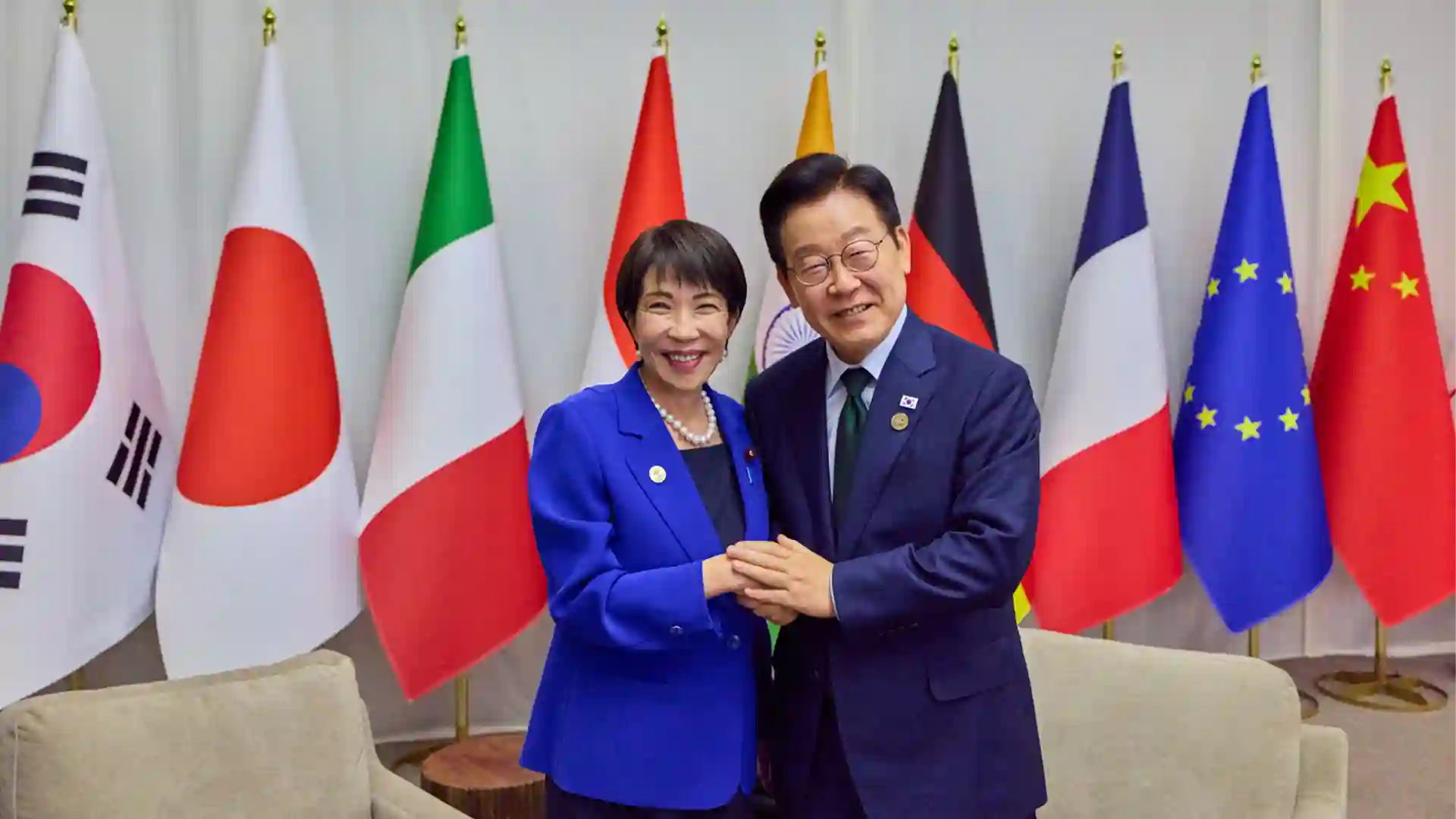
Japan and South Korea’s leaders drew widespread attention this week after an unusual and light-hearted moment following their summit, blending diplomacy with pop culture in a way that quickly went viral online.
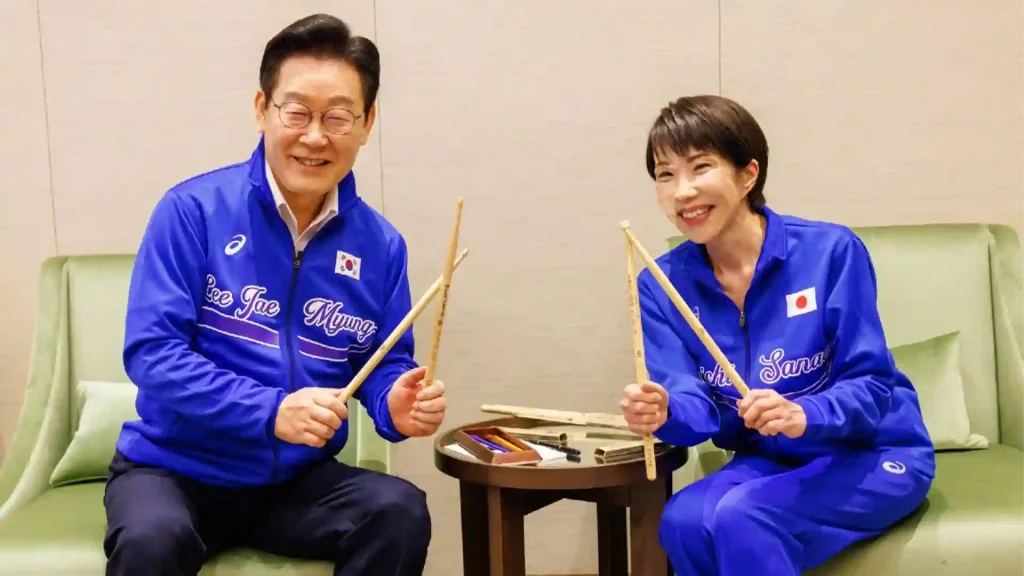
Japanese Prime Minister Sanae Takaichi and South Korean President Lee Jae Myung surprised the public by sitting down for an informal drumming session after their official talks. The two leaders played along to popular K-pop tracks, including BTS’s global hit Dynamite and Golden, a song from the Golden Globe-winning animated film K-Pop Demon Hunters. The relaxed exchange, shared widely on social media, offered a rare glimpse of warmth and humor in a relationship often shaped by history and geopolitics.
Images and video clips posted on X showed Takaichi and Lee wearing matching blue sports jackets, customized with their names, as they jammed together after meeting in Nara, the prime minister’s home region. In the footage, Takaichi appears visibly enthusiastic behind the drums, smiling broadly as she keeps the beat, while Lee joins in with measured taps, gradually finding his rhythm.
Takaichi later explained that the musical moment had been planned as a surprise. She revealed that during a previous encounter with Lee at last year’s APEC summit, he mentioned that playing the drums had long been a personal wish. Knowing this—and drawing on her own background as a former member of a student heavy metal band—Takaichi arranged the post-summit session. In her social media post, she described the experience as an enjoyable way to connect beyond formal discussions.
President Lee also reflected on the moment online, admitting that he initially felt slightly uncomfortable. However, he said the shared rhythm soon brought them together. As they continued playing, the sound began to align, symbolizing, in his words, how cooperation can grow even when starting from different tempos. He added that the experience reflected their mutual desire to move forward together and strengthen ties between South Korea and Japan.
Beyond the viral drumming session, the summit itself focused on serious regional and global concerns. According to South Korea’s presidential office, the two leaders agreed to deepen cooperation on economic security, as well as broader regional and international challenges. Takaichi emphasized that close collaboration between the neighboring countries is essential to maintaining stability in East Asia, particularly amid growing uncertainty in the region.
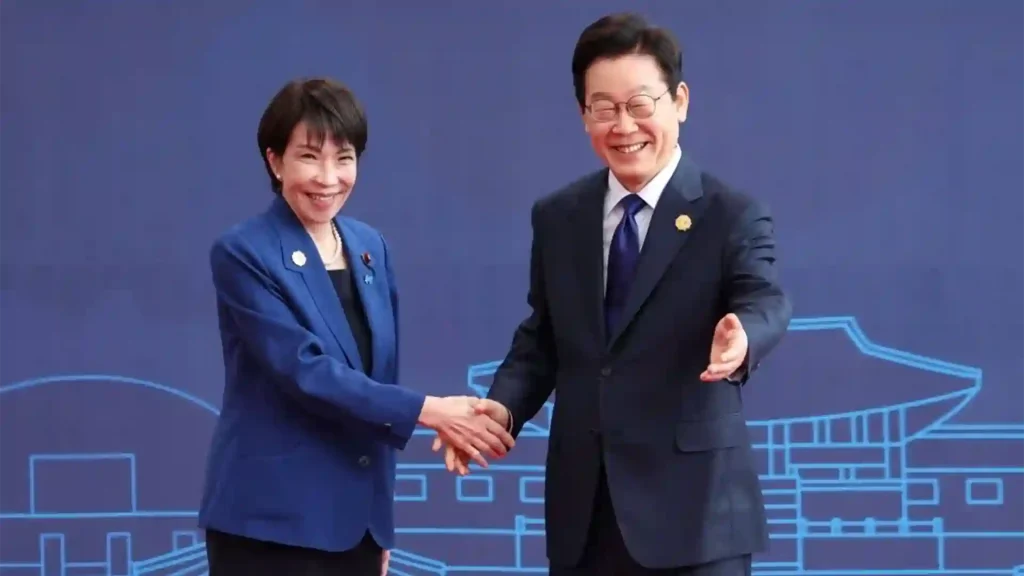
Their meeting took place against a complex diplomatic backdrop. Japan is currently engaged in a tense dispute with China, sparked in part by Takaichi’s remarks late last year suggesting Japan could consider military involvement if China were to attack Taiwan. These comments have added strain to regional dynamics and underscored the importance of coordination among U.S. allies in the area.
President Lee highlighted this point, stating that cooperation between Japan and South Korea is more critical than ever. He pointed to an increasingly complicated international environment and a rapidly shifting global order, stressing the need for steady progress toward a shared and forward-looking future. His comments reflected a pragmatic approach to regional security, even as his administration is generally seen as more cautious toward North Korea than that of his predecessor.
Historical tensions continue to loom large over Tokyo-Seoul relations. Lingering resentment over Japan’s occupation of the Korean Peninsula from 1910 to 1945 has long complicated diplomatic efforts, often resurfacing during periods of political strain. While recent years have seen attempts at rapprochement, the relationship remains sensitive and easily influenced by domestic and regional pressures.
Lee’s predecessor, conservative former president Yoon Suk Yeol, had actively sought to improve ties with Japan during his time in office. However, Yoon’s political career ended abruptly after he declared martial law in December 2024 and was subsequently removed from power. Lee, who succeeded him, has struck a somewhat different tone, particularly regarding North Korea, but has maintained that constructive engagement with Japan remains essential.
Using a vivid metaphor, Lee has described South Korea and Japan as “neighbors sharing a front yard,” emphasizing both their proximity and the inevitability of interaction. His remarks suggest a recognition that, despite differences and historical grievances, the two countries must find ways to coexist and cooperate.
The visit also included a cultural component beyond the drumming session. On Wednesday morning, Takaichi and Lee toured one of Japan’s oldest temples in Nara, underscoring the symbolic importance of shared heritage and mutual respect. President Lee is scheduled to depart Japan later the same day, concluding a visit that balanced diplomatic substance with a surprising display of camaraderie.
Ultimately, the viral music moment did more than entertain online audiences. It offered a symbolic counterpoint to the often serious and strained narrative surrounding Japan–South Korea relations. By sharing a beat—even imperfectly—the two leaders sent a message about dialogue, patience, and the possibility of harmony, even when history and politics make the rhythm hard to follow.