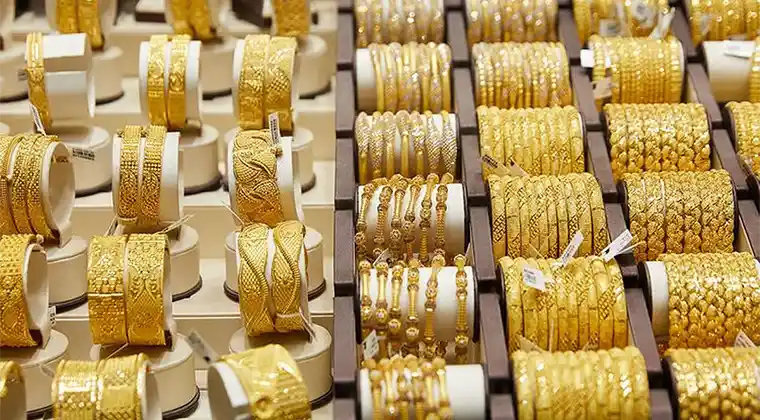
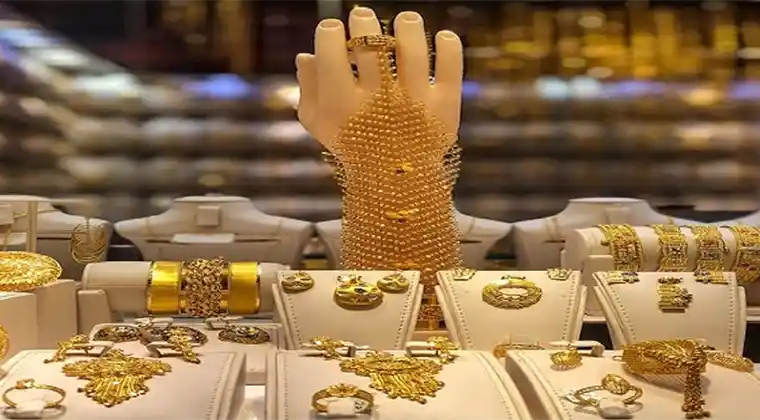
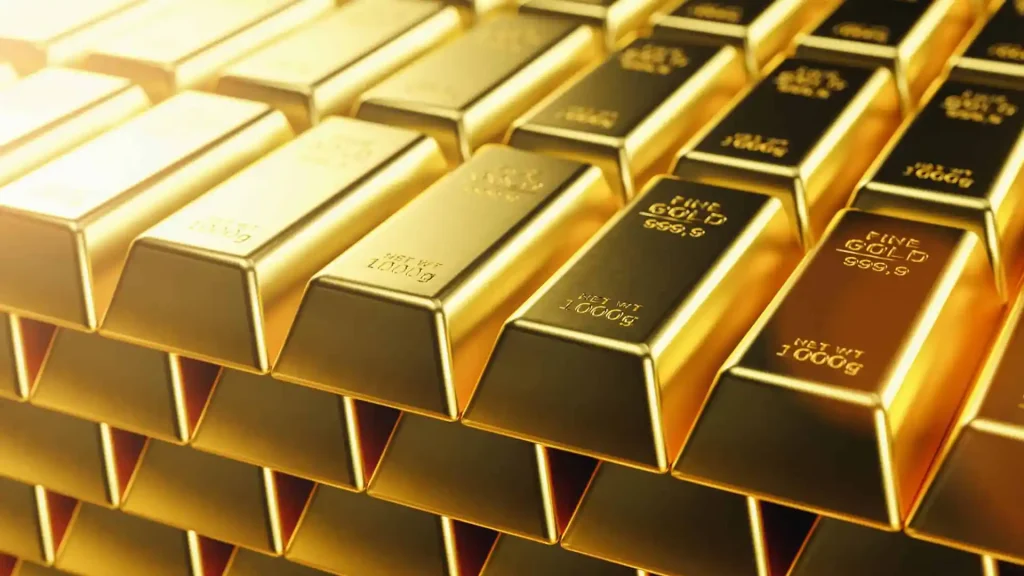
Gold and silver prices in Dubai have climbed to record-breaking levels, driven by strong global demand and market uncertainty, pushing precious metals to their highest values ever seen in the emirate’s markets.
Dubai gold and silver prices surge to unprecedented levels.
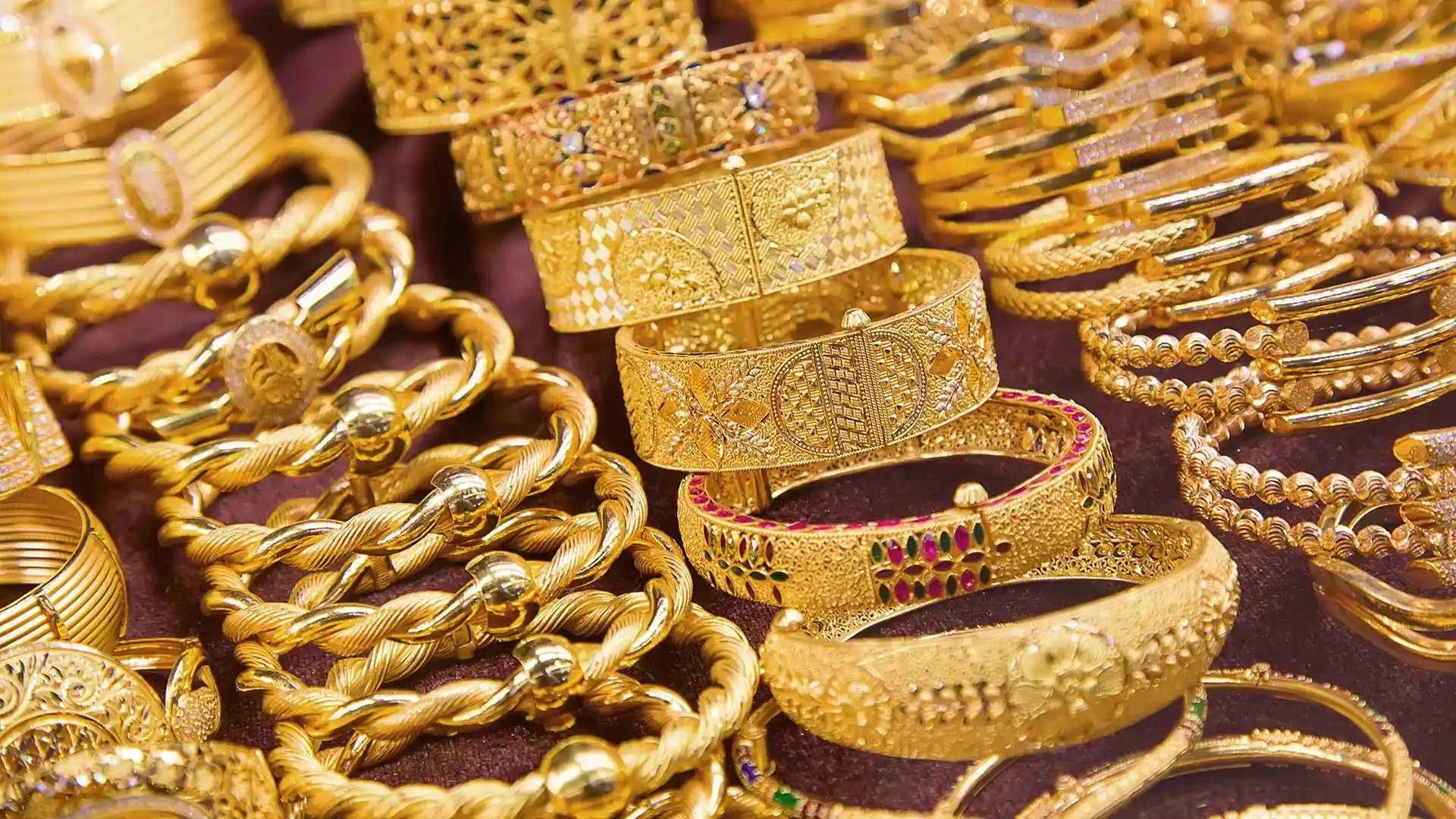
Dubai and Global Markets See Gold and Silver Prices Hit Record Levels Amid Economic and Geopolitical Pressure
In recent trading sessions, precious metals — particularly gold and silver — have surged to unprecedented prices both in Dubai’s markets and across international exchanges. This sharp rise reflects a confluence of global economic uncertainties, geopolitical tensions, and shifting expectations around monetary policy, especially in the United States.
Gold and silver are traditionally valued as “safe‑haven” assets: investments that tend to hold or gain value when economic confidence falters. In the current market environment, a range of factors has converged to make these metals especially attractive to investors, traders, and jewelers alike.
Record Highs for Gold and Silver: What’s Happening in Dubai?
On a recent Wednesday morning in Dubai, gold prices jumped significantly in local bullion trading. The premium 24‑karat gold climbed by almost AED 3, reaching approximately AED 558 per gram. Other popular varieties such as 22‑karat gold also increased in value, trading at around AED 516.75 per gram during early market hours. Lower gold purities saw similar gains; 21K reached about AED 495.50, 18K at AED 424.50 and 14K near AED 331.25 per gram in early trade.
Silver, which has also been gaining popularity for both industrial and investment uses, cracked the historic $90 per ounce mark — a level not seen before in global markets. Spot prices for the white metal reached approximately $91.53 per ounce, marking another milestone in its 2026 bull run.
These Dubai prices come amid a broader international rally in precious metals, where global benchmark rates for gold have also escalated to all‑time highs above the $4,600 an ounce range. Markets are watching these levels closely, as reaching or exceeding such prices signals deep investor interest and risk‑averse positioning across financial markets worldwide.
Why Are Precious Metals Rallying Now?
Several key forces are driving this surge in precious metals prices:
1. Geopolitical Tensions and Safe‑Haven Demand
Global political instability remains one of the most influential drivers of current gold and silver prices. Uncertainty arising from conflicts, regional tensions, and shifting power dynamics across the Middle East and beyond has fueled investor demand for assets considered safe in times of crisis.
Tensions involving nations such as Iran and the United States, along with continued unrest in various global hotspots, are weighing heavily on markets. As a result, many investors are moving capital into gold and silver — which are perceived as stores of value that can protect wealth during turbulent times.
Historically, precious metals have often seen price surges during periods of war, political upheaval or when diplomatic relations falter. This is because fear and risk aversion prompt individuals, institutions, and even central banks to move funds away from volatile equities and into hard assets.
2. Expectations That U.S. Interest Rates Will Be Lowered
Monetary policy in the United States, and particularly decisions by the Federal Reserve (the Fed), plays a central role in shaping global investment flows. Currently, markets are pricing in the likelihood of interest rate decreases by the Fed in the months ahead. Lower interest rates tend to reduce the appeal of yield‑bearing assets such as bonds and savings accounts, while simultaneously increasing the relative attractiveness of non‑yielding assets like gold and silver.
This dynamic helps explain why metals that do not pay interest — but instead serve as hedges against currency depreciation and inflation — have seen their prices climb so steeply. Expectations of rate cuts can weaken the U.S. dollar, which is traditionally inversely correlated with gold and silver prices; a softer dollar makes these commodities less expensive for foreign buyers and stimulates demand.
Adding to this, recent U.S. macroeconomic data — including inflation figures — has bolstered speculation that the Fed may adopt a more accommodative stance. Data indicating slower inflation growth reinforces the argument for interest rate easing, and in response, investors have repositioned assets towards gold and silver.
3. Broader Economic Concerns and Market Sentiment
Beyond geopolitical issues, broader concerns about global economic growth also influence precious metals. Economic slowdown fears, trade uncertainties, and uneven growth indicators worldwide have contributed to risk‑off sentiment among global investors. This has pushed many toward assets believed to preserve value over the long term, including precious metals.
Furthermore, uncertainty about the independence and future actions of central banks — particularly the Federal Reserve — has intensified market nervousness. Headlines regarding scrutinies or legal inquiries into central bank leadership can create fears about policy stability, prompting investors to hedge with gold and silver.
How Precious Metals Are Trading Globally
The international markets have echoed the trends seen in Dubai’s bullion trading floors. Spot gold has been trading around record highs of approximately $4,637.81 per ounce — reflecting a significant increase year‑over‑year. Silver, meanwhile, has broken new ground by trading above $90 per ounce, marking a historic moment for the metal on world exchanges.
Such levels are particularly notable because they demonstrate not just temporary spikes, but sustained upward momentum that reflects ongoing confidence in gold and silver’s role as stores of value and hedges against risk.
Global investors — including private funds, institutional holders, and central banks — are contributing to this momentum. Large purchases and increased holdings, especially by major central banks like China’s, amplify upward pressure on prices as supply struggles to catch up with strong demand.
Technical Outlook and Market Analyst Views
Some financial analysts tracking precious metal markets see technical resistance forming just above current price levels. For example, gold may face stiff resistance as it approaches certain key price thresholds that have historically acted as psychological barriers for traders. In technical analysis, such resistance levels can slow or temporarily stall price rallies, even if broader upward trends remain intact.
Despite this, many analysts remain bullish overall, projecting that gold could break even higher long‑term milestones if current economic conditions persist or worsen.
It is also worth noting that silver’s rally has been supported not only by its role as a safe haven but by its industrial demand. Unlike gold, silver has extensive use in technology sectors including solar panels, electric vehicles, and electronics. This dual‑role demand — both as an investment and as an industrial commodity — creates a unique dynamic where fundamental industrial trends also support price strength alongside traditional investment flows.
What This Means for Dubai Consumers and Markets
Dubai has long been known as the “City of Gold,” with local markets deeply intertwined with the global bullion price. Record prices for gold and silver in global markets naturally influence the buying and selling activity within the UAE.
Retail jewellers report strong demand despite rising prices, with many buyers accepting higher rates in the belief that precious metals may continue appreciating. At the same time, some consumers — particularly those purchasing gold for jewellery rather than investment — may adjust their buying behaviour as prices rise sharply.
High precious metal prices also have implications for investment portfolios, import balances, and even cultural practices that traditionally involve gifting gold. Both retail investors and institutional holders in Dubai are recalibrating their strategies in response to this historic rally.
The Role of Safe‑Haven Assets in Risk Management
The ongoing rally in gold and silver highlights an age‑old truth of global finance: during periods of uncertainty — whether geopolitical, economic, or monetary — investors often flock to assets perceived as stable stores of value. Unlike stocks or bonds, precious metals have intrinsic worth based on scarcity, historical significance, and broad acceptance.
This safe‑haven behaviour has manifested in the recent surge, as gold and silver have steadily climbed to heights not seen before. In many respects, these price levels reflect collective investor psychology — a widespread preference for security over short‑term risk in unsettled times.
Looking Ahead: Will Prices Continue Rising?
Given the complex interplay of political risks, economic signals, and central bank policies, predicting the future course of precious metal prices remains challenging. On the one hand, continued global tensions, expectations of further interest rate cuts, and robust investor demand could keep supporting high price levels.
On the other hand, if geopolitical tensions ease, central bank actions stabilize, or economic data shifts dramatically in favour of stronger growth, precious metal markets could experience corrections or slower growth.
Market watchers will continue to monitor inflation reports, monetary policy announcements, and geopolitical developments for signs of what comes next. Whatever the future holds, the current price environment underscores gold and silver’s enduring role as financial instruments deeply connected to global sentiment and economic health.
Lorem ipsum dolor sit amet, consectetur adipiscing elit. Ut elit tellus, luctus nec ullamcorper mattis, pulvinar dapibus leo.