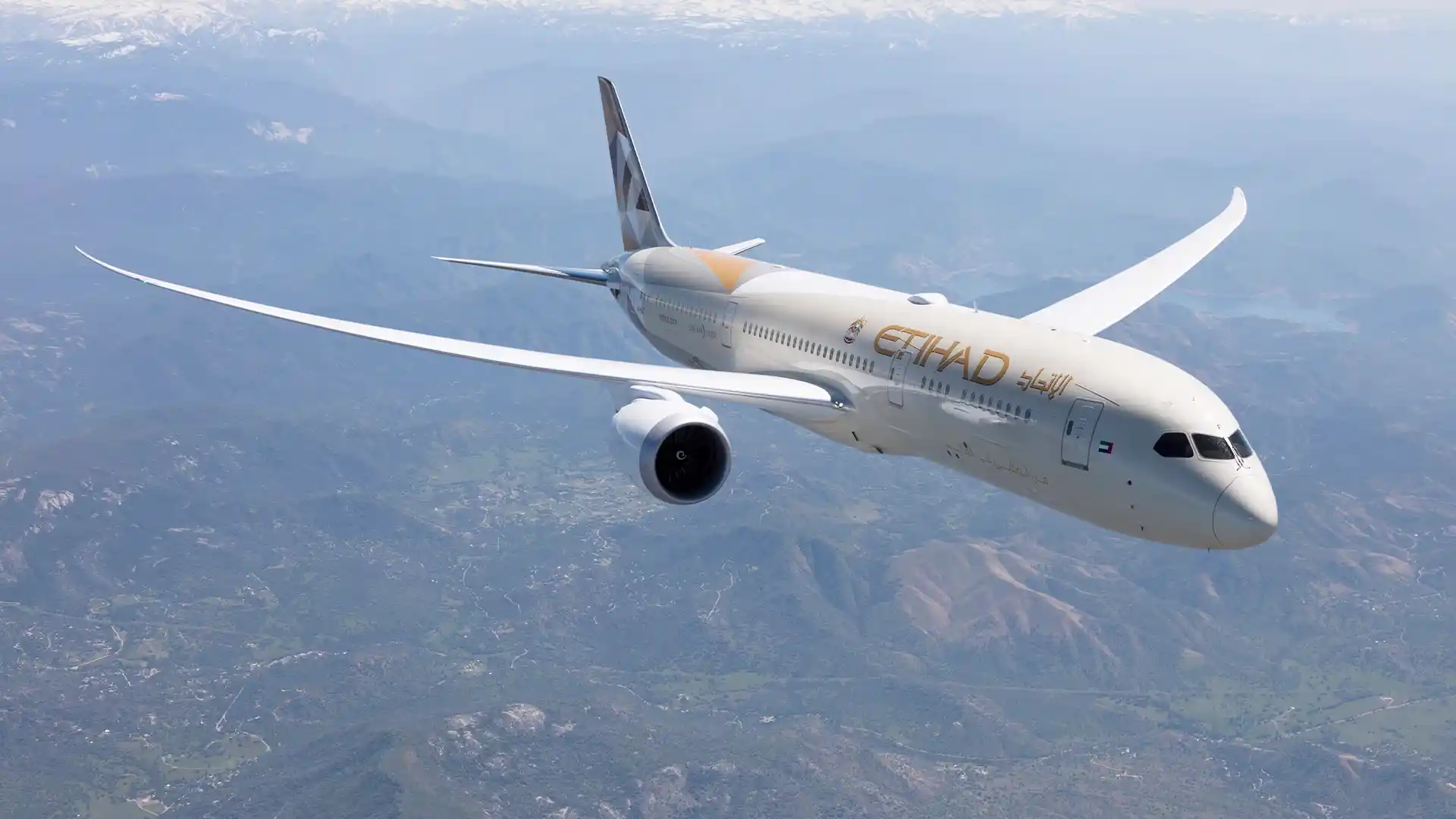
Etihad Airways recorded a landmark year in 2025, carrying 22.4 million passengers while significantly expanding its global network through the introduction of 16 new routes, strengthening connectivity and reinforcing its growth strategy.
Etihad Marks Historic 2025 With 22.4 Million Passengers and Major Route Expansion.
Etihad Airways Caps Landmark Year as Passenger Numbers, Fleet, and Network Reach New Highs
Etihad Airways has closed 2025 as the strongest year in its history, marking a significant milestone in the Abu Dhabi-based carrier’s transformation journey. With record passenger volumes, rising load factors, and the most extensive fleet expansion the airline has ever undertaken in a single year, Etihad has firmly positioned itself as a central pillar of the UAE’s aviation and tourism growth.
During the 12 months ending December 2025, Etihad carried a total of 22.4 million passengers, representing a 21 per cent increase compared to the previous year. This figure stands as the highest annual passenger total the airline has recorded since its launch, underlining the scale of its recovery and growth in the post-pandemic era.
The strong passenger performance was complemented by a passenger load factor of 88.3 per cent, an improvement of two percentage points over 2024. This rise reflects sustained demand across Etihad’s route network, as well as disciplined capacity management, which ensured aircraft were consistently operating at high occupancy levels.
A Record December Caps a Strong Year
The airline ended the year on a particularly strong note. In December 2025 alone, Etihad transported 2.2 million passengers, marking a 28 per cent increase compared to December 2024. The month coincided with peak travel demand driven by holidays, global tourism flows, and major events in the UAE, with the airline achieving a passenger load factor of 87.6 per cent during this period.
The December figures underscored not only the rebound of international travel but also Etihad’s growing relevance as a preferred carrier for both leisure and business travellers. The airline cited customer confidence in its service quality, network reliability, and premium offerings as key drivers behind the strong end-of-year performance.
Central Role in UAE Aviation Growth
Etihad’s rapid expansion has played a substantial role in the broader growth of the UAE’s aviation sector. According to the airline, its passenger growth in 2025 accounted for approximately half of the total increase in airline traffic across the country, based on reported and projected national aviation data.
This contribution highlights Etihad’s importance in supporting Abu Dhabi’s tourism strategy, economic diversification plans, and international connectivity goals. As the capital continues to invest heavily in cultural attractions, business infrastructure, and global events, Etihad has emerged as a key enabler of visitor growth and economic activity.
Industry observers note that the UAE’s aviation success in the post-pandemic years has been driven by a combination of government support, strategic investment, and aggressive expansion by local carriers. Over the past four years, UAE airlines have added new aircraft, expanded route networks, and significantly increased staffing levels to meet surging global demand for air travel.
Network Expansion and New Destinations
A defining feature of Etihad’s 2025 performance was the continued expansion of its global network. During the year, the airline launched 16 new routes, bringing the total number of destinations served to 110 by the end of December.
These new routes were strategically selected to enhance connectivity between Abu Dhabi and key global markets, spanning Europe, Asia, Africa, and the Americas. The expansion reinforced Abu Dhabi’s position as a global aviation hub while offering travellers more direct connections and improved travel options.
In addition to the 16 routes launched during the year, Etihad announced a total of 31 new destinations over the course of its recent expansion phase, reflecting the airline’s ambition to significantly scale its operations in a relatively short timeframe.
Fleet Growth at an Unprecedented Pace
Supporting this rapid network growth was the largest fleet expansion in Etihad’s history. By the end of 2025, the airline’s operating fleet had reached 127 aircraft, following the addition of 29 aircraft during the year alone.
This expansion marked the most significant single-year fleet increase Etihad has ever undertaken and underscored its confidence in long-term travel demand. The enlarged fleet provides greater operational flexibility, allowing the airline to increase frequencies on high-demand routes while opening new markets.
A notable addition to the fleet was the introduction of the Airbus A321LR, which plays a key role in Etihad’s strategy to enhance premium offerings on short- and medium-haul routes. The aircraft allows the airline to extend its signature premium cabin experience beyond long-haul flights, catering to travellers seeking comfort and consistency across different journey lengths.
Strategic Investment and Workforce Expansion
Looking ahead, Etihad has laid out ambitious plans to sustain its growth momentum. The airline intends to invest $10 billion (Dh36.7 billion) over the next five years in new aircraft, as part of a broader strategy to double the size of the airline.
Alongside fleet investment, Etihad plans to continue expanding its workforce, with an ongoing recruitment drive targeting 2,500 new employees per year. These hires will span pilots, cabin crew, engineers, ground staff, and corporate roles, supporting both operational growth and service excellence.
Etihad’s chief executive officer, Antonoaldo Neves, has repeatedly highlighted the scale of the airline’s transformation over a relatively short period. Speaking during Abu Dhabi Finance Week in December, Neves reflected on the progress achieved since Etihad’s restructuring phase.
“It’s been only about three years, and we have doubled the size of the airline,” he said. “We have just announced 31 destinations, and we came from an airline that was near the bottom of the profitability rankings.”
Neves added that the airline’s investment strategy is underpinned by strong cash flow generation, which provides the financial foundation for continued expansion.
“We’re going to be investing about $10 billion in the next five years in new aircraft to double the airline, and cash flow generation is coming very strong,” he said.
A Turnaround Story
Etihad’s performance in 2025 reflects a broader turnaround that has reshaped the airline’s fortunes. Just a few years ago, the carrier was focused on restructuring, improving efficiency, and restoring profitability. Since then, it has pursued a strategy centred on sustainable growth, network optimisation, and enhanced customer experience.
According to Neves, 2025 was not only about scale but also about consistency and reliability.
“Closing the year with a record December reflects the confidence our customers place in our product and service,” he said.
He noted that the airline’s expanded fleet and growing network place it in a strong position to support Abu Dhabi’s ambitions as a global destination.
“With the largest fleet in Etihad’s history, we are better positioned than ever to welcome more visitors to Abu Dhabi and deliver extraordinary travel experiences for our guests across a rapidly expanding network,” he added.
Commitment to Safety, Service, and Sustainability
As Etihad looks toward 2026 and beyond, the airline has reaffirmed its commitment to maintaining high standards across all aspects of its operations. Safety remains the cornerstone of its strategy, supported by ongoing investment in training, technology, and operational excellence.
Customer service continues to be a key focus, with the airline investing in cabin upgrades, digital tools, and enhanced ground services to improve the end-to-end travel experience. The expansion of premium cabins across more aircraft types reflects Etihad’s emphasis on delivering a consistent, high-quality product.
Sustainability is another central pillar of the airline’s long-term vision. Etihad has been actively involved in initiatives aimed at reducing emissions, improving fuel efficiency, and supporting the aviation industry’s broader environmental goals. Fleet renewal, including the introduction of more fuel-efficient aircraft, forms a critical part of this effort.
“As we move into 2026, we remain committed to safety, customer service, and sustainable growth that benefits Abu Dhabi and the communities we serve,” Neves said.
Looking Ahead
With record passenger numbers, a growing fleet, and an expanding route network, Etihad enters 2026 with strong momentum. Industry analysts suggest that the airline’s disciplined approach to growth, combined with robust demand for travel through the UAE, positions it well to navigate future challenges and opportunities.
The continued recovery of global aviation, rising tourism flows, and Abu Dhabi’s increasing profile as a cultural and business hub all support Etihad’s outlook. While the airline faces competition from regional and international carriers, its recent performance demonstrates its ability to scale rapidly while maintaining operational efficiency.
As Etihad builds on the achievements of 2025, its transformation from a restructuring-focused airline to a growth-driven global carrier stands as one of the most notable success stories in the aviation sector. With substantial investment planned, new destinations on the horizon, and a clear strategic vision, the airline appears well-equipped to shape the next chapter of Abu Dhabi’s aviation future.