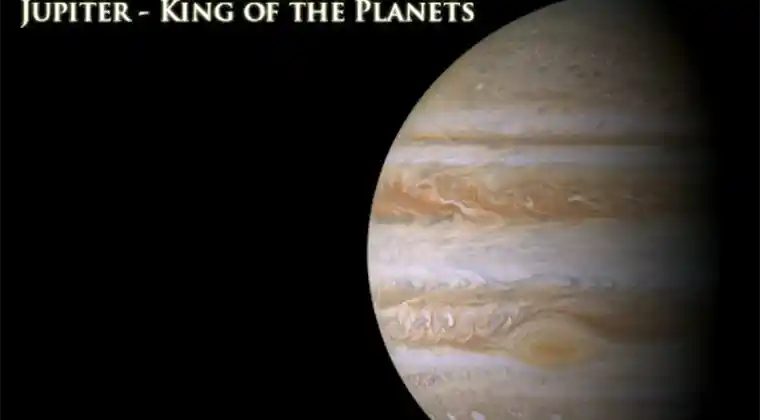
This weekend in the UAE, stargazers can spot Jupiter, known as the “King of Planets,” with the naked eye, offering a rare opportunity to enjoy the giant planet without needing a telescope or special equipment.
UAE Skywatch: Jupiter, the ‘King of Planets,’ Visible Without a Telescope This Weekend.
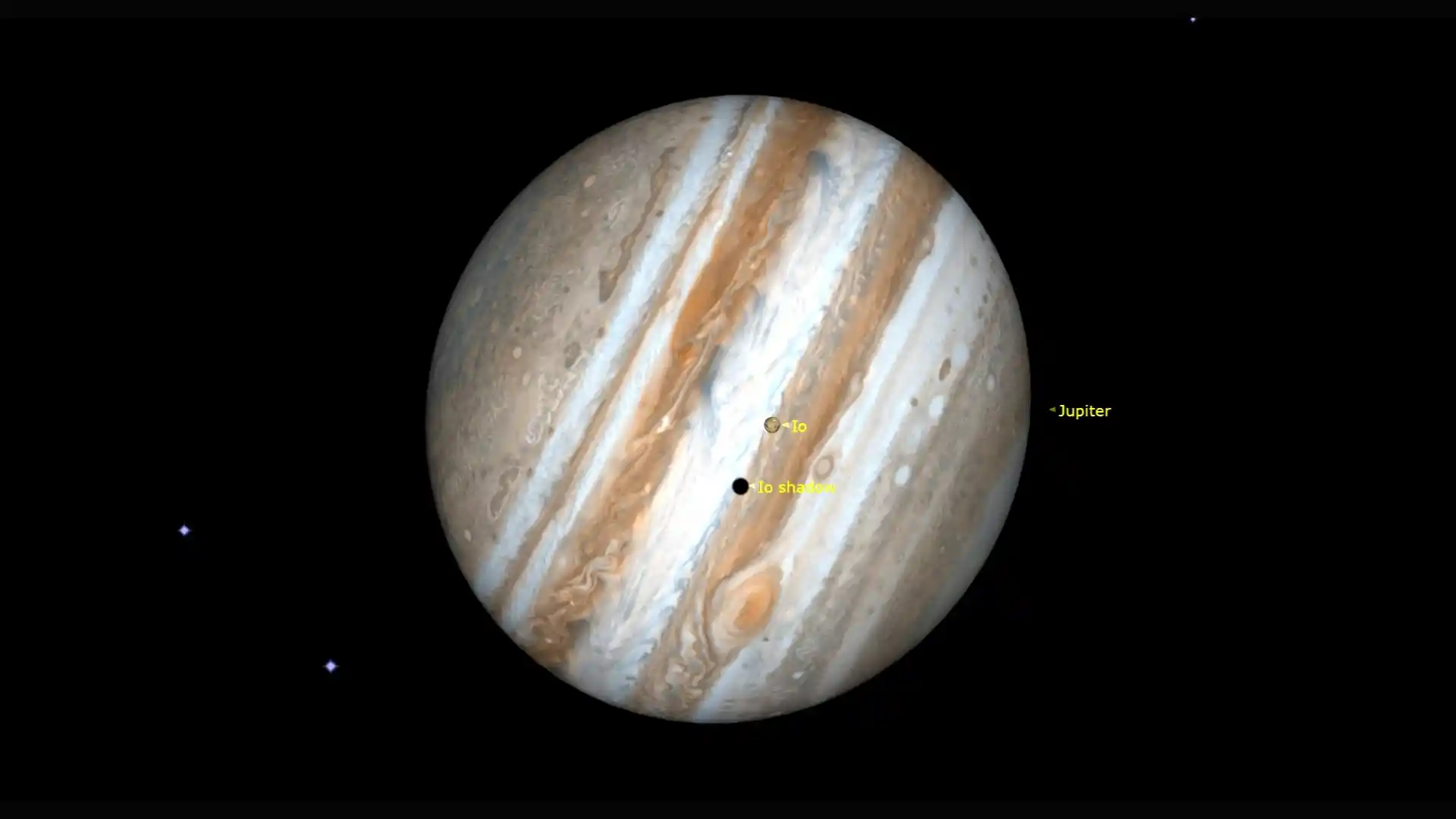
Stargazers and astronomy enthusiasts throughout the United Arab Emirates are being treated to a remarkable celestial display this Saturday evening as Jupiter, the largest planet in our solar system, reaches opposition—a rare astronomical alignment that allows the planet to appear brighter, larger, and more prominent in the night sky than at almost any other time during the year. Considered one of the most eagerly anticipated events on the astronomical calendar, Jupiter’s opposition presents a unique opportunity for both casual observers and seasoned skywatchers to marvel at the gas giant’s spectacular features and witness the scale of the solar system in real-time.
Jupiter will reach opposition on January 10, a configuration in which the Sun, Earth, and Jupiter are positioned in a straight line, with Earth situated directly between the Sun and the distant planet. This alignment causes the planet to rise in the eastern horizon as the Sun sets in the west, creating optimal viewing conditions. During opposition, Jupiter receives full illumination from the Sun, reflecting the maximum amount of light toward Earth. The result is a planet that outshines nearly every star in the night sky, appearing larger and closer than at any other period in its orbital cycle. The phenomenon has long fascinated astronomers, both professional and amateur, due to the clarity and brightness with which Jupiter can be studied.
Khadijah Hariri, a representative of the Dubai Astronomy Group (DAG), emphasized the significance of opposition events for observers. “Jupiter at opposition is one of the most exciting occurrences for skywatchers each year,” she explained. “The planet not only shines more brightly than usual, but its immense size becomes more apparent. Its cloud bands, distinctive coloration, and four largest moons—Io, Europa, Ganymede, and Callisto—are easier to discern, making the night sky come alive with detail.”
Jupiter is renowned for being the behemoth of the solar system, with a diameter more than 11 times that of Earth. Its striking features include the turbulent Great Red Spot, a massive storm system larger than Earth itself, and a complex system of rings and moons. The planet’s powerful magnetic field, which is far stronger than Earth’s, adds to its scientific intrigue. While Jupiter reaches opposition roughly once every 13 months, each occurrence is unique due to variations in the planet’s distance from Earth. Observing opposition provides a rare opportunity to appreciate the scale, brilliance, and dynamic atmospheric features of the gas giant firsthand, rather than through images or telescopic photographs.
For those curious about how to best witness Jupiter’s spectacle, meteorology and astronomy expert Muhammed Sajjad, popularly known as the UAE Weatherman, offered practical guidance. He explained that the planet’s bright appearance is a direct result of the precise geometric alignment during opposition. “When the Sun, Earth, and Jupiter form a straight line, Earth ends up positioned between the Sun and the planet. This means that the sunlight reflecting off Jupiter is fully directed toward us, making the planet appear brighter than almost every other point of light in the night sky,” he said.
Observers are encouraged to begin their viewing shortly after sunset, turning their gaze toward the eastern horizon. Sajjad advised looking for a steady, creamy-coloured glow that remains constant and does not flicker like a star. “Jupiter can be observed easily with the naked eye, but binoculars or a small telescope will allow you to see additional details, including its moons and cloud bands. To improve visibility, choose a location away from bright city lights, such as desert areas or open fields, where light pollution is minimal.”
For those seeking a more immersive experience, the Dubai Astronomy Group will be hosting a public observation event at the Mohammed Bin Rashid Library, starting at 6:30 pm on the evening of opposition. The event is ticketed, ensuring a well-organized viewing experience with access to high-quality telescopes and expert guidance. “Our mission is to make astronomy accessible and engaging for the public,” said Khadijah Hariri. “Participants will not only observe Jupiter and its largest moons, but they will also learn about the science and mechanics behind this extraordinary celestial alignment.”
Astronomy experts note that opposition is particularly significant because it allows for both long-term observation and educational opportunities. While Jupiter is visible throughout much of the year, its appearance during opposition is unmistakable and striking. The planet’s brightness during this period often surpasses that of Sirius, the brightest star in the night sky, making it impossible to miss even for casual observers. Amateur astronomers often seize the opportunity to capture detailed photographs or make sketches of Jupiter, noting the positions of its moons, observing the movement of cloud bands, or attempting to spot the Great Red Spot under favorable conditions.
The event also serves as a gateway for families, students, and the general public to connect with science in a hands-on way. Stargazing nights, such as the one organized by DAG, provide attendees with explanations about planetary orbits, gravitational effects, and the broader structure of the solar system. It is a chance to foster curiosity, inspire young scientists, and demonstrate the beauty and predictability of celestial mechanics.
In addition to its scientific significance, Jupiter’s opposition has long held cultural and historical importance. Ancient civilizations, including Babylonians, Greeks, and Romans, tracked the movements of planets like Jupiter and assigned mythological significance to their positions. In modern times, opposition events offer a rare opportunity to appreciate the continuity of human observation and the enduring fascination with the night sky. By witnessing Jupiter at its brightest and closest, observers are participating in a tradition of stargazing that stretches back thousands of years.
Experts advise that anyone planning to view Jupiter this weekend prepare by checking local weather conditions. Clear skies are essential for optimal visibility, and temperatures in desert locations may drop after sunset, so appropriate clothing is recommended. Binoculars or entry-level telescopes can enhance the experience, but even unaided eyes will reveal the planet’s distinctive glow and steady light. Observers are encouraged to bring cameras, sketchpads, or smartphones to capture the moment, though the naked-eye experience remains a highlight for many.
For UAE residents who may not have access to telescopes or remote locations, DAG and other astronomy organizations often provide livestreams or virtual sessions, allowing participants to witness Jupiter’s opposition remotely while receiving expert commentary. These initiatives ensure that anyone with an interest in astronomy can enjoy the event, regardless of physical location or equipment availability.
Ultimately, Jupiter’s opposition is more than just a visual spectacle; it is an educational opportunity and a celebration of humanity’s ongoing exploration of the cosmos. Whether observing through a telescope, binoculars, or the naked eye, skywatchers can witness the immense scale of the solar system, the brilliance of Jupiter, and the delicate balance of celestial mechanics that allow such events to occur.
In conclusion, the upcoming opposition on January 10 provides a perfect opportunity for residents of the UAE to observe the “King of Planets” at its brightest and closest for the year. By heading to a location with minimal light pollution, following expert guidance, and attending public observation events, anyone can appreciate the wonder of Jupiter and gain a deeper understanding of the solar system. This rare alignment is not only a treat for astronomers and enthusiasts but also an invitation for all residents to look up, marvel at the night sky, and connect with the universe in a meaningful way.