
The UAE has issued a recall for certain Nestlé products, including some infant formulas. Parents and caregivers are advised to check product details carefully to determine whether the formula they have may be affected.
UAE Warns Consumers as Select Nestlé Products Are Recalled: How to Identify Affected Baby Formula.

Nestlé has announced a voluntary recall of certain batches of its infant formulas across the MENA region after discovering a potential contamination risk linked to cereulide, a toxin produced by the Bacillus cereus bacteria. This precautionary step is aimed at safeguarding the health of infants and preventing any potential exposure to the toxin, which can be harmful if ingested. Authorities in the UAE have responded promptly, issuing an official recall of the affected products and advising parents and caregivers to avoid using these formulas until their safety is confirmed.
The decision follows a thorough internal investigation by Nestlé, which revealed that one of the raw materials used in the production of specific formula batches contained traces of Bacillus cereus. While the risk is considered low, the company has chosen to act proactively to protect infants, whose immune systems are particularly vulnerable. Cereulide, the toxin produced by this bacterium, can cause gastrointestinal discomfort and other health issues if consumed, making early detection and preventive measures critical.
The Emirates Drug Establishment, in coordination with Nestlé, has identified the products impacted by the recall. These include a number of formulas under the NAN and Isomil ranges, as well as Alfamino. Specifically, the recalled products are: NAN Comfort 1, NAN Optipro 1, NAN Supreme Pro 1, 2, and 3, Isomil Ultima 1, 2, and 3, and Alfamino. This list covers multiple stages of infant formula, from newborn to toddler, and encompasses products widely used by families across the UAE.
Parents and caregivers are urged to examine the packaging of their formula products carefully. Each product includes batch numbers and production dates, which can be cross-referenced with the official list provided by Nestlé. Checking these details is essential, as only specific batches are affected by the recall; formulas outside these batches are considered safe to use. Nestlé has made the full batch list publicly available on its website and through customer service channels to ensure families can verify the safety of their products quickly and efficiently.
To confirm whether a product is included in the recall, parents should first locate the batch number and expiry date on the packaging. These identifiers are typically printed on the top or bottom of the container. Once located, the batch number can be compared with the recall list released by Nestlé. If a product matches any of the listed batches, it should not be used. Families are advised to either return the product to the point of purchase for a replacement or contact Nestlé’s customer support for guidance on safe alternatives.
Officials stress that the recall is a precautionary measure, and no cases of illness have been reported in relation to these specific formula batches. Nevertheless, due to the vulnerable nature of infants’ digestive systems and immune responses, authorities and Nestlé are taking the matter seriously. The UAE government has emphasized the importance of vigilance and has asked residents to report any products that appear on the recall list to ensure comprehensive consumer protection.
For parents currently using infant formula, the steps to verify product safety are straightforward: first, check the batch number and production date printed on the packaging; second, compare these details against the official list published by Nestlé; and third, follow the guidance provided if the product is affected, whether that means returning it to the store or contacting Nestlé directly. The company has also provided a hotline and online resources to answer questions and guide caregivers through the process.
While this recall may cause concern among families, it highlights the proactive measures taken by both Nestlé and regulatory authorities in the UAE to prioritize child health and safety. It serves as a reminder of the importance of checking product information regularly and staying informed about official alerts, particularly when it comes to items as essential as infant formula.
By following the official guidance and carefully verifying batch numbers, parents can ensure that the formula they are providing to their children is safe and free from potential contamination. Nestlé has reiterated its commitment to quality, safety, and transparency, reassuring families that measures are being taken to prevent similar incidents in the future.
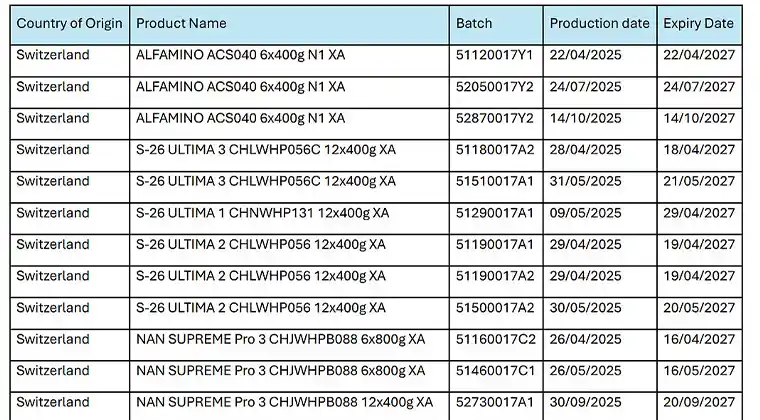

Parents and caregivers who use Nestlé infant formula are being advised to check their products carefully following a recent voluntary recall of specific batches. The recall has been initiated due to a potential contamination risk from cereulide, a toxin produced by Bacillus cereus bacteria, and is intended as a precaution to safeguard the health of infants, whose immune systems are particularly sensitive to bacterial toxins.
If you have purchased a Nestlé infant formula, one of the first steps in confirming whether your product is affected is to locate the batch code. The batch code is a unique identifier that allows both the company and consumers to track production details of specific formula batches. Typically, the batch code is printed clearly on the base of the tin or container, making it easily accessible for verification purposes. Once the batch code has been identified, it should be compared against the official list of recalled batches released by Nestlé. If the code on your product matches one included on this list, the product is part of the recall and should not be used under any circumstances.
Upon identifying a product as part of the recall, the next step is to reach out to the Nestlé Consumer Engagement Centre in your region. The contact number for the centre is usually printed on the formula tin itself, providing parents with a direct line to customer support for guidance and resolution. When contacting the centre, parents should have the product on hand, as staff may request specific information to verify the batch. This process ensures that the recall is efficiently managed and that families receive appropriate assistance quickly.
In many cases, the Consumer Engagement Centre may ask for a photograph of the product, clearly showing the batch code and packaging. This visual confirmation helps Nestlé verify that the product indeed belongs to the recalled batches. Once verification is complete, the company offers options such as a replacement product of equivalent value or a full refund, depending on the preferences of the customer and the availability of alternative formulas. This process is designed to make it simple and convenient for parents to respond to the recall without undue disruption.
It is important to note that this recall affects multiple countries in the MENA region, highlighting the wide distribution of Nestlé infant formulas. In the Gulf Cooperation Council (GCC), four countries—the UAE, Saudi Arabia, Kuwait, and Qatar—have issued official recalls for specific formula batches. This means that residents in these nations should be especially vigilant in checking the batch codes of the products they currently have at home.
Beyond the GCC, the recall extends to other countries in the region as well. Nestlé has confirmed that Bahrain, Egypt, Iran, and Oman have also been affected. The company clarified that while the recall encompasses multiple nations, the specific batch numbers involved may vary depending on the country. Therefore, it is essential for parents and caregivers to consult the official recall list relevant to their nation rather than assuming that the same batch numbers are impacted universally.
For families in any of the affected countries, the key steps are clear. First, carefully examine each tin of formula and locate the batch code. Second, compare the batch code with the official list provided by Nestlé for your country. Third, if the product matches a recalled batch, immediately cease use. Fourth, contact the local Nestlé Consumer Engagement Centre using the number provided on the tin or via the company’s official website. Fifth, follow the instructions provided by the centre, which may include sending a photograph of the product for verification. Finally, choose either a replacement product or a refund as offered by Nestlé.
The company has emphasized that, to date, there have been no confirmed cases of illness associated with the recalled formula batches. The recall is strictly a precautionary measure, implemented to minimize any potential risk to infants who might consume formulas from affected batches. Health authorities in each country involved are coordinating with Nestlé to ensure that information reaches parents promptly, and that no child is exposed to a product that could potentially contain the cereulide toxin.
The proactive response by Nestlé and regional authorities underscores the importance of vigilance and transparency in matters related to infant nutrition. Cereulide, the toxin linked to Bacillus cereus, can cause gastrointestinal upset and other complications, particularly in infants and young children. By acting quickly to remove potentially contaminated products from the market and advising families on how to verify their formula, Nestlé and the affected governments aim to prevent any adverse health effects before they occur.
Parents are encouraged not to ignore recall notifications, even if their child has already consumed some of the formula. While there are currently no reports of illness, monitoring for any unusual symptoms, such as vomiting, diarrhea, or lethargy, is prudent. In the unlikely event of such symptoms, caregivers should seek medical attention immediately and inform the attending physician about the recall.
Communication is also a key part of the response. Nestlé has made resources available online and through customer service channels to ensure that families are fully informed about the recall. These resources include detailed batch lists, step-by-step instructions for checking products, and guidance on how to contact the Consumer Engagement Centre. By providing clear and accessible information, the company aims to minimize confusion and ensure that parents can take swift action if necessary.
The recall also highlights the interconnected nature of food supply chains in the region. Infant formula is distributed widely across multiple countries, and even a single issue with a raw material can necessitate action across national borders. This underscores the importance of robust quality control measures, close monitoring, and international cooperation to protect consumers, particularly vulnerable populations like infants.
In conclusion, the steps for parents and caregivers are straightforward but critical: verify the batch code, compare it with the official recall list for your country, stop using any affected product, contact the local Nestlé Consumer Engagement Centre, and follow instructions for replacement or refund. By doing so, families can ensure that the formula they provide to their infants is safe and free from potential contamination. The recall, while precautionary, demonstrates the commitment of both Nestlé and regional authorities to maintaining the highest standards of safety in infant nutrition.
Remaining attentive to these instructions and acting promptly will protect children and give parents confidence that their infants are receiving safe, high-quality nutrition. Families are urged to remain informed through official channels, avoid assumptions about unaffected batches, and take advantage of the resources provided by Nestlé to navigate the recall efficiently and responsibly.