Dubai’s long-delayed ‘Big Ben’ tower is set to be brought back to life by a private developer, with revised plans moving forward that exclude the clock feature originally intended to define the project.
Dubai’s ‘Big Ben’ tower set for revival by private developer, clock dropped.
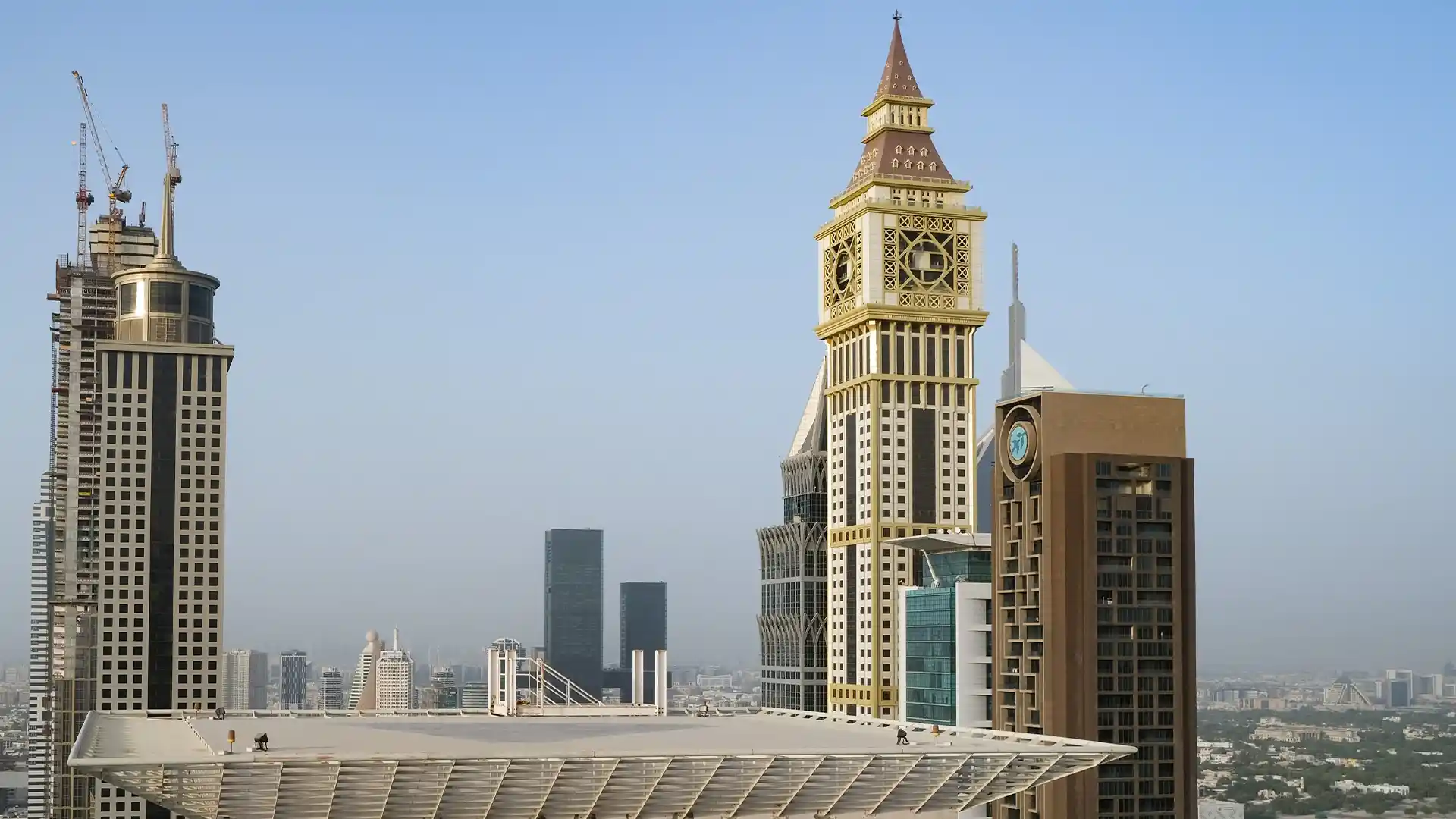
A prominent private developer is set to bring new life to the tower in Dubai once popularly referred to as the city’s “Big Ben,” following its acquisition from a local bank. The building, which has long been a notable feature on the Sheikh Zayed Road skyline, is expected to welcome occupants and tenants in the first quarter of 2027 under its new branding as the AHS Tower. While the structure once gained attention for its resemblance to London’s iconic clock tower, the revived project will proceed without including a clock as part of its design.
Abbas Sajwani, founder and CEO of AHS Group, shared details of the acquisition and redevelopment plans in a recent interview. “We purchased this property last year, in July, from the Commercial Bank of Dubai, for approximately $120 million, which is around Dh440.4 million,” Sajwani explained. He elaborated that the initial motivation for acquiring the building was primarily for investment purposes, rather than immediate resale. At the time of purchase, the property was under leasehold arrangements because Sheikh Zayed Road did not permit freehold ownership, making it impossible to sell individual units directly. “Our original intention was to convert the building into office spaces, maintain it within our portfolio, and generate rental income from tenants,” he said.
The situation changed following the introduction of new freehold laws on Sheikh Zayed Road, which opened up the possibility of selling units individually. According to Sajwani, this regulatory shift presented an opportunity to explore off-plan sales of strata units within the tower. “Once the new law came into effect, we realized that selling the units as off-plan strata properties could be a very appealing proposition,” he stated. The sales process commenced several months ago and experienced overwhelming interest. In just a matter of weeks, approximately 95 percent of the building’s units were sold, leaving only a few remaining for prospective buyers. “The response exceeded our expectations,” Sajwani added, emphasizing the strong demand for high-quality office and residential units in central Dubai.
The building, now officially named AHS Tower, stands 70 floors high and measures over 200 meters, contributing to Dubai’s growing collection of supertall structures. The UAE is home to more than 100 towers exceeding 230 meters in height, according to data from the Skyscraper Center, highlighting the city’s reputation as a global hub for high-rise development. While the tower previously earned the nickname “Big Ben” due to its architectural resemblance to the historic London clock tower, the redevelopment plan will not include a clock feature, marking a significant departure from its former image.
AHS Tower represents both a continuation of Dubai’s ongoing urban transformation and an example of how regulatory changes can influence development strategies. Sajwani noted that the combination of his group’s investment approach and the recent legal changes on freehold ownership created the perfect environment to maximize the building’s value while providing modern office and commercial spaces to the market. By adopting a strata sales model, individual units can now be purchased by investors or businesses, rather than being limited to long-term leases, offering greater flexibility and financial accessibility to prospective buyers.
Abbas Sajwani’s connection to Dubai’s real estate landscape is also notable given his family background. He is the son of Hussain Sajwani, the billionaire founder of Damac Properties, one of the largest private master developers in Dubai. This lineage has provided him with a deep understanding of the city’s property market dynamics and a network that facilitates large-scale real estate transactions. His involvement in AHS Tower underscores the growing trend of family-led development groups playing a key role in shaping Dubai’s skyline.
The redevelopment strategy also reflects broader trends in Dubai’s real estate sector. High-rise towers along Sheikh Zayed Road remain highly sought after due to their central locations, accessibility, and proximity to commercial, retail, and residential hubs. The city’s skyline continues to evolve rapidly, with both residential and commercial projects attracting investors from around the globe. By repositioning the former “Big Ben” tower as AHS Tower, the developer aims to offer premium office spaces and strata units that meet modern standards of design, amenities, and sustainability.
In addition to meeting market demand, the redevelopment emphasizes flexibility and adaptability in design. While the clock that once symbolized the tower’s identity will not be included, the building will feature contemporary architectural elements, upgraded interiors, and enhanced facilities to appeal to tenants and buyers. Sajwani explained that the decision to omit the clock aligns with current market preferences and operational considerations, including maintenance and long-term functionality. The updated design aims to balance aesthetic appeal with practical usability for businesses and residents alike.
The project’s timeline is ambitious yet carefully planned. With a projected opening in the first quarter of 2027, the developer has outlined a phased approach to completing interior works, installing modern infrastructure, and ensuring compliance with building codes and safety regulations. Marketing efforts have already been underway, focusing on highlighting the tower’s prime location, state-of-the-art facilities, and the investment potential of strata units in one of Dubai’s most prominent corridors.
Dubai’s real estate market has historically been shaped by regulatory shifts, investor demand, and iconic architectural developments. AHS Tower serves as a case study of how private developers can leverage these factors to reposition existing buildings and create new investment opportunities. The combination of freehold legislation, strategic location, and the city’s growing reputation as a commercial hub has enabled the project to attract significant attention from both local and international investors.
As AHS Tower prepares to open its doors, it is expected to contribute to the vibrancy of Sheikh Zayed Road, complementing the surrounding high-rise developments while offering a unique identity as a modern business destination. The absence of the clock does not diminish its presence; rather, it reflects a pragmatic approach to redevelopment that prioritizes functionality, market appeal, and long-term sustainability over purely symbolic design elements.
In summary, the AHS Tower redevelopment illustrates a strategic approach to real estate in Dubai: acquiring a high-profile, previously underutilized property, adapting it in response to new legal frameworks, and offering flexible ownership options to meet current market demands. While the tower will no longer carry the “Big Ben” moniker in practice, it remains a significant addition to the city’s skyline and an example of how private developers are shaping Dubai’s high-rise landscape in line with modern investment trends and architectural priorities.
Abbas Sajwani, the founder and CEO of AHS Group, confirmed that the redevelopment of the tower formerly known as Dubai’s “Big Ben” will feature a completely redesigned façade, and the decision has been made to remove the iconic clock entirely. “We are removing the clock from the building because we are redesigning the exterior to give the tower a new identity,” Sajwani said in a recent interview. He explained that the aim of the redesign is to modernize the structure, reflecting contemporary architectural trends while positioning the tower as a landmark within Dubai’s rapidly evolving skyline. The move represents a shift from a symbolic, iconic feature to a more practical, modern aesthetic that complements the city’s premium business districts.

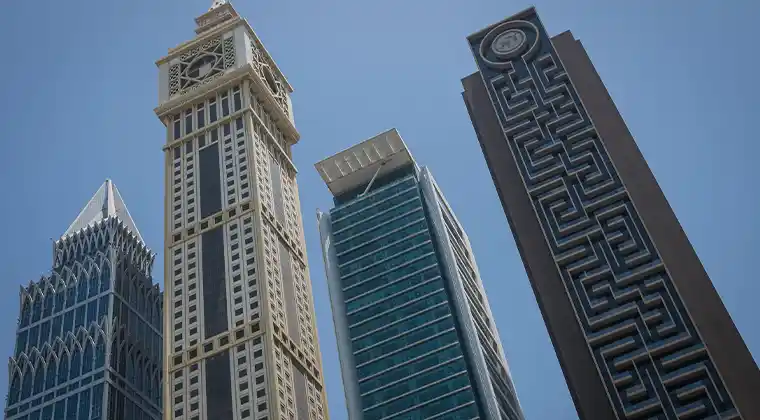
Sajwani elaborated on the rationale behind acquiring the building in the first place. He noted that the tower’s location is exceptionally rare and strategically significant, offering views of some of Dubai’s most renowned landmarks, including the Dubai International Financial Centre (DIFC), the Museum of the Future, the Burj Khalifa, and the Arabian Gulf. “I chose to buy this tower because of its landmark location,” he explained. “It is extremely difficult to find vacant land in such a prime area that provides these panoramic views. From an investment and development perspective, it made perfect sense to acquire an existing tower and convert it into a premium office property.”
One of the advantages of working with an already constructed building, Sajwani highlighted, is the significantly reduced development timeline. “The structure was already complete when we acquired it, which makes the project far faster to finish than starting from scratch. This allowed us to bring a high-quality office space to the market in a much shorter period, while still incorporating modern design, cutting-edge facilities, and luxury amenities,” he said. By taking this approach, the developer not only accelerates the timeline for market entry but also reduces construction risks typically associated with building new towers from the ground up.
The redevelopment of the tower is being positioned as a high-end office destination, responding to a growing demand for Grade A office spaces in Dubai. Sajwani stressed that the city has a shortage of such premium office properties, particularly those that combine contemporary design with world-class amenities. “Dubai lacks sufficient Grade A office spaces, and this building is designed to address that gap in the market,” he noted. The tower will feature a full-glass exterior, emphasizing modernity, elegance, and natural light, while ensuring that tenants benefit from both aesthetic appeal and functional efficiency.
In terms of facilities, Sajwani explained that the tower will offer an extensive array of premium amenities, distinguishing it from typical office developments. “We’ve designed a comprehensive suite of features, including a private members’ club, a fully equipped business center, a two-floor spa with sauna and steam rooms, a luxury lounge, an indoor pool, a dedicated cigar room, an indoor garden, a full-floor gym, and a triple-height lobby,” he said. According to Sajwani, these facilities are intended not only to attract businesses but also to create a unique experience for employees and visitors, blending work, wellness, and lifestyle into a single environment. The combination of these high-end features and the building’s prime location positions it as one of Dubai’s most distinctive office towers, catering to multinational corporations, high-profile firms, and entrepreneurs seeking an exclusive workspace.
Sajwani emphasized that the redevelopment is about more than simply finishing the structure—it is about creating an “iconic tower” that contributes to Dubai’s architectural landscape and meets current and future market demands. “We wanted to create a building that stands out, not just for its height or location, but for the overall quality and experience it offers. This is why we are incorporating these unique amenities and premium finishes,” he explained. The project reflects a careful balance between practicality, market needs, and aspirational design, ensuring that it is both functional and visually appealing.
The CEO also revealed that AHS Group has ambitious plans for 2026, with multiple new projects in the pipeline. He noted that the combined gross development value of these upcoming ventures is expected to exceed $12 billion (approximately Dh44 billion) by the end of the year. These projects are part of the company’s broader strategy to expand its presence in Dubai’s real estate market, focusing on high-quality developments that align with the city’s long-term urban growth and investment goals. “We are looking at several landmark projects across the emirate, each designed to meet specific market needs and create exceptional value for investors and end users alike,” Sajwani said.
He stressed that the approach taken with the AHS Tower is indicative of the group’s development philosophy: identify strategic opportunities, leverage existing structures or prime locations, and deliver premium, thoughtfully designed properties that set new standards in Dubai. The removal of the clock, the redesign of the façade, and the integration of luxury amenities are all part of a deliberate plan to modernize the building while ensuring it stands out as a flagship development.
Sajwani also highlighted the importance of location in driving the success of such projects. “Having a building in such a central, high-visibility area provides not only stunning views but also unparalleled access to key business and leisure districts. It’s rare to find land in Dubai that offers proximity to the DIFC, the Museum of the Future, the Burj Khalifa, and the waterfront all at once,” he said. The combination of location, design, and amenities is expected to make the tower highly attractive to tenants looking for flexible office layouts, impressive vistas, and world-class facilities.
The tower’s redevelopment also aligns with broader trends in Dubai’s real estate sector, where there is increasing demand for office spaces that combine functionality with lifestyle offerings. Developers are recognizing that modern tenants seek more than just a workspace—they value wellness, recreation, networking, and comfort integrated into the building environment. AHS Tower aims to fulfill this demand by offering a comprehensive mix of professional, social, and leisure facilities that elevate the experience of working in the building.
While the clock that once gave the tower its nickname will no longer feature on the façade, Sajwani insists that the building will remain an iconic landmark. “The identity of the tower is evolving, but it will continue to be a recognizable part of Dubai’s skyline. The removal of the clock is simply part of giving it a new image that matches the expectations of today’s market and tenants,” he said. By rebranding the building as AHS Tower, the developer intends to create a modern landmark that reflects both the city’s ambition and the changing dynamics of Dubai’s real estate sector.
In conclusion, the redevelopment of the former “Big Ben” tower into AHS Tower represents a strategic and forward-looking investment in Dubai’s commercial property landscape. By capitalizing on its prime location, completing the building efficiently, and incorporating premium amenities, AHS Group is positioning the tower as one of the most desirable Grade A office developments in the city. Coupled with a pipeline of additional high-value projects set to launch in 2026, the initiative demonstrates the group’s commitment to delivering iconic, market-leading real estate that meets the evolving needs of Dubai’s business and investment community.