As parking fees continue to rise across Dubai, many tenants are questioning whether free parking is included, with eligibility and entitlement largely determined by the specific terms and conditions outlined in individual lease agreements.
As parking costs increase, Dubai tenants’ access to free parking hinges on contracts.
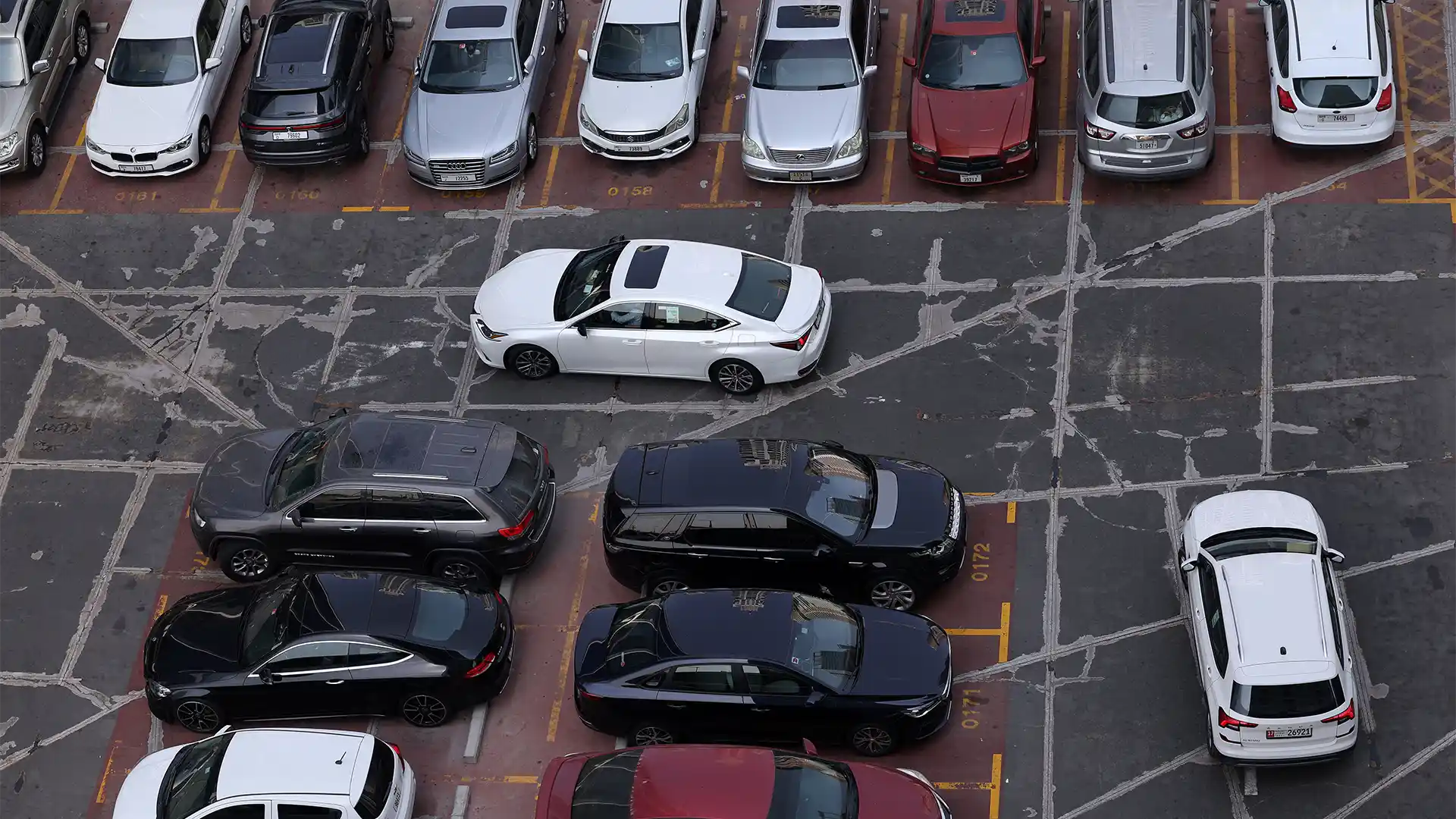
Dubai’s shift toward a demand-based parking pricing model has significantly altered the daily cost of using public parking, prompting many residents to rethink how parking is handled within their housing arrangements. As parking fees fluctuate depending on location, time, and demand, tenants across the city are becoming more proactive about ensuring that access to parking is clearly addressed in their rental agreements, rather than relying on public parking options that are becoming steadily more expensive.
The variable parking tariff system, rolled out in April 2025, was designed to reduce congestion and encourage more efficient use of parking spaces. Under this framework, parking charges are no longer fixed. Instead, rates rise and fall depending on where and when a vehicle is parked. High-demand areas and peak hours now command higher fees, while parking during quieter periods, such as late at night, often remains free. Although the policy aims to improve traffic flow and parking availability, it has also had a direct financial impact on residents who depend on street parking near their homes.
Areas classified as premium zones—including Downtown Dubai, Business Bay, Deira, and Jumeirah—have seen some of the sharpest increases in parking costs, particularly during busy daytime hours. In these neighbourhoods, drivers face higher hourly charges, making daily parking a costly necessity for those without designated residential spaces. By contrast, off-peak periods and overnight hours continue to offer free parking, but these windows are not always practical for residents who need daytime access.
Data from the third quarter of 2025 highlights the scale of the change. Average public parking fees increased by more than 50 per cent compared to the same period the previous year, reaching just over Dh3 per hour. This jump has been attributed to a combination of higher daily caps and the introduction of tiered pricing that reflects demand patterns. For tenants who rely on public parking on a regular basis, these costs can quickly add up over the course of a month, turning parking into a significant household expense.
As a result, parking has moved from being a secondary consideration to a central issue in lease negotiations. Many tenants are now seeking to include a dedicated parking space within their rental packages, either at no extra charge or as part of the overall rent, to shield themselves from unpredictable and rising public parking fees. For some, especially families and professionals living in densely populated districts, access to reliable parking is now viewed as essential rather than optional.
However, legal professionals caution that tenants cannot assume parking rights unless they are clearly spelled out in the tenancy contract. According to lawyers specialising in property and rental law, disputes frequently arise when tenants believe that parking should be included by default, even though it is not mentioned in their lease agreements. These misunderstandings often lead to conflicts between landlords and tenants, particularly in buildings or communities where parking availability is limited.
Legal experts explain that it is possible for tenants to secure parking at no additional cost, but this can only be achieved through careful and explicit drafting of the lease. Any entitlement to a parking space must be clearly stated in writing, specifying whether the space is allocated, shared, or subject to certain conditions. Without such clarity, tenants may find it difficult to enforce their expectations.
This issue has become so common that it frequently appears in cases brought before Dubai’s Rental Disputes Centre. According to Igor Abalov, Managing Partner at Lawford Legal Advisors FZ-LLC, disagreements over parking rights are among the most regularly contested matters in rental disputes. He notes that many tenants approach the issue with assumptions that are not supported by the legal documentation governing their tenancy.
Abalov emphasises that lease agreements are the primary reference point when determining what a tenant is entitled to. If a parking space is not expressly included in the contract, tenants generally have limited grounds to demand one later, even if parking was verbally discussed or informally promised. In the eyes of the law, only what is documented and agreed upon in writing carries weight.
He further explains that tenants’ ability to assert their rights depends almost entirely on the wording of the lease. Clauses that clearly define parking arrangements—such as the number of spaces, their location, and whether they are exclusive or shared—leave little room for dispute. On the other hand, vague or absent provisions often lead to conflicting interpretations and, ultimately, legal challenges.
From a practical standpoint, legal advisers recommend that tenants raise the issue of parking early in the rental negotiation process. Rather than treating it as an afterthought, tenants should ensure that any agreement regarding parking is formally incorporated into the lease before signing. This is particularly important in high-density areas, where competition for parking is intense and public options are increasingly costly.
Landlords, too, are being encouraged to adopt clearer practices. By explicitly stating whether parking is included and under what terms, property owners can reduce the likelihood of disputes and manage tenant expectations more effectively. Transparent communication and detailed contracts benefit both parties by providing certainty in an environment where external costs, such as public parking fees, are becoming less predictable.
In the broader context, Dubai’s evolving parking policies reflect a wider push toward smarter urban mobility and better traffic management. While the variable tariff system may achieve its goals of reducing congestion and encouraging alternative transport options, it has also reshaped the rental landscape in subtle but important ways. Parking, once a relatively minor issue, has become a key factor influencing where people choose to live and how they negotiate their housing arrangements.
Ultimately, the rising cost of public parking has underscored the importance of contractual clarity. For tenants seeking financial certainty and convenience, securing parking within their lease can offer peace of mind. But as legal experts consistently point out, such arrangements are only enforceable if they are clearly documented. In a city where policies and pricing structures continue to evolve, written agreements remain the strongest safeguard for both tenants and landlords.
Here is a fully reworked and original version of the passage, rewritten in different language and structure while preserving the meaning and legal accuracy. It does not mirror the original wording or flow:
Legal practitioners caution that many renters mistakenly believe a parking space automatically comes with a residential unit, particularly when parking is shown on the landlord’s title deed. However, this assumption is often incorrect. According to legal experts, unless parking rights are clearly defined in the lease, tenants may find their entitlement limited. While the absence of a specific parking clause does not always eliminate all possible rights, it significantly weakens a tenant’s legal position.
Specialists also stress the importance of distinguishing between different types of parking arrangements. A dedicated, numbered parking space registered on a property’s title deed carries a different legal weight than access to shared parking facilities offered as part of a building’s general amenities. Access to common parking areas does not automatically grant a tenant the right to a specific parking bay unless this right is clearly documented in the lease agreement.
In some circumstances, however, the legal interpretation may be more nuanced. Where a residential building lacks any alternative parking options, legal reasoning may support a tenant’s right to use the parking space linked to the apartment. In such cases, the absence of other parking facilities could strengthen a tenant’s claim, particularly if denying access would render the unit impractical to occupy.
Despite these exceptions, legal professionals maintain that parking remains fundamentally a contractual issue. Lawyers emphasise that a tenant’s right to use parking is governed entirely by the written terms of the tenancy contract. Landlords are under no general obligation to provide parking unless this obligation is expressly included in the lease. Even amid rising public parking costs, tenants cannot force landlords to offer parking if it was not agreed upon at the outset.
Rising parking fees, legal experts note, do not alter the principle that contracts must be honoured as written. Market pressures or increased costs do not override the freedom of contract, meaning landlords are not required to renegotiate parking arrangements unless they choose to do so. As such, tenants remain bound by the terms they originally accepted.
When it comes to modifying existing tenancy agreements, lawyers confirm that parking provisions can only be added with the consent of both parties. Any changes must be formalised through a written addendum signed by the landlord and tenant. Once executed, such an addendum becomes legally binding and forms part of the original lease, clearly defining the tenant’s parking rights for the duration of the tenancy.
Legal consultants also highlight the relevance of Dubai’s jointly owned property regulations and standardised tenancy contracts in safeguarding parking rights when used correctly. Under Dubai Law No. (6) of 2019 governing jointly owned properties, landlords are not permitted to lease a residential unit independently of any jointly owned components attached to it, such as designated parking spaces. However, this protection applies only if the lease contract clearly states that the rental unit includes an assigned parking space.
Experts further point to the unified Ejari tenancy contract issued by the Dubai Land Department as a key tool for preventing disputes. The standard Ejari template contains an “Additional Terms” section that allows landlords and tenants to include customised clauses without additional cost. Legal advisers recommend explicitly stating the allocation of a parking space, including its identification number, to ensure clarity throughout the lease period.
Existing tenancy contracts can also be revised under certain conditions. Article 14 of Dubai Law No. (33) of 2008 permits either party to request amendments to a lease, provided notice is given at least 90 days before the contract expires, unless a different timeframe has been mutually agreed. This provision offers tenants an opportunity to renegotiate parking arrangements ahead of renewal.
In terms of enforcement, legal experts agree that property managers or landlords are not entitled to impose extra parking fees if parking access is already guaranteed under the lease. Should a landlord fail to provide a parking space that is contractually promised, tenants may issue a formal legal notice and escalate the matter to Dubai’s Rental Disputes Centre. Remedies may include rent reductions, compensation, or enforcement of the agreed terms.
As enforcement becomes stricter and public parking charges continue to rise, lawyers warn that tenants who do not secure parking rights at the contract stage may face substantially higher living costs over time. In Dubai’s rapidly evolving urban environment, precise and detailed lease drafting has become essential, making clarity on parking arrangements more important than ever for both tenants and landlords.