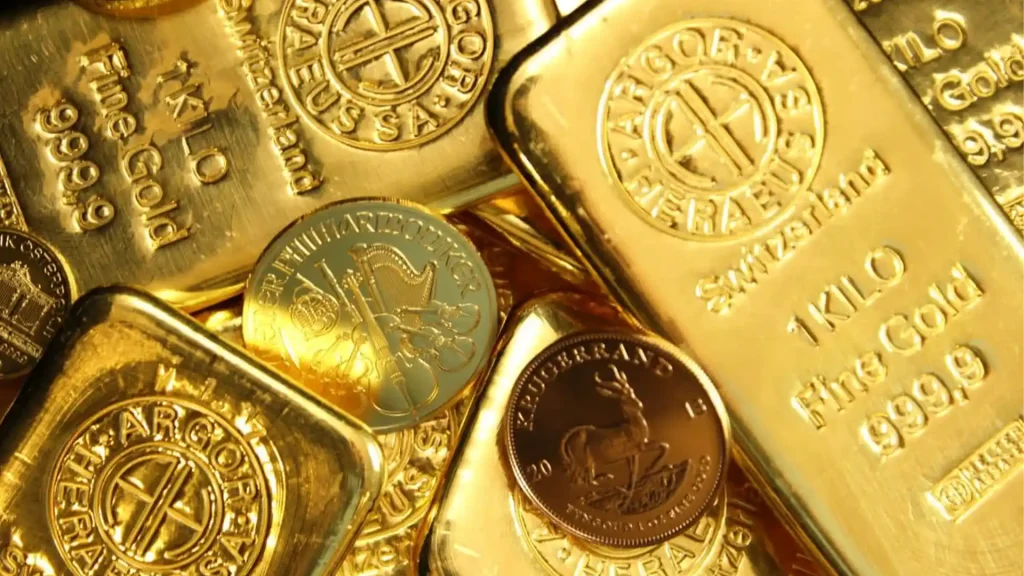
Gold prices in the UAE surged to unprecedented levels following rising tensions after the US attack on Venezuela, reflecting market uncertainty and investor demand for safe-haven assets amid geopolitical instability.
UAE gold touches historic high after escalation involving US and Venezuela.

Gold Prices Surge Across Markets as Global Tensions Rise After US Action in Venezuela
Gold prices in India climbed sharply on Friday, with the domestic benchmark reaching ₹30,720 per 10 grams — a level not seen since November 2016. This dramatic rise in local bullion values underscored a broader trend of strengthening demand for gold, driven by heightened geopolitical uncertainty on multiple fronts.
In the UAE, commodity markets opened on Monday to remarkable gains in gold. Traders and investors responded swiftly to escalating geopolitical tensions following military action by the United States in Venezuela, which triggered a wave of risk aversion across financial markets. As a result, gold — widely regarded as a safe-haven asset — witnessed significant buying interest early in the trading session in Dubai.
At around 9:25 am UAE time, gold in its purest form was trading at record prices. The 24-karat variety was quoted at AED 530.5 per gram, marking an unprecedented level for the UAE market. Slightly lower but still elevated were the prices for other common purity grades: 22K gold was changing hands at AED 491.25 per gram, while 21K, 18K and 14K gold were trading at AED 471, AED 403.75 and AED 315 per gram, respectively.
International spot gold also witnessed significant upside momentum. By mid-morning, the spot price had climbed to USD 4,408.65 per ounce — a rise of 1.76 per cent — reflecting robust global demand as investors sought refuge from volatility in equities, currencies, and other risk-sensitive assets.
This session marked the first major market reaction since the US launched attacks on Venezuelan territory, which culminated in the arrest of President Nicolás Maduro. The news shook markets worldwide, raising fears of broader geopolitical escalation and uncertainty about future political alignments in the Latin American region.
In a highly unusual statement, US President Donald Trump announced that the United States would assume control over Venezuelan governance in the wake of the leadership disruption. Such statements — rare in modern diplomatic exchanges — fuelled concerns about potential regional instability, prompting investors to move capital into traditional safe havens like gold.
The recent developments in Venezuela are not occurring in isolation. They arrive at a time when global markets were already grappling with elevated geopolitical risks spanning the Middle East and Europe. Over the past several years, tensions in these regions had repeatedly pushed gold prices higher, as traders priced in potential disruptions to trade flows, energy supplies, and global economic growth.


In addition to geopolitical factors, macroeconomic policies have played a significant role in driving precious metal prices. The US Federal Reserve’s decisions to cut interest rates have reduced the opportunity cost of holding non-yielding assets such as gold. Lower interest rates make gold more attractive relative to fixed-income securities like bonds, which yield less in a low-rate environment.
Moreover, central banks around the world have been steadily increasing their gold reserves, adding another layer of demand. In recent years, several major economies have expanded their bullion holdings as part of efforts to diversify foreign exchange reserves away from traditional reserve currencies. This central bank buying has provided sustained support for gold prices, even during periods of softer investor sentiment.
Back in India, the surge to ₹30,720 per 10 grams — the highest price in nearly a decade — underscored how global developments can quickly translate into local market movements. Indian buyers, both institutional and retail, have traditionally shown strong appetite for gold, driven by cultural preferences, festival demand, and investment motives. The current spike is likely to reinforce this trend, especially as buyers rush to secure holdings amid uncertainty.
Market analysts suggest that the convergence of geopolitical upheaval, monetary policy shifts, and robust physical demand could keep gold prices elevated in the near term. “We are seeing a classic flight to safety,” said one commodities strategist. “When uncertainty spikes and conventional markets wobble, investors tend to head toward assets that preserve value. Right now, gold stands out as one of the most reliable options.”
In global financial hubs like London, New York, and Singapore, traders echoed similar sentiments. Many reported heightened activity in gold contracts, as well as in related derivatives. Some institutional investors have turned to exchange-traded funds (ETFs) backed by physical gold, while others have increased allocations to bullion holdings within diversified portfolios.
The rush into gold amid geopolitical stress is not unprecedented, but the speed and scale of the recent price movements have drawn particular attention. Analysts point to a combination of factors that created a “perfect storm” for bullion markets: rising tensions in Venezuela, ongoing conflicts in other parts of the world, dovish monetary policy from major central banks, and strong demand from Asia.
This complex backdrop has also influenced other commodities. Precious metals such as silver and platinum have seen gains alongside gold, though not nearly to the same extent. Safe-haven currencies, including the Japanese yen and Swiss franc, strengthened against major peers as traders sought refuge from potential currency market turbulence.
In commodity exchanges across the UAE, gold retailers and wholesalers reported a flurry of activity early Monday. Some buyers cited fear of further price increases as the primary motivation for purchases, while others spoke of using gold as a hedge against broader financial risks.
“The market is clearly responding to developments in Venezuela,” said a Dubai-based bullion dealer. “When people see heightened geopolitical risk, they move into gold. It’s a natural reaction, especially when prices are trending upward and sentiment is uncertain.”
In many Gulf countries, gold holds not only financial value but cultural significance. Weddings, festivals, and traditional occasions often feature gold prominently, which adds another dimension to demand patterns. As prices rise, demand typically shifts between investment buyers and jewellery consumers, depending on perceptions of future price movement.
Economists caution that while gold can serve as a safeguard during periods of uncertainty, rapid price spikes can also have inflationary implications, particularly in countries where gold imports are significant. In India, for instance, rising bullion prices can contribute to broader price pressures, especially if sustained over time.
Yet, for now, attention remains firmly focused on geopolitical developments and how they may continue to influence markets. The situation in Venezuela, in particular, will be monitored closely by investors and policymakers alike. Any signs of further escalation — or attempts at diplomatic resolution — could have immediate consequences for global financial markets.
Financial commentators note that while gold’s surge reflects risk aversion, broader economic fundamentals will ultimately shape its trajectory. Should global growth slow or if central banks adopt more aggressive monetary easing, demand for gold could remain strong. Conversely, a swift resolution to geopolitical tensions might ease safe-haven demand, potentially stabilising prices.
In summary, the sharp rise in gold prices — both in the UAE and in India — illustrates how interconnected global markets have become. Events in one part of the world can quickly resonate through financial systems, prompting reactions from investors, traders, and ordinary consumers alike. With gold prices near historic highs, market watchers will be paying close attention to developments in Venezuela, central bank policies, and broader geopolitical trends that could influence bullion’s path forward.
For now, gold continues to shine as a preferred refuge in uncertain times, offering investors a sense of security amid fast-changing global dynamics. Whether this trend persists will depend on how the geopolitical and economic landscape evolves in the weeks and months ahead.