Former President Trump suggested the U.S. could take military action against Colombia while asserting that Cuba might collapse on its own, signaling heightened tensions in Latin America and a tough foreign policy stance.
Trump Floats Military Option for Colombia, Predicts Cuba’s Downfall
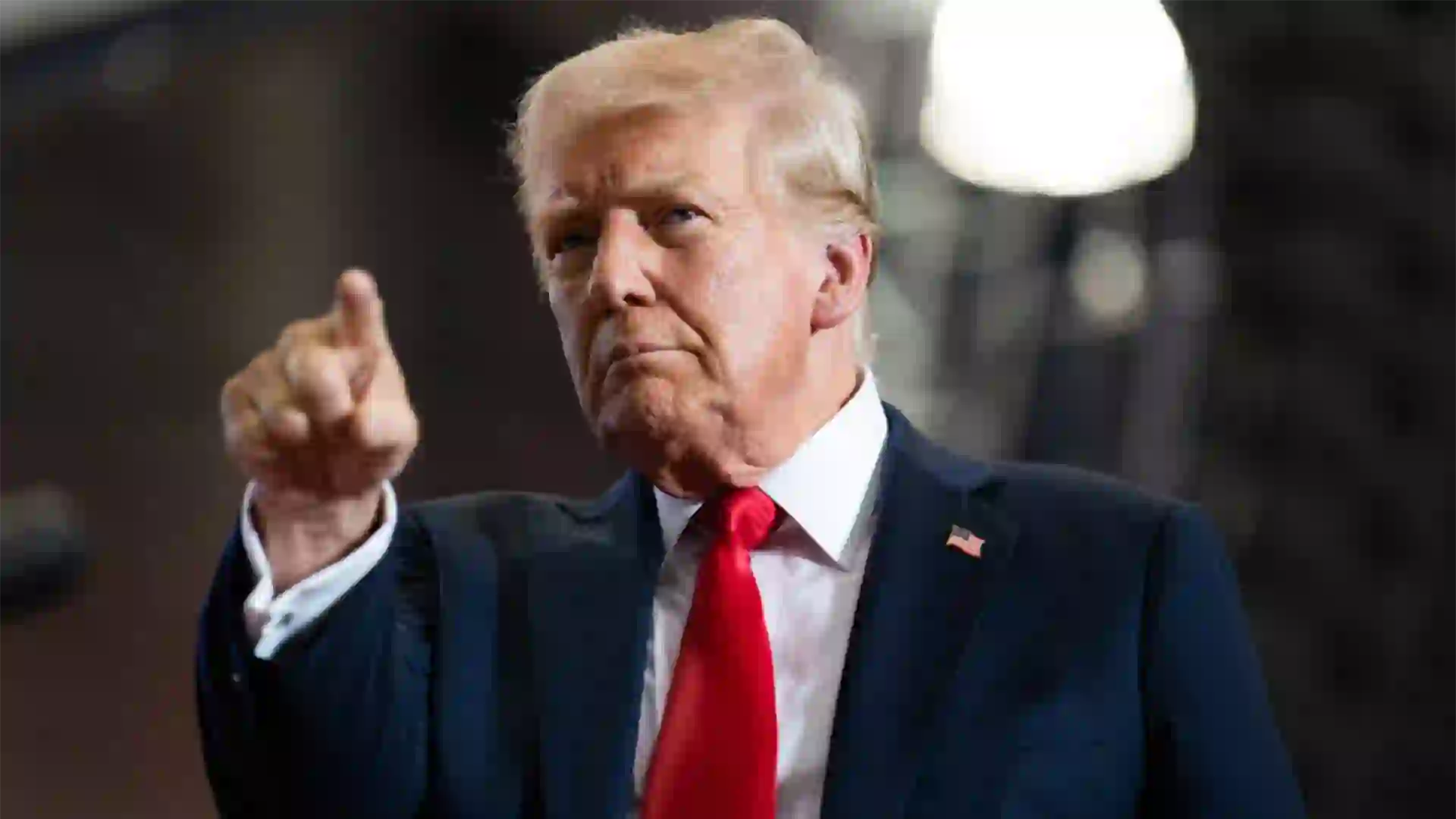
In a dramatic escalation of its involvement in Latin America, US President Donald Trump issued stark warnings on Sunday that suggested military action might be on the table against Colombia, even as he spoke about the unfolding political landscape in neighboring countries following a major US military operation in Venezuela. Trump’s remarks, delivered to reporters aboard Air Force One as he returned from a high‑profile overseas mission, mark one of the most confrontational foreign policy stances toward Latin American governments in years.
The backdrop for Trump’s comments was an extraordinary and controversial military strike this past weekend in Venezuela that resulted in the capture of Venezuelan President Nicolás Maduro. US forces conducted a swift and highly coordinated operation that brought Maduro and his wife, Cilia Flores, into US custody. Officials in Washington have indicated that they intend to prosecute Maduro on charges related to large‑scale drug trafficking and narco‑terrorism, though the move has sparked widespread global criticism and deep concern among legal and diplomatic experts over its implications for national sovereignty and international norms.
Against this tense regional backdrop, Trump did not rule out extending US military operations beyond Venezuela. When a reporter asked whether the United States might pursue a military campaign against Colombia, Trump responded affirmatively — “It sounds good to me” — a phrase that instantly reverberated across diplomatic circles and social media.
In his comments, Trump did not mince words about Colombia’s leadership. He accused Colombian President Gustavo Petro of presiding over a government that he described as “very sick,” and of tolerating or even facilitating the production and export of cocaine into the United States. Trump argued that Petro’s policies, particularly regarding drug trafficking, have been harmful to US interests and claimed that such activities “wouldn’t be going on for very long” under his watch.
The blunt character of Trump’s remarks underlines the growing friction between Washington and Bogota, even though the two nations have historically maintained a strategic partnership, including cooperation on combating narcotics and drug cartels. In recent months, Colombia has struggled with rising levels of violence linked to organized crime and drug flows, and while its government insists it has increased seizure and interdiction efforts, it has also pushed back hard against Washington’s rhetoric and actions, accusing the United States of overstepping diplomatic norms.
Trump’s broader comments extended beyond Colombia. Asked about the situation in Cuba — a longtime ally of both Venezuela and Russia — the US president suggested that American troops would likely not need to intervene. Trump argued that Cuba’s government appears to be on the brink of collapse without direct military engagement, saying, “Cuba is ready to fall” and that its economic and political foundations are weakening rapidly, particularly after losing critical Venezuelan oil support.
That assessment reflects an assumption in the US administration that the destabilization of Venezuela will have cascading effects throughout the region, weakening allied and ideologically aligned governments in Havana and beyond. Trump presented this as a vindication of his strategy — one that some analysts see as a 21st‑century version of the Monroe Doctrine, with the United States asserting a dominant role in Western Hemisphere geopolitics.
Trump also touched on Mexico, reiterating his long‑standing frustration with that country’s handling of drug cartels. While his tone toward Mexico was somewhat less confrontational than toward Colombia, Trump stressed the need for action, saying Mexico must “get its act together” or face consequences. He framed this as a continuation of his overall policy to crack down on illegal drugs pouring into the United States from across the southern border.
Reactions to Trump’s statements have been swift and polarized. In Colombia, President Petro condemned the notion of foreign military intervention as an unacceptable threat to national sovereignty, suggesting such moves could push Latin American nations to unite in opposition to US influence. Petro’s government called on regional partners to strengthen diplomatic and economic ties independent of Washington.
Internationally, critics of the US operation in Venezuela and Trump’s subsequent remarks have warned that such aggressive posturing risks triggering broader instability. Many legal scholars argue that the unilateral removal of a sitting president from another country without explicit international mandate sets a dangerous precedent. They suggest it may embolden other nations to challenge US actions or to justify similar tactics of intervention under the guise of law enforcement or anti‑drug initiatives.
Supporters of Trump’s approach, by contrast, say the United States has long been frustrated by regimes in the region that have either failed to curb drug trafficking or have pursued policies hostile to US interests. They point to the severe social and economic crises in Venezuela and Cuba as evidence that strong action was necessary. For them, Trump’s willingness to confront these governments directly is a demonstration of decisive leadership.
As of now, it remains unclear whether Trump’s comments signal concrete plans for additional military deployments or whether they are intended to exert diplomatic pressure. What is certain, however, is that his remarks have sparked intense debate both within Latin America and in capitals around the world about the future of US influence in the region and the potential consequences of further military action — either directly by Washington or as a result of the destabilizing effects of ongoing interventions.