Venezuela has issued a strong warning to the international community, claiming that the United States carried out a significant act of military aggression, and urging global institutions to urgently address what it says is a serious threat to national sovereignty.
Venezuela raises alarm over what it describes as major US military aggression.
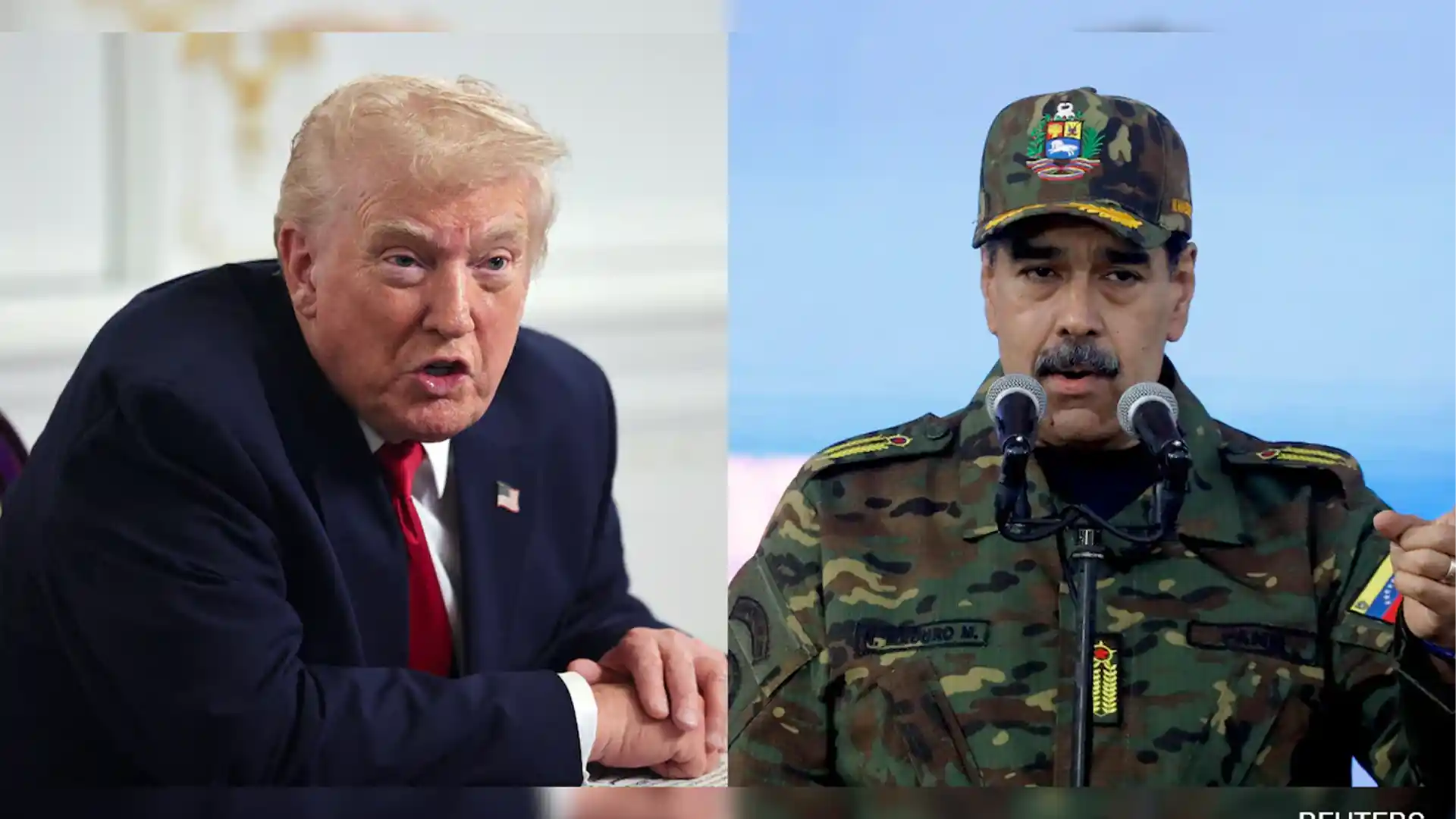
Venezuela was thrust into a state of heightened political and military tension early Saturday after President Nicolás Maduro announced the imposition of a nationwide emergency, following what his administration described as a severe act of military aggression carried out by the United States against the country’s capital, Caracas. The announcement came amid reports of explosions, power disruptions, and unusual military activity observed across parts of the city during the early hours of the morning.
Speaking through an official government statement, Maduro’s administration accused Washington of launching a direct and dangerous assault on Venezuelan territory, characterizing the incident as one of the most serious escalations in the long-running confrontation between the two nations. The government declared that it would formally raise the issue before international institutions and called on the global community to respond urgently.
In the early hours before dawn, residents in Caracas reported hearing multiple loud blasts that reverberated across neighborhoods, with some witnesses describing the sight of aircraft overhead and thick plumes of smoke rising into the sky. Images and videos circulating on social media appeared to show dark smoke columns near strategic zones of the capital, though independent verification of the footage was not immediately possible.
Journalists on the ground reported widespread confusion and alarm as the events unfolded. According to witnesses cited by Reuters, the disturbances began around 2:00 a.m. local time, plunging parts of the city into uncertainty. In the southern districts of Caracas, electricity was reportedly cut off, particularly in areas located near a significant military installation. The cause of the blackout remained unclear, adding to public concern as information remained limited.
The Venezuelan government issued a forceful condemnation shortly after the incident. In its statement, authorities rejected what they described as an unprovoked and unlawful act of aggression by the United States, asserting that the alleged attack targeted both Venezuelan territory and its civilian population. Officials emphasized that the situation would be taken to international forums, urging global institutions to intervene.
President Maduro, who has repeatedly accused Washington of attempting to destabilize his government, framed the alleged attack as part of a broader strategy aimed at regime change. According to Maduro, the United States has long sought to remove his administration in order to gain control over Venezuela’s vast natural resources, particularly its oil reserves, which rank among the largest in the world.
The U.S. government, for its part, offered little immediate clarification. When asked about the events, officials at the Pentagon directed inquiries to the White House. The White House declined to issue a statement, leaving unanswered questions about the nature of U.S. involvement or whether any military action had taken place.
The silence from Washington did little to calm regional anxiety. Leaders and governments across Latin America closely monitored developments, with some expressing alarm at the prospect of a direct military confrontation involving the United States and a South American nation.
Colombian President Gustavo Petro was among the most vocal international figures to react. In a message posted on social media platform X, Petro warned that Caracas was under attack and urged regional and global bodies to act immediately. He called on both the Organization of American States (OAS) and the United Nations to convene emergency sessions, stressing the need for diplomatic intervention to prevent further escalation.
Petro did not provide specific evidence or detail the sources behind his claims, but his remarks reflected long-standing concerns about U.S. military pressure on Venezuela. The Colombian leader has consistently criticized Washington’s approach toward Caracas, arguing that sanctions and military threats risk destabilizing the entire region.
The reported incident comes against the backdrop of intensifying tensions between Washington and Caracas under U.S. President Donald Trump. Since returning to office, Trump has adopted an increasingly aggressive stance toward the Maduro government, publicly and privately signaling that military options remain on the table.
In recent months, Trump has openly suggested that military intervention could be used to force political change in Venezuela. While he has not publicly outlined a comprehensive strategy, multiple reports have indicated that he has pressured Maduro behind the scenes to relinquish power and leave the country. Earlier this week, Trump remarked that it would be “smart” for the Venezuelan leader to step aside, a statement widely interpreted as a warning.
The United States has also expanded its military presence in the region. According to defense sources, Washington has deployed significant naval and air assets to the Caribbean, including an aircraft carrier, multiple warships, and advanced fighter aircraft. U.S. officials have described the buildup as a deterrent measure, though critics argue it signals preparation for potential military action.
Last month, Trump announced a comprehensive maritime blockade targeting vessels entering or leaving Venezuelan waters. The measure, he said, was designed to intensify pressure on Maduro’s government and cut off alleged illicit activities linked to drug trafficking and sanctions evasion. Caracas denounced the blockade as an act of economic warfare and a violation of international law.
In addition to the blockade, the Trump administration has expanded economic sanctions and authorized a series of military strikes against vessels accused of transporting illegal drugs. U.S. officials have claimed that these operations are part of a broader counter-narcotics campaign in the Pacific Ocean and Caribbean Sea.
However, these actions have drawn sharp criticism from several governments and human rights organizations, which argue that the strikes constitute extrajudicial actions carried out without due process. Venezuelan authorities have consistently denied U.S. allegations that the country plays a role in drug trafficking, calling them baseless and politically motivated.
The situation escalated further last week when Trump confirmed that U.S. forces had conducted strikes on land inside Venezuela, targeting what he described as an area used for loading drug shipments onto boats. The statement marked the first publicly acknowledged instance of U.S. land operations in Venezuela since the pressure campaign began.
Trump did not clarify which agency carried out the operation, declining to say whether it involved the Central Intelligence Agency or conventional military forces. Subsequent media reports suggested that the CIA may have played a role, though U.S. officials have not confirmed these claims.
For Maduro, these actions represent a direct challenge to Venezuela’s sovereignty. He has repeatedly accused the Trump administration of fabricating accusations of drug trafficking to justify intervention and undermine his government. In speeches and official statements, Maduro has portrayed the U.S. campaign as a modern form of imperialism aimed at controlling Venezuela’s resources.
The events in Caracas on Saturday have intensified fears that the long-standing standoff could spiral into open conflict. Residents described waking to the sound of explosions and seeing military aircraft overhead, though the full scope and origin of the disturbances remain unclear. Authorities have not released detailed information about potential damage or casualties.
As the day progressed, Venezuelan state media emphasized national unity and resilience, broadcasting messages urging calm and support for the government. Security forces were reportedly placed on high alert, and checkpoints were increased in strategic areas of the capital.
International observers warned that the lack of clear information from both sides could worsen instability. Analysts noted that miscommunication or misinterpretation during periods of heightened tension can increase the risk of unintended escalation.
Diplomatic channels remain strained. Relations between Caracas and Washington have been severed for years, with both sides relying on public statements and intermediaries to communicate. Calls from regional leaders for emergency meetings underscore growing concern that the crisis could have far-reaching consequences beyond Venezuela’s borders.
As night fell, uncertainty continued to hang over Caracas. While no official confirmation emerged regarding the exact nature of the reported explosions or aircraft activity, the political fallout was already evident. Maduro’s declaration of a state of emergency signaled that his government views the situation as an existential threat.
Whether the events represent a direct military strike, a covert operation, or a misinterpreted incident remains to be determined. What is clear, however, is that tensions between the United States and Venezuela have entered a new and dangerous phase.
The coming days are expected to bring intense diplomatic activity, as governments, international organizations, and observers seek clarity and push for de-escalation. For ordinary Venezuelans, the priority remains safety and stability, amid fears that their country could once again become the center of a major geopolitical confrontation.
As global attention turns toward Caracas, the unfolding situation highlights the fragile balance between political pressure and military action—and the profound consequences when that balance is disrupted.