Early Tuesday, loud explosions shook Caracas around 2 a.m., startling residents. Authorities are investigating the cause, while locals reported disrupted sleep and visible panic. No official details on damages or casualties yet.
Early Morning Explosions Heard Across Caracas
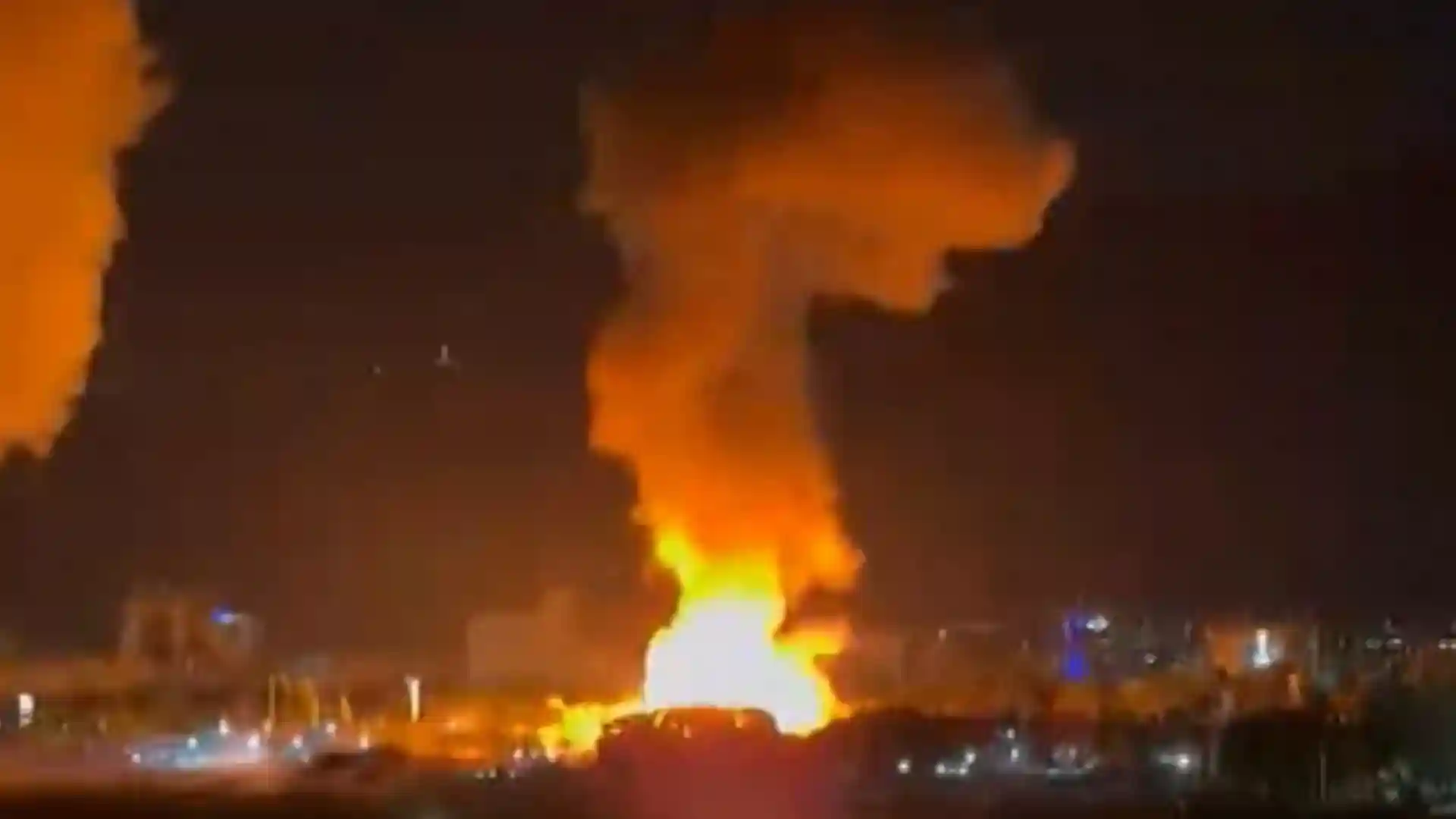
Loud detonations, along with noises that resembled the passage of aircraft, echoed through the Venezuelan capital of Caracas at approximately 2:00 a.m. local time (0600 GMT) on Saturday, according to an Insider18 correspondent in the city. Residents were awakened by sharp booms and the unsettling sounds of flying objects, although the exact origin of the blasts remained unclear in the early hours.
The reported explosions occurred amid growing tension between the United States and Venezuela, as U.S. President Donald Trump has intensified military pressure on Caracas. This escalation includes the deployment of a U.S. naval task force to the Caribbean Sea and repeated warnings from Washington about possible offensive actions against Venezuelan territory.
In a recent development that marked a new phase of confrontation, Trump announced that American forces had struck and destroyed what he described as a docking facility used by suspected Venezuelan drug smuggling vessels. The president was vague about the specifics of the mission, declining to confirm whether it was carried out by conventional military forces or the Central Intelligence Agency (CIA), and offered no precise information on the geographic location of the operation beyond saying it took place “along the shore.”
If confirmed as a military operation on Venezuelan soil, this action would represent the first acknowledged ground strike against Venezuela attributable to the United States. Trump’s comments about the strike came earlier in the week and have since fueled speculation about further military engagements as tensions rise.
President Nicolás Maduro, Venezuela’s embattled leader, has responded cautiously. While he has not explicitly denied that a strike occurred, he has signaled an openness to dialogue with Washington, even after weeks of increased military pressure and diplomatic strain. This posture comes as Maduro seeks to navigate a complex web of internal and external challenges, including economic collapse, political unrest, and international isolation.
The Trump administration has escalated its rhetoric significantly, characterizing Maduro’s government as operating akin to a drug cartel and asserting that cracking down on narcotics trafficking is a key justification for U.S. actions. Maduro, predictably, has rejected these allegations. He insists that his government plays no role in narcotics smuggling and contends that the real motive behind U.S. hostility is Venezuela’s vast oil reserves, which are among the largest in the world.
In addition to the recent strike, Washington has taken multiple steps to tighten the noose around Caracas. These measures include an unofficial closure of Venezuelan airspace, the imposition of additional economic sanctions, and orders to seize oil tankers loaded with Venezuelan crude. Such actions have heightened fears of a broader confrontation and deepened the sense of crisis gripping the nation.
For several weeks, Trump has warned that he might authorize ground operations against drug cartels in the region, and his statements have hinted that such actions could begin imminently. Monday’s attack on the docking area appeared to many analysts to be the first tangible manifestation of those warnings, though the administration has yet to provide full clarity on whether the mission was defensive, preemptive, or purely punitive.
In the wider context, U.S. forces have stepped up military activity in and around the Caribbean and the eastern Pacific Ocean since at least last September, conducting a series of strikes on boats that American officials claim are involved in drug smuggling. According to U.S. military reports, these operations have targeted vessels purportedly transporting narcotics bound for the United States and its allies.
However, critics of the campaign — including international observers, legal experts, and some regional governments — argue that the Trump administration has not produced convincing evidence linking the targeted craft to drug trafficking activities. This lack of publicly available proof has prompted questions about the legality and legitimacy of the strikes under both U.S. and international law.
Data released by the U.S. Department of Defense indicates that the naval and aerial anti-narcotics campaign has been deadly. At least 107 people are reported to have died in more than 30 separate strikes attributed to American forces. These figures, while substantial, are disputed in some quarters, with opponents of the policy suggesting that civilian casualties and collateral damage may be underreported.
Against this backdrop of escalating military pressure and political antagonism, Caracas remains tense. The early‑morning explosions have only added to the anxiety felt by ordinary Venezuelans, many of whom have endured years of economic hardship, shortages of basic goods, and frequent power outages. For residents already accustomed to turmoil, the latest blasts serve as a stark reminder of how close the country appears to be teetering on the edge of a much larger conflict.
International responses to the situation have been mixed. Some Latin American governments have backed the U.S. position, criticizing Maduro’s leadership and supporting efforts to pressure him into relinquishing power or reforming Venezuela’s political system. Others have condemned Washington’s approach as heavy‑handed and neo‑imperialistic, insisting that any solution to Venezuela’s crisis must come through diplomacy and respect for sovereignty.
Meanwhile, in Caracas, the government has not yet provided a detailed account of the explosions heard in the early hours. Officials have been tight‑lipped, offering neither confirmation of U.S. involvement nor an alternate explanation for the blasts. As the day progresses, Venezuelans and international watchers alike will be monitoring for updates, concerned that these noises may foreshadow even more dramatic developments.
Whether this latest incident marks a fleeting escalation or the beginning of a broader military engagement remains uncertain. What is clear, however, is that tensions between the United States and Venezuela have reached a point where unexpected events — like the explosions heard in the dead of night — can quickly capture global attention and deepen an already volatile standoff.