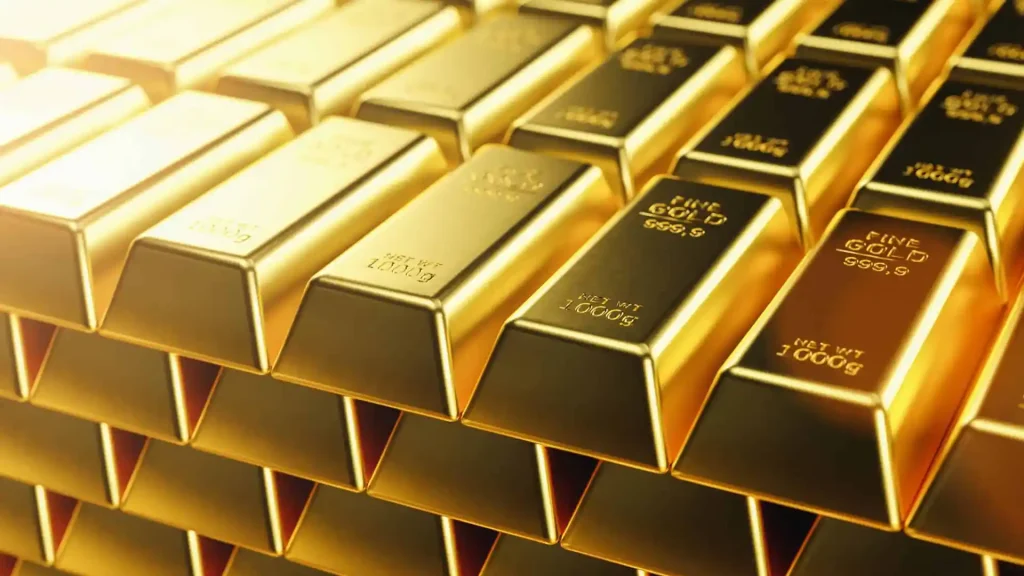
Dubai’s gold market experienced a sharp decline, with prices dropping approximately Dh18 per gram within a single day, marking a significant shift that could influence buying decisions and market sentiment among investors and consumers alike.
Sudden Dip: Dubai Gold Prices Fall Around Dh18 Per Gram in 24 Hours.

Dubai’s gold market witnessed notable fluctuations in the first trading days after the weekend, reflecting a dynamic interplay of global trends, investor sentiment, and local market forces. On Tuesday morning, gold prices in Dubai rebounded slightly after experiencing a steep decline on Monday, signaling both short-term volatility and continued underlying strength in the precious metals sector.
According to the latest figures from the Dubai Jewellery Group, the price of 24-carat gold opened at Dh525.75 per gram on Tuesday, marking a modest recovery of approximately Dh4.5 per gram from Monday’s closing rate of Dh521.25. This modest rebound came after a sharper drop of more than Dh22 per gram the previous day, which had been driven largely by profit-booking and short-term market adjustments. Despite the daily swings, the broader trend in Dubai continues to reflect sensitivity to global rates and investor positioning, highlighting how local prices remain tightly linked to movements in international markets.
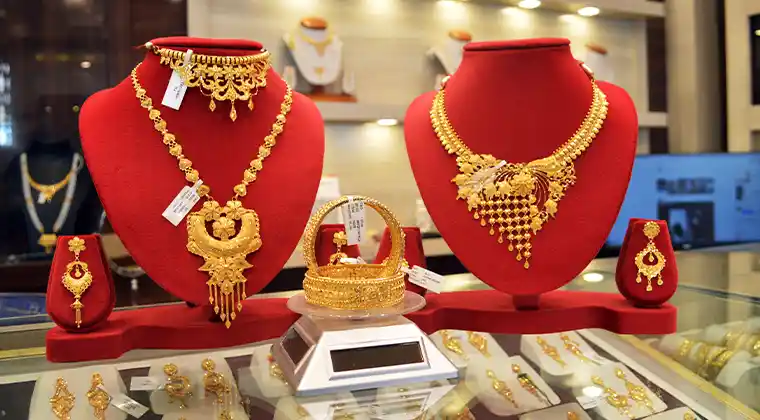
The recent fluctuations affected not only pure 24K gold but also other popular variants. Prices for 22-carat, 21-carat, 18-carat, and 14-carat gold rose on Tuesday, opening at Dh486.75, Dh466.75, Dh400.0, and Dh312.0 per gram, respectively. These increases followed a period of downward pressure on Monday, when profit-taking and cautious investor behaviour led to significant intraday declines. The movements in Dubai’s gold prices mirror broader trends in international markets, where global demand, currency fluctuations, and economic indicators continue to influence asset valuations.
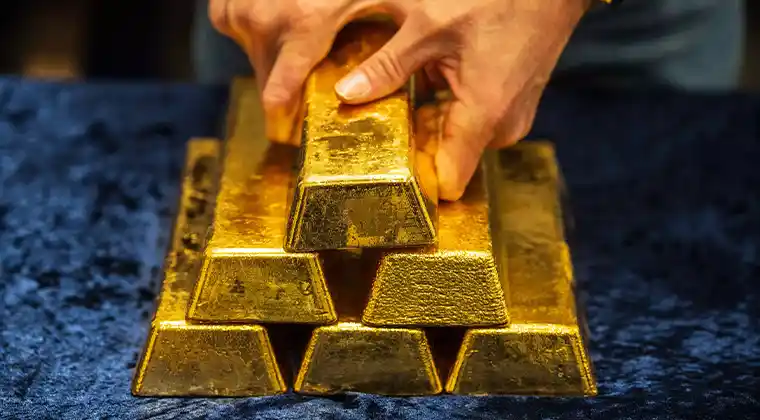
On the global stage, spot gold was trading at $4,375.86 per ounce at 9:30 am UAE time on Tuesday, representing a gain of around 1.1% following the losses recorded the previous session. Late Monday, spot gold had fallen to a two-week low, declining by more than 4.5% in a single session. Analysts attributed the drop to a combination of profit-taking and adjustments in speculative positioning after recent gains, as traders assessed the outlook for inflation, interest rates, and macroeconomic conditions.
Ahmad Assiri, a research strategist at Pepperstone, commented on the price action, noting that the recent volatility does not alter the long-term bullish structure for precious metals. According to him, “With the holiday period now behind us, metals have further demonstrated that their bullish framework remains intact. Gold, in particular, is retesting the $4,500 level as a consolidation zone, suggesting that the market is in the process of digesting recent gains rather than reversing its long-term trajectory.” Assiri emphasized that both gold and silver remain influenced by steady geopolitical and policy-related risks, which underpin ongoing demand in the sector.
From a macroeconomic perspective, expectations surrounding the US dollar and monetary policy are major drivers of precious metals pricing. Markets are increasingly factoring in the possibility that the US Federal Reserve may continue its easing cycle in the upcoming months, particularly if data suggests a cooling in the US labour market. A softer US dollar, in combination with lower interest rates, tends to increase the attractiveness of non-yielding assets such as gold and silver, as investors seek stable stores of value and hedges against inflation or economic uncertainty. This dynamic helps explain the resilience observed in gold prices despite short-term corrections.
Geopolitical developments continue to play a supporting role, albeit less visibly in recent weeks. While outward tensions between major powers such as the US and China appear relatively subdued, underlying issues—particularly surrounding critical minerals and strategic resources—persist. Assiri highlighted that these unresolved structural challenges continue to reinforce demand for metals without drawing significant media attention or causing abrupt market disruptions. The interplay of these factors ensures that gold retains its appeal as a safe-haven asset, especially in times of uncertainty or uneven global growth.
Investor sentiment in Dubai, as elsewhere, has also been influenced by technical market factors. The profit-taking observed on Monday can be interpreted as part of normal market behaviour, where short-term traders lock in gains following periods of rapid appreciation. This process often leads to temporary price dips, followed by gradual recoveries, as seen on Tuesday morning. Analysts note that such fluctuations are typical in commodities markets and do not necessarily indicate a fundamental shift in the market’s long-term trajectory.
In addition to traditional investment considerations, Dubai’s gold market is shaped by local buying patterns, which include both individual investors and institutional participants. Jewellery demand, seasonal purchases, and regional trading activity all influence daily price levels. During periods of volatility, local traders may adjust their positions in response to international price movements, further amplifying short-term swings in the market.
The rebound observed on Tuesday morning reflects this interplay between global and local forces. While the 24K gold price remains nearly Dh18 lower than its levels a day prior, the partial recovery demonstrates the market’s capacity to absorb shocks and stabilise quickly. Traders and analysts are closely monitoring these movements, particularly as broader economic signals emerge from the United States and other major economies.
For investors, the recent volatility offers both challenges and opportunities. The sharp declines and quick rebounds suggest that timing can play a significant role in achieving favourable returns. Those looking to acquire gold may view dips as entry points, while existing holders may use periods of temporary weakness to assess risk management and portfolio adjustments. Market experts also recommend keeping a close watch on macroeconomic indicators, currency trends, and geopolitical developments, as these factors are likely to continue influencing prices in the coming weeks.
In conclusion, Dubai’s gold market continues to reflect a complex mixture of international trends, local demand, and investor sentiment. Prices fell sharply on Monday due to profit-booking, pushing the 24K gold rate down by more than Dh22 per gram, but rebounded slightly on Tuesday, opening at Dh525.75 per gram. Other caratages, including 22K, 21K, 18K, and 14K, also showed upward movements, illustrating the broader resilience of the market. Global spot gold trading and macroeconomic signals, including expectations of Federal Reserve policy and US dollar movements, remain key drivers, while geopolitical factors and domestic investor activity further shape the dynamics of Dubai’s gold pricing. Experts such as Ahmad Assiri stress that despite short-term volatility, the underlying bullish structure of metals remains intact, supported by ongoing global and regional economic and geopolitical conditions. For investors and traders alike, understanding these factors is crucial for navigating the current environment and making informed decisions in both the short and long term.