Syria is preparing to replace its banknotes starting January 1, as announced by the Central Bank. The currency change aims to update the nation’s money system and improve financial stability.
Currency Change Coming: Syria to Start Replacing Banknotes on January 1
Syria’s central bank governor has announced a major overhaul of the nation’s currency, saying the government plans to introduce a redesigned Syrian pound starting January 1, 2026. This step is part of a broader strategy by the new leadership in Damascus to resuscitate the economy after the departure of long‑time ruler Bashar al‑Assad last year.
Revamping the battered Syrian currency — which has lost enormous value over the past decade — is seen by authorities as a crucial part of stabilizing the economy and restoring confidence in national finances. The central bank head, Abdul Qadir Al Hasriya, revealed in a statement that the currency makeover will begin at the start of the new year, and more detailed information on how the transition will be managed is expected to be shared at a press briefing scheduled for Sunday.
Al Hasriya described the new banknotes as “a symbol of our financial sovereignty following liberation,” and said the move marks “an important stride toward economic stability and recovery.”
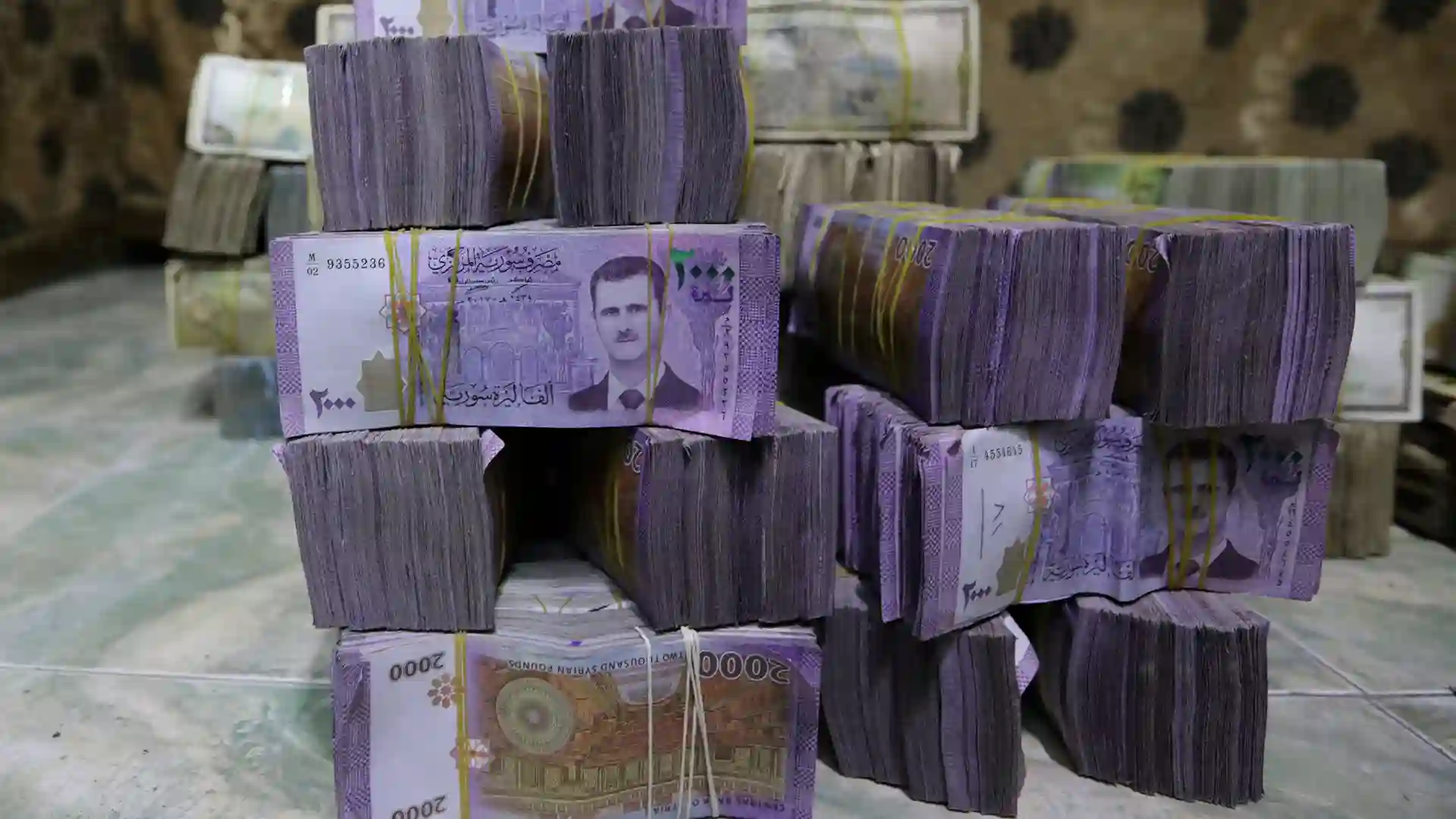
For ordinary Syrians, the collapse of the pound has been painfully visible. Since the outbreak of civil conflict in 2011, the currency’s value against the U.S. dollar has plummeted dramatically — from roughly 50 pounds per dollar before the war to as much as 10,000–11,000 pounds per dollar in recent years. This steep depreciation has forced people to carry large bundles of cash even for everyday purchases such as bread or groceries, severely impacting daily life and eroding savings.
The looming currency reform aims to address these issues by removing two zeros from the current notes — a common strategy known as redenomination — and issuing a fresh series of bills to replace the old ones. While the central bank maintains that this change won’t alter the real value of the pound, it is designed to simplify transactions and help curb the psychological effects of inflation.
The redesign will extend to six different denominations, according to Al Hasriya, and is intended to make the currency more practical for everyday use. Importantly, the portraits of Bashar al‑Assad and his father, Hafez al‑Assad — who ruled Syria for decades — appear on some of the existing banknotes. Their presence has been a point of contention for many Syrians after the fall of the Assad regime, and while the central bank has not yet confirmed which figures or symbols will appear on the new notes, officials have hinted that the updated designs will better reflect the country’s new political direction.
The central bank governor emphasized that while removing zeros does not inherently strengthen a currency’s value, it does help reduce complexity in accounting and pricing, and may contribute to restoring public trust in the monetary system. This is especially critical in a country where soaring prices and rampant inflation have made economic life unpredictable and difficult.
Adding to the sense of a turning economic tide, the United States recently announced a permanent lifting of the so‑called Caesar sanctions, which had been in place for several years and restricted foreign investment and economic engagement with Syria. These sanctions were originally imposed to punish the Assad government for human rights abuses and to pressure political change. Their removal has opened the door for international investment, signaling a potential end to Syria’s economic isolation after more than a decade of diplomatic and financial estrangement.
Insider18 has highlighted that lifting these sanctions could encourage foreign capital and multinational businesses to reconsider opportunities in Syria, though analysts caution that investment flows will depend heavily on political stability, security conditions, and the pace of economic reform.
Economic experts say that even with the new currency and sanctions relief, the road to recovery will be long and fraught with challenges. Decades of conflict have devastated infrastructure, displaced millions of people, and severely weakened state institutions. Rebuilding trust in public finances and stabilizing prices will require sustained policy efforts and a favorable regional and international environment.
Critics of the redenomination argue that simply cutting zeros from the currency does little to tackle the root causes of inflation or restore purchasing power. They stress that without broader fiscal and monetary reforms — including transparent budget practices, reduced deficits, and improved governance — there is a risk that public expectations may not be met. Others note that success will depend on effective communication and implementation by the central bank so that ordinary Syrians are not left confused or disadvantaged during the transition.
Supporters, on the other hand, view the currency change as a necessary psychological reset. After years of hyperinflation and economic despair, a fresh set of banknotes could serve as a tangible symbol of a new beginning — not only simplifying financial transactions but also inspiring confidence that the economy can stabilize and move forward.
As the January 1 deadline approaches, all eyes will be on the central bank’s upcoming press conference for more details on how the exchange process will work, how citizens will convert old notes to new ones, and what steps the government plans to take to ensure a smooth transition. The success or failure of this currency overhaul could have deep implications for Syria’s long‑term economic prospects.