During the festive season, stargazers in the UAE spotted the Christmas Tree star cluster glowing in clear night skies, adding a celestial highlight to holiday celebrations and exciting astronomy enthusiasts.
See: Festive season lights up UAE skies as the Christmas Tree star cluster appears
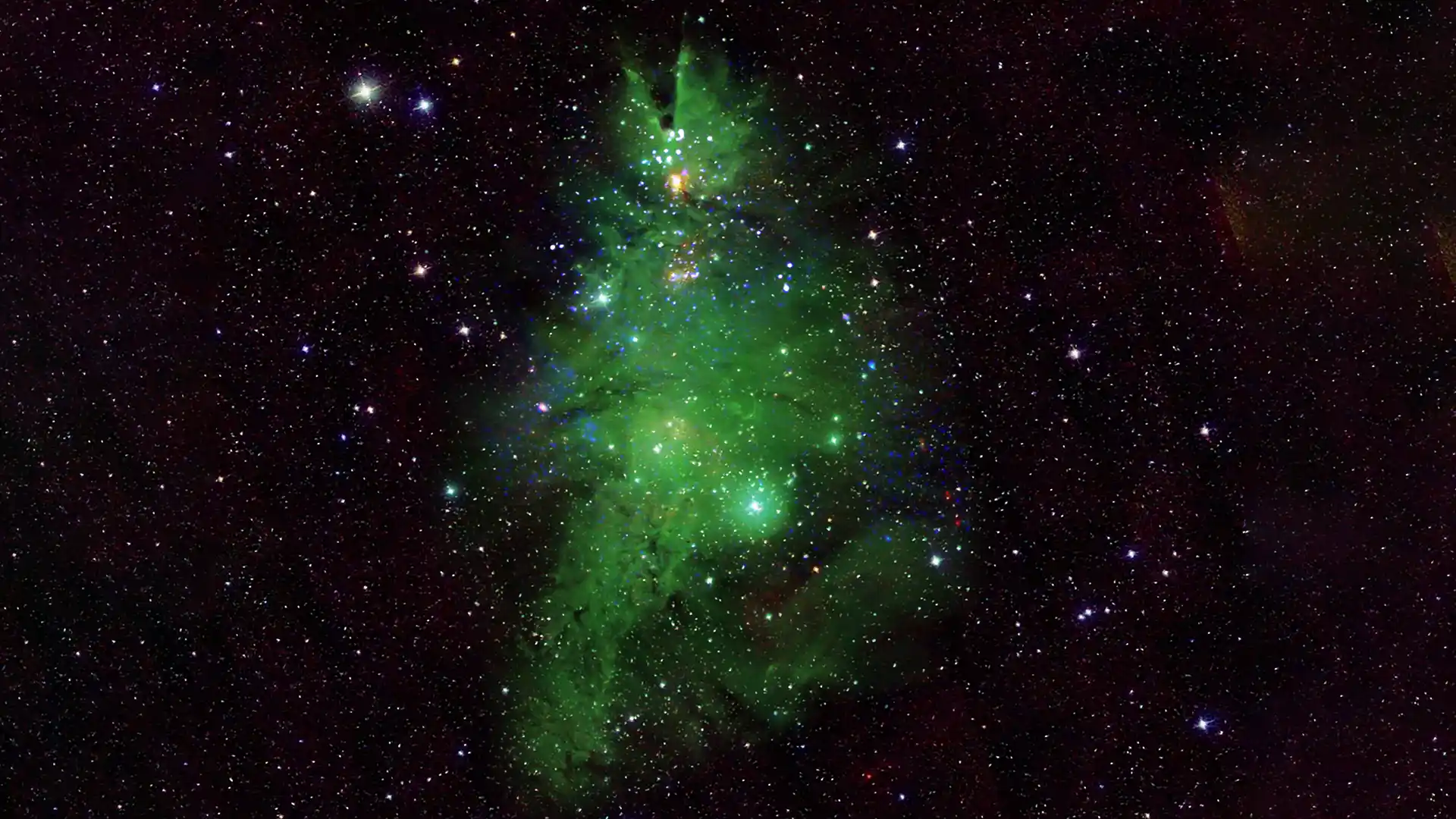
Festive wonder has reached far beyond our world!
Skywatchers in the UAE dedicated 35 hours, spread across an entire month, to record a remarkable image featuring several deep-space objects, including the famous “Christmas Tree Cluster”.
Anyone familiar with Christmas trees on Earth can picture its space counterpart. Resembling the beloved symbol of celebration and generosity, the Christmas Tree Cluster, observed alongside the Cone Nebula, is jointly catalogued under the astronomical name NGC 2264.
These celestial sights lie about 2,300 light-years from Earth, meaning the light now visible began its journey around 275 BC before finally reaching us today.
They were not the only cosmic highlights identified. Close by, astronomers also observed two additional formations: the Snowflake Cluster and the Fox Fur Nebula.
Below are the breathtaking images captured in the night sky just before Christmas.
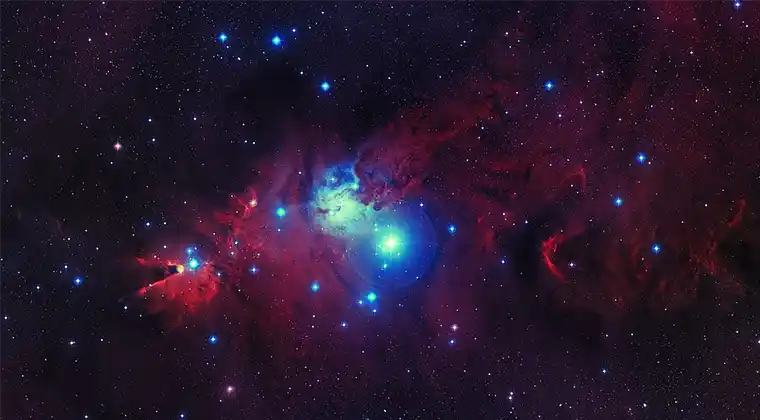
To begin, zoom in on the Christmas Tree Cluster and the Cone Nebula. The striking red and pink hues come from ionised hydrogen gas, while the blue shades are caused by ionised oxygen.
Several dark nebulae also appear as shadowy regions, where dense clouds of gas and dust block background light. These darker areas add contrast and depth to the scene.
Astronomers used a 108mm refractor telescope, a colour imaging camera, and a light-pollution filter. The project involved 35 hours of exposure time, made up of 421 individual images, each lasting five minutes.
The observatory contributors were Image capture by Mohammad Ouda, image processing by Haitham Hamdi, with observatory support from Osama Ghannam, Anas Mohammad, and Khalfan Al Nuaimi.
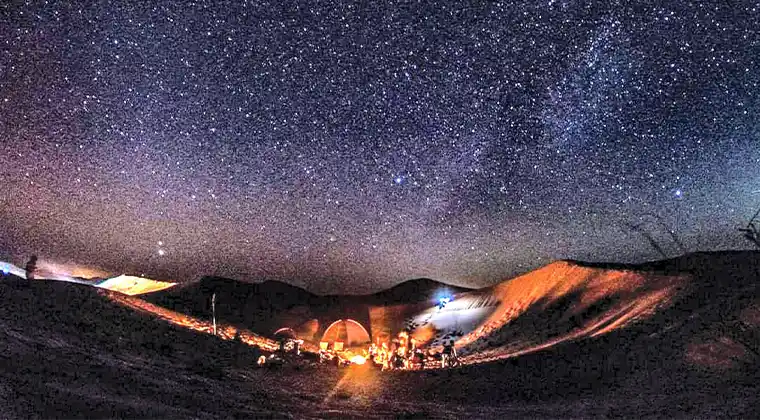
The successful capture of this cosmic scene highlights the growing strength of astronomical research and amateur astrophotography in the UAE. Clear desert skies, advanced equipment, and long hours of patience allowed astronomers to reveal fine details that are usually invisible to the naked eye. Projects like this not only celebrate festive moments in a unique way but also help raise public interest in space science. By sharing such images, observatories inspire students, hobbyists, and the wider community to look up and appreciate the universe beyond daily life, reminding people that even familiar celebrations have extraordinary reflections in the vastness of space.
Beyond its visual appeal, the observation of the Christmas Tree Cluster also offers scientific value. Star clusters like NGC 2264 are stellar nurseries where young stars are still forming, allowing astronomers to study early stages of star evolution. The interaction between glowing gases and dense dust clouds provides clues about how radiation, gravity, and magnetic fields shape the birth of stars. By analysing colour variations and structural patterns in the nebulae, researchers can better understand the chemical composition and physical processes occurring thousands of light-years away, deepening our knowledge of how solar systems, including our own, may have formed.
The project also reflects how collaboration and dedication play a key role in modern astronomy. Capturing deep-sky objects requires careful planning, precise tracking, and extensive post-processing to bring out hidden details without distorting scientific accuracy. The long imaging hours demonstrate how astrophotography blends art and science, demanding both technical expertise and creative judgement. Such initiatives position the UAE as an emerging hub for space observation and education, aligning with its broader ambitions in space exploration. They also show how local efforts can contribute to global appreciation of the universe, one image at a time.