Bangladesh has heightened security nationwide after a youth leader was killed, triggering mob violence and attacks on media outlets, raising serious concerns over law and order and press freedom.
Bangladesh on Alert After Youth Leader’s Death Sparks Mob Attacks on Media
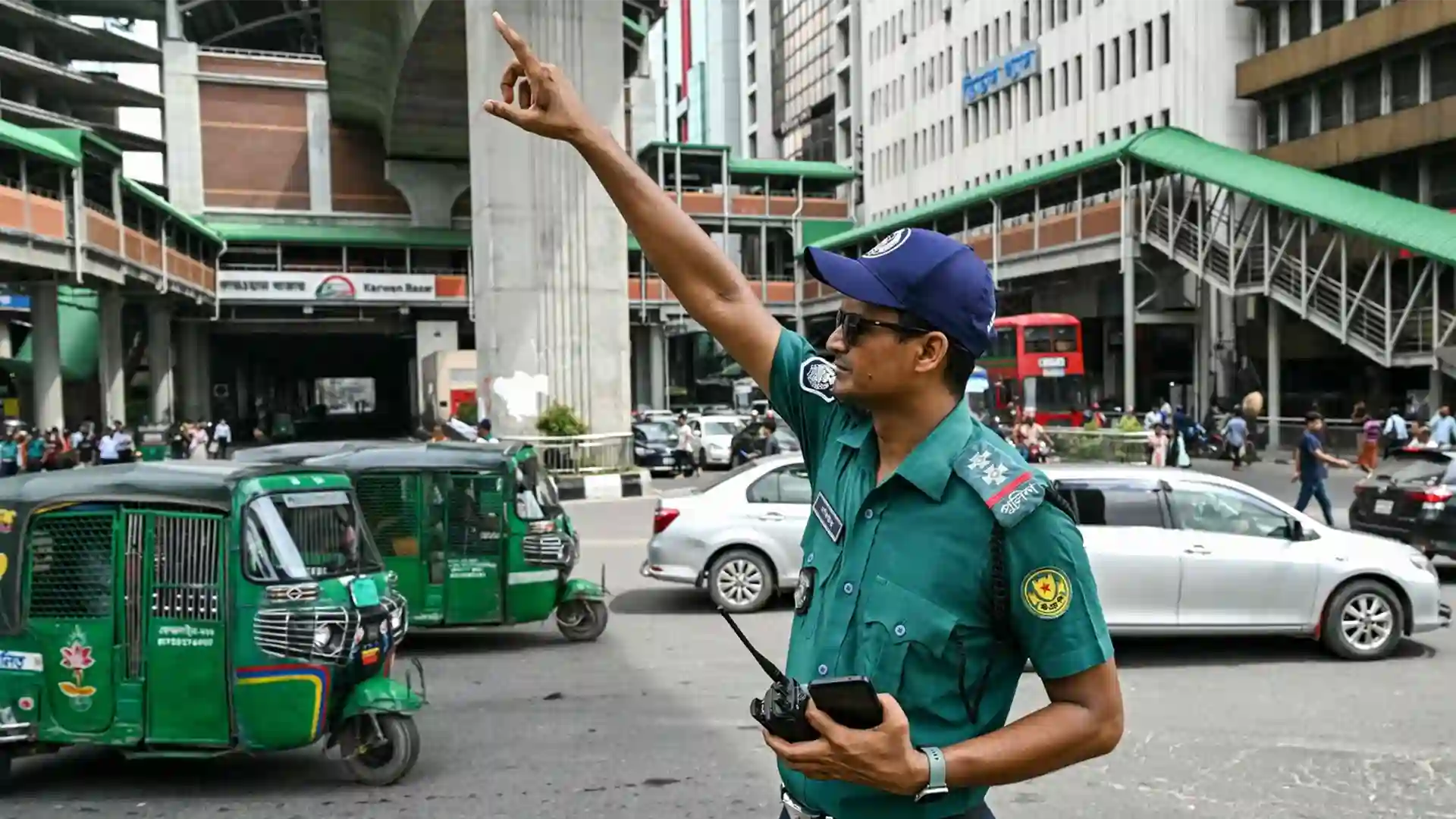
Bangladesh increased security measures on Saturday, with police and paramilitary units deployed across Dhaka ahead of funeral prayers for a young political leader whose killing has triggered fresh unrest.
The violence followed the fatal shooting of 32-year-old Sharif Osman Hadi, an election candidate and prominent figure in last year’s student-led movement that ended the long rule of former prime minister Sheikh Hasina. Hadi was attacked by masked gunmen in the capital while beginning his campaign and later succumbed to his injuries in Singapore after spending six days on life support.
Since his death, the country has witnessed a wave of disturbances, including organised mob assaults on leading newspapers and cultural centres, heightening concerns over public safety and freedom of expression.
Bangladesh is scheduled to hold parliamentary elections on February 12, a vote widely seen as crucial for restoring political stability after nearly two years of turmoil in the Muslim-majority nation of about 175 million people.
Rights groups condemn killing, attacks on media
However, repeated outbreaks of violent demonstrations and ongoing political infighting among a range of factions — including Islamist hardline groups — have dampened the optimism that swept the country following Sheikh Hasina’s removal from power in August 2024.
Analysts say the turmoil has also highlighted the challenges facing the interim administration led by Nobel Peace Prize laureate Muhammad Yunus, raising doubts about the government’s ability to maintain stability and effective governance in Bangladesh, the world’s second-largest garment manufacturing hub after China.
In response to the crisis, Yunus’s government declared Saturday a national day of mourning for Sharif Osman Hadi and appealed to the public to stand against what it described as violence driven by fringe groups. Officials warned that continued unrest could seriously undermine Bangladesh’s already delicate transition toward democratic rule.
International rights organisations have strongly condemned the killing and the violence that followed. Human Rights Watch described Hadi’s death as a “deeply disturbing crime” and called on authorities to take immediate steps to restore order and protect civilians. The organisation also denounced the targeting of media outlets, warning that such attacks strike at the core of free expression.
Concerns over press freedom remain acute in Bangladesh, which is ranked 149th out of 180 countries in the World Press Freedom Index. Rights advocates caution that persistent threats, assaults, and intimidation of journalists and activists risk further narrowing civic space as the country approaches a crucial national election.
Amnesty International echoed these concerns, urging authorities to launch swift, independent, and transparent investigations into Hadi’s killing as well as the wave of violence that followed. The organisation specifically highlighted incidents involving the torching of newspaper offices and the harassment of reporters covering the unrest.
Protests continued on Friday in Dhaka’s Shahbagh area, where demonstrators gathered to demand justice for Hadi and accountability for those responsible for the attacks on media and cultural institutions. During the unrest, a crowd forced its way into the Dhaka headquarters of Udichi Shilpigosthi, one of Bangladesh’s most prominent progressive cultural groups.
The instability has not been confined to the capital. In the port city of Chittagong, protesters targeted the Indian Assistant High Commission, underscoring rising anti-India sentiment since Sheikh Hasina sought refuge in New Delhi following her removal from office.
Meanwhile, the Awami League — Hasina’s party — which has been disqualified from contesting the upcoming election, has warned of further agitation. Observers fear that renewed unrest could threaten the electoral process and jeopardise hopes for a peaceful political transition.