UAE companies are revising work-from-home policies to ensure employee safety and business continuity as unpredictable weather conditions disrupt commuting, office operations and daily work schedules across the country.
UAE Firms Adjust Work-From-Home Policies Amid Unstable Weather
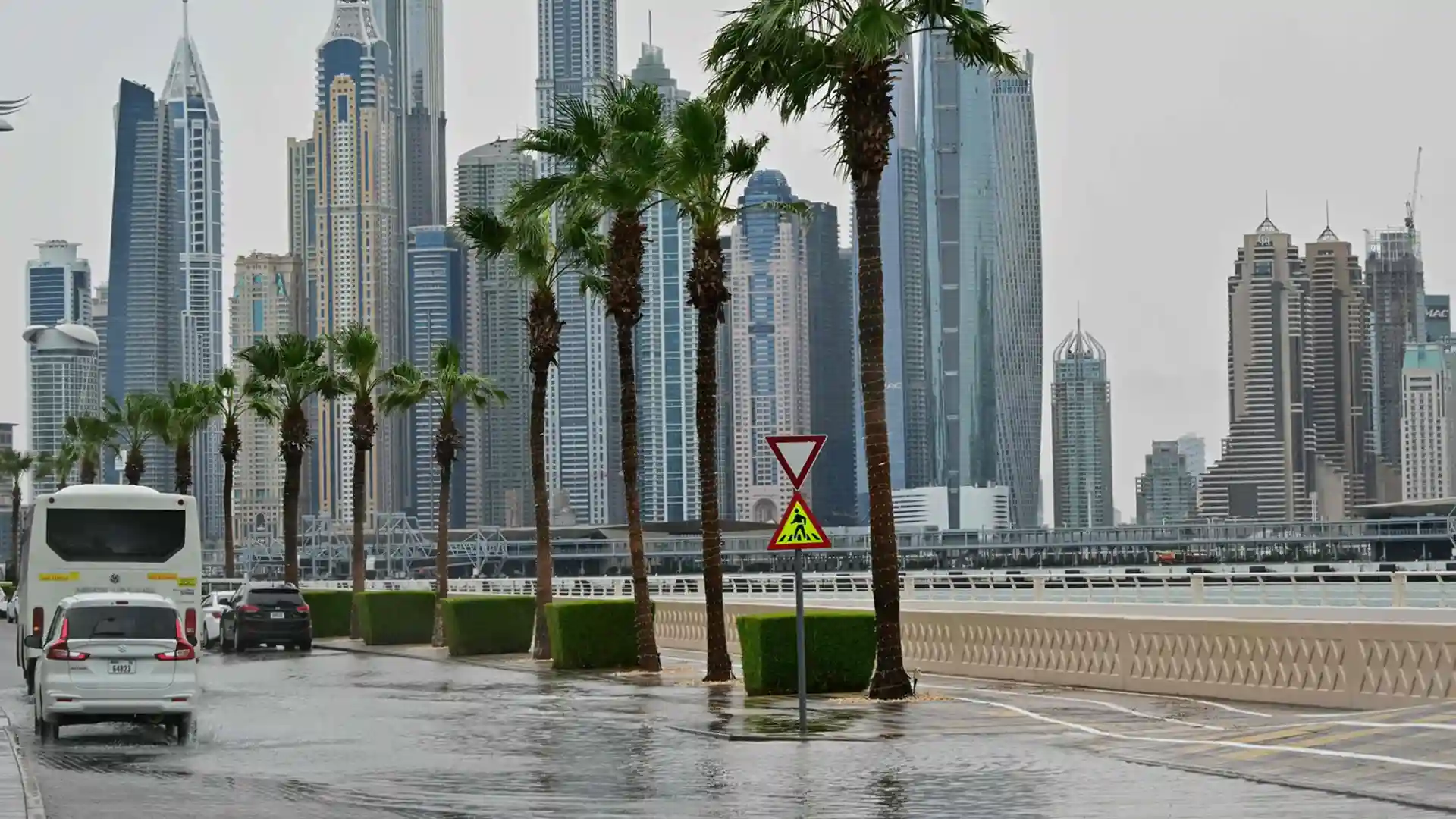
When severe flooding struck the UAE in April 2024, it caused widespread disruption across the country’s transport network, leaving employees stranded for hours and preventing many from reaching their workplaces. The unprecedented weather event became a wake-up call for companies, prompting them to reconsider their work-from-home policies and highlight the importance of employee safety during extreme conditions. For many businesses, the floods became a turning point, accelerating the adoption of flexible remote-work arrangements and forcing management to rethink how they support staff during emergencies.
Several companies moved quickly to ease the burden on employees. Karla M., head of human resources at a private firm, explained that her company had already implemented a policy allowing staff to work from home two days per week—a practice first introduced after the Covid-19 pandemic and later refined based on employee feedback. She noted that during extreme weather events, such as the historic April 2024 rainfall, management does not wait for staff to request remote work. Instead, the company actively encourages employees to stay home for their own safety. “We incentivise people to work from home during hazardous weather, but we leave the decision up to them. If they prefer to come in, they are welcome to do so,” she said.
To further support employees during the floods, the company introduced additional measures to help those whose commutes were severely impacted. With multiple metro stations closed and trains operating at reduced speeds, management arranged for drivers to pick up small groups of employees living in close proximity to one another. This initiative significantly reduced travel times and alleviated some of the stress associated with commuting in such challenging conditions. According to Karla, these steps not only helped maintain productivity but also reassured employees that their wellbeing was a priority.
However, not all workers experienced the same level of flexibility. Abdul Majid Awan, a former public relations professional who now works in the media sector, shared a very different account. Despite early weather warnings and guidance from the Ministry of Human Resources and Emiratisation (MoHRE) encouraging work-from-home options, Awan was required to attend the office on the third day of the heavy rainfall. His commute, which typically took less than an hour, extended to nearly four hours due to train delays and station closures. “I waited almost two hours for the metro, which was running at extremely reduced speeds, and several stations were closed entirely. What is normally a manageable journey became exhausting both physically and mentally,” he recalled.
Awan explained that attendance at the office was mandatory, despite the fact that all of his work—meetings, planning, and administrative tasks—could have been completed remotely. “We were told that failure to attend would result in a day’s salary being deducted,” he said. Reflecting on his experience, he highlighted the disconnect between policy and practical safety measures, noting that the floods demonstrated the need for clear and enforceable remote-work protocols during emergencies.
The April 2024 floods reinforced Awan’s belief in the viability of remote work. “During the Covid-19 pandemic, we proved that remote work can function effectively even during a global crisis,” he said. “There is no reason this model cannot be applied during extreme weather events. Many corporate roles do not require physical presence, and staff safety should always be a priority.” He advocates for mandatory work-from-home arrangements during emergencies when job responsibilities allow, while acknowledging that some positions, such as frontline operational roles, will naturally require in-person attendance.
Experts suggest that the UAE’s experience with the floods reflects a broader trend in workplace flexibility across the region. Companies that had previously embraced hybrid work models were able to respond quickly to the crisis, maintaining operational continuity while protecting employees. Those without such policies faced logistical challenges and risked exposing staff to unsafe conditions. Human resources professionals increasingly view flexible working arrangements as essential not just for employee satisfaction, but also for risk management during unexpected events such as natural disasters, extreme heat, or transport disruptions.
The events of April 2024 have prompted many UAE businesses to formally review and update their remote-work policies. Some are incorporating emergency clauses into contracts, clearly outlining when employees may be required to work from home, while others are investing in technology and digital infrastructure to ensure staff can continue to perform their duties remotely without interruption. These measures reflect a growing recognition that workplace resilience is closely linked to the ability to adapt quickly to changing circumstances.
As climate events and unpredictable weather become more frequent, flexible work arrangements are expected to play an increasingly important role in the UAE’s corporate landscape. Companies that proactively plan for employee safety while ensuring business continuity are likely to see higher levels of engagement, loyalty, and productivity. The floods of April 2024 serve as a reminder that robust work-from-home policies are no longer optional—they are a critical component of modern workforce management in an era of climate uncertainty.