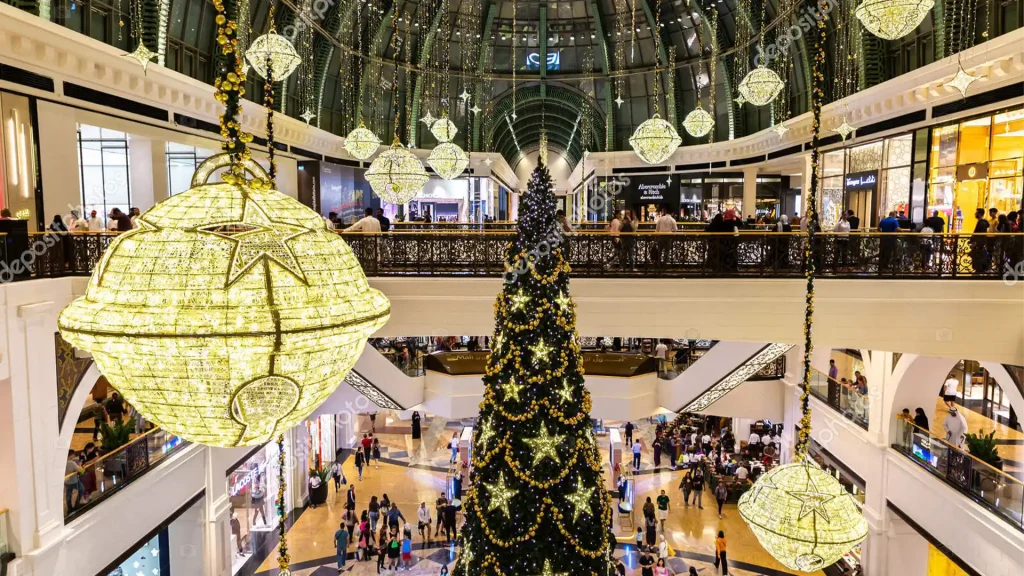
Massive fir trees shipped from Canada and Denmark have arrived in Dubai, bringing festive spirit to the UAE as the city prepares elaborate Christmas displays featuring these towering evergreens today.
Huge Canadian and Danish fir trees reach Dubai for the UAE’s Christmas celebrations.
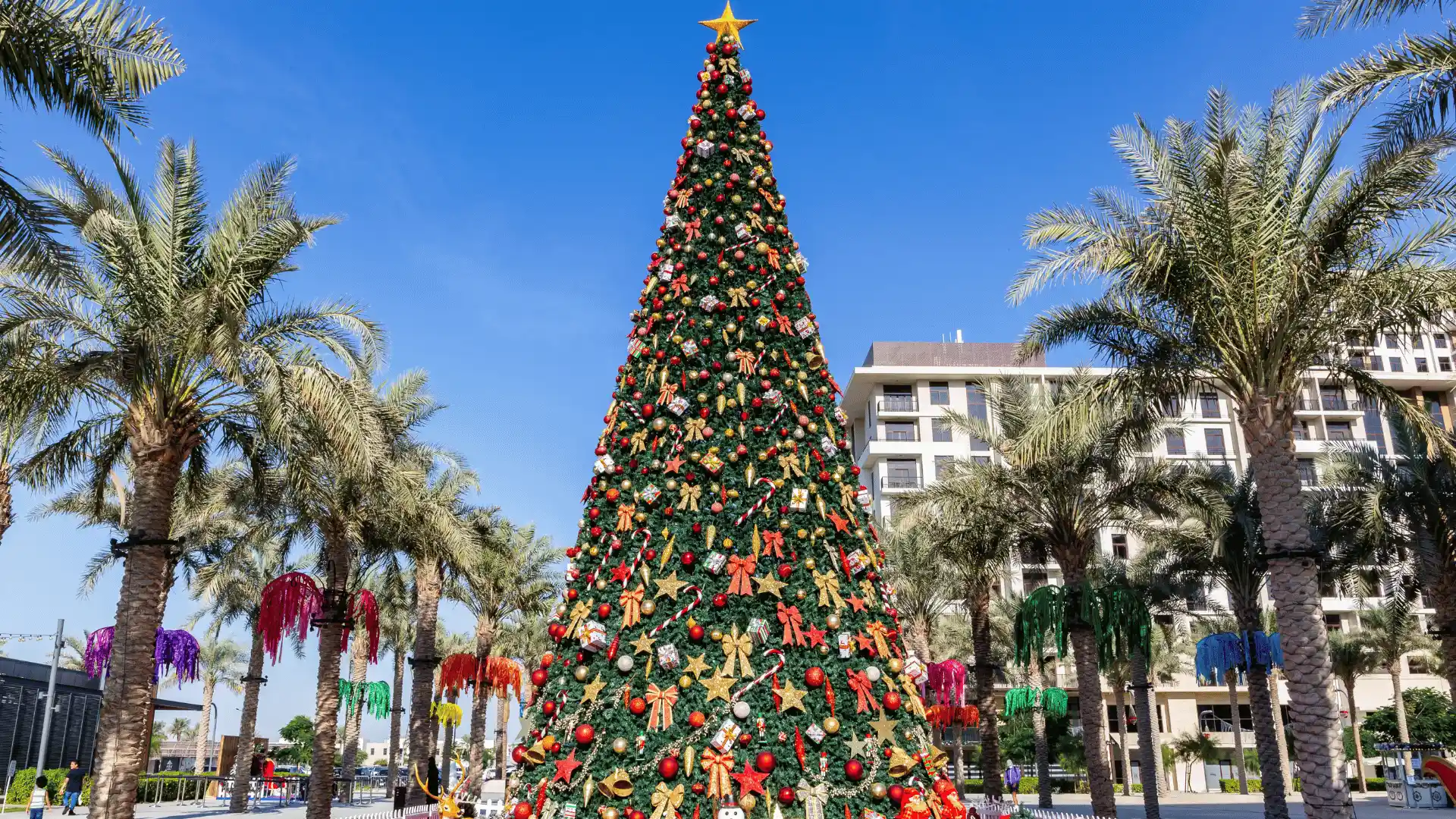
As the month of December quietly begins to settle over Dubai, the shift in the atmosphere is unmistakable. The city, usually known for its warm breezes and brilliant sunshine, starts to embrace a gentler, cooler climate that signals the unofficial start of the festive season. Alongside the slight drop in temperature comes an eagerness among residents and visitors alike to welcome the traditions that accompany the end of the year. Markets, neighbourhood shops, and garden centres across the city begin adopting a cheerful glow, hinting at the celebrations soon to come.
One of the clearest signs that the season has arrived appears this week in the lively neighbourhood of Satwa. The streets—normally bustling with everyday shoppers, tailors, and small cafés—have taken on an entirely new look. What was once an ordinary set of lanes has now turned into something resembling a cosy winter marketplace, despite Dubai’s desert setting. The transformation is subtle yet enchanting: long rows of green fir trees stand neatly on display, forming a fragrant passageway that temporarily transports visitors to colder corners of the world.
These trees, carefully imported from the forests of Denmark and Canada, bring with them the unmistakable scent of fresh pine. Even from a distance, the aroma drifts through the morning air, making passersby pause for a moment to breathe it in. The perfume of the branches mixes with the cool December breeze, creating a sensation that feels far removed from the city’s usual desert climate. For many, this scent alone evokes memories of past holidays, making the simple act of walking through Satwa feel nostalgic.
By mid-morning, the streets begin to fill with people who have come specifically for these green seasonal treasures. Families stroll between the displays, discussing where a tree might fit in their homes. Young couples take measurements with their hands, imagining how a particular fir would look once adorned with lights and ornaments. Some shoppers kneel down to check the branches closely, making sure the needles are firm, fresh, and vibrant. Others step back and admire the towering ones, contemplating whether their living rooms can accommodate something so grand.
Vendors, standing proudly beside their freshly delivered stock, chat with customers and offer advice on selecting the right tree. They explain the differences between the varieties, the best ways to keep the branches hydrated, and how long each type is expected to last. Many of these sellers have been participating in Dubai’s seasonal tree market for years, and their expertise shines as they help each person choose the perfect holiday centrepiece.
The soundscape in Satwa reflects the lively rhythm of a place preparing for celebration. Children tug at their parents’ sleeves, excitedly pointing out the trees that sparkle under the soft winter sunshine. Delivery vans pull up to load purchased firs, carefully wrapping them before transporting them to homes across the city. Conversations mix with laughter, and occasionally someone snaps a photo, capturing the charming contrast of lush green trees against Dubai’s urban backdrop.
What makes this annual scene so captivating is the blend of cultures it represents. While Christmas is not a traditional Emirati holiday, the UAE’s diverse population embraces the season with warmth and enthusiasm. The arrival of these imported firs becomes more than just a commercial event—it turns into a shared tradition that brings people from various backgrounds together. For many expats, selecting a real tree is a cherished ritual that reminds them of their home countries. For others, it’s a new experience, one they eagerly adopt as part of the city’s multicultural spirit.
As the day progresses, the winter-market feeling becomes even stronger. The sunlight softens, casting long shadows across the tree-lined lanes. Shopkeepers begin decorating their stalls with ribbons, small ornaments, and twinkling lights, adding a festive touch to the already picturesque scene. The natural green of the firs contrasts beautifully with the gold and red accents that start to appear, creating the kind of holiday atmosphere that people often associate with snowy cities rather than the Arabian Gulf.
By evening, Satwa’s transformation feels complete. The coolness in the air deepens slightly, making the surroundings feel even more seasonal. Families who return after work find the market glowing under warm lights, the firs almost shimmering as they stand tall and ready for new homes. People walking through the neighbourhood stop to admire the unusual sight, sometimes even taking a moment to touch the branches or breathe in the scent again before continuing on.
The arrival of these trees marks the beginning of a joyful cycle that will continue across the city throughout December. Once taken home, the firs will become the heart of many households, decorated with sentimental ornaments, strands of lights, and colourful ribbons. They will witness gatherings, gift-wrapping sessions, holiday dinners, and moments of laughter shared among loved ones.
In its own special way, Satwa’s temporary winter market becomes a symbol of what the season represents in Dubai—community, tradition, and the celebration of diversity. Through the simple act of choosing a Christmas tree, people from countless cultures find common ground, creating a festive landscape that feels uniquely Dubai: warm, welcoming, and full of life.
For countless people living in the UAE, the moment these freshly cut fir trees start appearing in local markets is when the true spirit of Christmas seems to take hold. It’s not just the sight of the deep green branches or the familiar woody scent that triggers the feeling; it’s the sense that a cherished seasonal tradition has returned once again. As soon as the first shipments arrive and vendors begin arranging the trees in long, fragrant rows, many residents feel the festive season officially beginning, no matter what the calendar says.
This year, that sense of anticipation has been stronger than usual. Traders across various neighbourhoods say they began receiving calls and messages well before their stock even landed in the country. People wanted to know the exact dates of arrival, the sizes available, the prices, and whether they could reserve a tree ahead of time. Some even visited shops weeks in advance, hoping to catch a glimpse of early batches or at least confirm that their favourite species would be available.
According to several sellers, the enthusiasm is noticeably higher compared with previous years. They’ve seen families planning their decorations earlier, shoppers comparing different types of firs with more interest, and expatriates sharing excitement at the chance to recreate holiday traditions from their home countries. Many traders said they barely had time to unpack the first shipments before curious customers showed up, eagerly browsing through the rows as if searching for a long-awaited symbol of the season.
In conversations with vendors, one theme kept repeating: people are ready for the celebrations, and they want to bring that festive energy into their homes as soon as possible. The trees, in many ways, have become the first signal that the holidays are truly on their way—an early spark of joy that residents are quick to embrace.


Ahmed, a vendor who has been selling Christmas trees in Satwa for many years, explained that interest surged far earlier than he expected. He shared that by the last days of November, people were already calling, visiting the shop, and sending messages to ask when the fresh shipments would arrive. Normally, he said, the rush begins only once December is underway, when families start decorating and planning for the festive season. But this year unfolded differently. Customers seemed determined to secure their trees well in advance, as if they feared missing out on their ideal size or preferred variety. Some families were so eager that they attempted to reserve specific trees days before the containers had even reached the port, confident that early planning would ensure the best pick.
Once the calendar flipped to December, the excitement only intensified. The neighbourhood instantly became lively, with residents pouring into the market at all hours of the day. The variety of trees on display attracted a wide range of shoppers, each with different needs and living spaces. Those with larger homes gravitated toward towering, full-bodied firs that could dominate a living room and serve as the festive focal point. Meanwhile, residents living in smaller apartments browsed through the more modest-sized trees—compact, neatly proportioned, and perfect for limited spaces without overwhelming the room.
As people wandered through the aisles, each shopper seemed to have a unique vision in mind. Some imagined a grand tree draped in golden lights and ornaments collected over many years; others preferred something simple, just big enough to carry a string of warm white lights. The market buzzed with conversation and laughter, turning the act of choosing a tree into a cherished seasonal ritual. For many, this early enthusiasm reflected a deeper desire to embrace the joy of the holidays and bring a sense of warmth and celebration into their homes as soon as possible.
Among this year’s most eye-catching additions to the UAE’s festive markets are the impressive Danish firs, many of which stand between eight and nine feet tall. These towering trees have quickly gained popularity, drawing the attention of both long-time residents and newcomers who want a statement piece for their holiday décor. Their height alone makes them striking, but it is their symmetry, soft needles, and rich scent that truly set them apart from smaller varieties.
Ghattas, a seasoned trader familiar with the preferences of Dubai’s diverse shoppers, explained that Denmark remains the primary source for these grand trees. He noted that most of the taller shipments arriving this season originate from Danish farms known for cultivating firs with consistent shape and lush branches. According to him, trees in the eight-to-nine-foot range are typically priced at around Dh750, a cost many buyers are willing to pay for the visual impact and authentic festive ambience they bring to a home. Ghattas added that families often choose these larger firs for villas or spacious living rooms, where the size enhances the holiday décor rather than overwhelming it. The natural pine fragrance is another major selling point, transforming a home’s atmosphere the moment the tree is set up.
Canadian firs have also made their way back into the UAE’s seasonal markets, and their arrival has been welcomed by customers who appreciate their sturdy build and deep green colour. These firs, often admired for their dense layering of branches, offer a slightly different aesthetic compared with their Danish counterparts. Where the Danish firs tend to be elegantly shaped, the Canadian ones exude a bolder, fuller appearance that suits homes aiming for a traditional Christmas feel.
Ahmed, another vendor with years of experience in the market, explained that these Canadian trees are well-known for their resilience. He pointed out that with attentive care—regular watering and placing the tree away from heat sources—they can retain their freshness for up to 45 days. This longevity makes them especially appealing to residents who enjoy decorating early in December and want their tree to last throughout the entire season, from the first Advent weekend to New Year celebrations.
He mentioned that customers who plan to host holiday dinners, gatherings, or themed events tend to favour both Danish and Canadian firs, as these species retain their colour and needles better than many other imported varieties. The stability of the branches also allows for heavier ornaments, making them ideal for those who enjoy elaborate decorating traditions.
As the festive season continues to build momentum, traders say that the demand for these premium trees reflects how deeply holiday customs have become part of the UAE’s multicultural fabric. Families from different backgrounds are drawn to the authenticity that real firs provide—whether it is the fragrance that fills the room, the joy of decorating together, or the sense of continuity the tree brings each year. In a country where traditions from all over the world blend seamlessly, the presence of these Danish and Canadian arrivals adds another layer of warmth to the celebration, making the holiday season feel complete for many residents.

While the larger Danish and Canadian firs dominate the market and attract the attention of families with spacious living rooms, there is a growing demand for smaller trees designed specifically for those living in apartments or more compact spaces. Recognising this need, traders have ensured that a variety of petite, easy-to-manage options are available alongside the towering firs, offering the festive spirit in a more convenient size.
Ghattas, who has been selling Christmas trees in Satwa for several years, explained that these smaller trees are imported mainly from the Netherlands. He described them as ideal for people who want a manageable yet attractive tree that can fit comfortably in apartments, studios, or even smaller rooms within larger homes. Unlike the full-sized firs that require a lot of space and careful handling, these Dutch mini-trees come already planted in small pots filled with soil. This makes them easier to transport, position, and maintain indoors, eliminating much of the setup effort associated with larger trees.
Priced at around Dh200, these compact trees typically grow up to two feet in height. While they may be diminutive compared with their towering cousins, they still carry the same lush greenery and pleasant pine aroma, giving residents the essence of Christmas without requiring much room. Ghattas noted that with proper care, including regular watering and placement away from direct heat, these little trees can survive indoors for two to three months. This longevity allows residents to enjoy the festive atmosphere from early December through the New Year, all without worrying about needles dropping excessively or the tree drying out prematurely.
These smaller trees have become particularly popular among young couples who may be celebrating their first Christmas together in a rented apartment. They are also a hit among university students and young professionals who want a personal touch of holiday cheer in their living spaces. Many families choose these petite trees as an additional decorative element in children’s rooms, offering little ones their own festive corner complete with mini ornaments and tiny lights. Parents often enjoy involving their children in decorating these smaller trees, which can become a fun and educational family activity.
Beyond practical considerations, the appeal of these miniature trees lies in their flexibility and charm. Unlike the grand firs that dominate a room, the small potted trees allow residents to experiment with placement and decoration. They can be displayed on tables, desks, or windowsills, adding subtle festive touches throughout the home. Some residents even use them in offices or shared living spaces, bringing the holiday spirit into workplaces or common areas without occupying excessive space.
Traders say the growing popularity of these small trees reflects a broader trend in Dubai, where many residents live in high-rise apartments or compact urban homes. By providing a range of sizes—from towering eight-foot Danish firs to tiny two-foot Dutch potted trees—the market caters to every need and lifestyle. In this way, the festive season becomes accessible to all, whether a household is large or small, ensuring that everyone can partake in the joy and warmth that Christmas decorations bring.
While the festive markets and streets of Dubai are now lined with beautifully arranged Christmas trees, very few people consider the long and carefully coordinated journey that brings these seasonal treasures to the city. Behind every tree that stands tall in a home or store, there is a complex supply chain stretching across continents, meticulous planning, and a commitment to maintaining the tree’s freshness and quality from the moment it is cut until it reaches a customer’s living room.
The journey begins in the dense forests of Europe and North America, where specialized farms cultivate trees specifically for export. In Denmark, Canada, and the Netherlands, growers spend years tending to their crops, pruning branches, and nurturing the trees to ensure they grow symmetrically and develop the rich, deep-green needles that customers desire. When the trees reach the ideal size for the market—whether a compact two-footer or a towering eight-foot fir—they are carefully harvested. Timing is crucial, as cutting too early or too late could affect the longevity of the tree once it reaches its destination.
Once harvested, the trees are immediately wrapped in nets to protect their branches and make handling easier. After this initial preparation, they are carefully loaded into refrigerated shipping containers, specially designed to maintain low temperatures and optimal humidity levels throughout the journey. These chilled containers are essential; they slow down the drying process, preserve the needles, and keep the fragrance intact so that when the tree is finally displayed in Dubai, it appears as fresh and vibrant as the day it was cut. The shipping process is a long one—trees can spend nearly 25 days crossing oceans, moving from the farms in Europe or North America to the bustling ports of the UAE.
Upon arrival, the containers are moved into cold storage facilities, another crucial step to preserve quality. Traders ensure that the storage rooms are maintained at consistent low temperatures, protecting the trees from heat and dehydration. It is in these cold storage rooms that the trees rest briefly before being carefully prepared for display and sale. This stage requires meticulous handling, as even minor negligence can affect the tree’s freshness and overall appearance.
Every morning, vendors in markets such as Satwa and other neighborhoods begin the labor-intensive process of preparing the trees for shoppers. Typically, each trader selects between 30 to 45 trees for display, carefully unwrapping them from the protective nets. Once unwrapped, the trees are gently shaken to remove any dry or loose needles, ensuring that what the customer sees is a pristine specimen ready for decoration. Ghattas, a long-time trader, explained the process in detail, emphasizing that transparency and care are critical: “We always let the customer see the actual tree they are buying. After inspection, we repack it neatly for delivery, so it arrives in perfect condition.” This approach ensures that every buyer leaves satisfied, whether they are purchasing a large centerpiece for a living room or a smaller tree for a bedroom.
The market for Christmas trees in Dubai is not limited to dedicated traders and street markets. Supermarkets across the city have also joined in, stocking fresh trees to cater to shoppers who prefer the convenience of a one-stop shop. These retail options are especially appealing for busy families or individuals who may not have the time to visit specialized markets. Supermarkets typically carry a range of sizes, from compact one-metre trees, which stand about 3.2 feet tall and are priced around Dh169, to taller two-metre trees, roughly 6.5 feet, costing around Dh299. This variety ensures that customers with different living spaces, budgets, and aesthetic preferences can all find a tree suited to their needs.
The supermarket trees, like those in specialized markets, are carefully maintained to preserve their freshness. Employees regularly check the condition of the stock, making sure that needles remain vibrant and branches are not damaged during handling. Smaller trees often come in potted soil, allowing them to last longer indoors and giving buyers the flexibility to plant them outside if desired. This attention to detail, both at the market and retail level, reflects the growing demand for quality and convenience in Dubai’s festive shopping experience.
The entire process, from farm to market, highlights the intricate logistics behind what may seem like a simple seasonal purchase. From careful cultivation in Europe and North America to temperature-controlled shipping, cold storage handling, and meticulous daily preparation, each step is designed to ensure that residents of the UAE can enjoy a fresh, fragrant, and beautiful tree in their homes. It is a journey that combines agricultural expertise, international shipping, and local dedication, all culminating in the moment a customer picks their perfect tree, ready to be decorated and celebrated.
In essence, the arrival of Christmas trees in Dubai is more than a seasonal ritual—it is a testament to careful planning, cross-continental collaboration, and the city’s commitment to bringing joy to its residents. The trees, whether grand and imposing or small and charming, arrive with stories of distant forests, careful handling, and months of preparation. For shoppers, each tree is not just a decoration but a symbol of the season’s spirit, made possible by a remarkable journey spanning thousands of miles, countless hours of work, and the expertise of farmers, shippers, and traders who ensure that the magic of Christmas reaches the heart of every home in Dubai.