The Emirati president of the FIA shares his pride and excitement as Abu Dhabi prepares to host the thrilling Formula 1 championship showdown, highlighting the nation’s role on the global stage.
FIA Emirati President Expresses Pride Ahead of Abu Dhabi F1 Title Clash.
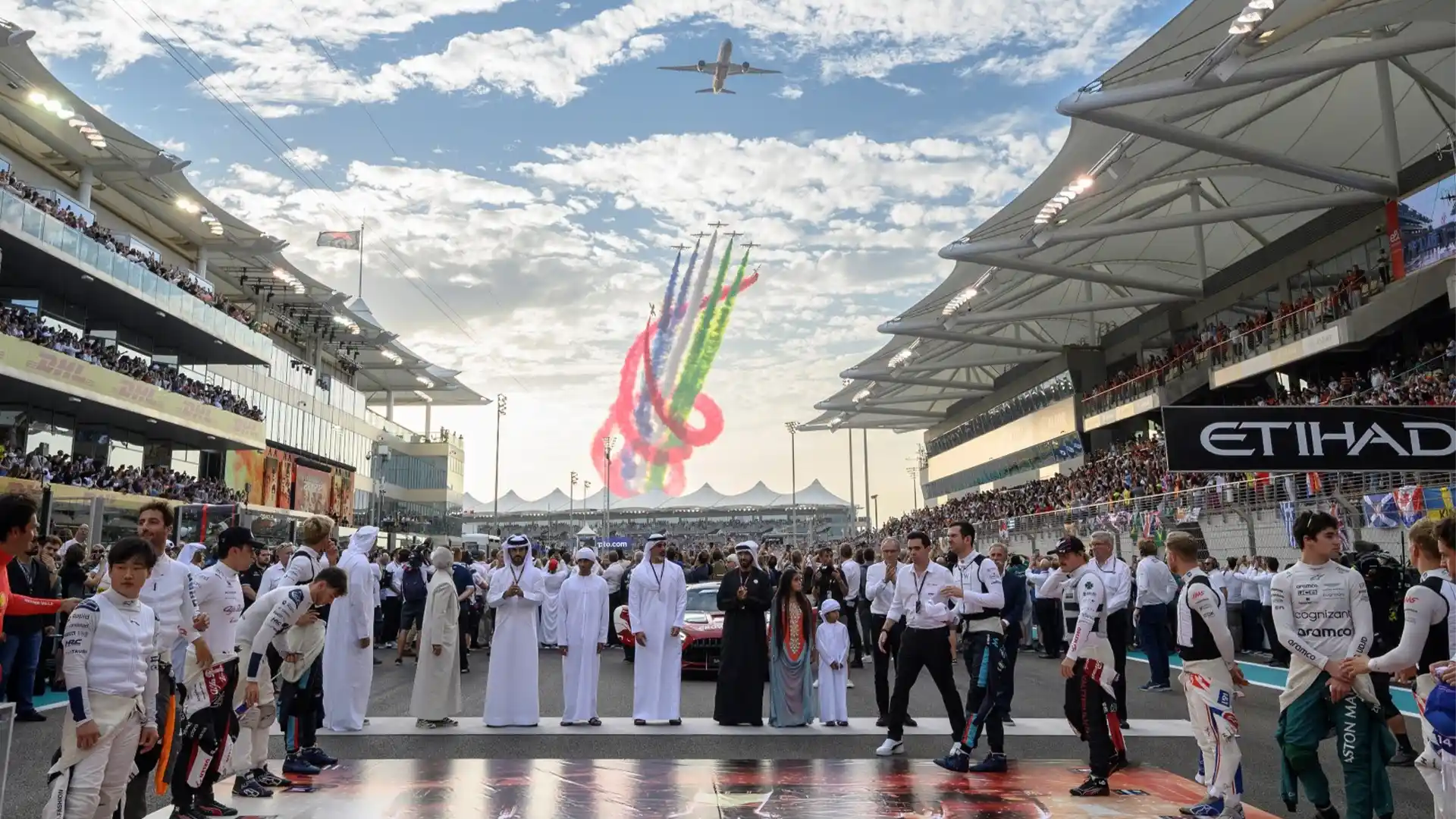
As the Formula One season hurtles toward its climactic conclusion, all eyes are set on Abu Dhabi, where the Etihad Airways Abu Dhabi Grand Prix promises a spectacular finale. For Mohammed Ben Sulayem, the Emirati president of the Fédération Internationale de l’Automobile (FIA), the upcoming race is more than just a high-stakes sporting event—it is a moment of profound national pride and personal significance. Ben Sulayem, a motorsport icon in his own right and a figure synonymous with the growth of racing in the UAE, spoke of the excitement and sense of honor he feels as the world’s most elite drivers prepare to battle for the championship at the Yas Marina Circuit this Sunday.
The stakes could not be higher. This year’s title race has reached a dramatic three-way battle, with Lando Norris, Max Verstappen, and Oscar Piastri all in contention. Fans around the globe are eagerly anticipating the tension, strategy, and skill that will determine who takes home the ultimate prize in Formula One. For Ben Sulayem, this tense showdown is not only a showcase of the athletes’ extraordinary talents but also a moment that highlights the UAE’s growing stature in the world of motorsport. The country, and Abu Dhabi in particular, has become a premier destination for international racing, combining world-class infrastructure, technological sophistication, and an atmosphere that captures the glamour and thrill of Formula One.
Reflecting on the significance of hosting such a pivotal event, Ben Sulayem emphasized the pride he feels in seeing his homeland at the center of the global motorsport spotlight. “It is an incredible feeling to witness this level of competition in my own country,” he said. “The UAE has worked tirelessly to build a reputation for excellence in motorsport, and the Abu Dhabi Grand Prix represents the culmination of years of investment, vision, and passion. To see the championship title decided here, on our home soil, is truly a moment of pride for every Emirati.”
The Yas Marina Circuit, with its cutting-edge design, illuminated night racing, and iconic waterfront setting, provides a fitting backdrop for the season’s dramatic conclusion. Its combination of technical corners, high-speed straights, and strategic overtaking opportunities ensures that the championship will be decided in a display of both skill and nerves. For the drivers involved, it is a test of endurance, precision, and strategic insight. For the fans, it is a spectacle of anticipation, adrenaline, and pageantry. And for Ben Sulayem, it is a validation of the UAE’s emergence as a global hub for premier motorsport events.
Ben Sulayem’s connection to the sport runs deep. As a former rally driver and multiple-time Middle East Rally Champion, he has long been an ambassador for motorsport in the region. His appointment as FIA president marked a continuation of his mission to elevate the profile of racing in the UAE and the wider Middle East, promoting not only the sport itself but also the technological, economic, and cultural benefits associated with hosting world-class events. Under his leadership, Abu Dhabi has become a fixture on the Formula One calendar, drawing thousands of international visitors and millions of television viewers, further solidifying the UAE’s reputation as a center of excellence for international sport.
This year, the intensity of the three-way championship race has only heightened the excitement. Fans are eagerly speculating on strategies, pit stops, and overtakes that could define the outcome. Max Verstappen, a dominant force in recent seasons, will be looking to assert his experience and precision. Lando Norris, a rising star with a reputation for fearless driving, aims to challenge the established order. Meanwhile, Oscar Piastri, the young and talented driver, brings a fresh dynamic to the championship, adding unpredictability and suspense. The convergence of these three extraordinary athletes at Yas Marina promises a thrilling climax, and for Ben Sulayem, it is an opportunity to see his nation play host to history in the making.
Beyond the on-track drama, Ben Sulayem is equally proud of the global attention the UAE continues to attract. Formula One broadcasts reach millions worldwide, showcasing not only the drivers and teams but also the country’s state-of-the-art facilities, hospitality, and infrastructure. The Abu Dhabi Grand Prix is more than a race; it is a platform for the UAE to demonstrate its commitment to innovation, world-class sporting experiences, and cultural engagement. Hosting a championship-deciding event elevates this impact, positioning Abu Dhabi as a destination that blends speed, spectacle, and sophistication.
As the FIA president, Ben Sulayem also feels the responsibility and honor of representing the sport on a global stage while ensuring that the event runs smoothly, safely, and to the highest standards. His leadership has been instrumental in bringing international attention to the UAE’s capabilities as a host nation, reinforcing confidence among teams, sponsors, and spectators alike. For him, the upcoming Grand Prix is the embodiment of years of strategic development, planning, and relentless dedication to motorsport excellence.
In the final analysis, the Abu Dhabi Grand Prix is more than a race for Mohammed Ben Sulayem—it is a celebration of national achievement, personal legacy, and global recognition. The spectacle of the championship showdown between Lando Norris, Max Verstappen, and Oscar Piastri is matched by the pride he feels in seeing the UAE take its place at the pinnacle of international motorsport. As engines roar, lights blaze, and drivers push the limits of skill and courage, Ben Sulayem stands as a symbol of vision, leadership, and the enduring power of passion to elevate both sport and nation.
This Sunday, as the Yas Marina Circuit hosts one of the most dramatic finishes in Formula One history, the world will watch not just the drivers battling for supremacy, but also a country demonstrating its unwavering commitment to excellence. For Ben Sulayem, the Emirati motorsport legend, it is a moment of immense pride—a time to celebrate achievement, talent, and the boundless possibilities that come when ambition meets opportunity in the heart of Abu Dhabi.
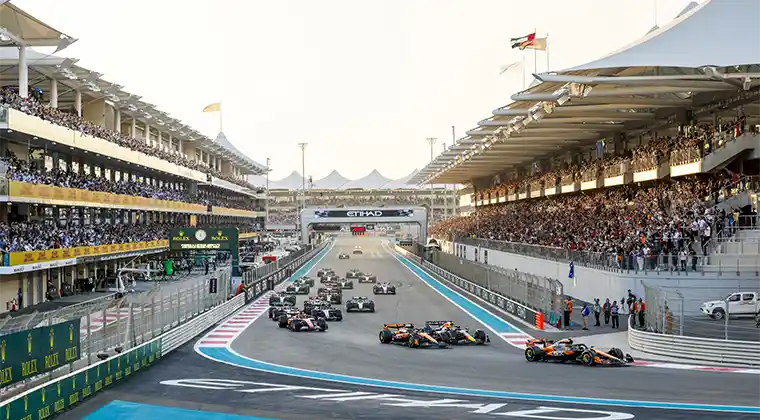
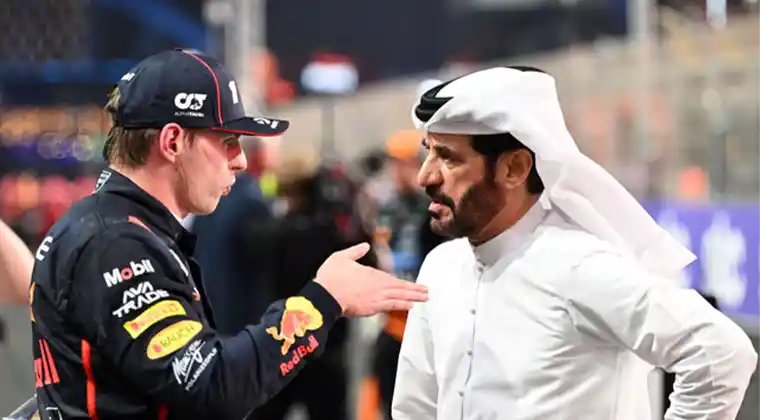
Mohammed Ben Sulayem, the Emirati president of the Fédération Internationale de l’Automobile (FIA), has long been a passionate advocate for motorsport in the United Arab Emirates, and his reflections on the nation’s achievements highlight both the progress made and the ambitions that lie ahead. Speaking about the UAE’s growing prominence on the global racing stage, Ben Sulayem emphasised the sustained support that authorities in the Emirates have provided for motorsport over many years. “The UAE has shown remarkable dedication to motorsport development, consistently investing in infrastructure, events, and initiatives that have elevated the country to an international platform,” he said. According to him, these efforts have transformed the UAE from a regional participant in motorsport to a globally recognised destination for both competitors and spectators.
Ben Sulayem noted that the country’s strategic commitment to high-calibre events has created a ripple effect across the sport. Hosting international races, particularly in Formula One, has not only attracted the world’s elite drivers and teams but has also drawn thousands of fans from every corner of the globe. These events have generated a spectacle that combines speed, precision, and excitement, capturing the imagination of motorsport enthusiasts and cementing the UAE’s reputation as a premier venue. “The development of events such as the Abu Dhabi Grand Prix has significantly contributed to the UAE’s visibility on the world sporting map,” he explained. “It’s not just about hosting races; it’s about creating an experience that resonates with fans, athletes, and stakeholders, while demonstrating the country’s ability to organise world-class sporting spectacles.”
The impact of these efforts goes beyond entertainment. According to Ben Sulayem, the UAE’s investment in motorsport has tangible cultural, economic, and social benefits. International competitions draw tourism, boost local economies, and create opportunities for young Emiratis and residents to engage with a sport that blends cutting-edge technology with athletic skill. By establishing state-of-the-art facilities such as the Yas Marina Circuit, the Emirates has provided a world-class arena where local talent can develop, and global motorsport figures can test and showcase their abilities. This combination of infrastructure and vision, Ben Sulayem notes, has positioned the UAE as a destination where the thrill of racing meets innovation and excellence.
Ben Sulayem’s reflections are deeply personal as well as professional. As an Emirati, he experiences a profound sense of pride in his country’s accomplishments within the world of motorsport. He sees the UAE’s journey from a relatively small player on the racing scene to a recognised hub for international motorsport as a reflection of the nation’s broader ambition, ingenuity, and commitment to excellence. “I am immensely proud of the achievements of my country in motorsport, particularly the impact of events such as the F1 Abu Dhabi Grand Prix,” he said. For him, the Grand Prix is more than a race; it is a celebration of the UAE’s vision, combining world-class competition with a display of national culture, hospitality, and innovation.
In his role as FIA president, Ben Sulayem emphasises that his mission is to continue supporting and strengthening these achievements. He has consistently highlighted the importance of collaboration between international sporting bodies, national authorities, and local stakeholders to ensure that the UAE maintains its position as a leading destination for motorsport. This commitment involves not only overseeing compliance with global standards but also advocating for initiatives that expand the sport’s reach, enhance safety, and improve the overall experience for participants and spectators alike. “As FIA President, I feel a responsibility to support the ongoing efforts in the Emirates,” he stated. “We must build on the progress already made, ensuring that the UAE continues to develop as a hub for international motorsport, where excellence, innovation, and sustainability are paramount.”
Ben Sulayem also reflected on the broader implications of the UAE’s success in hosting world-class motorsport events. The country’s strategic focus on quality, infrastructure, and global engagement has created a model for other nations aspiring to enter the international sporting arena. The careful planning and execution of events like the Abu Dhabi Grand Prix demonstrate how a combination of vision, investment, and expertise can elevate a country’s standing, attract international attention, and foster a culture of excellence that resonates beyond the sporting community. He notes that the UAE’s accomplishments in motorsport serve as an inspiration not only to the next generation of racing enthusiasts but also to policymakers, educators, and leaders seeking to showcase national capability on the world stage.
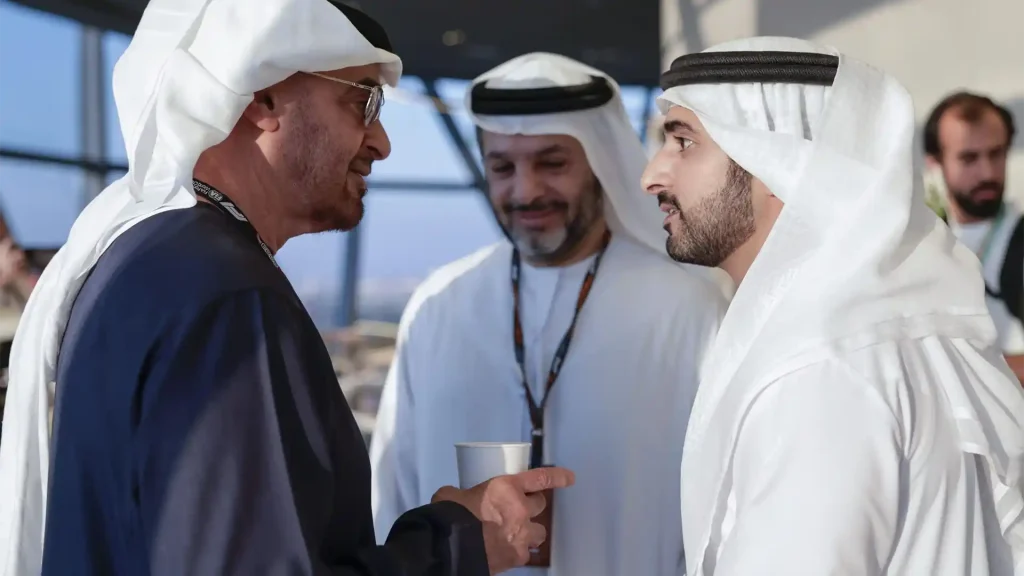
“Through consistent effort, dedication, and strategic vision, the UAE has established itself as a major hub for motorsport,” he concluded. “My role as FIA President allows me to support and strengthen these efforts, ensuring that the Emirates continues to thrive as a destination where world-class racing, innovation, and culture come together, inspiring the next generation of motorsport enthusiasts and showcasing the country’s excellence to a global audience.”
The FIA President highlighted that Abu Dhabi’s significant role in Formula One illustrates the growing prominence of the Middle East in global motorsport, with countries such as Bahrain, Saudi Arabia, Qatar, and the UAE hosting key races and becoming central fixtures on the F1 calendar. Reflecting on the inaugural Abu Dhabi Grand Prix in 2009, Ben Sulayem noted that while the UAE had long been a leader in motorsport for over three decades, bringing the Formula One World Championship to Yas Marina Circuit presented unique and unprecedented logistical challenges.
For instance, more than 700 marshals were required to manage the event, a sharp increase compared with the 150 typically needed for a major rally. At the first Grand Prix, around 350 volunteers from the UK assisted in operations, but over time, recruitment and training efforts focused on building a local, UAE-based team, many of whom were Emiratis renowned for their dedication and professionalism. According to Ben Sulayem, establishing this homegrown workforce was crucial to ensuring the Grand Prix’s long-term sustainability and operational independence—a principle that aligns with the FIA’s broader mission of fostering responsible growth and development across motorsport worldwide.
Looking to the future, the FIA President expressed optimism about Formula One’s trajectory, describing it as entering an exciting new phase. Next season will see Cadillac join as the sport’s eleventh team, while Madrid will debut as the latest Grand Prix venue, reflecting F1’s continued global expansion. Additionally, new FIA regulations will introduce lighter, more agile cars powered by sustainable fuel, signaling the beginning of a transformative era for the championship. For Ben Sulayem, these developments underscore both the enduring appeal of Formula One and the UAE’s ongoing influence as a leading hub within the international motorsport landscape.
Abu Dhabi has emerged as a prime example of the type of venue that the Fédération Internationale de l’Automobile (FIA) seeks when selecting locations for Formula One events. More than just a race track, the city’s approach demonstrates a comprehensive and forward-thinking strategy, combining world-class sporting infrastructure with the essential services and facilities required to host a global championship. The city’s commitment extends far beyond the circuit itself, encompassing investments in transport, hospitality, technology, and entertainment, ensuring that every aspect of the Grand Prix experience—both for the teams and for the thousands of spectators—is meticulously planned and executed. This holistic approach is precisely what the FIA values when evaluating potential race hosts, and Abu Dhabi has set a benchmark in the region for how to integrate sport, tourism, and urban development.
Mohammed Ben Sulayem, the Emirati president of the FIA and a motorsport legend himself, has frequently highlighted the UAE’s strategic vision in leveraging Formula One as a platform for showcasing the country on the global stage. “Through a strategic investment in building world-class sporting foundations, and in particular the investment in the Yas Marina Circuit, the UAE has showcased the country’s travel and tourism attractions, its appeal as an investment hub, and its status as a desirable country in which to live and work,” he said. According to Ben Sulayem, the vision behind Yas Marina went beyond the immediate spectacle of racing; it was about creating a sustainable and multifaceted legacy that positions Abu Dhabi as a hub for sports, business, and international tourism.
The Yas Marina Circuit itself has become synonymous with luxury, innovation, and technical sophistication. Its design integrates both aesthetic appeal and functional excellence, allowing the venue to accommodate the complex logistical requirements of a Formula One Grand Prix while providing an unforgettable experience for fans. Over the years, the circuit has gained a reputation as one of the most prestigious and opulent venues on the F1 calendar, combining breathtaking views, exceptional hospitality facilities, and cutting-edge race operations. Spectators and teams alike are drawn not only to the excitement of high-speed racing but also to the seamless integration of luxury, technology, and accessibility that Abu Dhabi consistently delivers.
In recent years, the Yas Marina Circuit has undergone multimillion-dirham upgrades, further enhancing its status as a technologically advanced venue. One of the standout improvements is the circuit’s race control room, which now ranks among the most sophisticated in the world. This facility serves as the nerve center for every aspect of the Grand Prix, allowing officials to manage the race with unprecedented precision. During Sunday’s race, officials will have the capability to simultaneously monitor 55 high-definition camera feeds, detailed timing screens, comprehensive race logs, and real-time car tracking systems. Such technological sophistication is not merely about prestige; it plays a critical role in ensuring the smooth and fair management of complex racing scenarios, particularly when the championship title hangs in the balance and split-second decisions can have major consequences.
The advanced capabilities of the race control room are especially crucial in a title-deciding race like this year’s Abu Dhabi Grand Prix. With multiple drivers in contention and countless variables on the track—ranging from weather conditions to pit strategies and mechanical performance—officials rely heavily on technology to maintain oversight, enforce regulations, and respond immediately to any incidents. The combination of human expertise and cutting-edge monitoring tools allows the FIA to uphold the integrity and safety of the sport while providing fans with a thrilling, uninterrupted spectacle. It is this integration of meticulous planning, world-class infrastructure, and advanced technology that distinguishes Abu Dhabi as a model Formula One venue.
Beyond the technical aspects, the city’s investment in the Yas Marina Circuit reflects a broader commitment to using sport as a driver of national development. By hosting Formula One, Abu Dhabi has successfully positioned itself as an international destination for tourism, business, and high-profile events. The Grand Prix attracts thousands of international visitors each year, generating significant economic impact, showcasing the UAE’s hospitality sector, and highlighting the country’s cultural and recreational offerings. This strategic approach demonstrates the UAE’s ability to harness global sporting events to create value across multiple sectors, reinforcing its reputation as a country capable of executing world-class projects that merge entertainment, technology, and economic development.
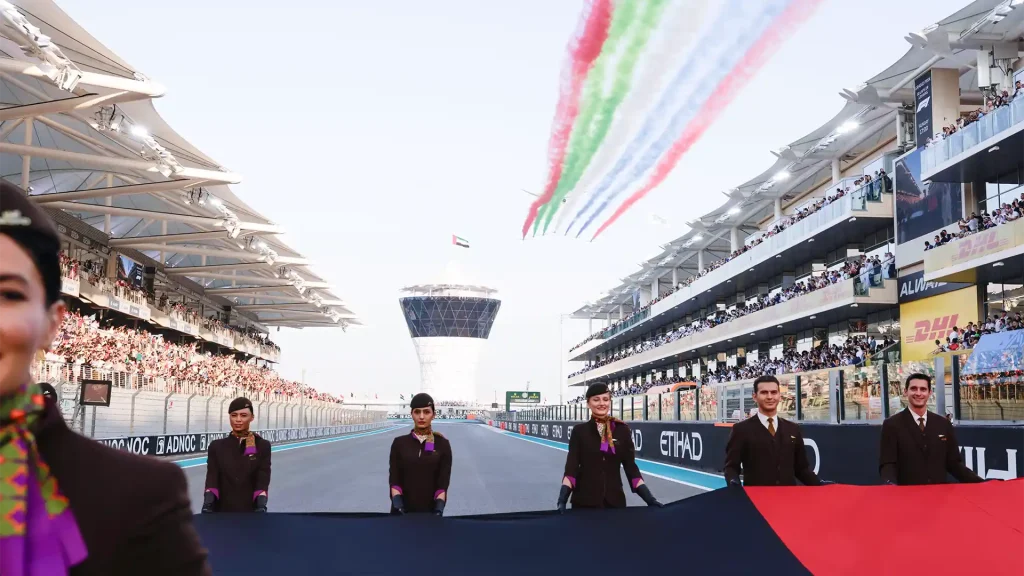
In essence, Abu Dhabi exemplifies the FIA’s vision of an ideal F1 venue: one that combines a strong local commitment to investment, unparalleled technical infrastructure, and the ability to provide a world-class experience for competitors, officials, and fans alike. The Yas Marina Circuit’s luxurious facilities, advanced race control capabilities, and seamless integration with the city’s broader tourism and transport networks make it a standout destination on the global Formula One calendar. For Mohammed Ben Sulayem and the UAE, this is more than just hosting a race—it is about creating a legacy of excellence, innovation, and international recognition that will continue to define Abu Dhabi’s position in the world of motorsport for years to come.