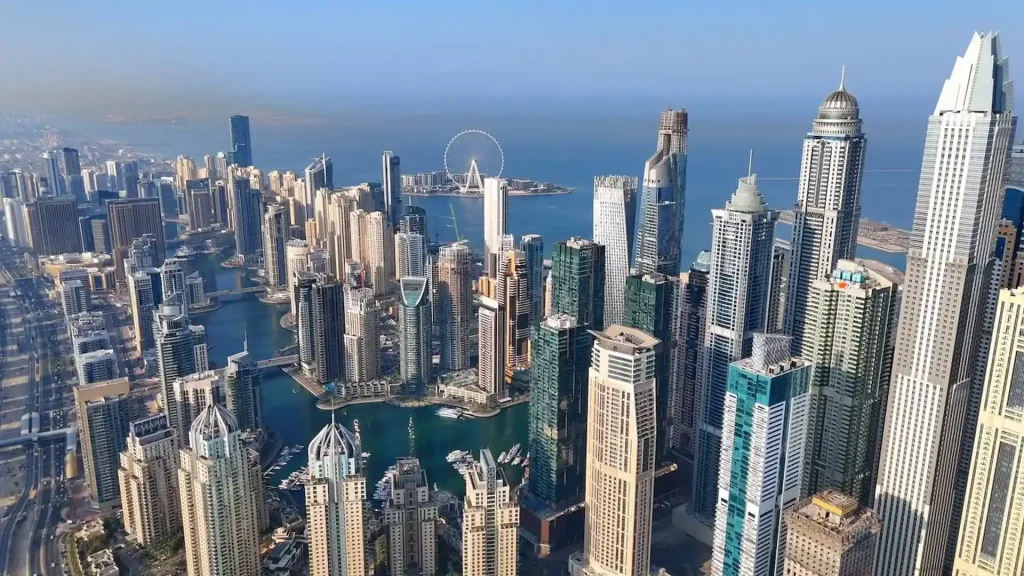
Dubai’s property market has experienced a dramatic upswing over the past five years, with the average cost per square foot rising to more than double previous levels, reflecting strong investor demand.
Dubai real estate values have surged, with price-per-square-foot more than doubling in just five years.

Dubai’s property sector is demonstrating remarkable momentum, continuing a streak of record-breaking performance in both pricing and transactional volumes as the market matures. New figures published by Property Monitor highlight just how dramatically the landscape has shifted over the past half decade. The report shows that the city’s average cost per square foot has climbed to Dh1,683 as of October 2025 — a level that is more than double what buyers and investors were paying only five years ago.
This surge reflects several forces that have reshaped Dubai’s real estate environment. A combination of strong population growth, expanding employment opportunities, and increased interest from overseas investors has fueled consistent demand across nearly every segment of the market. Developers have responded with a pipeline of ambitious projects, ranging from luxury waterfront residences to master-planned suburban communities, each adding new layers of choice for both end users and long-term investors.
Despite the rapid rise in prices, market analysts suggest that Dubai is not overheating; rather, it is entering a more stabilized and sustainable phase. Regulatory improvements, greater transparency in transactions, and efforts to enhance market data accessibility have contributed to a more mature ecosystem. These factors have strengthened buyer confidence and attracted a broader base of investors seeking safe, high-yielding global property markets.
Transaction activity has also been exceptional, with monthly sales frequently breaking previous records as both local and foreign buyers continue to capitalize on Dubai’s strong fundamentals. From luxury penthouses to mid-market family homes, nearly all sectors have experienced heightened interest.
As Dubai continues to evolve as a global hub for business, tourism, and lifestyle, the property market’s upward trajectory appears firmly supported. The latest price benchmarks underscore the city’s transformation into one of the world’s most dynamic and resilient real estate destinations.
Dubai’s residential property sector continued to progress through October, maintaining the upward trajectory that has characterized the market in recent years, though the pace of appreciation has clearly cooled compared to the sharper jumps recorded during late summer. According to the latest industry analysis, home prices advanced only marginally—by around 0.13 percent for the month—representing a visible deceleration from September and August, when growth was substantially more vigorous. Despite this tapering, analysts stress that the broader trend line continues to point upward. The real estate market, they say, is still expanding, but in a manner that suggests the beginning of a more balanced and sustainable cycle rather than the rapid climb seen earlier.
The newest monthly report underscores that while October’s results may appear modest on a month-to-month basis, they should not be interpreted as a sign of weakening fundamentals. Instead, experts describe the change as natural moderation after a prolonged period of strong performance. They note that the sector’s foundations remain solid, with demand still supported by factors such as robust economic activity, population inflow, and heightened confidence among both domestic and international buyers. “Even with this slower pace, the market continues to climb steadily,” the report explained, adding that Dubai’s long-term growth curve remains intact even if monthly fluctuations have started to level off.
Entering the year’s final quarter, Dubai’s property market appears to be settling into a healthier rhythm—one shaped by stability rather than exuberance. Transactions remain elevated relative to historical patterns, demonstrating that buyers are still highly active. However, price behaviour is becoming more predictable, a sign that the frantic rate of expansion that dominated earlier stages of the cycle is giving way to a more measured, mature environment. This shift is welcomed by many market observers, who have long argued that sustainable growth is ultimately more beneficial than rapid, unsustainable spikes.
Property Monitor, which compiled the latest data, highlighted that October was the first month of 2025 in which the market did not set a new price peak. That milestone, rather than indicating a downturn, reflects a normalization process underway. The noticeable drop in monthly growth rates aligns with patterns observed in markets that have moved past their most aggressive expansion periods. Analysts say this moderation is both expected and healthy, signalling that Dubai’s real estate cycle is transitioning from breakneck momentum to steadier progress.
Despite the absence of a new record high, the level of activity across the sector remained exceptionally strong. Residential transactions continued to outperform long-term averages, with both off-plan and ready-property segments attracting considerable attention. Investor appetite has not diminished; instead, buyer strategies appear to be shifting. Rather than chasing sharp price jumps, investors are increasingly prioritizing long-term value, rental returns, and stable capital appreciation. This behavioural change mirrors global real estate trends in emerging and maturing markets alike, where periods of explosive growth are typically followed by phases of consolidation.
The moderating pace of price increases is also consistent with broader economic developments. Dubai has experienced significant expansion over the past several years, driven by its diversified economy, robust tourism sector, and continued investment in infrastructure. As these forces stabilize at high levels, real estate growth naturally becomes more linear. The government’s ongoing regulatory enhancements have also played a central role in creating a more balanced environment. Measures focused on increasing transparency, improving data availability, and promoting fair market practices have strengthened buyer confidence, in turn fostering healthier competition among developers and sellers.
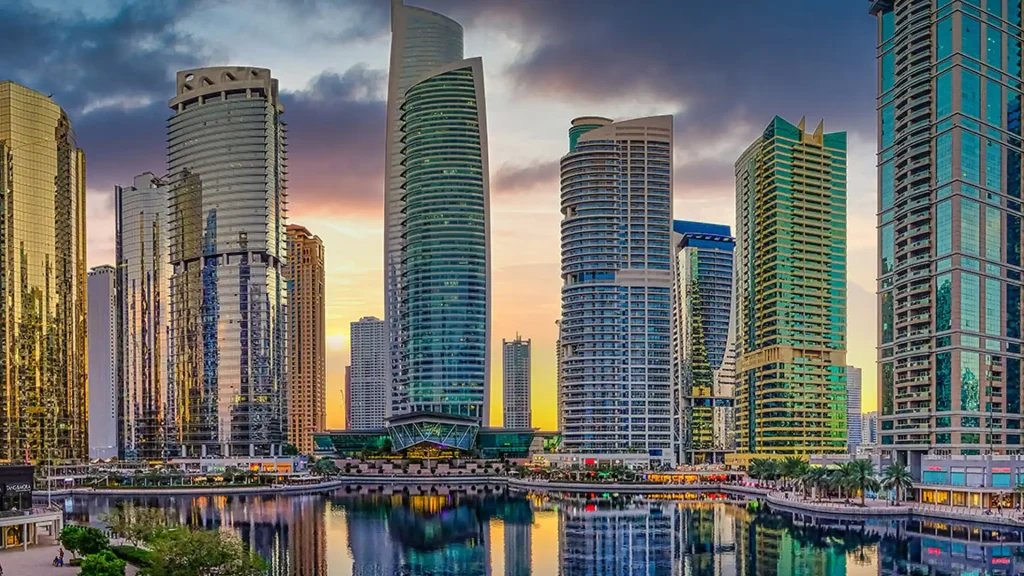
Market analysts note that the slowing of monthly price gains should be viewed as a positive sign, as it reduces the risks associated with overheating. Rapid price surges can ultimately lead to affordability challenges, speculative behaviour, and volatility. A gradual, moderated rise encourages long-term market health, allowing salaries, rents, and investment returns to adjust more evenly. October’s data suggests Dubai is successfully navigating this transition, sustaining growth while avoiding the pitfalls of overheating that other global real estate hubs have faced.
Developers are also adjusting their strategies in response to the changing tempo of the market. While launch activity remains robust, project planning has become more carefully aligned with genuine end-user demand. New communities continue to emerge in suburban districts, catering to families seeking larger living spaces and lifestyle-oriented amenities. In the luxury segment, high-end waterfront developments and branded residences are still attracting strong interest, particularly from overseas buyers who see Dubai as both a lifestyle destination and a secure haven for capital.
Rental market dynamics further reinforce the narrative of normalization. After a period of intense upward movement, rents are stabilizing in many neighbourhoods, though prime areas continue to see moderate increases due to ongoing demand from expatriates and professionals relocating to the emirate. This stabilization provides relief for tenants and supports broader economic mobility, ensuring Dubai remains an accessible market for residents seeking long-term housing solutions.
Looking ahead, experts anticipate that Dubai’s property market will continue on its steady upward path, though without the dramatic surges recorded in previous quarters. Price increases are likely to remain modest but consistent, driven by stable demand, controlled supply, and strong confidence in the emirate’s long-term prospects. Transaction volumes are expected to remain healthy, supported by favourable payment plans, attractive mortgage options, and the city’s reputation as a safe, well-regulated global real estate destination.
In summary, October’s softening does not indicate weakness; it represents evolution. Dubai’s real estate market is transitioning from rapid, high-velocity expansion to mature, sustainable growth. Prices are still rising—just at a pace that reflects stability rather than exuberance. Activity remains historically strong, investor sentiment is robust, and the underlying fundamentals continue to support long-term appreciation. For buyers, sellers, and developers alike, this shift signals the emergence of a more predictable and resilient market landscape—one that is built not on short-term spikes, but on sustained confidence and enduring economic strength.
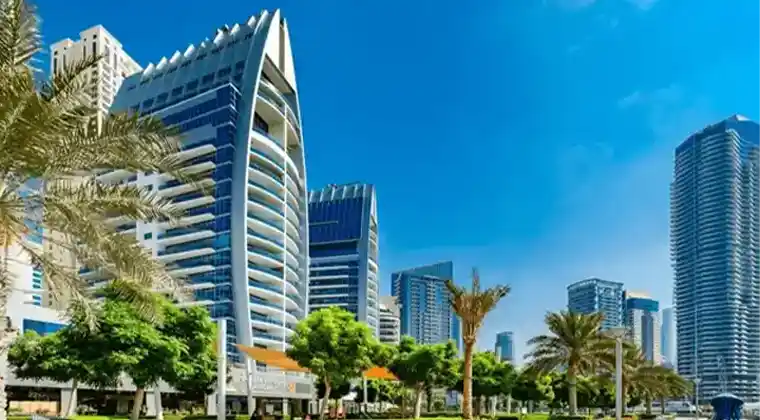
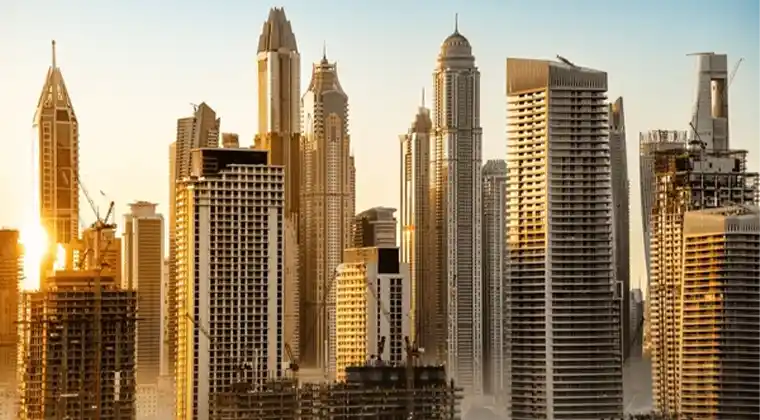
Dubai’s real estate development ecosystem continued its impressive pace throughout the first ten months of 2025, reflecting the emirate’s ongoing transformation into one of the world’s most active construction and investment hubs. The scale of new project launches has reached levels rarely witnessed in global property markets, with both established developers and newly emerging players rapidly expanding their portfolios to capture growing demand from residents, investors, and international buyers seeking high-quality housing options. The environment is one of confidence and acceleration, with supply expanding at a rate that would have once been considered extraordinary.
The month of October 2025 alone illustrated this momentum with clarity. Over those thirty-one days, Dubai saw 65 new project launches, contributing more than 14,000 residential units to the market. The combined value of these developments reached an estimated Dh33.5 billion, underscoring the sheer magnitude of construction activity. These numbers reflect not just short-term enthusiasm but also deep conviction across the development community that the demand base for Dubai real estate remains strong and broadening across income groups and lifestyle segments.
When the cumulative data for the year is examined, the scale becomes even more remarkable. A total of 532 projects have been launched in Dubai between January and October 2025. These projects collectively represent nearly 131,504 residential units, a volume that would typically characterize an entire year—or even several years—of development in many cities around the world. For Dubai, however, it forms part of a deliberate, sustained cycle of expansion that aligns with the city’s continuously growing population, robust investor sentiment, and ambitious urban planning strategy.
The diversity and rising number of developers participating in the market further highlight the depth and dynamism of the sector. As of October, 228 developers have launched projects in 2025, significantly higher than the 163 developers active during the same period in 2024. This surge indicates not only a healthy competitive environment but also the growing number of firms—from boutique builders to large international real estate companies—seeking to capitalize on Dubai’s strong economy, business-friendly environment, and global appeal.
Apartment buildings and multifamily housing dominated the new launches in October, reflecting the continued demand for vertical living in a city where urban density, lifestyle convenience, and investment value play crucial roles. Apartments made up 99 percent of all units introduced, while villa and townhouse launches were limited to just 144 units. This imbalance between apartment and villa supply has been a recurring theme in Dubai’s development landscape, largely because apartment projects typically offer faster delivery cycles, broader investor appeal, and more flexible pricing tiers suitable for the mass market.
However, market analysts emphasize that this trend is likely to shift in the months ahead. Property Monitor’s research team notes that the forward pipeline includes significant new allocations for single-family homes, a category that has historically seen tight supply due to limited land availability and strong end-user demand. With families, long-term residents, and high-income expatriates showing increasing preference for more spacious, community-oriented environments, developers are strategically positioning themselves to respond.
Several of Dubai’s most prominent master developers have already announced upcoming phases dedicated to villas and townhouses. Emaar is preparing to unveil new clusters at the Grand Polo Club and The Valley, two communities known for their family-centric masterplans and emphasis on open spaces and recreational amenities. The much-anticipated redesigned launch of The Heights is also expected to broaden the range of villa options in emerging suburban districts. Meanwhile, Damac is advancing with the first phase of Damac Islands 2, a project designed to expand the developer’s waterfront offering and appeal to buyers focused on exclusive, resort-style living. In addition, Wasl is set to continue its enhancement of the Jumeirah Golf Estates area, a long-established luxury enclave that remains in high demand among investors seeking prestige and premium-quality living environments.
This shift toward more villa and townhouse availability marks an important step in balancing Dubai’s residential landscape. Over the past few years, the surge in apartment launches has satisfied investor demand but has left family-oriented buyers searching for more options in masterplanned communities. With new zones, infrastructure improvements, and expanded suburban districts, developers now have both the incentive and opportunity to increase low-density residential supply.
The overarching trend driving this exceptional development activity is confidence—not only among developers but across the entire spectrum of stakeholders in Dubai’s real estate market. Population growth continues to outpace many global cities, driven by business expansions, visa reforms, and the emirate’s ability to attract entrepreneurs, skilled professionals, and remote workers. The city’s reputation as a secure, tax-friendly, innovation-driven destination encourages both long-term settlement and high levels of foreign investment. These conditions create stable and rising demand for housing across multiple price brackets.
Another underlying factor is Dubai’s strong regulatory environment, which has been refined over the years to promote transparency, protect buyers, and ensure that development remains aligned with broader urban planning goals. Enhanced reporting standards, digitalized processing systems, and stricter escrow regulations are among the measures that have increased trust in the market. This, in turn, has helped attract new development companies and encouraged existing players to accelerate their project pipelines.
In addition, the surge in launches reflects developers’ long-term view of Dubai’s trajectory. With mega-projects, expanded public transport networks, tourism sector growth, and major economic diversification strategies underway, real estate developers see ample opportunity for future demand. Large-scale masterplans such as Dubai 2040 Urban Master Plan further affirm the emirate’s intention to support sustained population growth, high livability standards, and a thriving real estate ecosystem.
It is also worth noting that the international investor segment remains a powerful driver of demand. Buyers from Europe, Asia, the Middle East, and Russia continue to view Dubai as a stable investment haven with appealing rental yields, flexible ownership rules, and a strong track record of capital appreciation. The influx of foreign capital encourages developers to launch new phases more quickly and scale up project offerings to meet global expectations.
As Dubai approaches the end of 2025, the development landscape suggests that the city’s property market is preparing for another strong year ahead. The pipeline is dense, diverse, and strategically planned, indicating that developers remain confident not just in current conditions but also in the emirate’s medium- and long-term prospects. Whether in high-rise towers, family communities, waterfront neighbourhoods, or golf estates, Dubai is solidifying its position as one of the world’s most ambitious and prolific real estate development arenas.
Dubai’s real estate market continues to demonstrate exceptional strength in 2025, with property transactions rising at a pace that consistently breaks previous performance benchmarks. The emirate’s sales activity has not only maintained its momentum throughout the year but has also reached new heights, reflecting deep buyer confidence and sustained interest from investors across the globe. The high level of engagement in both off-plan and ready-property segments shows that Dubai’s appeal as a real estate investment destination remains firmly intact.
Recent market indicators show that demand has remained resilient even in the face of increasing prices, global economic uncertainty, and tightening financial conditions in many regions. Buyers—ranging from long-term residents to international investors seeking safe-haven assets—continue to snap up units at remarkable speed, pushing transaction volumes to levels that surpass anything previously recorded this early in the year.
As of the end of October 2025, the total number of property transactions completed in Dubai has climbed to nearly 178,000, representing a 17.4 percent increase compared to the same ten-month period in 2024. This figure already amounts to 98 percent of last year’s total annual sales, meaning the market is on track to exceed the previous year’s performance well before the final figures for December are compiled. For analysts observing the sector, such numbers provide clear evidence of how dynamic and fast-moving Dubai’s real estate landscape has become.
One of the most striking aspects of 2025’s market activity is its stability. Instead of short-lived spikes in sales, Dubai has seen consistent month-after-month growth, with average monthly transactions sitting at roughly 17,300 units over the last twelve months. Only two months during this period recorded fewer than 15,000 transactions—an impressive performance that underscores the breadth of demand across property categories, price ranges, and neighbourhoods. This consistency indicates that the market is not dependent on sporadic surges or isolated development releases; rather, it is supported by a wide and diverse base of buyers responding to ongoing supply.
Market analysts attribute this growth to several key factors. First, Dubai’s economic outlook has remained positive, supported by population growth, business expansion, and the emirate’s status as a global hub for investment, tourism, and innovation. The continued introduction of long-term visas, expansion of remote work residency options, and improvements in regulatory transparency have all contributed to an uptick in international interest. Buyers from Europe, South Asia, China, the GCC, and Africa are increasingly viewing Dubai as a dependable destination for capital preservation and high rental yields.
Another driver is the strong performance of the off-plan market. Developers have launched an unprecedented number of new projects in 2025, providing buyers with abundant and varied options—from luxury waterfront towers to suburban family communities. Flexible payment plans, improved design quality, and branded residences have further stimulated demand among both homeowners and investors. Many buyers are eager to secure units now before prices climb higher, which in turn supports ongoing transaction volume.
The ready-property market has also remained exceptionally active, particularly in established neighbourhoods where supply remains limited. Villas, townhouses, and premium apartments in popular districts continue to witness intense competition among buyers, sometimes resulting in rapid sales or bidding wars. This segment of the market benefits from a constant inflow of new residents seeking immediate occupancy, as well as investors attracted to the strong rental returns that Dubai consistently offers.
Given these strong fundamentals, projections for the remainder of the year paint an even more remarkable picture. If the current pace continues through the end of December, total sales for 2025 are expected to reach more than 212,000 transactions. This would not only set a new all-time annual record but also mark the third consecutive year in which Dubai’s property market has achieved record-shattering results.
Such an achievement would underscore the long-term strength and resilience of Dubai’s real estate sector. Rather than being driven by short-term speculation, the sustained rise in transactions suggests a deepening foundation built on structural demand, regulatory improvements, and the emirate’s ongoing evolution as a world-class city. The ability of the market to absorb large volumes of new supply while maintaining strong sales momentum is a testament to both its maturity and its enormous growth potential.
Looking forward, market experts believe that Dubai will continue to attract buyers despite global uncertainties. The city’s strategic position, high quality of life, expanding infrastructure, and increasingly diversified economy make it an appealing choice for investors across multiple regions. While the pace of price growth may moderate as the market advances into a more stable phase, transaction volumes are expected to stay elevated, supported by strong off-plan pipelines, a growing population, and ongoing investor interest.
In summary, 2025 is shaping up to be a historic year for Dubai’s real estate market. Nearly 178,000 transactions completed in just ten months highlight the unmatched vibrancy of the sector. With sales likely to surpass 212,000 by year-end, Dubai is poised to secure yet another annual record, reinforcing its position as one of the most active and resilient property markets worldwide. The city’s ability to continually outperform expectations reflects not only strong demand but also a broader confidence in Dubai’s vision, economic outlook, and long-term real estate prospects.