In the UAE, a paralysed woman woke from a three-month coma and was informed she had given birth while unconscious, discovering her baby for the first time upon awakening there.
UAE: Paralysed woman awakens after 3-month coma to learn she has given birth.
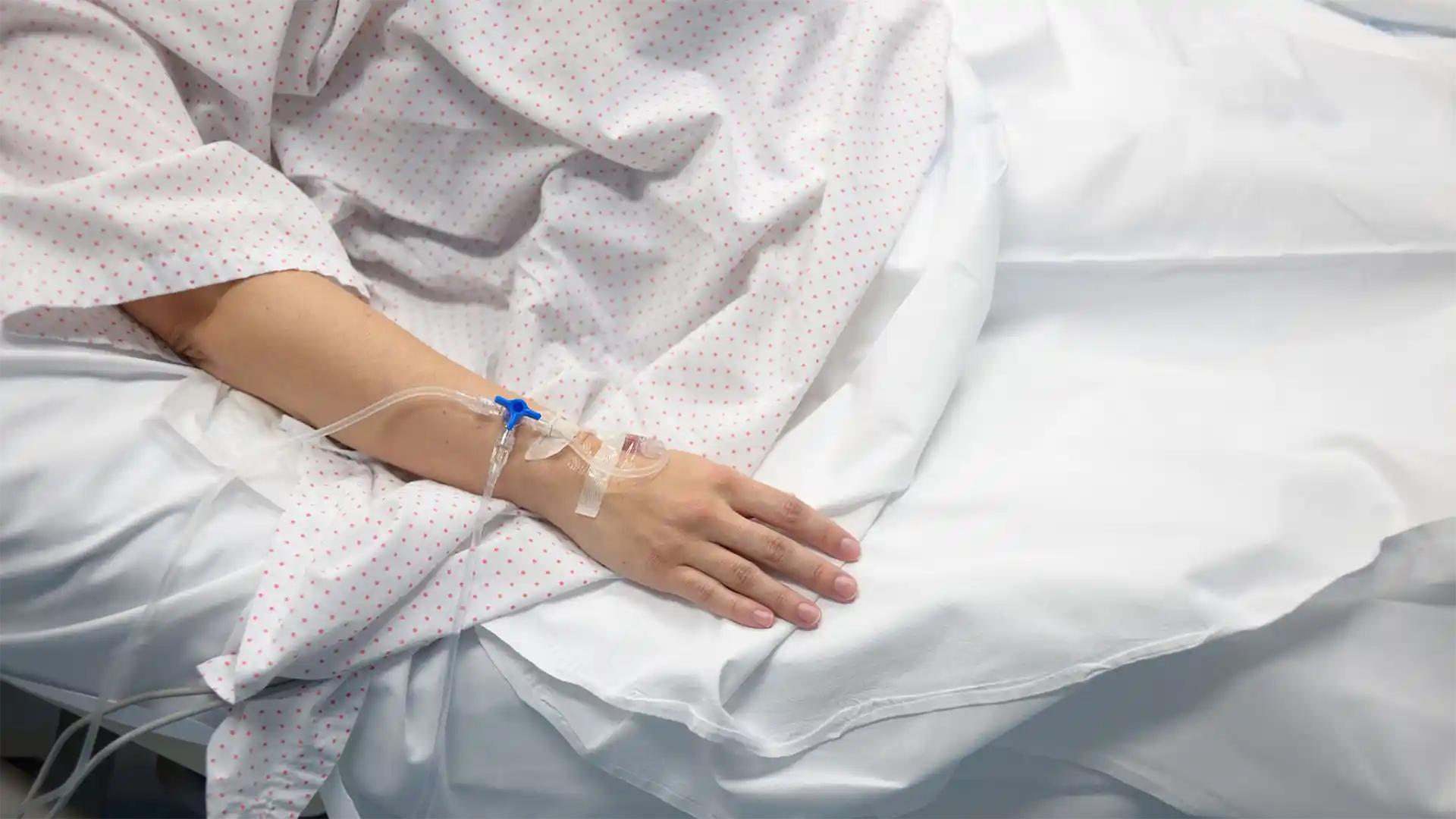
A woman from the United Arab Emirates, Amal Othman, spent an astonishing three months lying unconscious in a hospital bed, suspended in a state where no one could predict how her story might end. When she finally opened her eyes, she discovered that her world had changed in ways she could not have imagined. She awoke unable to move her body, unable to produce a sound, and struggling to piece together the fragments of time that had slipped away from her. In that vulnerable moment, when she was still trying to understand why her limbs would not respond and why her voice felt trapped inside her, she was told something that instantly cut through the haze of fear and confusion: she had given birth to a baby girl while she was in the coma.
For Amal, the news was overwhelming, not because it frightened her, but because it brought light into a period her family describes as filled with uncertainty, prayer, and the constant shadow of loss. She later explained that learning she had become a mother was like receiving a message of hope after drifting for months in what she called the space “between life and death.” Even though she could not yet embrace her daughter or speak her name, the simple knowledge that a new life had entered the world because of her filled her with joy that outweighed the shock of her physical condition.
Amal had been receiving critical care at Cleveland Clinic Abu Dhabi (CCAD), where medical teams worked around the clock to keep her alive as her organs repeatedly shut down. Her condition was so severe that doctors had to rely on advanced lifesaving measures, including emergency surgery and continuous use of ECMO — a machine that oxygenates the blood and circulates it through the body when the heart and lungs can no longer function on their own. Her case became one of the longest ECMO-supported survival stories ever documented at the facility, a testament both to the dedication of her medical team and the remarkable resilience of her body.
Throughout her coma, doctors fought complication after complication, never being able to give her family definitive answers about the outcome. Each day was unpredictable; at times, her vitals dropped so sharply that the team was forced into rapid intervention, while on other days she remained stable enough to inspire cautious optimism. Her pregnancy added an additional layer of complexity, requiring specialists to consider not only her survival but also the well-being of the unborn child who depended on her.
When Amal finally regained consciousness, the medical staff and her loved ones approached her recovery gently, understanding that she would need time to process how drastically her life had shifted. They explained to her—slowly, patiently—how she had endured near-fatal organ failure, the intense procedures required to save her, and the reasons she could not yet move or speak. But amid all those explanations, the announcement that she had brought a daughter into the world stood out as the moment that transformed her awakening from one of fear into one of gratitude.
Today, Amal describes the revelation of her child’s birth as a gift that gave purpose to her struggle. It became the emotional anchor she needed to begin the long journey toward healing after surviving an ordeal that few people ever experience.
Amal’s difficult journey started unexpectedly during what was meant to be a peaceful pilgrimage for Umrah while she was expecting her daughter. She later explained that everything seemed normal at first and that she had only been dealing with a slight cough, nothing serious enough to cause concern. However, the situation quickly shifted. By the following morning, the cough that had merely irritated her began to intensify, and she soon felt her temperature rising sharply. What began as a minor discomfort escalated into a fever so severe that she struggled to stay on her feet.
The 40-year-old remembers those final moments before losing consciousness with unusual clarity. She described feeling her strength drain from her body as the fever worsened and her breathing became more laboured. She recalls sensing that something was terribly wrong, as though her body was shutting down one system at a time. Then, as she put it, everything faded. It was as if someone had switched off a light, plunging her into an extended darkness that she had no power to resist. That moment marked the beginning of a long, silent battle—one she would not fully understand until months later, when she finally woke up.
When Amal finally opened her eyes after months of unconsciousness, she found herself in a world that felt unfamiliar and unsettling. Instead of waking up in her home in Ajman, surrounded by people she knew, she was met with a room crowded with blinking lights, medical equipment, and faces she could not immediately place. She later said that the first thing she noticed was the overwhelming presence of machines—tubes running across her body, wires connected to monitors, and devices producing constant rhythmic beeps that made her wonder what had happened to her.
As she looked around, the 40-year-old Jordanian expatriate realised that nothing was recognizable. Her body felt detached from her, heavy and unresponsive, as if she had been placed inside someone else’s skin. When she attempted to speak, not even a whisper came out. Panic set in as she tried to make sense of her surroundings, but her limbs would not obey, and her voice refused to return. She described the sensation as waking up in a place that was both real and dreamlike—somewhere that looked like a hospital but felt foreign, almost as if she had been transported to another world entirely.
Despite her confusion, people began approaching her gently. Nurses and doctors leaned over her with cautious smiles, speaking softly, as though afraid she might be frightened by even the slightest loud sound. They tried to reassure her with calm voices, telling her she was safe, that she was being cared for, and that she had survived something serious. Yet their words reached her as fragments, pieces of a story she could not piece together on her own. She saw their lips moving but struggled to grasp the meaning behind what they were saying.
Her family, too, appeared at her bedside, their faces filled with relief and emotion. They held her hands, stroked her hair, and repeated reassuring phrases—expressions of love, gratitude, and comfort. Amal sensed their affection but could not understand why they looked at her with such intensity, or why their eyes sometimes filled with tears. Her mind was still clouded, holding only vague memories from before the darkness overtook her.
In those first moments of awakening, she had no idea how long she had been unconscious. She didn’t know the severity of the medical crisis she had endured or that an entire chapter of her life had unfolded without her awareness. Most startling of all, she did not yet know that she had given birth months earlier—an extraordinary event that everyone around her understood, but she herself had yet to discover.
In the days following Amal’s awakening, her husband took on the difficult task of helping her understand the reality she had returned to. He approached her bedside with great care, fully aware that she was barely beginning to process her surroundings. When he finally spoke, his voice was soft, almost hesitant, as though he feared his words might overwhelm her fragile state. He told her gently that she had not simply been sleeping or sedated for a short while—she had been in a deep coma that lasted an entire three months. For Amal, the revelation felt unreal. Although she had no concept of how much time had passed, she described her experience as drifting through a vast, silent emptiness, a place where there was no direction, no time, no sense of self—only a lingering awareness that she was far from the world she once knew.
Her husband did not tell her everything at once. He allowed her to absorb the first piece of information before returning the next day, ready to continue the story she could not remember living through. When he walked into her room again, he carried something with him, both emotional and physical: reassurance and a photograph. Sitting beside her, he spoke in a calm tone, sharing updates about their family. He told her that the children were safe, that they had been waiting for her, and that life outside the hospital had continued to move forward despite the uncertainty the family faced.
Then came the moment that changed everything for her. He revealed that during the months she was unconscious, their family had grown. They now had a baby girl—born early, fragile, and cared for with extraordinary dedication. He explained that their daughter was already four and a half months old, and then he placed a photo in front of her. For Amal, the image was more than just a picture; it was an anchor pulling her back into life. She stared at the tiny face, the delicate features, the eyes that had never seen her, and she felt a spark within her that had been absent since she awakened.
It was the first genuine moment of hope she had felt since opening her eyes in the hospital. Until then, she had existed in a fog of confusion, unable to understand what her future held or whether she would ever reclaim the life she remembered. But seeing her daughter—this small, perfect being who had entered the world without her awareness—ignited something powerful in her spirit. The child’s existence became a sign that her story was not over. Her survival had meaning, and her struggle had a purpose.
She later said that learning about her daughter’s birth affirmed her belief that life continues according to a divine plan. She felt that God had chosen to bring her daughter into the world early for a reason, and that this new life was a reminder that hope can emerge from even the darkest experiences. In that single moment, surrounded by machines and still unable to speak or move, Amal felt the faint but steady assurance that her journey was not ending—it was restarting.
Visions Inside the Coma
While Amal lay unconscious for months, her mind created vivid scenes that felt as real as waking life. Even though her body was immobile and unresponsive, her thoughts wandered through images and moments she couldn’t explain at the time. Among the most unforgettable of these were visions involving her husband. She described seeing him packing belongings, shifting furniture from one room to another, and walking through hallways she didn’t recognise. These scenes came to her with remarkable clarity, almost like watching her life unfold from a distance, even though she believed she was drifting somewhere far beyond physical reality.
She recalled observing boxes being opened and closed, curtains being hung, and rooms being arranged carefully, as though a new household was being set up. In her vision, he seemed focused, busy, and determined, moving items with purpose but also with a hint of exhaustion. At the time, she didn’t understand why she was witnessing these moments or where they were happening. All she knew was that these images appeared repeatedly, leaving deep impressions in her mind, even as she floated in the strange, dim world of her coma.
Months later, after she regained consciousness and her husband began filling in the blanks of her lost time, he mentioned something that stunned her. He explained that during the period she was unconscious, he had been forced to move their family to a new home. With the children to care for and the uncertainty surrounding her condition, he had no choice but to relocate for practical reasons. When he told her this, Amal felt a chill of recognition. She immediately remembered the scenes she had witnessed in the depths of her coma—the rooms being rearranged, the heavy lifting, the boxes—and realised she had somehow “seen” events that were truly taking place outside her sleeping body.
The realisation left her astonished. It was as though a hidden part of her consciousness had remained connected to the world even when her physical senses had shut down. She described the experience as surreal, an inexplicable link between her inner visions and the life she had temporarily left behind. The accuracy of what she had perceived still amazes her, and she considers it one of the most mysterious aspects of her coma journey.
While Amal experienced these visions, her medical team at Cleveland Clinic Abu Dhabi (CCAD) was fighting relentlessly to save her life. Doctors later explained to her that she had suffered from an extremely severe form of influenza. What began as a routine seasonal infection rapidly spiralled into acute respiratory distress syndrome (ARDS), a life-threatening condition that causes the lungs to become inflamed and filled with fluid, making breathing nearly impossible. As her situation worsened, complications developed quickly: pockets of air and blood accumulated in her chest cavity, restricting her lungs even further and making her condition critical.
These complications required continuous intervention, advanced life support, and constant monitoring by specialists. The combination of severe flu, ARDS, and the buildup of air and blood in her chest created a perfect storm that pushed her body to the edge. Her coma was not simply a deep sleep—it was a protective state triggered by the body’s overwhelming fight to survive a cascade of medical emergencies.
Looking back, Amal sees her visions as a strange companion to her physical battle, a reminder that even when the body falls silent, the mind can continue to sense the world in ways science still struggles to fully explain.
One of the Longest ECMO Journeys Ever Documented
Amal’s medical crisis became a case that the team at Cleveland Clinic Abu Dhabi will never forget. Dr. Fadi Hamed, one of the critical care specialists overseeing her treatment, later explained that her situation stood out as one of the most difficult and multilayered emergencies they had ever handled. What initially appeared to be a severe bout of influenza rapidly spiralled into a cascade of life-threatening complications, placing her in a condition that required some of the most advanced interventions available in modern medicine.
According to Dr. Hamed, Amal’s lungs had deteriorated to a point where they were barely functioning. The flu had triggered acute respiratory distress syndrome (ARDS), a condition in which the lungs become severely inflamed and filled with fluid, making oxygen exchange nearly impossible. As if ARDS alone wasn’t devastating enough, she developed additional complications—specifically, hemothorax and pneumothorax. These occur when blood and air accumulate around the lungs, compressing them and preventing normal breathing. The buildup was so severe that it required multiple thoracic surgical procedures to relieve pressure and repair the damage. Every operation carried significant risk due to her already fragile state, making her entire course of treatment extraordinarily complex.
While Dr. Hamed and the surgical teams addressed the structural and emergency aspects of her condition, Dr. Ihab Ahmed, a specialist in respiratory failure, was faced with a critical decision. Amal’s lungs were simply too damaged to function on their own, and conventional treatments were no longer enough to keep her alive. Dr. Ahmed determined that she needed to be connected to ECMO—Extracorporeal Membrane Oxygenation—a machine that essentially takes over the role of the lungs (and sometimes the heart) by oxygenating the blood outside the body before pumping it back in. This technologically advanced life-support system is typically used only when a patient is at the most extreme edge of survival.
Dr. Ahmed later explained that placing Amal on ECMO was not a routine measure but a last resort intended to give her a chance to recover while her lungs rested. What makes Amal’s case extraordinary is not simply that she required ECMO, but how long she remained connected to it. Most ECMO treatments last days or weeks. In rare cases, they extend to a few months. Amal, however, was supported by the machine for an astonishing 324 days—almost an entire year.
Her duration on ECMO was unprecedented for the hospital and ranked among the longest documented globally. For nearly eleven months, the machine served as her lifeline, maintaining her oxygen levels and circulation while doctors fought complication after complication. Over this period, she endured infections, surgical interventions, and the day-to-day dangers that come with long-term critical care. Yet, despite the immense complexity of her condition, she gradually pushed through each medical challenge.
Dr. Ahmed expressed deep gratitude and amazement when reflecting on her survival. He emphasised that few patients endure such a prolonged and difficult journey on ECMO and emerge on the other side. Amal did—defying expectations, surviving medical crises that would overwhelm most people, and surpassing what many would consider medically possible.
Her case, now remembered by her doctors as a testament to resilience and the sophistication of modern critical care, stands as an example of extraordinary endurance—both human and medical.
A Long Road to Regaining Strength
Throughout Amal Othman’s nearly year-long stay at the hospital, one of the people who witnessed her slow and determined fight to regain her abilities was physical therapist Rami Boyles. He recalls that when he first met her, she was almost completely immobilised. Months of critical illness, surgeries, and life-support had left her body extremely weak, and she was unable to move even her hands or legs without assistance. Every small action was a challenge; even shifting slightly in bed required effort and support.
Boyles explained that the rehabilitation journey had to begin gently and gradually. At first, the focus was on helping her regain even the smallest degree of mobility while she remained lying down. They started with passive exercises, moving her limbs for her, encouraging circulation and preventing further muscle deterioration. These sessions were slow and delicate, but essential for her long-term recovery.
As time passed and Amal’s condition stabilised, the team introduced slightly more demanding activities. They encouraged her to sit supported at the edge of the bed—a milestone that may seem minor to a healthy person, but for someone emerging from prolonged immobility, it was monumental. Boyles described how each stage of her progress brought both challenges and moments of emotional triumph. There were days when she could tolerate only a few minutes upright, and others when she surprised the team with newfound strength. Through every small step, the therapists remained hopeful, refusing to give up on her even when progress stalled.
The commitment of the rehabilitation team was driven not only by medical responsibility but by a genuine belief in her potential to recover. Boyles said that seeing her eventually stand—after months of being unable to move—was one of the most rewarding moments of his career. For the team, watching her rise to her feet symbolised far more than physical strength; it represented resilience, perseverance, and the extraordinary human capacity to fight back after being pushed to the limits. “We felt we had accomplished something deeply meaningful,” he explained, proud of the role the rehabilitation staff played in her journey.
Dr. Fadi Hamed echoed this sentiment when he reflected on Amal’s case. He emphasised that her medical story was so complex, so layered with moments of crisis and recovery, that it could easily fill the pages of an entire book. According to him, her experience offers a powerful message for healthcare professionals at any stage of their careers. It demonstrates that even the most daunting medical situations can evolve into positive outcomes when teams work seamlessly together, maintaining both clinical precision and emotional hope.
He described Amal’s recovery as a true example of what can happen when specialists from different fields—critical care, surgery, respiratory therapy, physiotherapy, nursing, and more—operate as a single, unified group. Their coordinated efforts, coupled with faith and perseverance, produced a result that many might have thought impossible.
To Dr. Hamed and the team, Amal’s survival and eventual rehabilitation are nothing short of miraculous—a reminder that medicine is not just science, but also dedication, teamwork, and unwavering hope.
Relearning How to Walk — Supported by an Entire Medical Team
When Amal finally reached the stage where rehabilitation specialists felt she could attempt walking again, the process was far from simple. Her body had endured months of immobilisation, invasive procedures, and the toll of life-support treatment, leaving her muscles fragile and her endurance nearly nonexistent. Taking even a few steps required planning, preparation, and the involvement of numerous medical professionals. She remembers how overwhelming it felt the first time she was escorted into the corridor. Rather than walking independently, she was surrounded by a coordinated group of caregivers—physiotherapists, nurses, respiratory therapists, and doctors—all moving in harmony around her.
She described the scene almost like a protective procession. On one side, a nurse would hold her oxygen supply; on another, a respiratory therapist would monitor her breathing. Behind her, someone managed machines that were still essential for her stability. Every piece of equipment had to move as she moved, and every staff member watched her carefully, alert for any sign of fatigue or imbalance. She said it seemed as though she could not take a single step without an entire team lifting her forward with their presence, encouragement, and technical support.
To her, these early walks were not just physical exercises—they were emotional experiences. She felt simultaneously grateful and overwhelmed, knowing that walking even a few meters required a level of support most people could never imagine. But with each attempt, she sensed that life was gradually returning to her, even if progress came in small, painstaking increments.
A Recovery Still in Progress
Although Amal survived a medical crisis that stretched the limits of what her body could endure, she is open about the fact that her healing process is ongoing. Some complications from her treatment have resulted in long-term challenges that she is still learning to manage. One of the most significant is the loss of colon function, a consequence of the severe illness and surgeries she underwent. As a result, she now depends on an external colon pouch to manage her digestive needs.
This change has brought practical, emotional, and financial burdens. Amal explained that the only long-term solution for her condition is a colon transplant—a complex and costly procedure that she has not yet been able to undergo. She speaks candidly about this aspect of her journey, noting that while doctors succeeded in bringing her back from the brink of death, she still faces daily struggles that require continued care. The transplant represents her hope for regaining a sense of normalcy, but achieving it depends on resources and support she is still hoping to secure.
Despite these challenges, Amal remains profoundly grateful for the progress she has made. She acknowledges the miracle of her survival while also emphasising that her medical story is far from complete. Her recovery, she says, is a path she must keep walking—sometimes with the help of machines, sometimes with the support of others, but always with determination and faith.