“Dubai is experiencing rapid growth as nearly 470 people move in each day, yet the city’s construction pace remains slow, producing only 150 new homes daily to meet rising demand.”
Dubai Adds 470 Residents Daily, but Only 150 New Homes Are Built.
Industry specialists are observing a widening gap between the number of people moving to Dubai and the availability of newly completed homes. The emirate’s appeal continues to grow, drawing in a steady stream of expatriates seeking career opportunities, international investors looking for strong returns, and high-net-worth individuals attracted by Dubai’s lifestyle, safety, and business-friendly policies. As this diverse mix of newcomers arrives, demand for housing in both established and emerging communities has intensified faster than developers can bring fresh residential units to the market.
Analysts note that the population has been rising at a remarkable pace, fueled by economic expansion, large-scale infrastructure projects, and government initiatives designed to attract long-term residents. These include visa reforms, new business regulations, and incentives that make it easier for investors and professionals to put down roots. However, while the demand side grows rapidly, supply pipelines remain comparatively constrained. Developers face long construction cycles, limited land availability in prime districts, and the challenge of keeping up with an ever-evolving market.
This imbalance, experts say, is not a short-term issue. Many expect the influx of new residents to continue steadily for several years as Dubai strengthens its position as a global hub for finance, tourism, technology, and entrepreneurship. The emirate’s resilience during global economic fluctuations has also enhanced its reputation as a stable place to live, work, and invest.
Given this outlook, property professionals believe that the pressure on housing inventory is likely to persist for the next three to four years. Instead of easing, the strong demand is expected to provide ongoing support to the real estate sector, influencing prices, rental yields, and development strategies. As long as population growth outpaces the delivery of new residential units, Dubai’s property market is projected to remain dynamic, competitive, and attractive to both local and international buyers.
Recent figures released by the Dubai Data and Statistics Establishment highlight the pace at which the city continues to attract new residents. In the span of only one month, Dubai recorded a population increase of more than 17,600 people, pushing the overall number of inhabitants to approximately 4.04 million by the middle of November. This sharp uptick reflects the emirate’s growing status as a preferred destination for individuals seeking better career prospects, a high quality of life, and a stable environment for long-term investment.
A significant share of these newcomers consists of expatriates drawn by the region’s expanding job market and competitive salaries. Dubai’s strong economic performance across sectors such as technology, finance, logistics, tourism, and real estate continues to create opportunities that appeal to skilled professionals from around the world. At the same time, investors are increasingly choosing Dubai as a base due to its business-friendly policies, attractive tax environment, and the security associated with a well-regulated market.
The momentum in population growth is also supported by government initiatives aimed at making residency more accessible, including long-term visas and flexible business licensing options. Together, these elements contribute to a steady and sustained flow of new arrivals, reinforcing Dubai’s position as a thriving global metropolis.
Recent projections for Dubai’s residential market reveal a widening gap between the number of new homes entering the market and the volume of new residents relocating to the city. According to figures referenced in industry assessments by Cushman and Wakefield Core, the emirate is expected to deliver approximately 7,800 new units in the third quarter of 2025, followed by a projected 14,900 units in the final quarter of the year. When these numbers are added to earlier completions, the total for 2025 is estimated to reach around 44,000 units. Although this may appear substantial at a glance, analysts point out that this level of supply is still far from sufficient to keep pace with the extraordinary population growth Dubai is currently experiencing.
The city has been attracting an unprecedented influx of newcomers—ranging from skilled expatriate workers and young professionals to foreign investors, entrepreneurs, and high-net-worth individuals seeking a safe, stable, and tax-friendly environment. As a result, the demand for housing has intensified much faster than developers can respond with new inventory. This disparity between supply and demand is becoming visible not only in the real estate data but also in the daily experience of residents as the city’s infrastructure adapts to accommodate rapid growth.
Hassan Saliba, CEO of Stage Properties, emphasized this imbalance during a recent industry discussion. He noted that even though many residential units have already been sold or are currently being released onto the market, the volume remains inadequate compared to the number of people moving into Dubai. Saliba drew attention to everyday signs of expansion across the city: traffic congestion, the construction of new bridges and road networks, and the ongoing rollout of large-scale development projects. All these indicators suggest, in his view, that population numbers are racing ahead of the speed at which new homes can be delivered. According to him, the demand for housing “far exceeds” the available supply, and this trend is likely to extend into the foreseeable future.
Addressing market speculation, Saliba also commented on predictions that Dubai’s property market might undergo a price correction. Contrary to these concerns, he expressed complete confidence that the emirate will remain on an upward trajectory for the next three to four years. In his assessment, global uncertainties—which often negatively influence major real estate markets—are, somewhat counterintuitively, reinforcing Dubai’s attractiveness. The emirate has positioned itself as a secure haven in a volatile world, offering political stability, strong regulatory oversight, and a consistent commitment to long-term economic development.
Saliba further elaborated that Dubai continues to outperform expectations because it combines multiple advantages that are rare to find together in a single destination. These include high personal and financial security, a luxury-oriented lifestyle, state-of-the-art infrastructure, and a zero-income-tax environment that appeals strongly to both residents and investors. In his view, the combination of lifestyle benefits and financial incentives creates a unique ecosystem where people are not only buying property for investment returns but also choosing to live, work, and build long-term futures.
He reiterated that, based on the current influx of residents, the pace of economic activity, and ongoing government initiatives, Dubai is poised to maintain strong demand for residential property well into the next several years. As long as new arrivals continue to outnumber the homes being delivered, the market will remain supportive of price stability and further growth. For investors, he argued, this makes Dubai one of the most compelling real estate markets globally, where long-term value, security, and opportunity come together.
Dubai’s rapid population expansion continues to place significant pressure on its residential market, with new figures illustrating the scale at which the emirate is attracting fresh arrivals. Industry specialist Vitesh K. Kohli, principal consultant at Real One Assets, noted that the city’s population surpassed 4.03 million in October 2025, reflecting an impressive 4.47% annual increase. When broken down, this growth translates into an estimated 470 new residents choosing Dubai as their home every single day. With household sizes and living patterns taken into account, this level of population inflow generates a need for roughly 150 additional homes each day, far surpassing the current pace of residential handovers.
Kohli emphasized that Dubai is experiencing one of the strongest periods of demographic and economic expansion in its modern history. The emirate continues to draw a diverse mix of individuals—from professionals pursuing career advancement, to families seeking an elevated lifestyle, to global investors moving capital into safer and more profitable markets. The city’s appeal has been reinforced by its stable governance, ambitious development plans, business-friendly regulations, and consistently high quality of life. As a result, both human and financial inflows are outpacing earlier expectations.
However, Kohli pointed out that while demand has surged, the housing pipeline is struggling to keep pace. Construction timelines, regulatory processes, and finite land availability in prime districts mean that new homes cannot be brought to market quickly enough to satisfy the accelerating needs of an expanding population. This supply gap is becoming increasingly visible in both rental and sales markets, where competition for well-located properties has intensified.
For buyers, Kohli believes the current environment signals strong long-term fundamentals. The persistent mismatch between population growth and residential supply is likely to support steady price appreciation, particularly in low-density segments such as villa communities and townhouse developments. These types of homes remain limited in number, and as more affluent families and expatriates relocate to Dubai, demand for spacious, lifestyle-oriented living continues to rise.
According to Kohli, the inflow of wealth and investment is not a temporary spike but part of a broader, long-term trend driven by Dubai’s growing global profile. As long as newcomers outnumber the homes being delivered, the market will remain tight, creating an environment that favors capital growth for property owners. In his view, Dubai’s real estate sector is positioned for sustained strength, underpinned by a population that is expanding at a pace few global cities can match.
Ghassan Saliba, CEO of Stage Properties Brokers, recently highlighted the sheer scale at which Dubai continues to attract new residents. He noted that more than 17,000 people have moved to the emirate in a short period, underscoring the city’s powerful draw for individuals seeking opportunity, stability, and a higher standard of living. This steady flow of newcomers has contributed to persistent demand in the real estate market, where both property prices and rental rates have been rising steadily.
Recognizing the need to balance affordability with growth, Dubai’s leadership unveiled a significant housing initiative earlier this year. In March, authorities allocated land for the development of over 17,000 affordable residential units across a variety of neighborhoods. This large-scale plan aims to ensure that the city remains accessible to residents from different income levels, offering them a chance to secure quality housing despite ongoing market pressures.
The affordable housing program forms part of a wider strategy to support residents during a period of rapid economic and population expansion. Alongside increasing supply, Dubai has also introduced a series of measures designed to help people transition from renting to owning property. One of the most notable efforts is the First-Time Home Buyer Programme, created to give eligible residents a more feasible path toward homeownership.
Through this initiative, qualifying individuals gain access to priority booking on new project launches, allowing them the advantage of selecting preferred units before they are released to the broader market. The programme also provides special pricing incentives on select developments, helping reduce the financial burden for aspiring buyers. In addition, it offers more flexible and accessible mortgage options, making it easier for residents—especially young families and working professionals—to secure financing for homes priced up to Dh5 million.
These measures reflect Dubai’s long-term vision of cultivating a stable, inclusive, and sustainable housing ecosystem. As the city continues to grow rapidly, both in terms of population and economic strength, government-led initiatives are aimed at ensuring that residents can still find pathways into ownership rather than being limited to the rental market. The combination of expanded affordable housing supply and targeted homebuyer support programs is expected to play a vital role in maintaining market balance.
According to Saliba and other industry analysts, such reforms not only address immediate pressures but also contribute to Dubai’s broader goal of building a future-ready city—one where residents feel secure, empowered, and able to establish long-term roots.
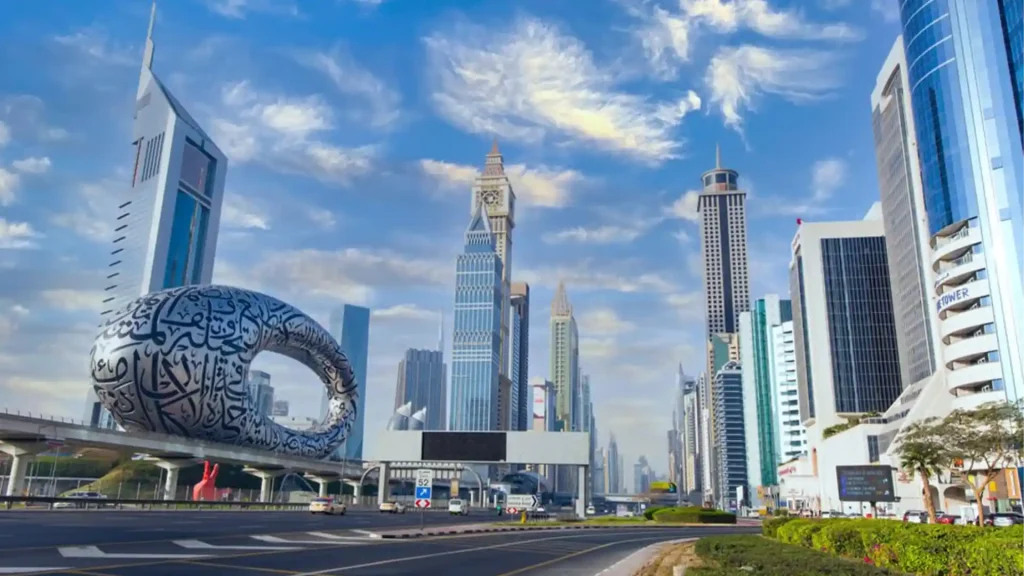
Will Dubai’s future residents be able to afford living in the city?
As Dubai continues to grow at an extraordinary pace, questions are emerging about whether the city can supply enough reasonably priced homes to support its long-term population goals. The Dubai 2040 Urban Master Plan envisions the emirate evolving into a larger, more integrated metropolis with a population of 5.8 million by the end of the next decade and a half. To reach that target, analysts at Allsopp & Allsopp estimate that around 128,000 new residents must relocate to the city every year—a demanding yet achievable benchmark given Dubai’s recent growth patterns.
However, recent demographic trends show that the city is growing much faster than originally projected. According to market assessments, approximately 208,000 people have already settled in Dubai this year alone. This figure far surpasses the annual pace required to meet the 2040 goal, suggesting that the population milestone could be reached ahead of schedule. While the accelerated growth is a testament to Dubai’s appeal as a global hub for work, lifestyle, and investment, it also brings to the surface a pressing concern: the city’s affordable housing supply is lagging behind the influx of residents.
Industry experts caution that even though Dubai’s real estate market has matured and diversified, its current rate of residential development is not enough to match the escalating demand. Allsopp & Allsopp highlight that, even when adopting a conservative estimate of four people per household, Dubai must deliver over 40,000 new homes every year to adequately accommodate incoming residents. Yet, the number of homes actually being completed remains well below that threshold, with delivery rates averaging roughly half of what is required.
The consequence of this shortfall is already visible in both the rental and sales markets. Demand for homes in mid-range and affordable segments has been rising sharply, pushing prices upward and intensifying competition among tenants and buyers. Villas and townhouses—particularly those in established neighborhoods—have experienced steep appreciation due to limited supply. Meanwhile, apartment rents continue climbing in numerous districts as newcomers compete for available stock.
The imbalance between supply and demand raises the possibility that a portion of new and aspiring residents may be priced out of the market. Without a substantial increase in moderately priced housing, those with modest incomes or limited savings could struggle to secure homes within their budget. This challenge affects not only newly arrived expatriates but also long-term renters looking to transition to homeownership.
Experts warn that if affordability issues deepen, the long-term consequences could extend beyond the real estate sector. One of Dubai’s core strengths has always been its ability to attract a diverse mix of workers, entrepreneurs, families, and investors. Should housing costs escalate at a pace that outstrips wage growth or business activity, some demographics may find it harder to establish themselves in the city. Over time, this could slow the very population growth that Dubai aims to achieve through its 2040 vision.
To avoid this scenario, analysts stress the importance of continued investment in affordable and mid-income housing projects. They point to the need for streamlined development processes, greater availability of land for reasonably priced communities, and incentives for developers to prioritize accessible housing options. Such measures would help ensure that Dubai remains competitive and welcoming for a broad population base—not just high-income residents or luxury buyers.
In summary, while Dubai’s rapid growth demonstrates its global appeal and resilience, maintaining a balanced housing ecosystem is essential. Without a stronger emphasis on delivering affordable homes, the risk is clear: new residents and prospective buyers may be pushed out of the market, potentially slowing the city’s long-term expansion and undermining the very vision that the 2040 Master Plan seeks to achieve.