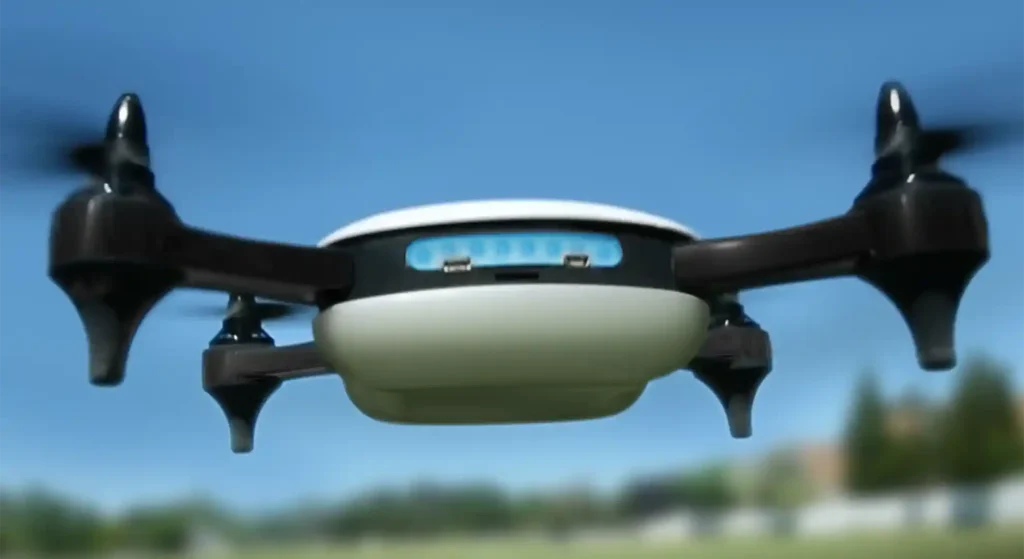
Following ten unsuccessful attempts, Dubai ultimately engineered a groundbreaking drone capable of reaching an exceptional top speed of 580 kilometers per hour, marking a significant milestone in high-velocity aerial innovation.
After 10 Failures, Dubai Achieves a 580 km/h Breakthrough in Drone Speed
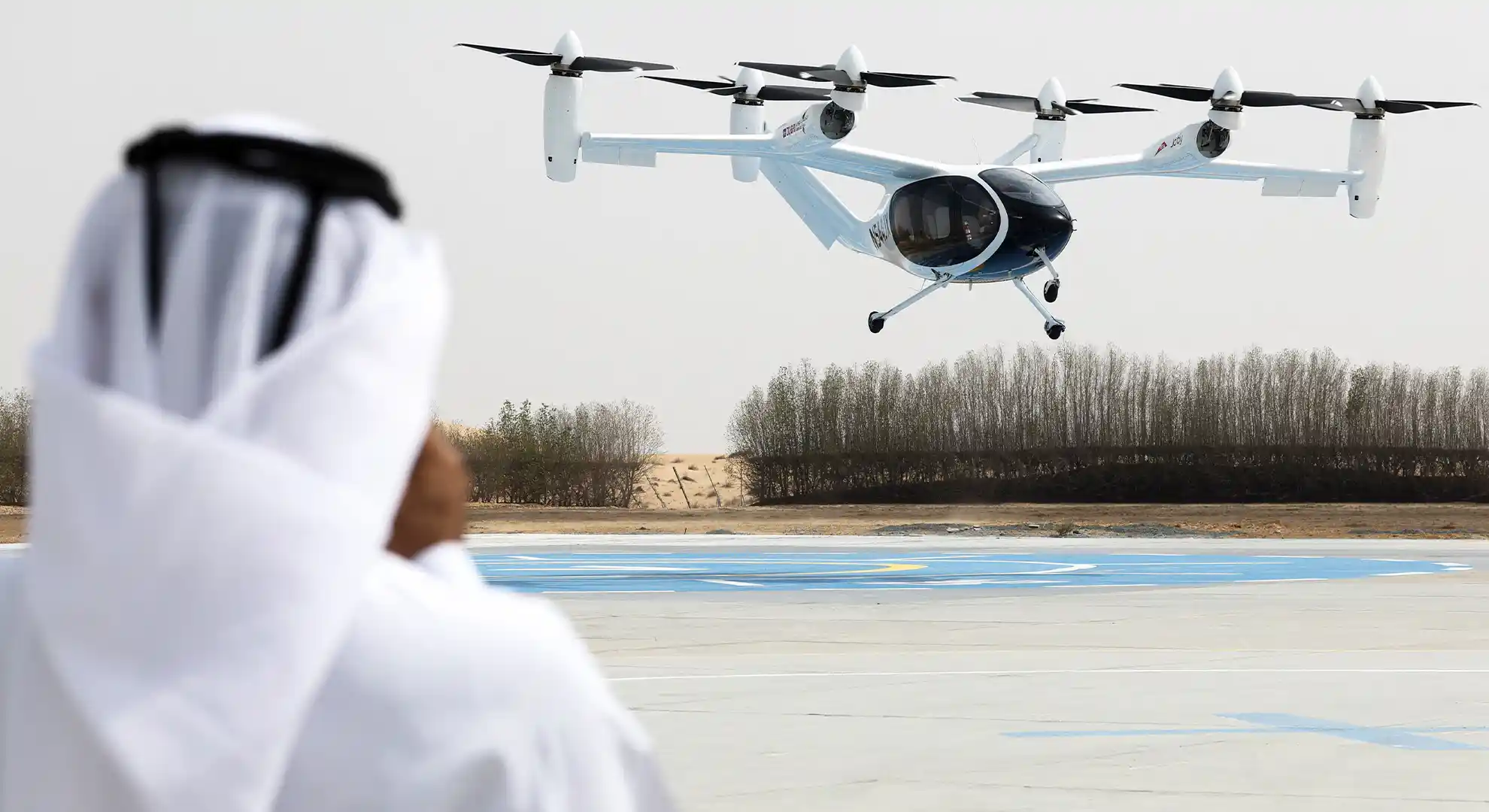
What many witnessed on Monday as a spectacular, headline-making achievement did not begin with triumph. Instead, it emerged from a long stretch of setbacks, broken components, and a team of engineers who—at several points—wondered whether they would ever see success. In a conversation during the 2025 Dubai Airshow, First Lieutenant Reem Al Balushi of the Dubai Police Unmanned Aerial Systems Centre opened up about the journey behind creating what is now recognized as the world’s fastest drone, a project that eventually earned a Guinness World Record. According to her, the accomplishment was the result of relentless persistence through “one of the most demanding engineering obstacles” their unit has ever taken on.
She explained that the earliest stages were far from promising. Nothing seemed to cooperate—not the environment, not the equipment, and certainly not the timing. The team had expected a challenging development phase, but the reality proved even harsher. During test after test, issues surfaced faster than they could be corrected. The engines overheated, sensors malfunctioned, and unpredictable weather conditions disrupted carefully planned trials. On some days, they spent hours preparing for a launch only to abort the mission within seconds due to another unforeseen failure. “It felt as though every variable that could turn against us, did,” Al Balushi said, reflecting on those stressful months.
The number of failed attempts eventually reached ten. Each failure was demoralizing, not only because it set the project back but also because it seemed to erode the confidence of even the most experienced team members. Parts shattered from high-stress loads, structural components had to be redesigned repeatedly, and the drone’s aerodynamics went through cycle after cycle of refinement. There were moments when the team wondered whether they were trying to push the limits of technology too far, too fast. “After every test, we walked away with a new problem to solve. It became a routine—launch, fail, analyze, rebuild,” she explained.
But buried within each failed launch was a clue—a small piece of information that inched the engineers closer to their goal. Their persistence stemmed from the belief that if they could identify the one element that kept holding the drone back, everything else would fall into place. What began as frustration slowly transformed into determination. The team used every setback as an opportunity to learn what the next design iteration required. They reconstructed components, rewired systems, and reconfigured algorithms. Even when fatigue threatened their morale, their shared purpose kept them going.
Eventually, after countless late nights, redesign sessions, and meticulous troubleshooting, all the individual improvements aligned. The engines ran smoothly, the temperature-control systems stabilized, and the drone’s structure held firm against stress levels that had previously caused catastrophic failures. For the first time in the entire project, a launch sequence unfolded exactly as intended. The drone soared, accelerating with unmatched speed, finally achieving the performance they had envisioned from the start. That breakthrough moment—born from persistence, precision, and unwavering teamwork—became the foundation of their record-breaking accomplishment.
At the 2025 Dubai Airshow, visitors expected technological displays, aviation announcements, and futuristic demonstrations. What they may not have anticipated was the revealing narrative shared by the Dubai Police Unmanned Aerial Systems Centre—an in-depth account of how a modest, tightly coordinated team managed to achieve something no law-enforcement agency anywhere in the world had accomplished before. What appears today as a smooth, confident record-setting performance was, in reality, the final chapter of a long, grueling journey filled with challenges that tested the limits of engineering and human endurance.
During the event, representatives from the centre stepped onto the stage not simply to showcase a machine but to recount the extraordinary process that led to its creation. They described how the drone that shattered global speed expectations was not born out of perfect conditions or limitless resources, but rather out of a relentless determination to keep moving forward despite near-constant setbacks. The team faced pressures that extended far beyond the technical realm—tight deadlines that demanded rapid iteration, environmental conditions that created stress on both the vehicle and its engineers, and a series of failures that would have discouraged even the most seasoned professionals.
They spoke of early test cycles conducted in scorching desert heat, where temperatures soared high enough to destabilize even the most carefully calibrated systems. Electronic components overheated, structural parts expanded unexpectedly, and flight behavior became unpredictable. Every session required adjustments, recalculations, and often complete redesigns. Yet, the team refused to interpret these obstacles as signs of defeat. Instead, each failed test became a case study from which they extracted valuable insight. Every malfunction revealed a weakness that could be strengthened, every crash exposed a detail that needed refinement, and every lost hour pushed them to innovate faster and smarter.
The pressure of working against unforgiving deadlines only intensified the challenge. With the airshow approaching and the world’s aviation community gathering in anticipation, the engineers knew that success demanded unwavering focus. They worked through nights, revisited design schematics repeatedly, and evaluated flight data line by line. Collaboration became their strongest tool: ideas were debated, theories tested, and solutions engineered in record time. Although their team was small in number, their persistence amplified their capability far beyond their size.
Presenters at the airshow emphasized that the breakthrough did not come from a single moment of inspiration but from a chain of small victories earned over long periods of persistence. Eventually, all the adjustments, redesigns, and sleepless nights converged into a final design that exceeded their expectations. The drone not only met the performance requirements—they surpassed them. During the decisive test flights, the aircraft demonstrated capabilities that stunned even its creators, validating every struggle that came before it.
By the time they unveiled the project to the world, it was more than a machine; it was a symbol of resilience. The record they achieved—one never before claimed by any police force—stood as proof that a dedicated team, even a small one, can accomplish the seemingly impossible when they refuse to surrender to setbacks.
First Lieutenant Reem Al Balushi recounted that one of the earliest test flights had left the entire team both awed and frustrated. Within moments of takeoff, the drone shot skyward at a speed that seemed almost uncontrollable, disappearing from view in the blink of an eye. But rather than celebrating the apparent success, the engineers were met with disappointment: the aircraft failed to perform as intended. “It wasn’t just a technical failure,” Al Balushi said. “It’s a blow to your confidence. Every time the drone doesn’t behave the way you expect, you have to start all over again, retracing your steps to figure out what went wrong.” In those moments, the team realized that each setback was more than a mechanical problem; it was a test of their perseverance and mental resilience.
She emphasized that the most formidable obstacle was the extreme heat, which placed enormous stress on the engines, circuits, and internal components, particularly during high-speed maneuvers. Every time the drone accelerated to its top limits, temperatures soared to levels that threatened to compromise critical systems. Components warped, electronic systems overheated, and even small misalignments could create catastrophic consequences at such velocities. “We were caught in a cycle,” Al Balushi explained. “We would redesign the parts, rebuild the unit, and launch again, only to discover a new issue. It felt like we were battling against not just the clock, but the air itself, the very environment in which we were trying to succeed.” The work tested not only their technical skills but also their patience, endurance, and creativity, as each solution seemed to spawn another problem waiting to be solved.
Despite the continuous setbacks, the team persisted, learning to treat each failure as a stepping stone rather than a roadblock. Analysis after each test provided small pieces of insight, gradually allowing them to understand the interactions between heat, speed, and mechanical strain. Even so, the process was painstaking and slow. Weeks passed with little apparent progress, each day bringing a mixture of hope and apprehension. The engineers constantly questioned whether they were capable of reaching the ambitious goal they had set for themselves.
Eventually, the project reached a moment of extreme tension and high stakes: they were left with only a single drone for what might be their final attempt. This lone unit represented the culmination of countless revisions, countless hours of work, and immense emotional investment. “This was the last drone we had,” Al Balushi recalled. “At that point, we didn’t know whether it would soar or fail just like all the others before it. Every risk we had taken, every modification we had made, was riding on this one flight.” The anticipation in the team was palpable—they were aware that this flight could define the success or failure of the entire project.
The gravity of the situation underscored both the vulnerability and determination of the team. They had invested everything into this single machine, refining every detail to withstand the extreme pressures it would face at high speeds. That final launch represented the culmination of months of trial and error, technical ingenuity, and unyielding determination. It was a defining moment not just for the drone itself, but for the engineers who refused to surrender, who had turned repeated setbacks into lessons that ultimately paved the way for record-breaking success.
The final launch proved to be a turning point. Confronting intense heat and strong desert winds, the drone maintained stability, surged forward, and ultimately reached a Guinness World Record speed of 580 km/h.
“That single moment transformed everything,” Al Balushi remarked. “It wasn’t merely about setting a record—it demonstrated that the Dubai Police have the expertise to design, test, and operate advanced technological systems capable of shaping the future of law enforcement and public safety.”
The record-breaking drone was created by the Dubai Police Unmanned Aerial Systems Centre in partnership with Luke Bell and Mike Bell, internationally recognized drone experts renowned for their work in high-speed flight innovation.
According to Dubai Police, this collaboration highlights their ongoing dedication to advancing aerial technologies, emphasizing rapid response capabilities, enhancing public safety, and strengthening readiness for emergencies.
Dubai Police stated that the project forms part of a larger initiative to expand the use of drones in law enforcement, security operations, and smart city management.
The force emphasized that the accomplishment “highlights Dubai Police’s dedication to pushing the boundaries of research and development in drone technology, implementing innovative solutions that improve safety and enable faster, more effective response capabilities.”
Officials at the Unmanned Aerial Systems Centre noted that the milestone reflects Dubai’s ambition to establish itself as a global leader in technological innovation, cutting-edge solutions, and forward-looking policing tools.
“Dubai Police is about more than just maintaining safety,” Al Balushi said. “It’s about ensuring public protection while pioneering the future of unmanned law enforcement.”