Local participation plays a vital role in reimagining urban futures, empowering communities to influence planning decisions, enhance public spaces, promote sustainability, and create cities that truly reflect their residents’ needs and values.
The Role of Local Participation in Shaping Urban Futures.
“Individually, we achieve little; collectively, we accomplish much,” observed American author Helen Keller. As the pace of urbanization continues to intensify worldwide, the importance of fostering inclusive urban design has become increasingly evident. Central to this progress is meaningful community participation — not as a superficial formality, but as a vital foundation for building fair, adaptable, and thriving cities.
Ultimately, cities represent more than bricks and infrastructure; they embody the collective values, ambitions, and priorities of their people. This reality highlights the significance of citizen-driven planning in meeting the varied needs and aspirations of diverse urban populations.
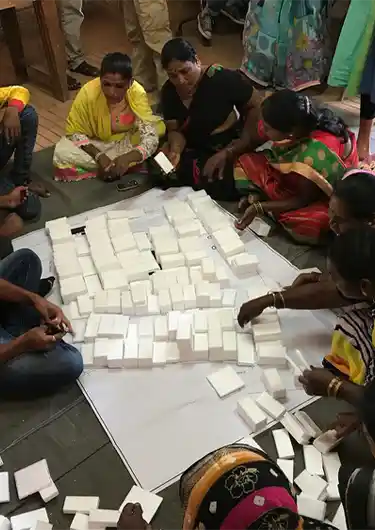
In the past, urban planning largely positioned communities as passive respondents, often involving them only after key decisions were finalized. Today, however, a growing emphasis on co-creation enables residents to take an active role from the very beginning, influencing and shaping their surroundings rather than merely reacting to them
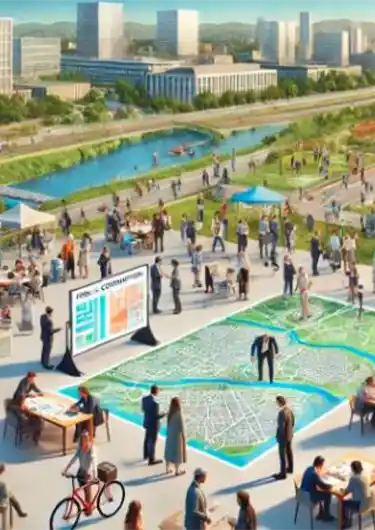
According to experts, collaborative brainstorming, Geographic Information Systems (GIS), and digital surveys help expand perspectives in urban development. This is because integrated planning goes beyond being democratic — it is also strategic, drawing upon the knowledge and expertise of local communities to create solutions that genuinely reflect their unique contexts.
An illustrative example can be found in Sharjah, United Arab Emirates, where municipal councils hold a pivotal position. Close cooperation between residents and government bodies ensures that initiatives — from housing developments and transportation networks to parks and open spaces — align with both cultural traditions and contemporary urban design standards. The Emirate’s approach to public space design, building regulations, and environmental protection demonstrates its commitment to blending local identity with sustainable growth.
Another notable example is Medellín, Colombia, where the concept of urban acupuncture involved local residents in pinpointing sites for small-scale interventions — such as installing public escalators in steep neighborhoods — significantly enhancing both accessibility and residents’ sense of dignity.
Urban acupuncture serves as a sustainable development approach that focuses on precise, localized actions to rejuvenate urban areas. Much like medical acupuncture, which activates healing by targeting specific points in the body, this method stimulates positive transformation across a city by addressing particular urban challenges.
By emphasizing manageable, cost-effective projects — including community parks, green gardens, and public art — collaboration between citizens and stakeholders breathes new life into neighborhoods, tackling social, economic, and environmental issues simultaneously.
In Curitiba, Brazil, renowned architect and former mayor Jaime Lerner exemplified these principles through the creation of a pioneering Bus Rapid Transit (BRT) system. His initiatives not only eased traffic congestion and enhanced mobility but also showcased how strategic, well-planned interventions inspired by urban acupuncture can drive large-scale, sustainable urban renewal.
When addressing development gaps, a crucial consideration is designing with equity in mind — focusing on the needs of vulnerable groups, not as an act of charity, but as a means to create fairer, more resilient cities for all. Ensuring equal access to housing, transportation, education, and green spaces requires planning approaches that pinpoint inequality and strategically reallocate resources to counter systemic exclusion.
In Brazil’s São Paulo, innovative mapping tools are used to locate zones of deprivation and direct investments where they are most needed. Meanwhile, Vienna, Austria, integrates gender-sensitive urban planning, introducing measures such as enhanced street lighting, broader pavements, and social housing projects specifically designed to reflect women’s everyday experiences and needs.
Similarly, Copenhagen, Denmark, revived its supply of affordable housing following an era of rapid economic growth and subsequent downturn, acknowledging that maintaining housing affordability is essential for achieving social balance. Tokyo, Japan, has also taken significant steps, implementing programs that cater to its aging population by enhancing healthcare access, mobility, and overall quality of life for older residents.
Ensuring equitable resource distribution involves the just sharing of urban benefits — such as public transport links, educational facilities, and healthcare centers. In this regard, data-driven equity mapping has proven valuable in cities like Boston, USA, and Helsinki, Finland, where demographic data and social indicators are layered to pinpoint areas of greatest need and direct public investment accordingly.
In the pursuit of inclusive environments that prioritize both safety and comfort, the concept of Universal Design (UD) emerged. It advocates for creating products, spaces, and systems that can be used by everyone without the need for modifications or specialized adjustments. The approach emphasizes accessibility for people of all ages, abilities, and backgrounds. When incorporated from the earliest stages of planning, UD proves not only inclusive but also cost-effective, reducing the need for expensive retrofits or later accommodations.
By accounting for diverse human needs throughout the design process, Universal Design helps shape physical and digital spaces, services, and infrastructures that are equitable and user-friendly. Its core principles include fair use, clear communication, and minimal physical effort, ensuring accessibility and dignity for all users.
Key UD elements include:
a) Step-free accessibility — achieved through features such as ramps, lifts, and level pathways — allows individuals with mobility challenges, including wheelchair users and those relying on assistive devices, to move independently and comfortably within public spaces.
b) Tactile signage — incorporating Braille and raised lettering — enhances navigation and safety for people with visual impairments. For instance, Tokyo’s metro system exemplifies UD by integrating tactile maps, auditory guidance, and elevator access, catering effectively to both residents and visitors with varied needs.
c) Audible crossing signals assist individuals with visual impairments by providing clear auditory cues that indicate when it is safe to cross streets. These alerts complement visual indicators to create an inclusive and comprehensive safety system.
d) Multiple means of representation — offering information in different formats — acknowledge that people process and understand content in diverse ways, thereby promoting inclusive learning and communication environments.
Creating inclusive cities also requires tackling environmental risks that tend to disproportionately impact vulnerable populations. Extreme weather events, such as heatwaves, floods, and pollution, often pose the greatest threats to marginalized communities.
Addressing these challenges calls for green infrastructure solutions, such as community gardens, expanded tree canopies, permeable surfaces, and solar-powered shading structures, which both improve urban resilience and enhance quality of life.
For example, New York’s “cool roofs” program focused on low-income neighborhoods, applying reflective coatings to rooftops to reduce urban heat islands. The initiative highlights how environmental equity can be achieved through interventions that are grounded in local communities.
Urban spaces reflect society, and when cultural representation is ignored, it can result in feelings of exclusion and loss of identity. Inclusive urban design gives character and meaning to public architecture, street names, spatial practices, and visual arts.
For instance, Toronto’s Regent Park revitalization incorporated murals and communal spaces celebrating its predominantly immigrant population. Similarly, Sharjah’s heritage districts preserve Islamic architectural traditions alongside modern art venues, fostering intercultural exchange and dialogue.
Because a city’s essence lies in its diversity, public spaces that celebrate multiculturalism act as powerful catalysts for community connection. As a result, active citizen participation has become central to urban development strategies.
As American civil rights leader Cesar Chavez noted: “We cannot seek achievement for ourselves and forget about progress and prosperity for our community. Our ambitions must be broad enough to include the aspirations and needs of others, for their sake and our own.”
The next article will focus on Governance in Sustainability: The Role of Municipal and Consultative Councils in Sharjah’s Urban Planning.
Beyond his public service, Dr. Al Nuaimi is a distinguished writer, poet, and keynote speaker, with more than 50 articles published in both Arabic and English. He is recognized as a leading authority on climate change, renewable energy, and sustainability. His election as a Fellow of the World Academy of Art and Science highlights his dedication to interdisciplinary collaboration and global development.
Dr. Al Nuaimi continues to shape public policy, advance academic discourse, and advocate for environmental sustainability both within the UAE and internationally.