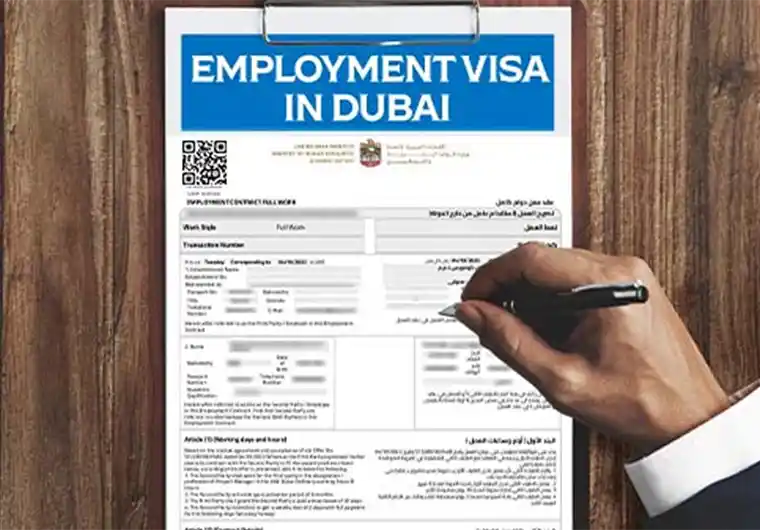
Freelancers across the UAE have expressed approval for more rigorous assessments of self-employment visas, while urging authorities to provide greater transparency and clearer details regarding the implementation of the revised visa regulations.
UAE freelancers support tighter checks on self-employment visas, call for clearer guidelines on updated regulations.

Independent professionals in the UAE have praised the government’s decision to introduce stricter evaluations for self-employment visas, considering the increased oversight a way to boost the sector’s credibility, while also requesting more transparency in the application procedures.
Ahmed Salim, a media professional based in Dubai, expressed his backing for increased regulation, noting that it helps guarantee that the system serves only legitimate freelancers.
“My visa renewal is coming up in a few months, so I’ve been following the updates closely,” he explained. “I’m okay with tougher checks; in fact, it’s a positive move since it ensures the system benefits genuine freelancers. However, there should be clearer guidelines so applicants understand the requirements fully.”
Visa consultants say that the stricter scrutiny is a natural step in improving the system. “The visa has opened opportunities for many to work in the UAE, but some individuals tried to take advantage of it—for instance, by going through unverified agencies, using shell companies, or submitting conflicting documents,” explained Ishaan A., a visa consultant based in Dubai.
He added that the enhanced verification reflects a more developed system. “Whenever a new visa category gains popularity, oversight needs to evolve to maintain fairness and consistency,” Ishaan noted.
Al Marri pointed out that authorities had uncovered several instances of visa misuse or illegal trading, which led to the implementation of extra verification measures. According to Ishaan, applications are now reviewed more thoroughly to confirm the authenticity of each case.
Some freelancers admitted that the process has become more comprehensive—and occasionally slower—but they consider it a necessary step to enhance compliance and strengthen the sector’s credibility.
Rachel (name changed for privacy), a freelance writer, shared that it took her several weeks to obtain clear guidance on the required documents.
“Different sources give conflicting advice. One agency says a trade license is necessary; another says it isn’t,” she explained. “The thoroughness is fine, but what we really need is a single, updated checklist so we know exactly what to do.”
Rachel eventually secured her visa through a registered company.
Officials have emphasized that the stricter checks are intended to reinforce the system, not limit opportunities, ensuring that permits are used correctly. While the freelance visa allows residents to work independently without a sponsor, it does not authorize them to hire staff or sponsor others.
Rachel expressed understanding of the authorities’ intentions behind the stricter measures. “It’s clear why these steps are being taken,” she said. “The government wants to ensure that the freelance sector remains credible and that permits are issued only to legitimate professionals. No one objects to that.” She emphasized that the main challenge for freelancers lies in the lack of clarity and consistency in communication. “What we really need is straightforward information and clear guidance. Different agencies often provide conflicting instructions, which makes the whole process confusing and stressful,” she explained. “If there were one official, up-to-date checklist or guideline that everyone could follow, it would make a huge difference. It would remove uncertainty and help freelancers complete the application process without unnecessary delays or mistakes.”
Rachel also highlighted the importance of predictable timelines. “Even when the rules are reasonable, not knowing how long each step will take makes it difficult to plan projects and manage clients. Freelancers rely on a steady workflow, and any unexpected delays in visa approvals can disrupt our work and financial stability,” she said.
She concluded by noting that while the extra scrutiny might slow down the process slightly, most freelancers see it as a positive development. “In the end, a well-regulated system benefits everyone. We just need clear communication and reliable timelines so we can approach the process confidently and focus on our work without constant uncertainty.”