Motorists across the UAE are waiting to find out whether petrol prices will decline in December. The upcoming fuel price announcement is expected to determine if drivers will benefit from lower refuelling costs or face another month of similar rates.
UAE Fuel Rates: Could Drivers See a Drop in Petrol Prices Next Month?
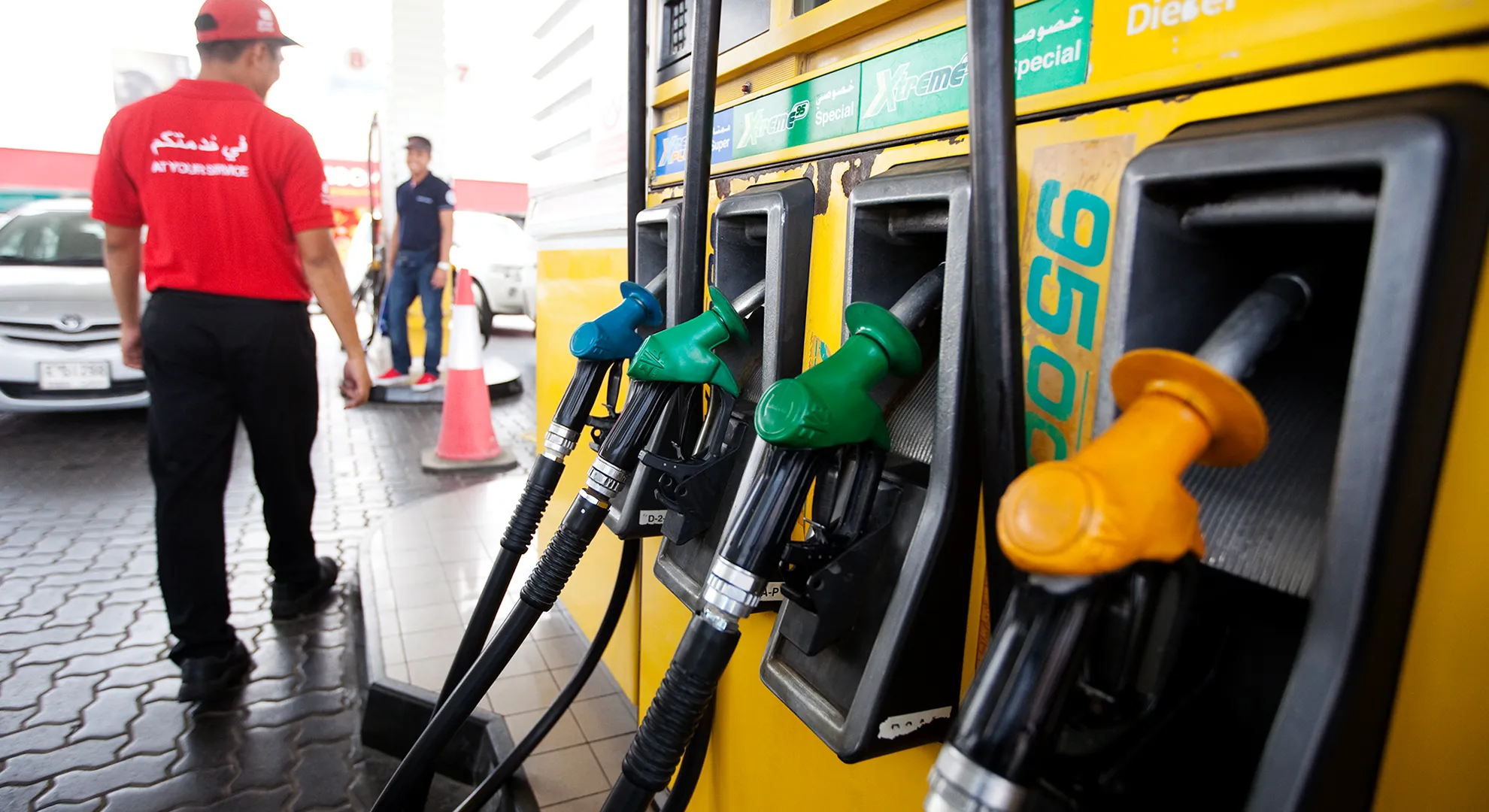
UAE Drivers May Get Another Fuel Price Cut in December as Global Oil Rates Slide
Motorists across the United Arab Emirates could receive some relief at petrol stations next month, as international crude oil prices recorded a notable decline during November 2026. With global energy markets showing signs of easing, expectations are growing that the UAE may introduce another reduction in domestic petrol prices when the December rates are announced next week.
The upcoming announcement is being closely watched by motorists, businesses and transport operators, particularly after fuel prices were lowered in November. The latest movement in international oil markets has raised hopes that the downward trend could continue into the final month of the year.
Brent crude, one of the major international benchmarks used to assess oil market movements, experienced a considerable fall during November. Its average price stood at approximately $94.84 per barrel through November 26, compared with $106.90 per barrel in October.
This represents a substantial month-on-month decline and reflects a cooling in global oil prices following the higher levels recorded in the previous month.
If international prices remain relatively subdued, UAE motorists could benefit from cheaper petrol when the new rates take effect in December. However, the final retail prices will only become clear once the official announcement is made.
November Fuel Prices Already Recorded a Reduction
The UAE introduced a reduction in petrol prices for November 2026, offering some financial relief to vehicle owners across the country.
Fuel prices were lowered by Dh0.24 per litre compared with the previous month’s rates. Following the adjustment, the prices of the three main petrol categories were announced as follows:
- Super 98: Dh4.16 per litre
- Special 95: Dh4.04 per litre
- E-Plus 91: Dh3.97 per litre
The reduction came amid changing conditions in international oil markets, where crude prices had started moving downwards after reaching elevated levels in October.
For motorists who regularly use private vehicles, even a relatively small reduction in the cost of petrol can result in noticeable savings over time. Drivers who commute long distances or refuel frequently are particularly sensitive to monthly changes in fuel rates.
The possibility of another price adjustment in December has therefore attracted attention from residents who are planning their household budgets and monthly transportation expenses.
Brent Crude Records a Significant Monthly Decline
International oil prices experienced considerable pressure throughout November, with Brent crude losing ground compared with its October average.
Data available up to November 26 showed that Brent was trading at an average of around $94.84 per barrel during the month. This was considerably lower than the October average of $106.90 per barrel.
The movement reflects several developments affecting the balance between global oil production and consumption.
One of the major factors behind the decline has been increasing concern about the possibility of excess supply in international energy markets. Production levels have gradually recovered in several regions, while demand expectations have become less encouraging.
When oil production rises faster than consumption, the market can experience a surplus. Such conditions generally place downward pressure on crude prices because buyers have more supply available.
The recovery of oil exports from the Middle East has also contributed to the changing market situation.
Rising Oil Supply Adds Pressure to International Prices
A gradual improvement in global oil production has become one of the key reasons behind the recent weakness in crude prices.
The International Energy Agency reported that worldwide oil supply increased by approximately 2.3 million barrels per day in October, reaching 105.4 million barrels per day.
The increase strengthened expectations that the international oil market could face an oversupply situation during the fourth quarter of 2026.
Higher production levels can influence crude prices when market demand does not increase at a similar pace. As more oil becomes available, traders may become less willing to pay higher prices, particularly when there are concerns about future consumption.
The recovery of production and exports from important oil-producing regions has also played a role in improving global availability.
For international energy markets, the possibility of a supply surplus has become an important consideration when assessing the direction of crude prices in the coming weeks.
If production continues to remain strong while consumption grows slowly, oil prices could face further downward pressure.
Middle Eastern Oil Exports Gradually Recover
The recovery of oil exports from the Middle East has been another important development influencing international crude prices in November.
Saudi Arabia’s East-West Pipeline, which provides an important route for transporting crude oil towards the Red Sea, resumed operations. The restoration of activity helped support the movement of oil supplies and contributed to expectations of improved export availability.
Libya also restarted operations at its Sharara oilfield, allowing additional production to return to the international market.
These developments have helped ease some concerns about the availability of crude oil from important producing regions.
When major production facilities and export routes return to operation, the additional supply can improve market availability and influence price expectations.
The combined impact of recovering exports, increased production and concerns about weaker consumption has contributed to the decline in Brent crude during November.
Slower Economic Growth Raises Questions About Oil Demand
Apart from increasing production, concerns about the global economic outlook have also affected oil market sentiment.
International crude demand is closely connected to economic activity. When businesses expand, manufacturing activity increases and transportation networks become busier, energy consumption generally rises.
However, concerns about slower economic growth have created uncertainty about how strongly oil consumption will develop in the coming months.
Weaker economic activity can reduce fuel consumption across several sectors, including aviation, manufacturing, shipping and road transportation.
This possibility has encouraged market participants to take a more cautious approach when assessing future oil demand.
If economic conditions remain subdued in major consuming countries, the growth in global oil consumption could be slower than previously expected.
Combined with increasing production, weaker demand expectations have added further pressure to international crude prices.
Geopolitical Risks Continue to Support Oil Prices
Despite the overall decline in November, international oil markets have not experienced a completely uninterrupted downward movement.
Geopolitical tensions in the Middle East and concerns surrounding energy infrastructure have continued to create uncertainty.
Attacks on energy facilities and disruptions involving important shipping routes can affect the movement of crude oil and other petroleum products. Any threat to major supply networks can quickly influence international market sentiment.
These risks have limited the extent of the recent price decline and contributed to some recovery in oil prices towards the end of November.
Energy traders continue to monitor developments in the region because disruptions to important production facilities or transportation routes could affect global supply.
This means that crude prices may remain sensitive to political and security developments, even when broader market conditions point towards an oversupply.
The balance between increasing supply, uncertain demand and geopolitical risks will therefore remain important in determining oil price movements in the coming weeks.
How Lower Global Oil Prices Could Affect UAE Motorists
A further decline in international crude prices could provide financial relief to motorists across the UAE if the movement is reflected in the country’s December retail fuel rates.
For residents who depend on personal vehicles for their daily journeys, petrol expenses represent an important part of monthly household spending.
People travelling long distances for work, families regularly using private cars and individuals living far from their workplaces could particularly benefit from lower fuel costs.
The impact may also extend beyond individual vehicle owners.
Companies operating delivery services, transportation fleets, logistics networks and distribution businesses rely heavily on fuel to maintain their operations.
A reduction in petrol and diesel expenses can help lower some operating costs, depending on the scale of the price adjustment and the amount of fuel consumed.
For businesses with large vehicle fleets, changes in fuel prices can have a noticeable effect on transportation budgets.
Lower fuel expenses may also provide some relief to companies dealing with higher operating costs across other areas of their business.
However, the actual savings will depend on the final December rates and individual consumption levels.
UAE Has Followed Market-Linked Fuel Pricing Since 2015
The UAE introduced a market-based fuel pricing system in 2015, linking domestic petrol and diesel rates more closely to international oil market movements.
Under this system, local fuel prices are reviewed regularly and adjusted according to changes in global market conditions.
The approach allows retail fuel rates in the country to respond to movements in international energy prices rather than remaining fixed for extended periods.
As a result, motorists may experience increases when international oil prices rise and reductions when global crude prices move lower.
The monthly pricing mechanism has made international oil market developments particularly important for residents and businesses across the Emirates.
According to figures available as of November 23, the average petrol price in the UAE was approximately Dh4.04 per litre.
This reflects the country’s pricing structure, under which local retail fuel rates are linked to international market conditions.
The upcoming December announcement will provide a clearer indication of how the recent decline in Brent crude has influenced the country’s domestic fuel prices.
What Can Motorists Expect in December?
With Brent crude averaging significantly less in November than in October, expectations of another petrol price reduction have increased.
Nevertheless, the decline in international oil prices does not automatically guarantee an equivalent reduction at UAE petrol stations.
The final retail rates depend on the relevant pricing calculations and the market information considered during the monthly review.
Motorists will therefore need to wait for the official announcement next week before knowing whether Super 98, Special 95 and E-Plus 91 will become cheaper in December.
For now, the latest developments in the international oil market have created optimism among vehicle owners hoping for another month of lower fuel expenses.
If the downward movement is reflected in the new rates, December could bring additional savings for private motorists as well as businesses that depend heavily on transportation.
Until the official figures are released, drivers across the UAE will be watching developments in global crude markets and waiting to see whether the recent decline translates into cheaper fuel at local petrol stations.