Nakheel has revealed plans for Palm Springs, a massive 3.8-million-square-metre residential development expected to provide homes for approximately 50,000 people, adding another major project to Dubai’s expanding property market.
Nakheel Unveils New 3.8 Million-Square-Metre Palm Springs Development Designed to Accommodate 50,000 Residents
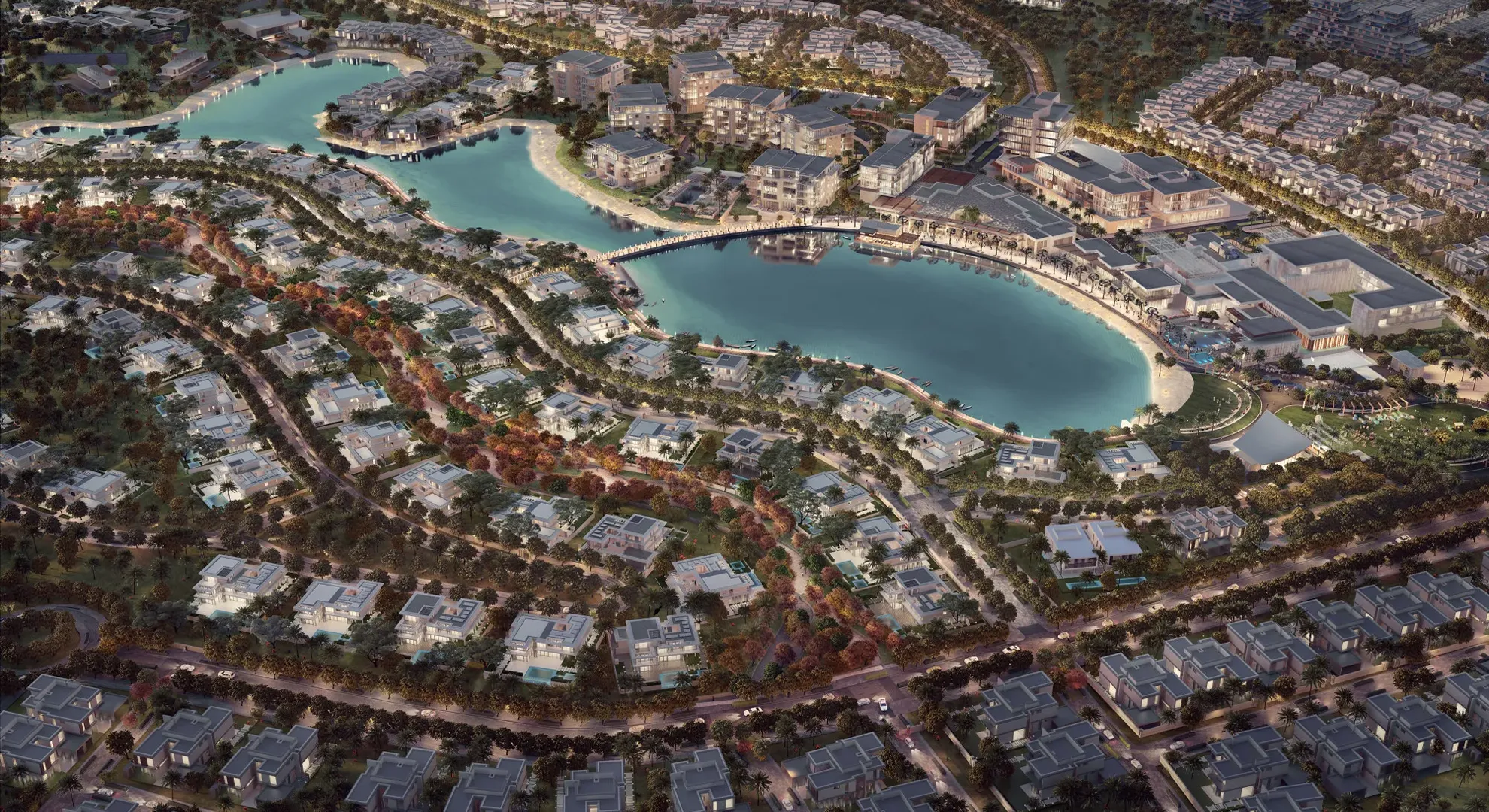
Nakheel Introduces Palm Springs, a 3.8 Million-Square-Metre Community Set to Accommodate 50,000 Residents in Dubai
Dubai’s real estate sector is preparing for another major residential addition after developer Nakheel announced its latest master-planned development, Palm Springs. Covering approximately 3.8 million square metres, the proposed community is designed to accommodate around 50,000 residents and will be located next to Palm Jebel Ali in the southern part of Dubai.
The large-scale residential project is expected to combine housing, healthcare, education, recreation, retail, and community facilities within one integrated destination. According to the developer, the masterplan will be divided into 15 neighbourhoods, with essential services and lifestyle amenities incorporated into the wider development.
The project will include two schools, one hospital, and six mosques, ensuring that residents have access to important facilities within the community.
In addition to residential buildings and essential infrastructure, Palm Springs will feature extensive landscaped areas, outdoor recreational spaces, and dedicated facilities for sports and leisure activities.
The announcement comes as southern Dubai continues to attract significant attention from property developers and investors. Major infrastructure developments, including the expansion of Al Maktoum International Airport and the growth of Expo City Dubai, are contributing to the area’s increasing importance in the emirate’s long-term development plans.
With its location close to Palm Jebel Ali, Palm Springs is expected to form part of this expanding residential and economic corridor.
15 Neighbourhoods Planned with Schools, Healthcare and Community Facilities
One of the main features of the Palm Springs masterplan is its focus on creating a residential environment where essential services are available within convenient reach of households.
The development will be organised into 15 separate neighbourhoods, bringing together residential areas and supporting infrastructure.
Nakheel has included two educational institutions in the proposed plan, providing families with access to schooling within the wider community. A hospital will also form part of the development, adding an important healthcare facility for residents.
Six mosques are planned across the masterplan, reflecting the importance of incorporating religious and community facilities into the residential environment.
The combination of educational, medical, and religious infrastructure is intended to support the needs of a growing population while reducing the need for residents to travel outside the development for certain everyday services.
The wider planning approach focuses on creating a connected residential destination rather than developing housing independently of supporting amenities.
As the population of southern Dubai continues to grow, communities with integrated facilities are expected to play an important role in accommodating future residential demand.
More Than 593,000 Square Metres of Green and Open Spaces
Palm Springs will place considerable emphasis on outdoor living, with approximately 593,000 square metres allocated for planned open spaces.
These areas are expected to provide residents with opportunities to enjoy outdoor activities, spend time with family members, and access landscaped surroundings close to their homes.
The development will also include more than 35 kilometres of dedicated routes for walking, jogging, and cycling.
These pathways are intended to encourage residents to incorporate physical activity into their daily routines while providing convenient connections between different neighbourhoods and recreational facilities.
The extensive network of pedestrian and cycling routes will form an important part of the community’s outdoor infrastructure.
Rather than limiting recreational opportunities to indoor facilities, the masterplan will provide several outdoor spaces where residents can exercise, socialise, and enjoy leisure activities.
Green areas and shaded pathways are also expected to improve the overall residential environment, particularly during warmer months.
The developer has highlighted the importance of climate-responsive landscaping and shaded corridors in making outdoor spaces more comfortable and suitable for Dubai’s weather conditions.
Country Club and Sports Club Among Planned Lifestyle Attractions
Apart from its landscaped areas and walking routes, Palm Springs will offer dedicated facilities designed to support sports, fitness, and social activities.
The masterplan includes two major lifestyle destinations, identified as the Country Club and Sports Club.
These facilities are expected to provide residents with additional options for recreation, physical exercise, and community interaction.
The wider development will also feature fitness areas, play facilities, and recreational spaces designed to accommodate people with different interests and age groups.
Families with children will be able to benefit from dedicated play areas, while fitness enthusiasts will have access to facilities supporting an active lifestyle.
The inclusion of these amenities reflects the developer’s intention to create a residential destination where leisure and wellbeing are considered important elements of everyday living.
The combination of sports facilities, landscaped spaces, and outdoor pathways is expected to provide multiple opportunities for residents to remain active without having to travel long distances.
Retail, Cultural and Social Spaces to Support Daily Living
Palm Springs will also incorporate commercial and cultural facilities as part of its wider residential planning.
The masterplan includes retail destinations where residents will be able to access shopping and everyday services.
Cultural venues will provide additional spaces for community activities and social engagement, helping establish a wider lifestyle environment beyond residential and commercial buildings.
Shaded pedestrian corridors and landscaped green areas will connect different parts of the development, creating more comfortable routes for people moving around the community.
These spaces are expected to contribute to a neighbourhood environment that encourages outdoor interaction and supports everyday convenience.
The inclusion of retail and cultural destinations also highlights the importance of providing a range of services and activities within a large residential development.
By combining homes with leisure, shopping, fitness, and community facilities, Nakheel aims to establish Palm Springs as a self-contained residential destination within Dubai’s expanding southern corridor.
Palm Springs Receives LEED Communities Platinum Precertification
Sustainability is another major element of the newly announced masterplan.
Palm Springs has received Leadership in Energy and Environmental Design (LEED) Communities Platinum Precertification, recognising the sustainability standards incorporated into its planning framework.
LEED is an internationally recognised rating system used to assess the environmental performance and sustainability of buildings and communities.
The Platinum level represents the highest certification tier within the LEED rating framework.
The precertification highlights the environmental objectives established for Palm Springs during its planning and design stages.
Nakheel has stated that the development will incorporate resource-efficient systems and sustainable infrastructure across the community.
The planned approach includes modern solutions for managing water consumption, energy use, and waste.
These measures are intended to improve resource efficiency and help reduce the development’s overall carbon emissions.
The sustainability strategy also includes climate-sensitive infrastructure and landscaping, with particular attention given to energy performance and the environmental conditions of the surrounding area.
Through these measures, the developer aims to create a residential environment that balances large-scale urban development with responsible resource management.
Energy Efficiency and Climate-Responsive Community Planning
The sustainability objectives for Palm Springs extend beyond individual buildings and are intended to influence the design of the wider neighbourhoods.
According to Nakheel, the masterplan will incorporate environmentally conscious infrastructure and landscaping throughout the development.
Water management will be an important part of the strategy, particularly given the importance of efficient water use in Dubai’s climate.
Energy-related solutions will also be integrated into the community to improve efficiency and support the project’s environmental targets.
Waste management systems are another part of the planned approach, with the intention of reducing resource wastage and improving the overall sustainability of the development.
The landscaping strategy will include climate-responsive features designed to make outdoor areas more suitable for local weather conditions.
Shaded walkways, carefully planned green spaces, and environmentally sensitive infrastructure will contribute to the community’s overall design.
These features are intended to support comfortable outdoor movement while maintaining attention to environmental performance.
The LEED Communities Platinum Precertification provides an indication of the sustainability standards considered during the project’s planning process.
Southern Dubai Emerging as an Important Residential Growth Destination
Palm Springs is being introduced at a time when southern Dubai is becoming an increasingly important part of the emirate’s future development plans.
Major investments in transportation, aviation, business, and urban infrastructure are expected to influence the area’s growth over the coming years.
Al Maktoum International Airport is one of the most significant projects shaping this part of Dubai.
The airport is planned to become a major international aviation hub, with its future expansion expected to support substantial passenger and cargo activity.
The development of the airport is also likely to encourage demand for residential communities, commercial facilities, and supporting infrastructure in nearby areas.
Expo City Dubai is another important destination contributing to the development of the southern corridor.
Its growing role as a business, innovation, and urban development hub is helping strengthen the area’s position within Dubai’s wider economic landscape.
The combination of aviation infrastructure, business activity, and residential investment is creating opportunities for further urban expansion.
Palm Springs, situated beside Palm Jebel Ali, will form part of this broader pattern of development.
Its location is expected to provide connections to important road infrastructure, including Sheikh Zayed Road, as well as access towards Al Maktoum International Airport.
According to Nakheel, these links will support movement between the residential development and other important destinations across the emirate.
Nakheel Focuses on Building a Complete Residential Community
Commenting on the announcement, Khalid Al Malik, Chief Executive Officer of Dubai Holding Real Estate, said the development strategy focuses on bringing residential properties and supporting infrastructure together from the beginning.
He explained that Palm Springs reflects the company’s long-term confidence in the development potential of southern Dubai and its contribution to the city’s future growth.
His comments highlight the importance of planning residential communities with essential facilities and services rather than treating housing as an isolated development.
The approach is intended to create an environment where residents can access important amenities, recreational opportunities, and community services within their neighbourhoods.
The project also reflects the developer’s broader interest in supporting Dubai’s long-term urban expansion through large-scale residential developments.
Palm Springs Adds to Dubai’s Expanding Property Landscape
Dubai has continued to attract interest from property investors, developers, and international buyers as the emirate expands its residential and commercial infrastructure.
Large master-planned developments are becoming an important part of this growth, particularly in areas supported by major transportation and economic projects.
Palm Springs adds another significant residential proposal to this expanding landscape.
With a planned area of 3.8 million square metres and an estimated population capacity of 50,000 residents, the development is designed to accommodate a substantial community.
Its proposed facilities include schools, healthcare infrastructure, religious centres, retail destinations, cultural spaces, sports facilities, and extensive outdoor areas.
The allocation of approximately 593,000 square metres for open spaces and more than 35 kilometres of walking, jogging, and cycling routes also highlights the importance given to outdoor recreation.
Meanwhile, its LEED Communities Platinum Precertification places sustainability among the key considerations of the masterplan.
The project’s location beside Palm Jebel Ali also connects it with one of the major areas of Dubai’s future development.
As investment continues around Al Maktoum International Airport and Expo City Dubai, southern Dubai is expected to remain an important focus for residential and economic expansion.
With Palm Springs, Nakheel is proposing a large integrated community designed to combine housing, essential services, leisure opportunities, and environmentally conscious planning in one destination.
The development will add another major project to Dubai’s evolving real estate landscape and reflects the growing emphasis on creating residential neighbourhoods supported by comprehensive infrastructure and lifestyle facilities.