Dubai has introduced a new 1.65-kilometre underground road link between Infinity Bridge and Deira, with the infrastructure designed to accommodate up to 12,000 vehicles every hour and improve traffic movement across the area.
Dubai Unveils 1.65km Tunnel Connecting Infinity Bridge to Deira, Designed to Handle 12,000 Vehicles Hourly
Dubai Opens New Al Khaleej Street Tunnel, Cutting Travel Times and Improving Access to Deira
Dubai has taken another step towards upgrading its road infrastructure with the opening of a major underground tunnel connecting Infinity Bridge with Deira. The newly completed road facility is expected to improve traffic movement, reduce congestion and provide smoother access to several residential, commercial and tourism destinations across the emirate.
The 1.65-kilometre Al Khaleej Street Tunnel, developed by Dubai’s Roads and Transport Authority (RTA), features three traffic lanes in each direction and has been designed to accommodate approximately 12,000 vehicles every hour.
The tunnel officially opened to motorists on Sunday, November 8, offering a direct, uninterrupted route between the end of the Infinity Bridge ramp and the junction of Al Khaleej Street and Al Wuheida Street.
The new infrastructure is expected to benefit motorists travelling towards Deira, Al Mamzar, Abu Hail and Al Wuheida, while also improving access to important commercial and tourism destinations, including Dubai Islands, Waterfront Market and Al Hamriya Port.
The opening forms part of Dubai’s wider Al Shindagha Corridor Improvement Project, an extensive road development programme aimed at improving connectivity across some of the city’s busiest transport routes.
The larger project covers approximately 13 kilometres and is designed to significantly reduce travel times for motorists using the corridor.
According to the RTA, completing the entire development programme could bring journey times down from the current 1 hour and 44 minutes to approximately 16 minutes by 2030.
The initiative is expected to improve the efficiency of daily transportation while supporting the continued expansion of residential communities, commercial establishments and tourism developments in the surrounding areas.
New tunnel strengthens road connectivity across Deira
The opening of the Al Khaleej Street Tunnel provides an additional transport connection for motorists travelling between the Infinity Bridge area and different destinations across Deira.
With three lanes available in both directions, the underground road is designed to accommodate substantial traffic volumes while helping vehicles move through the corridor without unnecessary interruptions.
The new route is particularly important for neighbourhoods experiencing increasing residential and commercial activity.
Areas such as Al Mamzar, Abu Hail and Al Wuheida are expected to benefit from improved accessibility as motorists gain another direct connection to the surrounding road network.
The tunnel will also support traffic movement towards Dubai Islands, a major waterfront development, as well as the Waterfront Market and Al Hamriya Port.
These destinations attract a combination of residents, visitors, commercial operators and delivery vehicles, making efficient road connections an important part of the area’s wider development.
The new tunnel is expected to improve the movement of traffic between these locations and the central parts of Dubai.
By providing a continuous route between the Infinity Bridge ramp and Al Khaleej Street, the project is intended to reduce delays at important junctions and improve the overall driving experience.
It also forms part of the RTA’s broader efforts to ensure that the city’s road network keeps pace with population growth, expanding business districts and increasing travel demand.
Al Shindagha Corridor project targets major reduction in journey times
The Al Khaleej Street Tunnel is one of several infrastructure developments being delivered under the Al Shindagha Corridor Improvement Project.
The wider programme focuses on upgrading a 13-kilometre section of Dubai’s road network, covering Sheikh Rashid Road, Al Mina Street, Al Khaleej Street and Cairo Street.
The project includes the construction and improvement of 15 intersections, with the objective of creating more efficient connections between major roads and surrounding neighbourhoods.
Once all planned works are completed, the RTA expects the corridor to provide considerably faster journeys for motorists.
Travel time across the 13-kilometre stretch is projected to decrease from 104 minutes to just 16 minutes by 2030.
This represents a substantial reduction in the time required to travel along the corridor and is expected to improve access between important residential, commercial and tourism areas.
The project is also designed to accommodate the transportation needs of approximately one million people living, working or travelling through the surrounding districts.
The scale of the development reflects the importance of the Al Shindagha area within Dubai’s wider transport system.
As the city continues to expand, improving connections between established communities and newer developments has become an important infrastructure priority.
The corridor project is intended to address these requirements through a combination of underground roads, bridges, upgraded intersections and supporting road connections.
RTA highlights benefits for residential and commercial communities
Mattar Al Tayer, director-general and chairman of the board of executive directors of the RTA, highlighted the importance of the newly opened tunnel in strengthening connections across Deira.
He said the development would improve access between residential neighbourhoods, business districts and tourist destinations in an area experiencing continued commercial and residential expansion.
The tunnel is expected to support this growth by providing a more efficient road connection and improving traffic distribution across the surrounding network.
Deira remains one of Dubai’s established commercial and residential districts, with a mixture of traditional markets, business centres, waterfront destinations and residential communities.
The area’s continued development has increased the importance of maintaining reliable transportation links for residents, employees, visitors and businesses.
Improved access to destinations such as Dubai Islands and Al Hamriya Port is also expected to support economic activity by strengthening connections between commercial and logistics facilities.
The RTA’s infrastructure programme aims to ensure that road capacity and transport facilities develop alongside these changing requirements.
The Al Khaleej Street Tunnel represents one component of that strategy, providing additional capacity along an important section of the city’s road network.
Cairo Street and Al Wuheida Street junctions also being upgraded
In addition to the tunnel construction, the Al Shindagha Corridor project includes improvements to several important intersections.
The existing roundabouts on Cairo Street and Al Wuheida Street are being replaced with signal-controlled junctions.
The changes are intended to improve traffic organisation and create more efficient connections between the surrounding roads.
Signal-controlled intersections can help manage vehicle movements at busy junctions by regulating traffic flows between different approaches.
The improvements are also expected to support smoother journeys along Cairo Street, which forms an important part of the wider corridor.
Another component involves connecting the bridge ramp serving Dubai Islands with the newly constructed tunnel.
This connection will allow vehicles travelling from the island development to access the underground route towards Al Mamzar.
The combination of upgraded intersections and new road links is expected to improve movement across the wider transport network.
Rather than concentrating traffic at a limited number of junctions, the improvements are designed to provide additional route options and strengthen connections between surrounding districts.
The RTA is undertaking these works as part of a coordinated approach to improving road capacity throughout the Al Shindagha corridor.
New bridge across Dubai Creek forms part of the wider development
Alongside the tunnel, the RTA is continuing construction of another major transport structure across Dubai Creek.
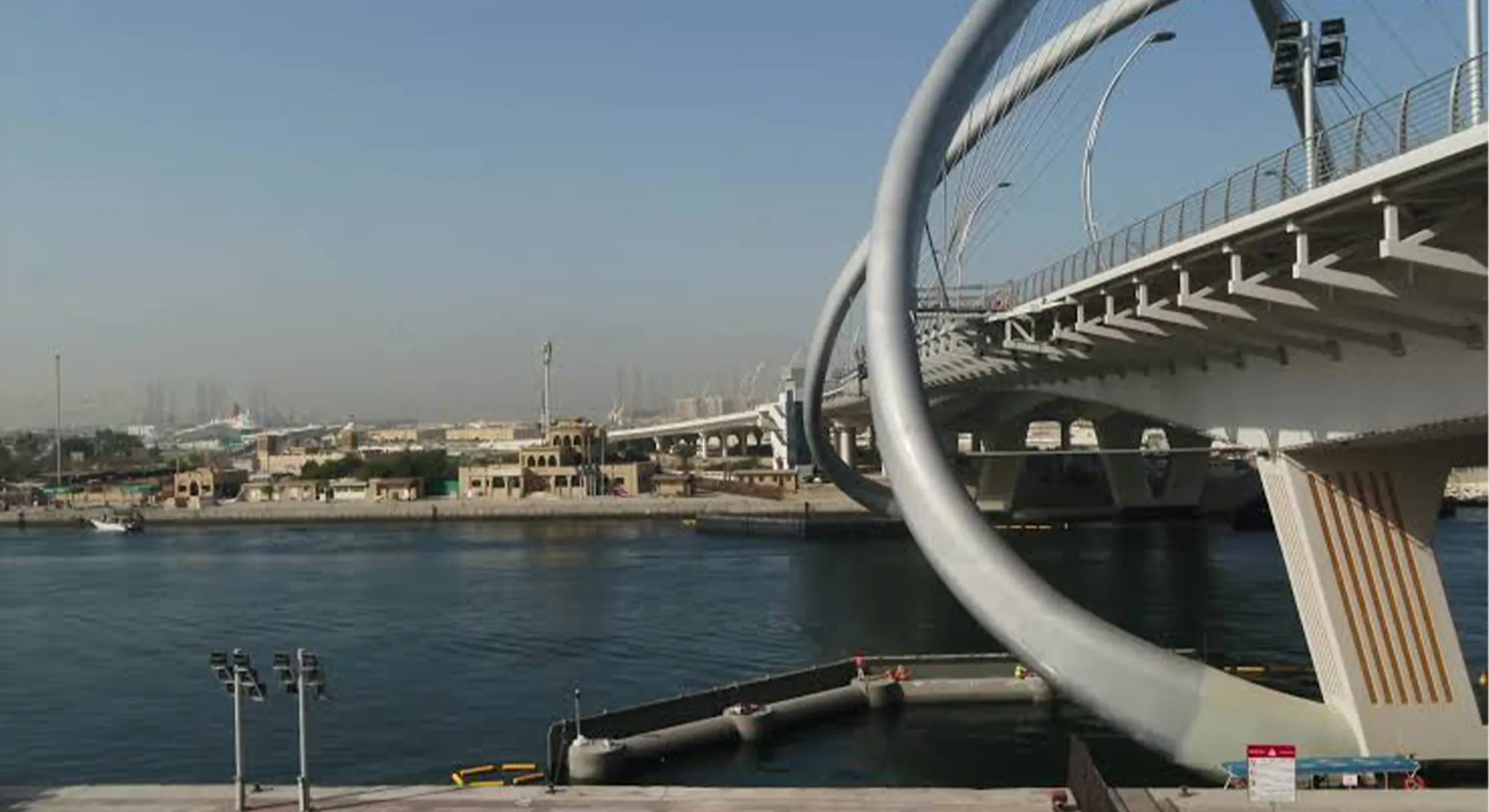
The planned bridge will extend approximately 1,425 metres and connect the area between Infinity Bridge and the redevelopment zone at Port Rashid.
The bridge is an important component of the wider Al Shindagha Corridor Improvement Project and is intended to provide additional road capacity across the creek.
According to the project details, the structure will feature four traffic lanes in each direction.
It is designed to accommodate a combined traffic capacity of approximately 16,000 vehicles per hour.
The bridge will stand around 18.5 metres above the water, providing sufficient clearance for maritime traffic passing underneath.
A navigational opening measuring approximately 75 metres in width will allow vessels to continue moving along Dubai Creek.
Maintaining this clearance is important because the waterway continues to serve maritime activities and vessel movements in the area.
The bridge is therefore being designed to support both road transportation and the continued operation of the creek as a navigable waterway.
Once completed, it will provide another important connection between the areas surrounding Infinity Bridge and the Port Rashid redevelopment district.
The additional road capacity is expected to complement the newly opened tunnel and other improvements being introduced across the corridor.
Together, these developments will strengthen connections between Deira, Bur Dubai, Dubai Islands and nearby commercial districts.
Dedicated facilities planned for pedestrians and cyclists
The new bridge project is not limited to improving access for motorists.
The development also includes a separate route intended for people travelling on foot or by bicycle.
A dedicated pedestrian and cycling track will form part of the bridge infrastructure, providing an additional option for people moving between the connected areas.
Two lifts are planned to provide access to the dedicated pathway, helping pedestrians and cyclists reach the route.
The inclusion of these facilities reflects the growing importance of accommodating different forms of mobility within Dubai’s transport infrastructure.
Dedicated walking and cycling facilities can provide safer and more convenient connections for people who do not rely on private vehicles for every journey.
The project also includes approximately two kilometres of connecting roads on both the Dubai Islands and Bur Dubai sides.
These supporting roads will link the bridge with the surrounding transport network and improve access to the areas at either end of the structure.
The additional connections are expected to help distribute traffic more effectively and make the new infrastructure accessible from nearby neighbourhoods.
The combination of vehicle lanes, pedestrian facilities and cycling infrastructure is intended to create a more comprehensive transport connection across the creek.
New tunnel features a large artwork celebrating Dubai’s skyline
Beyond its transportation function, the newly opened Al Khaleej Street Tunnel also includes a large decorative installation designed to reflect Dubai’s identity and urban development.
The underground passage features an extensive mosaic mural depicting the city’s skyline.
The artwork includes representations of prominent landmarks, including Infinity Bridge, which has become an important feature of Dubai’s road infrastructure.
Emirati artist Maryam Al Hathboor designed the mural, which incorporates approximately 36 million individual mosaic pieces.
The installation adds an artistic element to the road infrastructure while highlighting some of the city’s recognisable architectural and urban features.
The use of mosaic artwork also gives the tunnel a distinctive visual appearance, transforming part of the underground transport facility into a public art space.
Public art installations have increasingly become part of infrastructure and urban development projects, helping incorporate cultural and artistic elements into everyday public spaces.
In this case, the mural celebrates Dubai’s skyline and reflects the city’s continuing transformation through large-scale infrastructure and development projects.
The artwork also provides a visual connection between the new road facility and the surrounding urban landscape.
Construction materials reused to support sustainability efforts
The RTA has also highlighted the environmental measures adopted during construction of the Al Khaleej Street Tunnel.
According to the authority, approximately 77 per cent of the material excavated during the project was reused in other developments.
The amount of material recovered and reused was estimated at around 522,000 cubic metres.
Instead of treating the excavated material entirely as construction waste, the authority redirected a significant portion for use in projects undertaken by the RTA and other organisations.
The approach helped reduce the quantity of material requiring disposal while making productive use of resources generated during excavation.
Large underground infrastructure projects often involve substantial excavation work, making the management of construction materials an important part of the development process.
Reusing suitable excavated material can help limit waste and reduce the need to source additional materials for certain construction activities.
The reported reuse rate therefore represents an important part of the project’s sustainability measures.
It also reflects the RTA’s efforts to incorporate resource efficiency into major infrastructure developments.
The use of recovered materials can contribute to more responsible construction practices while supporting other ongoing development activities across Dubai.
More than 2,200 workers involved in the tunnel’s construction
The development of the Al Khaleej Street Tunnel involved a large workforce and substantial construction resources.
According to the RTA, approximately 2,200 engineers, technical specialists and workers contributed to delivering the project.
Their work was supported by around 350 pieces of machinery and construction equipment.
The scale of the workforce reflects the technical requirements involved in developing a major underground road facility within an established urban area.
Construction required coordination between engineering teams, technical personnel, contractors and other specialists responsible for different aspects of the project.
The use of specialised machinery and equipment was also necessary to complete excavation, structural works and the installation of supporting infrastructure.
The RTA reported that the project recorded nearly 11 million working hours without any reported injuries.
The figure highlights the authority’s reported safety performance throughout the construction period.
Managing workplace safety is particularly important during large infrastructure developments, where construction activities may involve excavation, heavy machinery, underground operations and complex engineering work.
The reported achievement reflects the scale of coordination involved in delivering the project while maintaining safety procedures.
Dubai continues investing in major road infrastructure
The opening of the Al Khaleej Street Tunnel forms part of Dubai’s continuing investment in road improvements and transport infrastructure.
The emirate has been developing new bridges, tunnels, junctions and road connections to support growing demand from residents, businesses and visitors.
As new residential communities and commercial destinations emerge, transportation infrastructure needs to provide sufficient capacity and convenient access to different parts of the city.
The Al Shindagha Corridor Improvement Project is one of the developments intended to address these requirements.
By improving a major 13-kilometre transport corridor, the RTA aims to reduce journey times and strengthen links between important districts.
The newly opened tunnel provides additional road capacity, while the planned bridge across Dubai Creek will create another connection between Deira and the Port Rashid area.
The improvements to Cairo Street and Al Wuheida Street are also expected to support better traffic management across the surrounding neighbourhoods.
In addition, the inclusion of walking and cycling facilities demonstrates the broader scope of the transport development programme.
These projects are intended to support a more connected urban environment while accommodating different transportation needs.
What motorists can expect from the new tunnel
For drivers, the immediate benefit of the Al Khaleej Street Tunnel is the availability of a new underground route connecting Infinity Bridge with the Al Khaleej Street and Al Wuheida Street junction.
The three-lane configuration in each direction provides substantial road capacity, with the facility designed to accommodate up to 12,000 vehicles every hour.
Motorists travelling towards Deira and nearby communities can use the new connection to reach destinations including Al Mamzar, Abu Hail and Al Wuheida.
The route also improves access to Dubai Islands, Waterfront Market and Al Hamriya Port.
The tunnel is expected to contribute to smoother traffic movement by providing a direct connection and supporting the wider improvements taking place along the corridor.
However, the full reduction in travel times is linked to the completion of the entire Al Shindagha Corridor Improvement Project rather than the opening of the tunnel alone.
The RTA’s target is to bring the journey time along the 13-kilometre corridor down from 104 minutes to approximately 16 minutes by 2030.
Further improvements, including the new bridge and upgraded intersections, are expected to play an important role in achieving that target.
For now, the opening of the Al Khaleej Street Tunnel marks another completed stage in Dubai’s wider effort to improve road connectivity and accommodate increasing traffic demand.
With additional infrastructure works continuing across the area, the emirate is moving towards a more integrated transport network designed to serve its growing residential, commercial and tourism destinations.