The United Arab Emirates has recorded remarkable growth in its international trade, with total foreign trade value coming close to Dh3 trillion during the first three quarters of 2026, marking a historic achievement despite ongoing economic uncertainties and global challenges.
UAE’s Foreign Trade Approaches Dh3 Trillion in First Nine Months of 2026 Despite Ongoing Challenges
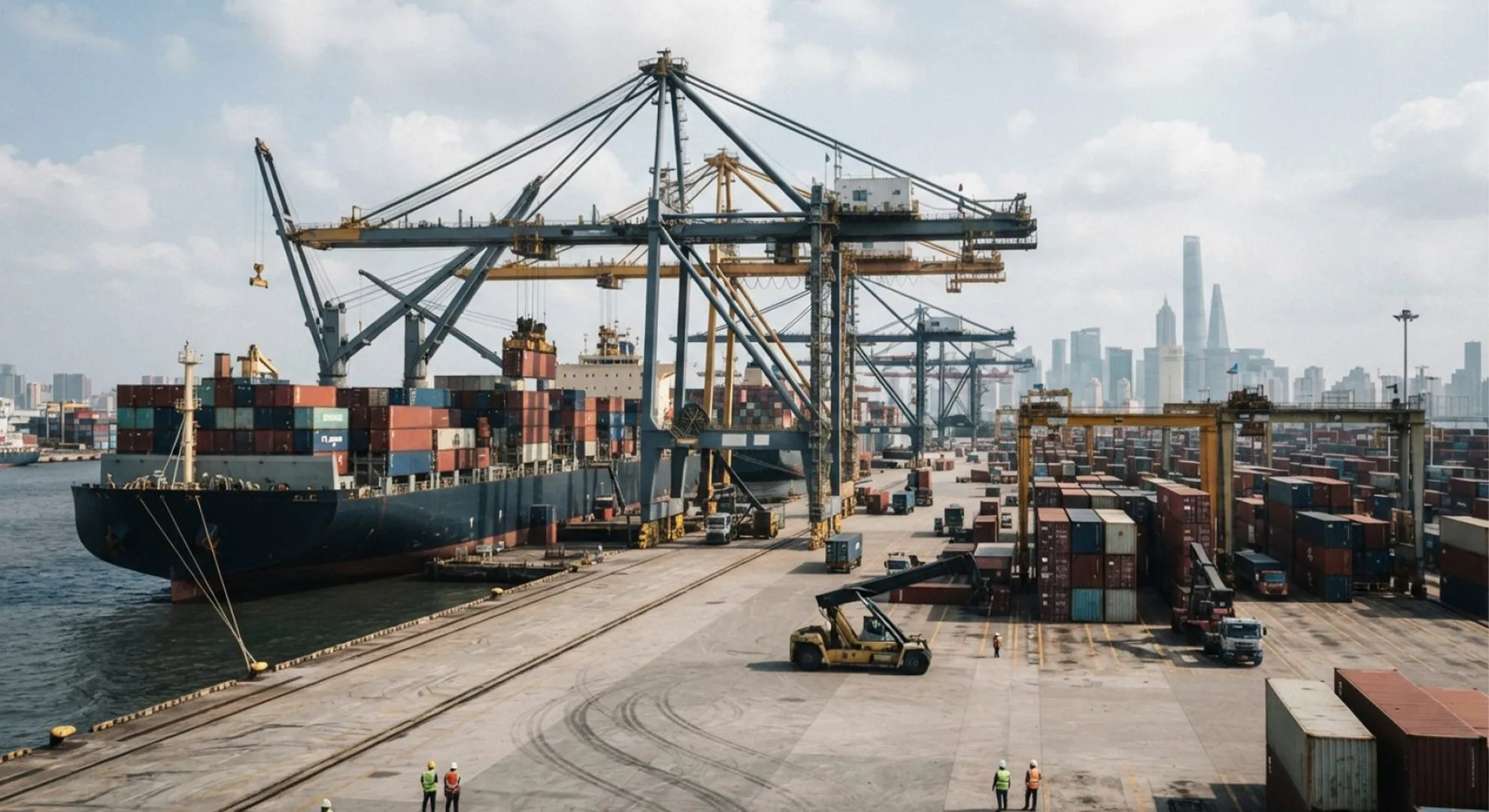
UAE Foreign Trade Moves Towards Dh3 Trillion as Exports to Major Partners Surge 31% in 2026
The United Arab Emirates has achieved another significant milestone in its international trade performance, with the country’s total foreign trade value approaching Dh3 trillion during the first nine months of 2026. The latest figures highlight the continued expansion of the UAE’s global commercial activities despite economic uncertainties, geopolitical tensions and changing conditions in international markets.
Sheikh Mohammed bin Rashid Al Maktoum, Vice-President and Prime Minister of the UAE and Ruler of Dubai, announced the development on Sunday, November 8, through a post on the social media platform X. He highlighted the country’s strong trading performance and pointed to the substantial increase in exports to its leading international trading partners.
According to Sheikh Mohammed, the UAE’s foreign trade recorded a year-on-year increase of 10 per cent during the first nine months of the year, bringing its overall value close to the Dh3 trillion mark. He also revealed that exports to the country’s 10 largest trading partners increased by 31 per cent compared with the corresponding period in 2025.
The latest performance represents an important achievement for the Emirates, reflecting the country’s growing participation in international commerce and its efforts to strengthen economic connections with markets around the world.
Sheikh Mohammed described the development as a historic moment for the country’s economy, emphasising that the expansion had taken place during a period of considerable international uncertainty.
He pointed out that global trade has been influenced by several economic and political developments, including regional instability and changing international commercial conditions. Nevertheless, the UAE has maintained its position as an important centre for international trade by adapting its economic strategies and responding effectively to developments in the global marketplace.
The UAE leadership has continued to prioritise economic diversification, international cooperation and the development of stronger trade relationships. These efforts have helped the country maintain commercial momentum while expanding opportunities for domestic businesses and international investors.
Sheikh Mohammed also highlighted the importance of building new economic partnerships and opening additional markets for Emirati products. Expanding export destinations and strengthening existing commercial relationships remain central to the country’s broader economic development objectives.
He further acknowledged the contribution of President Sheikh Mohamed bin Zayed Al Nahyan, national institutions, government teams and the country’s business partners in achieving the latest results.
According to him, the progress reflects the collective efforts of the UAE’s leadership, public-sector organisations and private-sector stakeholders, whose contributions have supported the country’s continued economic advancement.
UAE maintains trade momentum amid regional and global uncertainty
The latest announcement follows another period of strong performance in the country’s non-oil foreign trade sector.
During the first six months of 2026, the UAE’s non-oil foreign trade reached Dh1.937 trillion, representing an increase of 13.1 per cent compared with the first half of the previous year.
The figures demonstrated the growing importance of non-oil commercial activities in supporting the national economy and strengthening the country’s international trading position.
The expansion also reflected the UAE’s continued efforts to reduce its dependence on traditional sources of revenue by developing a broader economic base. Trade, logistics, manufacturing, technology and other non-oil industries have increasingly contributed to the country’s economic growth.
The strong performance during the first half of the year provided a positive indication of the direction of foreign trade activity in the following months.
On November 3, the UAE government expressed confidence that international trade would continue to expand despite challenges affecting the wider region. The announcement came after the country reported encouraging figures for the first six months of 2026.
Officials indicated that regional developments had created uncertainties for businesses and international supply chains. However, the country’s trade infrastructure, international connections and ability to respond to changing market conditions continued to support commercial activity.
Fahad Al Gergawi, Undersecretary at the UAE Ministry of Foreign Trade, expressed optimism about the country’s trade prospects for the remainder of the year.
He said he expected the UAE to register further growth in 2026, despite the difficulties associated with the regional conflict earlier in the year and continuing geopolitical tensions.
Al Gergawi also indicated that foreign trade figures had maintained double-digit growth during the first nine months of the year.
His comments reinforced the government’s confidence in the resilience of the national economy and its ability to sustain international commercial activity even when external conditions remain uncertain.
The latest nine-month figures appear to support this outlook, with total foreign trade nearing Dh3 trillion and exports to the country’s 10 biggest trading partners recording particularly strong growth.
Non-oil exports become an increasingly important economic driver
The UAE’s expanding non-oil export sector has become an important part of its broader economic transformation.
Over recent years, the country has placed greater emphasis on developing industries and commercial activities that can contribute to long-term growth beyond the energy sector.
Non-oil exports have consequently gained a larger role in the country’s international trade strategy, helping Emirati businesses access overseas markets and establish stronger relationships with international customers.
The government has continued to introduce initiatives aimed at improving the competitiveness of local industries, encouraging investment and supporting companies seeking to expand their international presence.
The country’s geographical position has also played an important role in its development as a global trading centre. Located between major markets in Asia, Europe and Africa, the UAE provides businesses with access to important international shipping routes and commercial networks.
Its ports, airports, logistics facilities and transport infrastructure have helped establish the country as a major gateway for the movement of goods across different regions.
These advantages have supported the growth of several industries, including manufacturing, re-exports, logistics, food products, metals, technology and other non-oil commercial activities.
The increase in exports to the UAE’s 10 largest trading partners by 31 per cent during the first nine months of 2026 further underlines the importance of international market relationships.
Stronger demand from major trading partners can create additional opportunities for domestic manufacturers and exporters while encouraging companies to increase production and explore new business opportunities.
The government is also continuing to focus on expanding its network of international economic partnerships, improving market access and creating favourable conditions for businesses involved in cross-border trade.
International partnerships remain central to UAE’s economic strategy
Strengthening foreign trade relationships has remained an important element of the UAE’s long-term economic vision.
The country has been working to establish closer commercial links with established economies as well as emerging markets, providing businesses with access to a wider range of customers, suppliers and investment opportunities.
Through trade agreements, economic cooperation initiatives and private-sector partnerships, the UAE aims to increase the movement of goods and services while supporting sustainable economic development.
The latest export figures suggest that these efforts are contributing to stronger commercial connections with the country’s most important trading partners.
At the same time, the government is seeking to diversify export destinations to reduce dependence on a limited number of markets and create greater flexibility for businesses operating internationally.
Such diversification is particularly important during periods of geopolitical uncertainty, when disruptions to shipping routes, supply chains and international trade flows can affect commercial activity.
The UAE’s continued focus on infrastructure development, international connectivity and economic flexibility is intended to help businesses respond to these challenges.
The country’s latest foreign trade performance therefore represents more than an increase in the overall value of commercial transactions. It also highlights the expanding role of the UAE in international supply chains and its ambitions to strengthen its position as a leading global business and trade destination.
With foreign trade approaching Dh3 trillion in just nine months, the country has recorded a notable achievement in 2026. The 31 per cent rise in exports to its 10 largest trading partners provides further evidence of the growing reach of Emirati products in international markets.
As the year progresses, the UAE is expected to continue pursuing policies focused on expanding exports, attracting investment, developing non-oil industries and strengthening international economic relationships.
The latest results also demonstrate the importance of maintaining a diversified and adaptable economy capable of navigating external pressures while continuing to generate opportunities for businesses and investors.
The UAE’s progress in foreign trade remains closely connected to its wider ambition of establishing a competitive, sustainable and globally integrated economy for the future.
The UAE’s non-oil export sector has continued to strengthen its contribution to the country’s overall trade performance, reflecting the growing importance of locally produced goods and value-added industries. During the first six months of 2026, these exports represented 23.4 per cent of the country’s total non-oil foreign trade, compared with 21.3 per cent in the corresponding period of 2025.
The latest figures indicate a steady increase in the contribution of non-oil exports over the past few years. Their share stood at 18.4 per cent in 2024 before rising further to 23.4 per cent in the first half of 2026. For comparison, the proportion was 16.9 per cent in 2023, demonstrating the gradual expansion of this segment within the UAE’s international trade activities.
This upward movement highlights the country’s continuing efforts to develop a more diversified economic structure, with greater emphasis on domestic manufacturing, industrial production and the export of higher-value products. Rather than relying predominantly on traditional trade activities, the UAE is increasingly focusing on strengthening its production capabilities and creating additional opportunities for businesses involved in non-oil industries.
The growing contribution of non-oil exports also reflects the government’s broader strategy of encouraging local companies to compete internationally, expanding industrial capacity and improving the competitiveness of Emirati products in overseas markets.
A stronger export sector can support economic diversification by generating additional business opportunities, attracting investment, creating employment and helping domestic industries establish a wider international presence.
China, Switzerland and India lead UAE’s non-oil trade partnerships
The UAE’s international trade expansion has been supported by strong commercial relationships with several major economies. Recent figures show that trade activity remained substantial across the country’s leading international partners during the first half of 2026.
China maintained its position as the UAE’s largest partner in non-oil trade, with bilateral exchanges reaching Dh180.7 billion. The figures underline the importance of the commercial relationship between the two countries and their continued cooperation across different areas of international trade.
Switzerland ranked second, recording non-oil trade valued at Dh138.4 billion. India occupied the third position, with the value of trade between the two countries reaching Dh107.5 billion.
These figures demonstrate the UAE’s extensive commercial connections with major markets across Asia and Europe. They also highlight the importance of international partnerships in supporting the country’s expanding foreign trade activities.
In addition to its largest trading partners, the UAE recorded notable growth in commercial exchanges with several other markets. Egypt, Oman and Hong Kong were among the economies that registered some of the strongest increases in trade activity.
The performance of these markets reflects the UAE’s efforts to broaden its international economic relationships and strengthen commercial cooperation with countries across different regions.
Egypt and Oman remain important regional partners because of their geographical proximity and established economic connections with the Emirates. Meanwhile, Hong Kong continues to represent an important commercial gateway within the wider Asian market.
The expansion of trade with these economies also highlights the UAE’s strategy of creating a more extensive network of trading relationships rather than concentrating its commercial activities within a limited number of markets.
By developing stronger connections with established trading economies and emerging commercial destinations, the UAE is seeking to provide its exporters with access to additional customers and business opportunities.
The increasing contribution of non-oil exports, combined with the strong performance of major international trading partners, reflects the country’s continuing economic transformation.
As the UAE strengthens its industrial capabilities, develops new export markets and expands international partnerships, non-oil trade is expected to remain an important contributor to its long-term economic ambitions.