An additional Indian national has tragically lost his life after battling critical injuries sustained during the October 10 attack at Riyadh Airport. The incident has raised fresh concerns over the safety of Indian nationals residing and working in Saudi Arabia.
Another Indian National Succumbs to Injuries Sustained in October 10 Riyadh Airport Attack
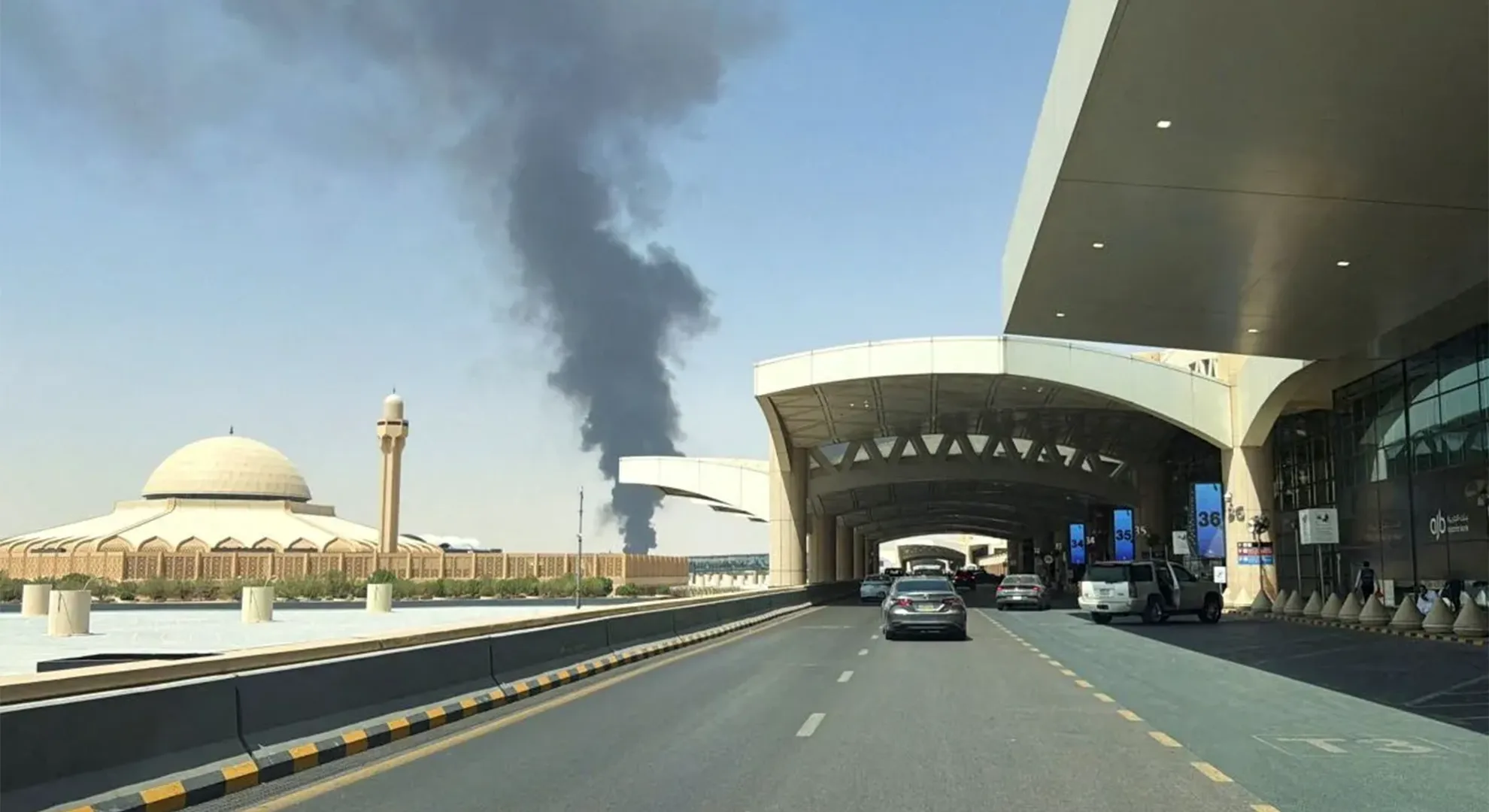
Another Indian National Dies After Sustaining Critical Injuries in October 10 Riyadh Airport Attack
Another Indian national has died after remaining in critical condition for several weeks following the October 10 attack on Riyadh Airport in Saudi Arabia. His death has increased the overall number of fatalities linked to the incident to 14, adding to the growing toll of casualties from the attack.
The Indian Embassy in Saudi Arabia confirmed the death on Wednesday, November 4, stating that the injured man passed away while receiving treatment in the Intensive Care Unit (ICU). He had been undergoing medical care for approximately 25 days after sustaining serious injuries during the attack on the Saudi capital’s airport.
In an official statement, the Indian diplomatic mission expressed deep sorrow over the loss of another Indian citizen. The embassy said the individual had been critically injured in the October 10 incident and eventually succumbed to his injuries despite receiving treatment.
The embassy also extended its condolences to the deceased man’s relatives and friends, acknowledging the difficult circumstances faced by the bereaved family. Although officials have confirmed his death, his identity has not yet been made public.
The Indian mission stated that its representatives had remained in contact with the family throughout the victim’s medical treatment and continued to provide support following his death. The embassy assured the relatives that it would offer every possible form of assistance during this difficult period.
It also said arrangements would be made to transport the deceased person’s remains to India or conduct his funeral in Riyadh, depending on the family’s preference.
The latest death has once again drawn attention to the consequences of the October 10 attack, which affected several foreign nationals and Saudi residents. The incident was part of a series of attacks targeting Saudi Arabia, with Yemen’s Houthi movement claiming responsibility for the strikes.
Death Toll From Riyadh Airport Attack Reaches 14
The October 10 attack at King Khalid International Airport in Riyadh resulted in multiple deaths and injuries among people of different nationalities. With another Indian citizen losing his life after spending weeks in critical care, the total number of reported fatalities from that particular incident has risen to 14.
According to the reported casualty figures, the victims include four Saudi nationals and ten foreign residents. Among the foreign nationals who lost their lives were two Bangladeshis, two Indians, one American, one Egyptian, one Jordanian, one Syrian, one Palestinian and one Sudanese citizen.
The attack also left several people injured, including Indian nationals living and working in Saudi Arabia. In an earlier update, the Indian Embassy had confirmed that 11 Indian citizens had suffered injuries in the incident.
The latest death is the second reported fatality among Indian nationals connected to the October 10 attack. The first Indian victim was identified as Yousuf Sahab, who belonged to Hyderabad in Telangana.
His death had earlier been highlighted by Asaduddin Owaisi, Hyderabad Member of Parliament and president of the All India Majlis-e-Ittehadul Muslimeen (AIMIM). Owaisi had raised concerns about the situation of Indian nationals affected by the attack and their families.
The death of another Indian citizen has added to the concerns of the Indian community in Saudi Arabia, particularly among families whose relatives were injured during the incident.
Indian Embassy Assures Support to the Bereaved Family
Following confirmation of the latest death, the Indian Embassy reiterated its commitment to supporting the victim’s family. The diplomatic mission said it had been closely following the man’s medical condition and had maintained contact with his relatives throughout the treatment process.
The embassy’s assistance is expected to include the necessary arrangements following his death. These may involve documentation, coordination with local authorities and procedures related to the transportation of his remains to India.
Families of Indian citizens who die abroad often require assistance with local formalities and repatriation arrangements. The embassy’s statement indicated that it would continue to work with the relatives to ensure their wishes were respected.
The family will have the option of bringing the deceased man’s body back to India or arranging his final rites in Riyadh. The embassy has promised to extend all possible cooperation according to the decision taken by the relatives.
However, authorities have not released further details about the deceased person’s identity or his personal background.
What Happened During the October 10 and 11 Attacks?
Saudi Arabia’s King Khalid International Airport and other locations came under attack during a period of heightened regional tensions on October 10 and 11. The incidents caused widespread concern because of their impact on civilian safety and international aviation.
Yemen’s Houthi movement claimed responsibility for strikes targeting Saudi Arabia. The attacks reportedly resulted in casualties and injuries, with the October 10 incident accounting for 14 deaths according to the reported figures.
The developments prompted several countries to express concern over the security situation in the Kingdom. Governments, including those of the United Arab Emirates, the United States and Egypt, strongly criticised the attacks and described them as a violation of Saudi Arabia’s sovereignty and territorial integrity.
The incidents also affected international air travel. Several airlines, including flydubai, Etihad Airways and Air France, reportedly cancelled or suspended flights to and from Riyadh amid concerns about the escalating security situation.
The disruption highlighted the wider consequences of the conflict, particularly for passengers, airline operators and foreign nationals travelling through or residing in Saudi Arabia.
Why Are Saudi Arabia and the Houthis Fighting?
The latest attacks are connected to the long-running conflict in Yemen, where Saudi Arabia and the Houthi movement have remained on opposing sides of the country’s political and military struggle.
Saudi Arabia has supported Yemen’s internationally recognised government in its efforts to regain control of territories held by the Houthis. The Kingdom has also led a military coalition that intervened in Yemen’s civil war to support the government against the armed group.
The Houthis, meanwhile, have continued to oppose the Saudi-backed government and have repeatedly criticised Riyadh for its involvement in Yemen’s internal conflict.
The confrontation has extended beyond Yemen’s borders, with the Houthi movement carrying out attacks targeting Saudi territory and threatening important infrastructure. Riyadh has been among the locations affected by the group’s military activities over the years.
The conflict has created significant security challenges for Saudi Arabia, particularly because attacks targeting airports and other important facilities can affect civilian populations, commercial operations and international travel.
Renewed Fighting Raises Regional Security Concerns
Although the conflict had experienced a period of reduced intensity following developments in 2022, tensions have reportedly increased again. The renewed hostilities have raised concerns about the possibility of further attacks and a wider escalation across the region.
The latest developments have also taken place against the backdrop of broader instability in the Middle East. The continuing tensions involving different regional actors have complicated diplomatic efforts and increased concerns about civilian safety.
The Houthis have justified their actions by pointing to Saudi Arabia’s involvement in Yemen and its support for government forces. The Saudi government, on the other hand, maintains that its military involvement is aimed at supporting Yemen’s internationally recognised authorities and countering the Houthi movement.
The Saudi-led coalition has warned that the attacks would have consequences and stated that those responsible would not escape accountability.
The October 10 and 11 incidents have therefore become another significant development in the ongoing confrontation between Saudi Arabia and the Houthis.
International Condemnation and Impact on Civilian Life
The attacks have drawn international criticism because of the reported loss of civilian lives and the threat posed to people living and working in the affected areas.
The involvement of foreign nationals among the victims has also highlighted how regional conflicts can affect communities far beyond the countries directly involved in the fighting.
For India, the deaths and injuries of its citizens have created particular concern because thousands of Indians live and work in Saudi Arabia. Many Indian families depend on relatives employed in the Kingdom, making their safety an important issue for both the Indian government and the wider Indian community.
The Indian Embassy’s continued engagement with affected families has become especially important as they deal with medical emergencies, treatment-related concerns and the arrangements following the deaths of their relatives.
The latest fatality serves as a reminder of the human cost of the continuing conflict and the risks faced by civilians during military escalations.
As the situation develops, the safety of foreign workers, residents and passengers remains a major concern. The Indian diplomatic mission is expected to continue providing assistance to affected citizens and their families.
For now, the death of the second Indian national in connection with the October 10 Riyadh airport attack has brought renewed attention to the incident, while the wider confrontation between Saudi Arabia and the Houthis continues to raise concerns about regional stability and civilian security.