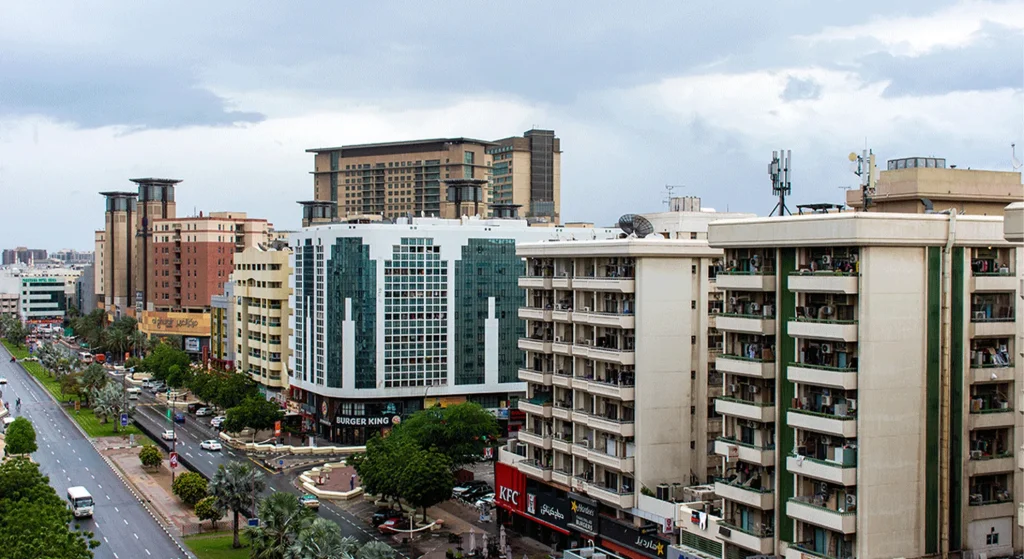
Dubai’s property market is witnessing a gradual shift as an increase in newly completed residential developments expands housing availability, intensifies competition among landlords and creates more opportunities for tenants to secure rental properties at comparatively lower prices.
Dubai’s Rental Market Cools as Growing Property Supply Drives Down Housing Costs for Tenants

Dubai Rental Market Shows Signs of Cooling as New Housing Supply Strengthens Tenants’ Position
Dubai’s residential rental market is beginning to show clear signs of moderation, with an increasing number of tenants managing to negotiate lower rental payments when renewing their leases. The growing availability of newly completed residential properties is giving renters more options and gradually changing the balance of power between landlords and tenants, according to a recent market analysis by property consultancy Cavendish Maxwell.
The latest findings reveal that more than one in five tenants in Dubai paid less rent under their latest agreement compared with their previous contract during the third quarter of 2026. This represents a substantial increase from the beginning of the year, indicating that the rapid expansion of the emirate’s residential property supply is starting to influence rental market conditions.
According to the consultancy, 21.4 per cent of rental transactions recorded during the July-September period involved a reduction in rent. The corresponding figure was only 4.8 per cent in the first quarter of 2026, meaning the proportion of tenants securing lower rental rates has increased more than fourfold in just six months.
Meanwhile, a significant portion of renters managed to maintain their existing rental payments. Around 38.7 per cent of transactions involved lease renewals at unchanged rates during the third quarter. This suggests that landlords are increasingly willing to retain existing tenants without imposing additional rental costs.
In contrast, the proportion of rental agreements involving higher payments declined considerably. Only 40 per cent of transactions registered an increase in rent during the third quarter, compared with 59.4 per cent in the January-March period.
The changing figures indicate that landlords are facing greater competition as additional residential properties enter the market. With more homes available across different neighbourhoods, tenants have gained greater flexibility when comparing properties, evaluating rental offers and negotiating contract terms.
Cavendish Maxwell believes this development reflects a gradual reduction in landlords’ ability to demand higher rents. The increasing availability of housing is creating a more competitive environment in which property owners may need to offer more attractive terms to secure tenants and minimise vacancy periods.
Rental growth loses momentum
Although rental prices in Dubai remain above their levels from the previous year, the pace of annual growth has slowed significantly.
Average residential rents reached Dh77.3 per square foot annually in September 2026, representing a year-on-year increase of 5.5 per cent. However, this is considerably lower than the annual growth rate of 11.5 per cent recorded in September 2025.
The slowdown suggests that the rapid rental appreciation experienced in previous periods is gradually losing momentum as additional residential inventory becomes available.
Rental rates experienced some downward movement during the second quarter of 2026 before recovering in the following three months. By the end of September, average rents had returned to approximately the same level recorded in March.
Despite the recent moderation, Dubai continues to attract considerable interest from residents, expatriates and international investors. Population growth, employment opportunities and continued business activity remain important factors supporting demand for residential accommodation across the emirate.
However, the increasing volume of completed homes is introducing additional competition into the market. This is particularly relevant for apartment rentals, as apartments account for a substantial proportion of the residential developments being delivered.
Rental transactions reflect changing market conditions
Dubai continued to record considerable activity in its residential leasing sector during the third quarter, with more than 172,000 rental agreements registered over the three-month period.
Renewal agreements accounted for approximately 94,300 transactions, representing a decline of 10.6 per cent compared with the corresponding period last year.
At the same time, new rental contracts demonstrated stronger performance. Registrations increased by 18.2 per cent year-on-year to reach approximately 77,700 transactions.
The difference between new agreements and renewals highlights the continued movement of tenants across Dubai’s residential communities. As more properties become available, renters may find it easier to explore alternative locations and housing options that better match their budgets and preferences.
For landlords, this changing environment could make tenant retention increasingly important. Property owners may need to reconsider rental expectations, improve property conditions and offer competitive lease terms to attract prospective occupants.
Cavendish Maxwell expects the expanding residential supply to continue influencing rental performance in the coming months. The consultancy believes that the additional inventory entering the market could place further pressure on rental growth, particularly within the apartment segment.
Apartment investments continue to deliver attractive returns
Despite the moderation in rental growth, Dubai’s residential property sector continues to offer relatively attractive rental yields for investors.
During the third quarter of 2026, gross rental yields averaged 6.6 per cent for apartments, while villas and townhouses generated an average return of 4.9 per cent.
Apartment yields recorded a slight decline compared with the same period last year. Nevertheless, the returns remain competitive when compared with several other major international residential property markets.
The figures demonstrate that Dubai continues to attract property investors seeking rental income alongside potential long-term capital appreciation.
Among apartment communities, Dubai Investments Park recorded the highest gross rental yield at 10 per cent. International City followed with an average yield of 9 per cent, while Dubai Production City secured the third position at 8 per cent.
These locations continue to appeal to investors looking for relatively higher rental returns, supported by demand for residential accommodation and comparatively accessible property prices in certain developments.
The villa and townhouse segment also recorded competitive returns across several established and emerging residential destinations.
Dubai Industrial City topped the list with a gross rental yield of 6.5 per cent. Jumeirah Golf Estates followed at 5.8 per cent, while Damac Hills 2 recorded an average yield of 5.7 per cent.
The difference in returns between apartments and larger residential properties highlights the varying investment characteristics of Dubai’s housing market. Apartments continue to provide higher average rental yields, while villas and townhouses attract buyers seeking larger living spaces and family-oriented communities.
For investors, the choice between these property categories increasingly depends on their financial objectives, preferred locations, maintenance expenses and expectations regarding future rental demand.
Residential deliveries reach record levels
One of the major factors influencing Dubai’s rental market is the substantial increase in residential properties being completed across the emirate.
Approximately 38,000 residential units were delivered between January and September 2026. This represents a 41.4 per cent increase compared with the corresponding nine-month period in 2025.
The number of homes completed during the first three quarters of this year has also exceeded the total annual residential deliveries recorded in both 2023 and 2024.
The third quarter alone accounted for around 12,400 completed residential properties, reflecting the strong pace of construction and handovers across several development projects.
The increase in completed housing is gradually expanding the range of options available to tenants. New residential communities and apartment developments are providing additional choices across different price categories, locations and property types.
This growing inventory could become an important factor in determining the direction of rental prices, particularly if the number of completed homes continues to rise faster than the growth in tenant demand.
Significant pipeline of homes expected over the next two years
Dubai’s residential development pipeline remains substantial, with thousands of additional properties scheduled for completion before the end of 2026 and throughout 2027 and 2028.
Around 24,400 residential units are currently scheduled for handover during the remaining months of 2026. However, historical completion patterns suggest that the actual number of properties delivered could be lower.
Based on previous delivery trends, the consultancy estimates that approximately 7,300 to 12,200 of these homes may ultimately reach completion during the remaining period.
The expected supply expansion becomes considerably larger when looking at the following two years.
Approximately 136,100 residential units are scheduled for delivery in 2027, followed by another 155,700 properties in 2028. Combined, the projected pipeline represents nearly 291,800 homes over the two-year period.
However, the actual number of completed properties will depend on construction progress, project schedules, market conditions and developers’ ability to meet their planned handover dates.
The scale of the upcoming supply pipeline is expected to remain a significant consideration for landlords, tenants, investors and property developers.
An increase in housing availability could provide additional relief to tenants, particularly in communities where a large number of similar residential properties are expected to enter the market around the same time.
At the same time, developers and property owners may face greater pressure to differentiate their projects through pricing, amenities, location advantages and overall property quality.
Developers adopt a more cautious approach to new launches
While the number of properties scheduled for completion remains high, the pace of new project launches has shown signs of moderation.
According to Cavendish Maxwell, the decline in new launches reflects a more cautious approach among developers, with some companies reassessing project timelines amid regional uncertainty and changing market conditions.
The consultancy noted that certain developments have been postponed, highlighting a shift towards a more measured approach to future construction activity.
Ronan Arthur MRICS, director and head of residential valuation at Cavendish Maxwell, said the reduction in project launches indicates a notable adjustment in development activity.
He pointed out that uncertainty across the region and a more cautious outlook among developers have contributed to the postponement of some projects.
However, Arthur also highlighted that Dubai still has a considerable number of residential properties scheduled for completion over the next two years.
Even after taking historical completion rates into consideration, the projected volume of upcoming housing supply remains substantial.
This means the rental market could continue experiencing changes as additional developments reach completion and become available for occupancy.
Population growth will play a crucial role in absorbing new homes
Despite the expected increase in residential supply, the future performance of Dubai’s property market will depend heavily on its ability to attract and retain residents.
Population expansion, the formation of new households, employment opportunities and investment activity are expected to play important roles in determining how quickly the upcoming housing inventory is absorbed.
A growing population generally creates additional demand for apartments, villas and other residential accommodation. Similarly, the arrival of professionals, entrepreneurs and international investors can support demand across different segments of the housing market.
Employment growth and business expansion will also influence residential requirements, particularly among expatriates relocating to Dubai for career opportunities.
However, if the supply of completed homes increases at a faster pace than the number of new residents and households, landlords could face greater competition when searching for tenants.
This may result in longer vacancy periods, more competitive rental offers and increased willingness among property owners to negotiate lease agreements.
For tenants, the changing market environment could create opportunities to secure better rental deals, explore larger properties or relocate to communities that previously offered limited affordable options.
For investors, the coming period may require greater attention to individual neighbourhoods, property quality, rental demand and upcoming development activity rather than relying solely on the broader market’s historical growth.
Overall, Dubai’s rental sector appears to be entering a more balanced phase after several periods of strong price increases. Although average rents remain higher than a year ago, the growing number of tenants negotiating reductions indicates that additional housing supply is beginning to influence market dynamics.
With nearly 292,000 residential units scheduled for delivery across 2027 and 2028, the relationship between new housing availability and population growth will be central to the market’s next phase.
The coming quarters will therefore be important in determining whether Dubai’s rental market moves towards greater stability, offering tenants more negotiating power while encouraging landlords and developers to adopt increasingly competitive strategies.
Dubai Property Market Faces Slower Sales as Buyer Confidence Weakens and Developers Delay New Projects
Dubai’s residential property market experienced a noticeable slowdown during the third quarter of 2026, with both transaction volumes and total sales values declining compared with the previous quarter. The moderation comes after an extended period of strong growth in property investment activity, suggesting that buyers and investors are becoming more cautious amid regional uncertainty and changing market conditions.
According to the latest findings from real estate consultancy Cavendish Maxwell, residential property transactions generated approximately Dh72.6 billion in sales during the July-September period. A total of 33,900 transactions were registered across the emirate, reflecting a decline in both the number of deals completed and their combined financial value.
Compared with the second quarter of 2026, the overall value of residential property sales decreased by 13.2 per cent, while transaction volumes recorded a smaller reduction of 2 per cent.
The annual comparison presents a more significant picture of the slowdown. Sales values dropped by 47.6 per cent compared with the third quarter of 2025, while the number of transactions declined by 38.6 per cent.
The latest figures also indicate that Dubai’s residential property market recorded its weakest quarterly transaction performance since the first quarter of 2024.
The decline follows two years of substantial expansion in property sales, during which Dubai attracted considerable interest from international investors, high-net-worth individuals and buyers looking for residential and investment opportunities.
However, the latest market developments suggest that purchasing activity is becoming more measured. Investors appear to be taking additional time to assess market conditions before committing to property acquisitions, particularly as regional developments influence confidence and investment decisions.
Property prices record their first annual fall in several years
Alongside the reduction in transaction activity, Dubai’s residential property prices have also started showing signs of moderation.
Average residential selling prices reached approximately Dh1,644 per square foot in September 2026. This represents a 2.2 per cent decrease compared with September last year.
The decline is particularly significant because it marks the first annual reduction in average residential sales prices since the recovery that followed the pandemic began.
Price growth had already started losing momentum in previous months, with the market moving into negative annual territory in August 2026.
However, the quarterly comparison suggests that prices have not experienced a continuous decline across every period. Average residential values registered a marginal increase of 0.3 per cent between the second and third quarters.
This indicates that although annual price performance has weakened, some parts of the market are continuing to demonstrate relative stability.
The change in pricing trends reflects a combination of factors, including reduced transaction activity, a more cautious investment environment and expectations surrounding the growing supply of residential properties.
For potential buyers, slower price growth could create opportunities to negotiate more favourable purchase terms, particularly in developments where sellers are competing to attract demand.
Property owners and developers, meanwhile, may need to reconsider pricing strategies to maintain sales momentum and attract buyers in an increasingly selective market.
Off-plan properties continue to dominate residential transactions
Despite the overall slowdown in property purchases, off-plan developments continued to account for the largest share of Dubai’s residential sales activity during the third quarter.
Approximately 72.2 per cent of all residential transactions involved properties purchased before completion. The segment recorded around 24,500 deals with a combined value of Dh47.1 billion.
Although off-plan properties maintained their leading position, sales activity within this category experienced a substantial annual decline. Transaction volumes were 41.9 per cent lower than those recorded during the corresponding quarter of 2025.
The continued popularity of off-plan developments reflects the importance of new residential projects in Dubai’s property market. Flexible payment arrangements, attractive launch offers and opportunities to purchase properties at earlier development stages have helped maintain interest in this segment.
Nevertheless, the decline in transactions indicates that buyers are becoming more selective when evaluating new projects.
Investors may increasingly consider factors such as the developer’s delivery history, construction progress, payment schedules, expected rental returns and the location of the development before making purchasing decisions.
The ready-property segment also experienced mixed performance during the quarter.
Transactions involving completed homes increased by 19.7 per cent compared with the second quarter, reaching approximately 9,400 deals.
However, despite the quarterly improvement, ready-property sales remained 28 per cent below the level recorded during the third quarter of 2025.
This suggests that demand for completed properties has shown some short-term improvement but has not yet returned to the stronger levels seen a year earlier.
Ready homes continue to attract buyers who prefer immediate occupancy or want to generate rental income without waiting for construction to finish.
For investors seeking more predictable income, completed residential properties can offer greater clarity regarding existing rental demand, property condition and neighbourhood performance.
Regional uncertainty influences investment decisions
Commenting on the latest market developments, Ronan Arthur MRICS, director and head of residential valuation at Cavendish Maxwell, said Dubai had experienced a reduction in property sales activity following two years of sustained growth.
He noted that transaction volumes had declined over the preceding four quarters, with purchases recorded during Q3 2026 reaching their lowest quarterly level since the beginning of 2024.
The latest transaction figures also remain more than 38 per cent below the peak recorded a year earlier.
Arthur explained that the consultancy had observed a more cautious investment environment in recent months.
He added that regional tensions continue to influence investor confidence and buyer sentiment, contributing to the slowdown in property purchasing activity.
The changing market environment suggests that buyers are increasingly evaluating potential risks and long-term investment prospects before committing significant amounts of capital to residential real estate.
Dubai continues to benefit from its international business environment, infrastructure, lifestyle offerings and position as a major destination for global investors. However, market participants are now operating in a more cautious environment than during the previous period of rapid expansion.
The coming quarters will therefore be important in determining whether the current slowdown represents a temporary adjustment or the beginning of a longer period of more moderate property market activity.
Dubai South emerges as the leading destination for off-plan apartment purchases
Although overall residential sales declined, certain communities continued to attract considerable buyer interest during the third quarter.
Dubai South emerged as the strongest-performing location for off-plan apartment transactions, recording approximately 4,776 sales.
Its transaction count was more than two and a half times higher than that of Downtown Jebel Ali, which occupied the second position with 1,865 deals.
Other locations also recorded substantial activity in the off-plan apartment category.
Azizi Milan registered 1,283 transactions, followed by Jumeirah Village Circle with 1,153 sales. Dubai Residence Complex completed the list with 946 transactions.
The strong performance of Dubai South highlights the continued interest in emerging residential destinations, particularly those benefiting from large-scale development activity and expanding infrastructure.
The area’s development potential and availability of new residential projects have helped attract buyers looking for properties outside some of Dubai’s more established and expensive residential districts.
Downtown Jebel Ali also maintained a strong position, demonstrating continued demand for developments in locations benefiting from wider urban expansion.
Jumeirah Village Circle remained another important destination for apartment buyers, supported by its established residential environment and range of housing options.
The transaction figures indicate that buyer activity remains concentrated in selected locations even as the broader property market experiences a slowdown.
Jumeirah Village Circle leads sales of completed apartments
In the ready-apartment category, Jumeirah Village Circle retained its position as the most active residential destination.
The community recorded approximately 1,111 completed apartment sales during Q3 2026, placing it comfortably ahead of Business Bay, which registered 555 transactions.
Jumeirah Village Circle’s sales volume was approximately double that of its nearest competitor.
The community’s established residential infrastructure, variety of apartment options and access to different price segments continue to support its popularity among buyers.
Business Bay also maintained considerable activity, benefiting from its central location and strong appeal among professionals and investors seeking properties close to Dubai’s commercial districts.
The difference between the leading locations suggests that buyers continue to consider affordability, accessibility and rental potential when selecting completed residential properties.
For investors, established communities can offer the advantage of existing rental markets and a clearer understanding of local property demand.
For end-users, the availability of completed homes provides the opportunity to move into a property without waiting for construction or handover.
Villa and townhouse segments record strong community-level activity
The villa and townhouse categories also recorded notable sales activity across selected Dubai residential developments.
Sobha Sanctuary secured the leading position in off-plan villa and townhouse transactions, registering approximately 282 deals during the third quarter.
The development’s performance highlights continued demand for larger residential properties, particularly among buyers looking for family-oriented housing and planned residential communities.
In the ready-property category, Damac Lagoons emerged as the leading destination for completed villa and townhouse sales.
The development recorded around 211 transactions during the period.
The figures demonstrate that demand for villas and townhouses remains present, although purchasing activity varies considerably between individual communities and property categories.
Larger residential homes continue to appeal to families seeking additional living space, private outdoor areas and community-based amenities.
However, buyers in this segment may also be more sensitive to overall purchase costs, maintenance expenses and financing requirements.
As market conditions become more competitive, developers may need to place greater emphasis on community facilities, construction quality and pricing to maintain interest among prospective buyers.
High-value residential transactions lose momentum
Dubai’s luxury residential property market also recorded a reduction in sales activity during the third quarter.
Properties valued at Dh20 million or above generated approximately 257 transactions, with their combined sales value reaching Dh9.6 billion.
However, the number of transactions in this category declined by 40.5 per cent compared with the third quarter of 2025.
The ultra-luxury segment, covering residential properties priced at Dh50 million and above, recorded 42 transactions worth approximately Dh3.4 billion.
Within this category, nine properties were sold for prices exceeding Dh100 million.
These figures demonstrate that Dubai continues to attract wealthy buyers and international property investors, even as the wider residential market experiences a reduction in purchasing activity.
The emirate has developed a strong reputation as a destination for luxury residential real estate, supported by high-end waterfront developments, exclusive villa communities and premium apartment projects.
However, the decline in high-value transactions indicates that even the luxury segment is not entirely insulated from changing investor sentiment.
High-net-worth buyers may be taking a more selective approach, focusing on location, exclusivity, long-term value and the quality of individual developments.
For developers operating in the luxury market, maintaining demand may increasingly depend on offering distinctive properties and competitive investment propositions.
New property launches fall sharply as developers reassess plans
The slowdown in sales activity has also coincided with a substantial reduction in new residential project launches.
During the third quarter of 2026, developers introduced 48 new projects containing approximately 15,300 residential units.
Compared with the same period in 2025, the number of project launches decreased by 72.7 per cent, while the number of units introduced to the market fell by 62.9 per cent.
Despite the considerable annual decline, new unit launches more than doubled compared with the second quarter of 2026.
This quarterly improvement suggests that some developers have gradually resumed introducing projects after a more cautious period earlier in the year.
However, the overall launch figures remain considerably below the levels recorded during the corresponding period last year.
Looking at the first nine months of 2026, Dubai recorded 190 new residential projects comprising approximately 49,800 units.
During the same period in 2025, the market had registered substantially higher launch activity. The number of projects introduced declined by 67.7 per cent, while the total number of residential units launched decreased by 65.5 per cent.
The figures highlight a major adjustment in developers’ approach towards introducing new housing projects.
Developers prioritise caution amid uncertain market conditions
Cavendish Maxwell attributed the reduction in project launches to a combination of developer caution and uncertainty across the region.
With market conditions becoming less predictable, several developers appear to have adopted a more conservative strategy, choosing to postpone or reconsider the timing of planned projects.
Launching a new residential development involves considerable financial commitments, construction planning and long-term market expectations.
In an environment where property sales are slowing and buyer confidence is under pressure, developers may prefer to delay certain launches until demand conditions become clearer.
This approach could also help companies manage project financing, construction schedules and potential exposure to changing market conditions.
The reduction in new launches does not necessarily indicate a complete loss of developer confidence in Dubai’s residential property sector.
Instead, it may reflect a shift towards more selective development activity, with companies focusing on projects that demonstrate stronger demand prospects and commercially viable locations.
Established developers with strong financial resources and successful delivery records may remain better positioned to navigate changing conditions.
For smaller developers, however, maintaining sales momentum and securing sufficient buyer interest could become increasingly important.
Property prices and rental growth expected to face further pressure
Looking ahead, Cavendish Maxwell expects the residential property market to remain under pressure as changing demand conditions and upcoming housing supply influence market performance.
The consultancy anticipates that downward pressure on residential selling prices could continue into 2027.
This outlook reflects the weaker transaction figures, moderation in buyer activity and the more cautious approach being adopted by developers and investors.
Rental growth is also expected to become more subdued as additional residential properties enter the market and tenants gain access to a wider range of housing options.
For property owners, this could mean greater competition when marketing homes for sale or rent.
Landlords may need to offer more attractive rental terms, while sellers could face increasing pressure to price their properties realistically to attract potential buyers.
For tenants and prospective homeowners, a more balanced market could create opportunities to negotiate better deals and compare a wider selection of residential properties.
Investors, meanwhile, may need to pay closer attention to individual communities, property fundamentals, rental yields and the financial strength of developers before making new commitments.
Dubai property sector enters a more measured phase
The latest market figures suggest that Dubai’s residential real estate sector is moving away from the exceptionally strong sales growth experienced over the previous two years.
Lower transaction volumes, softer annual property prices and a sharp reduction in new project launches indicate that market participants are adjusting to a different investment environment.
Nevertheless, the emirate continues to benefit from its international appeal, expanding residential communities and established property investment infrastructure.
Activity in locations such as Dubai South, Jumeirah Village Circle, Downtown Jebel Ali and Business Bay also demonstrates that demand remains present across selected residential markets.
The performance of individual communities is likely to become increasingly important as buyers and investors focus more closely on affordability, location, property quality and potential returns.
With developers becoming more selective about new launches and investors adopting a cautious approach, the next phase of Dubai’s residential property market could be characterised by slower but more measured activity.
Ultimately, the direction of sales prices, rental values and transaction volumes will depend on how quickly buyer confidence recovers, how developers respond to changing conditions and how effectively the market absorbs its growing residential inventory.
For now, the latest figures point towards a period of adjustment in which competitive pricing, careful investment decisions and realistic development strategies are likely to play a more significant role in shaping Dubai’s property market.