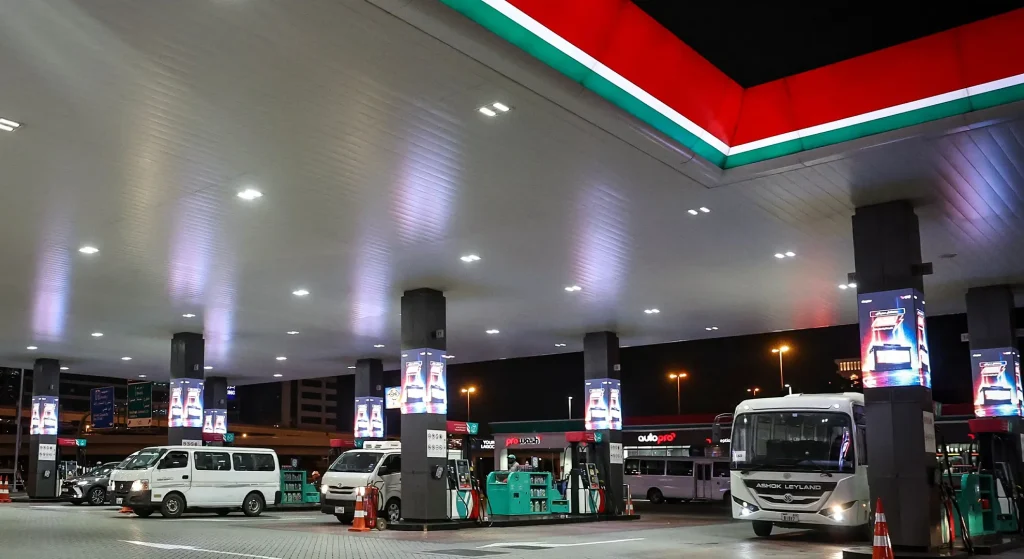
Motorists across the UAE are watching fuel prices ahead of November, with questions emerging over whether petrol costs could climb beyond the previous record of Dh4.63 per litre. The final rates will depend on the monthly pricing announcement.
UAE Petrol Price Outlook: Will November Rates Break the Dh4.63-Per-Litre Record?
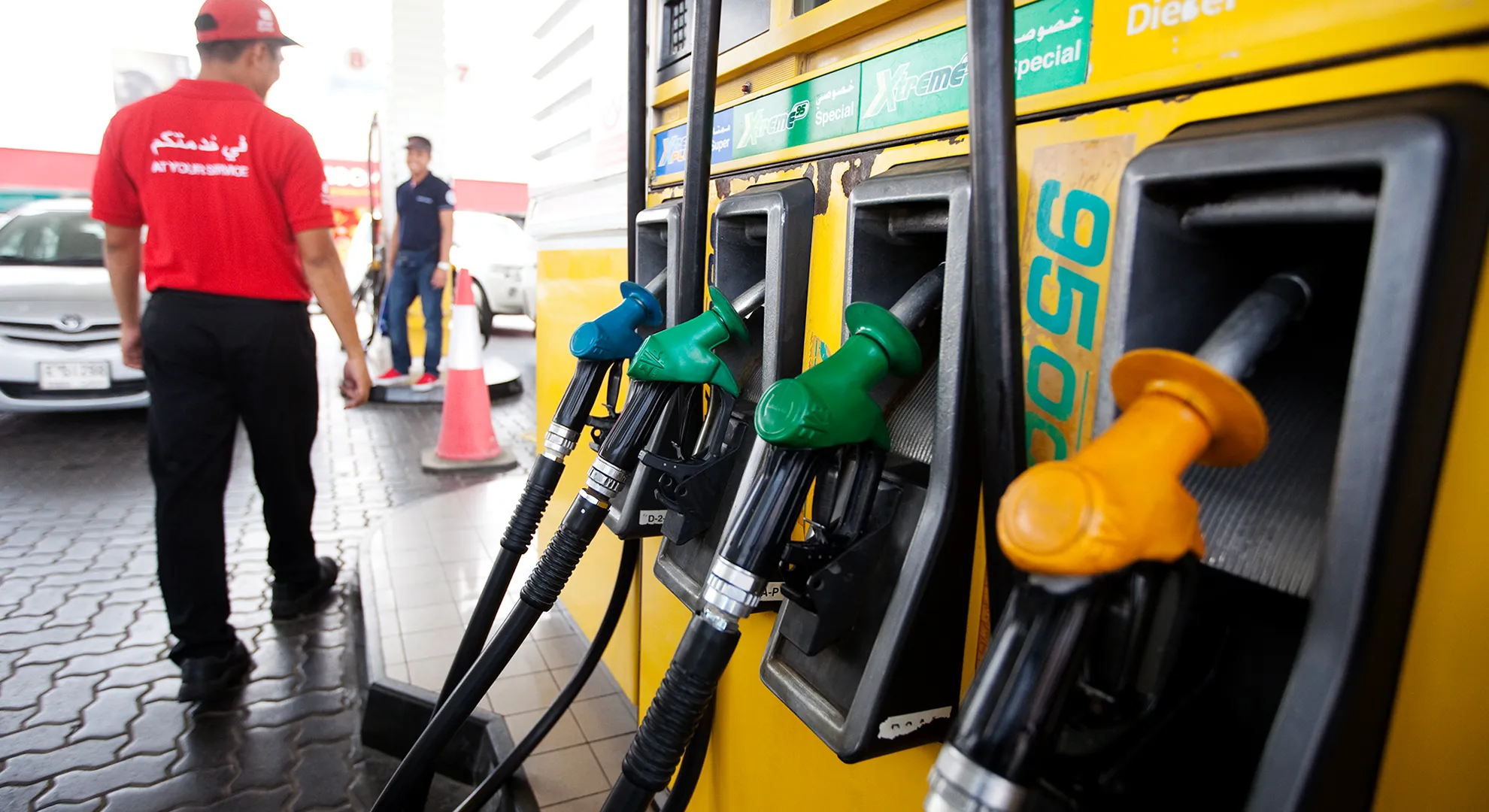
UAE Petrol Prices May Rise in November as Middle East Tensions Push Oil Costs Higher
Motorists across the UAE are preparing for the next fuel price announcement amid renewed volatility in international oil markets. Rising crude prices, concerns over possible supply disruptions and escalating tensions in the Middle East have increased speculation that petrol rates could climb further in November.
Global oil markets experienced another upward movement on Wednesday after reports of Houthi attacks on Saudi energy infrastructure raised concerns about the security of regional oil supplies. The latest developments have added to uncertainty in an already volatile market, with traders closely monitoring geopolitical developments and their potential impact on crude production and exports.
Brent crude moved above $116 per barrel during Wednesday morning trading, while West Texas Intermediate (WTI) also recorded gains. The increase came as investors assessed the possibility that further attacks or an escalation in regional hostilities could disrupt supplies from one of the world’s major oil-producing regions.
The direction of international oil prices is particularly important for UAE motorists because the country links domestic retail fuel rates to movements in global markets. Since the UAE deregulated petrol prices in 2015, monthly adjustments have reflected changes in international oil prices and related market conditions.
With fuel prices already reaching a four-year high in October, another increase could place additional pressure on motorists and businesses that rely heavily on road transport.
Global Oil Markets React to Fresh Supply Concerns
Crude prices strengthened after renewed security concerns surrounding Saudi Arabia’s energy infrastructure drew attention to the risks facing regional oil supplies.
Brent crude was trading at $115.68 per barrel on Wednesday morning, representing an increase of 1.8 per cent. WTI crude stood at $101.48 per barrel, up 1.6 per cent, according to the figures provided.
The latest movement reflects the influence geopolitical developments can have on oil markets. When traders become concerned that production, refining operations or transportation routes could be affected, prices may rise as market participants reassess the availability of supplies.
Saudi Arabia occupies an important position in the international energy market, making developments involving its oil facilities particularly significant for traders and consumers.
However, crude prices do not respond to geopolitical events alone. Expectations surrounding future demand, production levels, commercial inventories and diplomatic developments can also influence market movements.
For this reason, the latest gains do not automatically guarantee that UAE petrol prices will increase by a particular amount in November. The final retail rates will depend on the pricing process and the market conditions considered by the UAE Fuel Price Committee.
UAE Motorists Await November Fuel Rates
The next announcement from the UAE Fuel Price Committee is expected to provide clarity on how international market movements will affect petrol prices in November.
The committee is scheduled to announce the new rates on Saturday, October 31, according to the information supplied. Until the official figures are released, motorists will have to wait to find out whether the next adjustment will bring another increase.
The possibility of further price rises has attracted attention because October already saw a significant increase across the main petrol categories.
Super 98 petrol was priced at Dh4.40 per litre in October, compared with Dh3.80 in September. Special 95 rose to Dh4.28 per litre from Dh3.69, while E-Plus 91 increased to Dh4.21 per litre, up from Dh3.61.
These changes raised the cost of filling a vehicle’s fuel tank and added to household transport expenses. For motorists who travel long distances regularly, even a relatively small increase per litre can make a noticeable difference to monthly spending.
Businesses that operate delivery vehicles, taxis, commercial fleets and other transport services may also feel the effects of sustained increases in fuel costs.
Nevertheless, the October rates alone do not establish how much motorists will pay in November. The forthcoming announcement will determine the applicable prices for each petrol grade.
Could Petrol Prices Break the Previous Record?
One of the main questions facing UAE consumers is whether petrol prices could move beyond the previous peak of Dh4.63 per litre.
That record was reached in July 2022, when global energy markets were affected by the Russia-Ukraine war and the resulting disruption and uncertainty surrounding international supplies.
The current market situation has again brought geopolitical risks into focus, although the circumstances are not identical to those experienced in 2022.
Recent increases in crude prices have raised the possibility of another upward adjustment to UAE fuel rates. However, whether retail petrol reaches or exceeds the previous record will depend on the movement of international prices and the outcome of the monthly pricing review.
A further increase in crude prices could strengthen expectations of higher petrol rates, while a reduction in geopolitical tensions or an improvement in supply conditions could ease some of the pressure.
Consumers should therefore avoid treating forecasts or market speculation as confirmation of the final November prices. The official announcement remains the determining source for the rates motorists will pay.
How International Oil Prices Affect UAE Petrol Costs
The UAE introduced a deregulated fuel pricing system in 2015, allowing domestic petrol prices to respond more closely to international market conditions.
Under this approach, the prices charged at filling stations are reviewed periodically rather than remaining fixed regardless of movements in the global oil market.
When international crude prices rise, the cost pressures affecting domestic fuel pricing can increase. Conversely, sustained declines in crude prices may create room for lower retail rates, depending on the wider pricing calculation.
This means that developments thousands of kilometres away can influence the cost of filling a car in Dubai, Abu Dhabi, Sharjah and other parts of the country.
The relationship is not necessarily a direct one-to-one movement between a daily crude price and the retail price of petrol. Global oil benchmarks fluctuate throughout each trading session, while UAE retail fuel rates are announced on a monthly basis.
As a result, the timing and scale of market movements matter when assessing the potential effect on the next month’s prices.
For November, traders’ reactions to geopolitical developments, the broader direction of crude prices and the relevant monthly pricing calculations will all be important factors to watch.
Oil Contracts Reflect Continued Market Volatility
The figures supplied for October indicate that December oil contracts averaged approximately $107.30 per barrel during the period measured, compared with around $102 per barrel in September.
This increase came amid concerns about regional security, uncertainty over future oil supplies and reports of declining global reserves.
The higher average suggests that oil markets have been pricing in additional uncertainty. However, the quoted figures refer to the specific contracts and period described in the supplied material and should not be confused with the Wednesday spot-market quotations for Brent and WTI.
Oil futures reflect expectations about the market at a future date, while current benchmark quotations reflect conditions in their respective trading markets. Both can offer insight into how traders are responding to new developments, but they measure different aspects of the market.
When uncertainty increases, futures prices can move as buyers and sellers reassess the likelihood of supply disruptions and changes in demand.
For motorists, the significance lies in whether elevated prices persist long enough to influence the next monthly fuel adjustment.
A temporary rise in crude prices may not have the same implications as a sustained increase. Similarly, any improvement in regional stability or a change in supply expectations could alter the direction of the market before the new retail rates take effect.
Diplomatic Efforts Could Limit Further Price Increases
Despite the latest rise in crude prices, diplomatic activity remains an important factor in determining how markets respond to the regional situation.
Daniel Takieddine, co-founder and chief executive of Sky Links Capital Group, said continuing tensions involving the Houthis and Saudi Arabia were contributing to concerns about the outlook for oil supplies.
He also pointed to diplomatic contacts aimed at reducing regional tensions and reopening discussions with Iran. According to his assessment, progress towards negotiations could help ease some of the uncertainty currently reflected in oil prices.
Takieddine said regional governments had increased their engagement with Tehran in an effort to revive negotiations, while Iran had indicated some willingness to consider an accelerated timetable under certain conditions.
He suggested that a credible improvement in diplomatic efforts could reduce the perceived likelihood of renewed tensions and remove part of the additional premium that geopolitical uncertainty adds to oil prices.
The comments highlight the two competing forces currently influencing the market: the risk of further disruption to energy infrastructure and the possibility that diplomatic engagement could prevent the situation from deteriorating.
If regional tensions intensify, traders may become more concerned about supply availability, potentially supporting higher crude prices. If negotiations make progress and the risk of further attacks diminishes, some of that pressure could ease.
Neither outcome is guaranteed, making the diplomatic situation an important variable for energy markets in the coming weeks.
What Higher Fuel Prices Could Mean for Residents
An increase in petrol prices would have a direct effect on motorists who purchase fuel regularly, particularly those with long daily commutes or vehicles with larger fuel tanks.
For example, a driver who fills a 60-litre tank would pay Dh264 at the October Super 98 rate of Dh4.40 per litre. At the September rate of Dh3.80, the same quantity would have cost Dh228, representing a difference of Dh36 per full tank.
The calculation illustrates the effect of the October price increase without assuming what November rates will be.
Motorists who fill their tanks several times a month could see a larger cumulative difference in their transport budgets. Households may respond by adjusting discretionary spending, combining journeys or reviewing their transport arrangements.
Commercial operators may also need to account for fuel expenses when managing delivery schedules, fleet operations and service costs. The degree to which these expenses affect businesses will depend on fuel consumption, operating margins and whether additional costs can be absorbed or passed on.
However, the wider economic effect of changing petrol prices depends on more than the pump price alone. Other factors, including transport demand, business costs and the direction of global energy markets, can influence the eventual impact on consumers.
For now, motorists should use the current official rates for budgeting and wait for the November announcement before making assumptions about the cost of their next fill-up.
What to Watch Before the November Announcement
Several developments could influence expectations ahead of the UAE Fuel Price Committee’s decision.
First, traders will continue monitoring crude oil benchmarks to see whether Brent and WTI maintain their recent gains or move lower. The duration of the increase may be as important as the initial jump.
Second, developments involving Saudi energy facilities and the wider regional security situation could affect concerns about the reliability of oil supplies. Any further escalation could prompt additional market volatility.
Third, diplomatic contacts involving regional governments and Iran may influence how traders assess the risk of a prolonged confrontation. Progress towards negotiations could ease concerns, while setbacks might have the opposite effect.
Finally, the official UAE pricing announcement will confirm the petrol rates applicable for November. Until then, market forecasts should be regarded as estimates rather than final prices.
The combination of higher crude quotations and continuing geopolitical uncertainty has increased the possibility of another adjustment to UAE fuel prices. Nevertheless, the extent of any change remains uncertain.
November Rates Will Provide the Final Answer
The latest movement in international oil prices has put UAE petrol costs back in the spotlight, with motorists watching closely to see whether the October increase will be followed by another rise.
Brent crude trading above $116 per barrel and WTI above $101 per barrel underline the uncertainty currently affecting the energy market. Concerns about regional supply disruptions have contributed to the recent gains, while diplomatic efforts offer a possible route towards easing some of the pressure.
October’s retail petrol prices were already substantially higher than September’s rates, and the previous UAE record of Dh4.63 per litre remains a key reference point for consumers assessing the potential for another peak.
However, a new record cannot be confirmed solely from the latest daily movements in crude prices. The monthly pricing decision and market developments before the announcement will determine the actual outcome.
The UAE Fuel Price Committee’s November rates are expected to clarify whether motorists will face higher costs, a more moderate adjustment or a change in the opposite direction.
Until those figures are released, residents and businesses should follow the official announcement rather than rely on speculation about a specific price per litre.