Gold prices in Dubai have started to climb again after experiencing a notable decline earlier in October. The recent recovery comes after rates dropped by more than Dh20 per gram, drawing renewed attention from shoppers and investors monitoring the local bullion market.
Gold Prices in Dubai Recover Some Ground Following Significant October Slump.
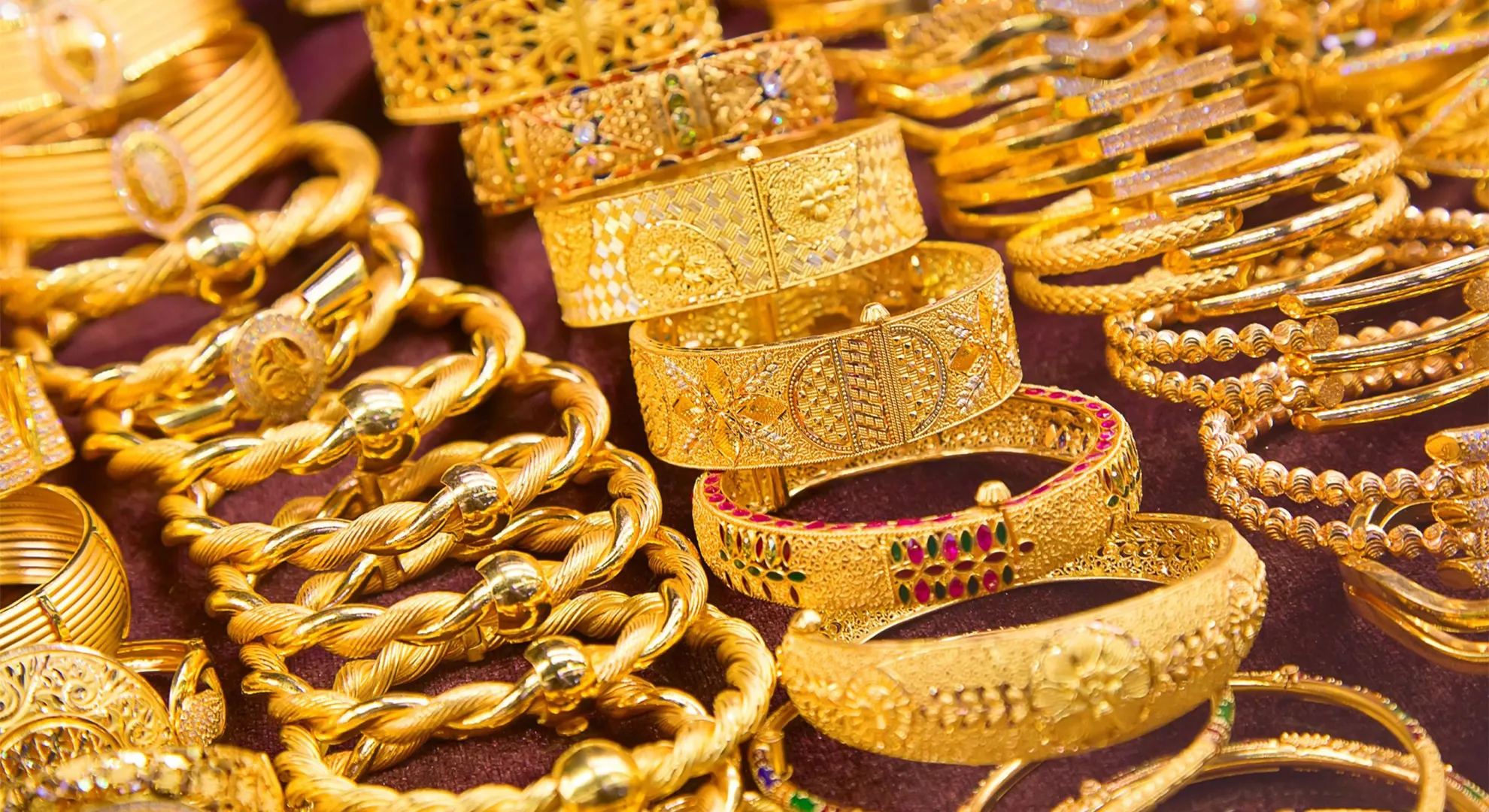
Dubai Gold Rates Edge Higher as Buyers Track Market Trends and Fed Decision
Gold prices in Dubai moved upward on Monday morning, recovering some of the ground lost during a sharp decline earlier in October. The increase was reflected across several popular jewellery categories, while investors continued to monitor international bullion prices, oil market movements and the upcoming US Federal Reserve policy announcement.
According to data from the Dubai Jewellery Group, the price of 24-karat gold reached Dh484 per gram on Monday morning, compared with Dh481.50 per gram at the end of weekend trading. Despite the latest improvement, the highest-purity gold category remained below the approximately Dh500-per-gram level recorded at the beginning of October.
Other commonly purchased gold varieties also registered gains at the start of the week. The 22K category was priced at Dh448.25 per gram, while 21K gold stood at Dh429.75 per gram. Meanwhile, 18K gold was available at Dh368.25 per gram.
The more affordable 14K variety continued to trade below Dh300 per gram, with its price recorded at Dh287.25.
The latest movement offered some relief after Dubai’s gold market experienced a decline of more than Dh20 per gram during October. However, the recovery in local prices came against a complicated international backdrop, with geopolitical tensions, inflation concerns and expectations surrounding US monetary policy continuing to influence investor sentiment.
Dubai Gold Prices Record a Modest Weekly Recovery
The beginning of the week brought an improvement in gold prices across Dubai’s major jewellery categories. The increase followed a period of weakness that had pushed prices down considerably from their levels at the start of the month.
The 24K rate rose by Dh2.50 per gram compared with the weekend closing price, indicating a modest upward adjustment in the local market.
Gold prices in Dubai generally respond to movements in international bullion markets, alongside currency-related factors and local retail pricing practices. As a result, changes in global trading conditions can influence the cost of purchasing jewellery and investment-grade gold in the emirate.
For consumers, even relatively small price changes can affect the total cost of a purchase, particularly when buying heavier jewellery pieces. A difference of a few dirhams per gram can become more noticeable when multiplied across a larger quantity of gold.
Nevertheless, the latest improvement does not necessarily signal the beginning of a sustained upward trend. Prices can fluctuate considerably in response to new economic information, central bank decisions and developments affecting global financial markets.
Shoppers considering a purchase may therefore wish to compare the latest rates with those available earlier in the day and check the final quotation with their chosen jeweller.
Latest Gold Rates Across Different Purities
Dubai’s gold market offers several purity categories to meet different consumer preferences and budgets. The prices recorded on Monday morning showed increases across the main varieties.
The reported rates were:
- 24K gold: Dh484 per gram
- 22K gold: Dh448.25 per gram
- 21K gold: Dh429.75 per gram
- 18K gold: Dh368.25 per gram
- 14K gold: Dh287.25 per gram
These prices provide a snapshot of the market at the time of reporting. Retail jewellery bills may be higher than the quoted gold value because making charges, applicable taxes and other shop-specific costs can affect the final amount payable.
The difference between purity categories is also important when comparing products. Higher-karat gold contains a greater proportion of pure gold, while lower-karat varieties contain a larger share of other metals.
For example, 24K gold is generally associated with very high purity and is commonly considered for bullion purchases. Meanwhile, 22K gold is widely used in traditional jewellery, while 18K and 14K varieties are often selected for designs that require different combinations of durability, appearance and gold content.
The most suitable option depends on the buyer’s intended use, budget and preference. A lower price per gram does not automatically make one category a better investment or a more appropriate jewellery purchase.
International Bullion Prices Also Move Higher
The recovery in Dubai coincided with a positive movement in the international gold market.
Spot gold was trading at $4,013.86 an ounce, representing an increase of 0.38 per cent, according to the figures provided in the market report.
Silver prices also moved upward, with the metal trading at $199.26 an ounce after gaining 0.28 per cent.
Movements in international precious-metal prices are important for Dubai because the local market is closely connected to global bullion trading. When international prices rise or fall, local gold rates typically adjust accordingly, although the precise change may depend on the timing of the quotation and local market conditions.
Gold remains closely watched by investors because it can play several roles in a portfolio. Some investors use it to diversify their holdings, while others purchase it as a potential store of value during periods of uncertainty.
However, its performance is not determined by geopolitical developments alone. Interest-rate expectations, the strength of the US dollar, inflation data, investment flows and changes in demand can all influence prices.
This combination of factors helps explain why gold can sometimes move differently from what investors might expect during a period of international tension.
Why Gold Is Facing Competing Market Pressures
Despite heightened geopolitical uncertainty, gold has struggled to attract consistent demand as a safe-haven asset, according to Naeem Aslam, Chief Investment Officer at Zaye Capital Markets.
Gold is frequently considered a defensive investment during periods of political instability or financial uncertainty. However, its appeal can weaken when other market developments increase the cost of holding a non-yielding asset.
Aslam said that tensions involving the United States and Iran had raised concerns about the possibility of further military confrontation and potential disruptions to energy supplies.
US President Donald Trump had stated that Washington was not negotiating with Iran and warned that developments could unfold relatively soon. Such comments added to uncertainty about the geopolitical outlook and the possible consequences for energy markets.
Under normal circumstances, an escalation in international tensions can encourage investors to seek assets they perceive as offering protection. Gold may benefit from that behaviour because it is not directly dependent on the financial health of a particular company or government.
However, the relationship between geopolitical risk and gold prices is not always straightforward.
If tensions push oil prices higher, markets may become more concerned about inflation. Higher energy costs can feed into transportation, manufacturing and consumer prices, potentially complicating the task facing central banks.
If inflation proves persistent, policymakers may be less willing to reduce interest rates quickly. That possibility can weigh on gold because the metal does not generate interest income.
Aslam’s assessment highlighted this conflict between gold’s traditional safe-haven appeal and the potential effects of rising energy costs and tighter monetary policy.
In other words, geopolitical uncertainty may support gold demand in one direction while the prospect of higher interest rates creates pressure in the opposite direction.
The $4,000 Level Remains Important for Traders
Aslam also highlighted the significance of the $4,000-per-ounce level as an important psychological point for the gold market.
Round-number price levels often attract attention from traders and investors because they can influence expectations and trading decisions. When prices approach a widely watched threshold, market participants may pay closer attention to whether the level holds or is breached.
Gold trading near $4,000 an ounce therefore places the market close to a level that could influence short-term sentiment.
If prices remain above an important threshold, some investors may interpret that as a sign of resilience. Conversely, a sustained move below it could prompt fresh questions about whether the market is losing momentum.
However, psychological price levels are not guarantees of future performance. Gold can move above or below them as market conditions change, and the direction of the next move depends on a combination of economic information, investor positioning and demand.
For buyers in Dubai, international price movements may provide useful context, but they do not offer certainty about the direction of local jewellery rates.
Anyone planning to purchase gold should distinguish between short-term price movements and longer-term investment considerations.
Federal Reserve Decision in Focus
Another major factor for investors this week was the anticipated monetary policy decision from the US Federal Reserve.
The central bank’s decisions can influence global financial markets by affecting borrowing costs, bond yields, currency movements and expectations for economic growth.
Gold is particularly sensitive to changes in interest-rate expectations because it does not pay a regular yield. When interest rates or bond yields are relatively attractive, some investors may prefer assets that generate income. When rates fall, the opportunity cost of holding gold may decrease.
The impact of a Federal Reserve announcement depends not only on the decision itself but also on how it compares with market expectations.
For example, if policymakers signal that borrowing costs could remain elevated for longer than investors anticipated, gold may face pressure. On the other hand, indications of a more accommodative policy outlook could support bullion, depending on the broader economic environment.
Inflation remains an important consideration in these decisions. Central banks must assess whether price pressures are easing sufficiently and whether economic conditions justify changes to monetary policy.
Developments in the energy market can complicate that assessment. A sustained increase in oil prices can raise costs across the economy, potentially making inflation more difficult to control.
This is why traders were watching the Federal Reserve’s policy announcement alongside geopolitical developments and movements in crude oil.
The decision could influence expectations for interest rates and, in turn, affect gold’s direction in international markets. However, the actual impact would depend on the policy statement, accompanying guidance and how investors interpreted the information.
Oil Prices Ease After Last Week’s Gains
Crude oil prices moved lower on Monday morning after recording strong gains during the previous week.
West Texas Intermediate crude was trading at $101 a barrel, down 2.18 per cent, while Brent crude stood at $114.50 a barrel, representing a decline of 1.89 per cent.
The pullback followed a period of upward movement in energy markets, where geopolitical risks had increased concerns about potential supply disruptions.
Oil is an important variable in the broader economic outlook because energy prices can influence inflation, production costs and consumer spending. A sustained rise in crude prices can place additional pressure on businesses and households, while a decline may ease some of those cost pressures.
However, a single session of falling oil prices does not necessarily indicate that concerns about supply or inflation have disappeared.
Energy markets can react rapidly to changes in political developments, production expectations, shipping conditions and demand forecasts. Prices may therefore reverse direction as new information becomes available.
The relationship between oil and gold is also complex. Higher crude prices can increase uncertainty and encourage some investors to seek defensive assets. At the same time, they can raise inflation expectations and affect the interest-rate outlook, potentially making gold less attractive.
The Monday decline in oil prices offered a different signal from the concerns that had driven the previous week’s gains, but investors still had to consider the wider geopolitical and monetary policy environment.
What the Market Movements Mean for Gold Buyers in Dubai
For consumers, the latest increase in Dubai gold rates comes after a significant decline earlier in October.
The rise may attract renewed attention from shoppers who had been waiting for prices to ease before making a purchase. Others may prefer to monitor the market for additional changes before committing to a transaction.
There is no single approach that works for every buyer. Someone purchasing jewellery for an upcoming occasion may have different priorities from an investor buying bullion for longer-term portfolio diversification.
Jewellery buyers should consider the total purchase price rather than focusing exclusively on the published gold rate. Making charges can vary depending on the design, craftsmanship and retailer, while taxes and other applicable costs can also affect the final bill.
Comparing quotations from several retailers can help shoppers understand the overall cost of similar items.
Buyers should also check the purity marking and weight of the jewellery and ask for a clear breakdown of the charges. These details are important when comparing pieces that may look similar but differ in their gold content or workmanship.
For those considering gold as an investment, short-term price changes should be evaluated alongside their financial objectives, time horizon and tolerance for risk.
Gold prices can rise and fall sharply, and previous gains or declines do not guarantee what will happen next. Investors may also face differences between buying and selling prices, as well as other transaction costs.
The latest recovery in Dubai therefore provides an update on market conditions rather than a clear signal that prices will continue moving in the same direction.
What Could Influence Gold Prices in the Coming Sessions?
Several developments may determine whether the recent improvement in gold prices continues.
The Federal Reserve’s policy decision is one important factor because it may influence market expectations for interest rates and the US dollar. Changes in bond yields and currency movements can also affect international demand for bullion.
Geopolitical developments involving the United States and Iran remain another area of uncertainty. Any escalation could alter expectations for energy supplies and encourage changes in investor positioning.
Oil prices will also be worth monitoring. A renewed rise in crude could intensify inflation concerns, while a sustained decline could reduce some of the pressure on energy-related costs.
In addition, traders will continue to assess whether gold can maintain its position around the closely watched $4,000-per-ounce level.
These factors do not operate independently. An announcement about monetary policy may have a different effect depending on the geopolitical environment, while changes in oil prices may influence expectations for inflation and interest rates.
As a result, gold’s direction may depend on how investors weigh competing economic and political signals rather than on any single development.
The same uncertainty applies to Dubai’s retail market, where local prices can adjust in response to changes in global bullion values.
A Market Recovery, but the Outlook Remains Uncertain
Dubai gold prices began Monday on a stronger footing, with the 24K rate rising to Dh484 per gram and other popular categories also registering gains.
The improvement followed losses exceeding Dh20 per gram during October, although 24K gold remained below the approximately Dh500-per-gram level seen at the beginning of the month.
International spot gold and silver prices were also higher in the reported session. At the same time, investors were weighing geopolitical risks, movements in crude oil and the possible implications of the Federal Reserve’s upcoming decision.
The market remains influenced by competing forces. Political uncertainty can support demand for gold as a defensive asset, but inflation concerns and the possibility of interest rates staying elevated can limit its appeal.
For shoppers, the latest figures offer a useful reference point when comparing gold prices across Dubai’s jewellery market. For investors, they underline the importance of monitoring a range of economic indicators rather than relying on a single day’s movement.
Whether the recovery develops into a more sustained trend will depend on how international markets respond to the policy announcement and the evolving geopolitical and economic outlook.
For now, Dubai’s gold market has recorded a modest rebound, while traders and consumers continue to watch for the next developments that could influence prices.