A Dubai-based resident has described the frightening moments experienced during an attack near Riyadh Airport, recalling the intense fear and uncertainty that made the situation feel catastrophic. The survivor said the incident was deeply traumatic and left a lasting impression.
Dubai Resident Recounts Terrifying Experience After Surviving Attack Near Riyadh Airport: ‘I Thought It Was the End of the World’
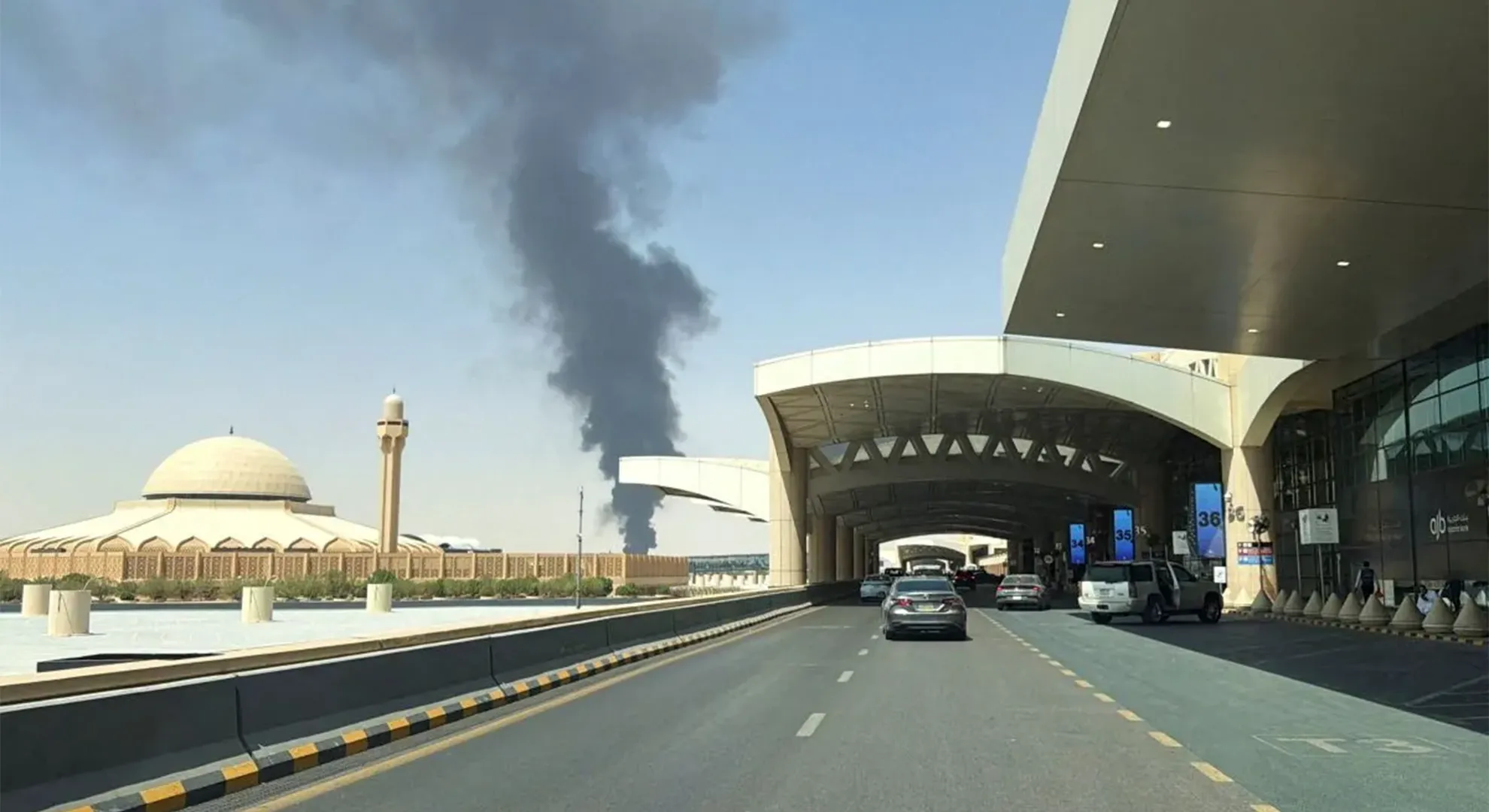
Dubai Woman Describes Ordeal After Riyadh Airport Blast Left Her Stranded for Days
A planned solo holiday to Bangkok became a frightening experience for Dubai resident Sunaira Sohail after a security incident at Riyadh airport disrupted her journey and left her struggling to find a way back to the United Arab Emirates.
Sohail, a public relations professional based in Dubai, was travelling to Thailand to attend a concert when her trip took an unexpected turn. What was supposed to be a straightforward journey became a difficult experience involving a nearby explosion, lengthy delays, communication problems, missing baggage and an exhausting return trip by road.
In an interview with INSIDER 18 following her return, Sohail described the fear she experienced during the incident and the uncertainty that followed. She said the situation was so alarming that she briefly believed she might not be able to return home.
The traveller reportedly spent approximately 26 hours inside the airport terminal as passengers waited for information about their flights and the next steps. With services disrupted and little clarity about when normal operations would resume, she eventually abandoned her original travel plans and began looking for another way to reach the UAE.
Her journey home involved arranging the necessary travel documents and boarding an overnight bus from Riyadh to Abu Dhabi. Even after reaching the Emirates, however, she continued to face problems, including uncertainty over her missing luggage and outstanding refunds.
An Unexpected Explosion at the Airport
Sohail’s difficulties began while she was at Riyadh airport preparing for her onward journey to Bangkok. She had arrived in Saudi Arabia for a connecting flight and was standing in a queue at a counter to have her boarding pass updated when the reported blast occurred nearby.
According to her account, the explosion was sudden and powerful. The force of the impact reportedly pushed people standing in the area to one side, leaving passengers shocked and struggling to understand what had happened.
Sohail recalled seeing smoke fill the surrounding area after the blast. The scene quickly became chaotic as travellers attempted to establish whether they were safe and what they should do next.
The incident transformed an ordinary airport wait into a frightening situation. Passengers who had been concentrating on their onward journeys suddenly found themselves dealing with a security emergency, with uncertainty surrounding the scale of the incident and the possibility of further danger.
Alarms reportedly sounded following the explosion. However, Sohail said passengers initially received little direction from airport personnel about where to go or how to respond.
As anxiety spread through the terminal, travellers began shouting, crying and searching for information. Officials subsequently instructed people to move towards the arrivals section of the airport.
The change in location created additional concerns for transit passengers who did not have Saudi entry stamps in their passports. Some feared that leaving the transit area could prevent them from returning to the airport to catch their connecting flights.
According to Sohail, passengers were reassured that they should not panic about their immigration status while following the instructions they had been given.
Nevertheless, the situation remained tense. Travellers had little information about the incident, the status of their flights or how long they might be required to remain at the airport.
Communication Problems Increased the Anxiety
The disruption became even more difficult when passengers reportedly lost access to reliable communication services.
Sohail said mobile networks and the airport’s Wi-Fi connection were unavailable after the blast. This left her unable to contact her family in Dubai and inform them about her circumstances.
For a traveller caught in an unfamiliar location during a security emergency, the inability to communicate with relatives can add significantly to the distress. Family members may be unaware of what has happened, while the stranded passenger may have no reliable way to confirm their safety.
Sohail’s experience reflected that uncertainty. Without dependable internet access or telephone service, she could not easily provide updates or seek assistance from people outside the airport.
The lack of information also made it harder for passengers to understand what would happen to their onward journeys. Travellers needed clarity about cancellations, alternative routes, accommodation and the availability of transport, but the circumstances left many of those questions unresolved.
For Sohail, the experience was especially upsetting because she had begun the trip with plans for a leisure visit to Thailand. Instead of preparing for a concert and a holiday, she found herself trying to navigate a rapidly changing situation far from home.
Repeated Delays Disrupted Her Bangkok Plans
Before leaving for her trip, Sohail had reportedly contacted the airline to ask whether rising tensions in the region might affect her travel arrangements.
She said she was informed that the flight schedule remained unchanged and that her journey was expected to proceed as planned.
Despite receiving that reassurance, she remained uneasy about travelling amid the regional situation. She recalled spending time reading the Quran because she was frightened by the uncertainty surrounding the journey.
Sohail arrived at Riyadh airport at approximately 1.30am, with her connecting flight to Bangkok scheduled to depart an hour later, at 2.30am.
However, the onward journey did not proceed according to the original timetable. Her flight was repeatedly delayed, leaving her and other passengers waiting for updates.
The delays continued for several hours. Eventually, passengers were reportedly allowed to board the aircraft at around 10.30am.
Even then, the journey did not begin as expected. Travellers remained aboard the plane for more than two hours before being instructed to disembark and return to the terminal.
By that stage, Sohail said, the prolonged wait had left passengers exhausted and uncertain about their next move.
The hours spent waiting at the airport had turned into an experience that she compared to the film The Terminal, which tells the story of a traveller unable to leave an airport under unusual circumstances.
She said the comparison reflected how passengers were effectively stuck inside the terminal for approximately 26 hours, with no clear timetable for when their travel plans could resume.
For Sohail, the immediate challenge was no longer simply reaching Bangkok. She needed to determine whether the airport would reopen, whether another flight would be available and how she could safely return home if her original plans were no longer possible.
Passengers Faced Difficulties Finding Food and Accommodation
As the disruption continued, Sohail said stranded travellers struggled to obtain basic assistance.
According to her account, passengers spent extended periods without suitable accommodation and had difficulty accessing food and water. She also criticised the level of assistance available from the airline during the disruption.
The lack of clear arrangements created further stress for travellers who had already endured a lengthy wait following the explosion.
Accommodation became one of the most urgent concerns. Sohail said passengers were informed that hotel arrangements were available only to people holding a Saudi visa, with accommodation reportedly costing about £140.
Faced with uncertainty and the prospect of remaining stranded for longer, some passengers applied for the required visa in the hope of finding a place to stay.
Sohail, however, initially decided to continue waiting for her scheduled flight to Bangkok. She said she had received further assurances that the flight would depart at 2.30am, giving her reason to believe she might still be able to continue her journey.
That expectation ultimately did not resolve her situation.
With the airport disruption continuing and passengers searching for somewhere to rest, Sohail joined a small group of friends in trying to find accommodation outside the terminal.
The group boarded a complimentary shuttle service that was intended to help stranded passengers reach hotels. They hoped the transport would take them to a place where they could spend the night while awaiting further instructions.
Instead, their search proved unsuccessful.
Sohail said the shuttle travelled between several hotels, but the establishments they visited were already fully booked. After approximately two hours of trying to find an available room, the driver reportedly dropped the group near a metro station.
She recalled being told that they would have to make their own arrangements for accommodation.
The experience left the group facing another challenge at a time when they were already tired and uncertain about their travel plans. They had expected the shuttle to provide a practical route to temporary shelter, but it did not lead them to a confirmed place to stay.
A Temporary Stay Did Not Bring the Expected Relief
After the shuttle journey, Sohail and her companions continued looking for a place where they could spend the night.
They eventually found an Airbnb property approximately 15 minutes from Riyadh airport. The arrangement offered temporary accommodation while they waited for updates about the airport’s operational status.
Sohail said police had informed them that the airport was expected to reopen the following day. Based on that information, the group had hoped that the interruption would be temporary and that they would soon be able to resume their journeys.
However, the expected reopening did not take place as they had anticipated.
The continuing disruption meant that Sohail had to reconsider her plans once again. Rather than returning to the airport for another uncertain wait, she began exploring alternative ways to reach the UAE.
Her experience also demonstrated the difficulties travellers can face when transport operations change suddenly and accommodation is in high demand.
Even passengers who manage to find a temporary place to stay may remain unable to determine how long they will need it, whether their airline will arrange another flight or what additional travel documents might be required.
For Sohail, the temporary accommodation solved only one immediate problem. She still had to establish how to leave Saudi Arabia, retrieve her belongings and deal with the financial consequences of the disrupted journey.
Missing Baggage Added to the Difficulties
The problems did not end with the cancellation or disruption of her travel arrangements. Sohail also faced uncertainty over her luggage.
She said she spent days attempting to establish where her bags were and which organisation was responsible for locating them.
According to her account, the airline directed her towards the airport, arguing that the matter fell under the airport’s responsibility. Airport representatives, meanwhile, reportedly indicated that the airline was responsible for the baggage.
The conflicting responses left Sohail without a clear answer about where her belongings were being held or when she could expect to receive them.
For travellers whose journeys are interrupted unexpectedly, missing luggage can create additional practical difficulties. Personal belongings may include clothing, essential items and other possessions needed during an extended stay away from home.
When the location of baggage is unclear, passengers may have to spend time contacting multiple departments while also arranging accommodation, transport and replacement travel documents.
Sohail said she continued trying to obtain information even after making arrangements to return to the UAE.
She also experienced difficulties securing documentation that confirmed she had been evacuated or otherwise assisted in leaving the affected area.
Such documents can be important when travellers need to communicate with airlines, employers, insurers or other organisations about an interrupted journey. Obtaining the correct paperwork can become particularly challenging when several agencies are involved and ordinary airport procedures have been disrupted.
Sohail’s account suggests that the administrative problems continued long after the immediate security incident had passed.
Other Travellers Sought Alternative Routes Home
As uncertainty persisted, other passengers began considering different ways to leave the region.
Sohail said some of her friends travelled to Doha, the capital of Qatar, before catching connecting flights to destinations in the United Kingdom and the United States.
Their journeys illustrated the different options passengers were attempting to use when their original travel plans could not be completed.
However, alternative routes were not necessarily straightforward. Travellers had to consider available transport, immigration requirements, flight connections and the possibility of further disruption.
For Sohail, returning directly to the UAE became the priority. Her planned holiday had already been interrupted, and the continuing uncertainty made it increasingly important to find a reliable way home.
She eventually applied for an urgent visa so she could travel by road.
Once the necessary arrangements were made, she boarded a bus scheduled to depart Riyadh at approximately 4pm.
The journey offered an alternative to waiting indefinitely for airport operations to resume. Rather than depending on another flight, she could travel towards the UAE by road and continue her journey from there.
The decision marked a turning point in her efforts to leave Saudi Arabia, although the trip itself would take many hours and bring its own difficulties.
An Overnight Bus Journey to Abu Dhabi
Sohail’s bus left Riyadh in the afternoon and reached Abu Dhabi at approximately 9am the following day.
The overnight journey meant spending additional hours travelling after the extended airport wait, the search for accommodation and the uncertainty over her flight arrangements.
Although the road trip was physically demanding, it provided a route back to the Emirates after her original plans had fallen apart.
However, the security situation remained a concern during the journey.
Sohail said passengers received alerts on their mobile phones warning of hostile threats while they were travelling. At one point, she recalled looking up after receiving an alert and witnessing what she described as an interception in the sky ahead of them.
She said the experience was startling because it was something she had previously associated with scenes in films rather than an event she expected to witness during an ordinary journey.
The incident reinforced the sense of uncertainty that had followed her since the airport blast.
Even after leaving Riyadh, Sohail could not entirely put aside concerns about the wider security situation. Alerts received during the bus journey reminded passengers that regional developments could affect their travel even when they were no longer inside an airport.
For someone who had set out on a solo holiday, the journey home had become an experience shaped by sudden changes, safety concerns and the need to make difficult decisions without reliable information.
Refunds and Luggage Still Unresolved After Her Return
Reaching the UAE brought Sohail considerable relief, but it did not immediately resolve every issue connected to her disrupted trip.
More than five days after the incident, she said she had still not recovered her missing luggage or received the refunds she was seeking.
The outstanding matters meant that the consequences of the journey continued after she returned home.
She had initially planned to visit Bangkok for a concert, but the airport disruption prevented the trip from unfolding as expected. Instead, she spent several days trying to find accommodation, obtain travel documents, identify alternative transport and establish what had happened to her belongings.
The unresolved baggage and refund issues added a financial and administrative burden to an already distressing experience.
Passengers whose journeys are interrupted may need to contact airlines and other service providers to determine whether they qualify for refunds, replacement travel or reimbursement for additional expenses. The process can become more complicated when responsibilities are unclear or when several organisations are involved.
Sohail’s account highlighted the importance of clear communication with affected passengers during major disruptions. Travellers need timely information not only about immediate safety but also about the practical arrangements required to complete or abandon their journeys.
In her case, getting back to the UAE was the most important immediate objective. However, the remaining issues showed that reaching home did not necessarily mark the end of the disruption.
A Holiday That Turned Into a Frightening Experience
Reflecting on what had happened, Sohail said the experience was completely different from what she had imagined when she began planning her solo trip.
Instead of enjoying a concert and exploring Bangkok, she found herself caught in a security incident, waiting for hours at an airport and trying to arrange a safe journey back to the UAE.
The blast, the loss of communications, the repeated flight delays and the difficulties finding accommodation all contributed to an experience that she described as deeply frightening.
Her comments conveyed the emotional impact of being stranded far from home without knowing when normal travel arrangements would resume.
The uncertainty was compounded by the need to make decisions about accommodation, immigration documentation and transport while the security situation remained unclear.
For Sohail, the most important outcome was that she had returned safely to the UAE.
She expressed gratitude for being back home, even though her luggage and refund claims remained unresolved at the time of the interview.
Her experience serves as a reminder that unexpected security incidents can rapidly transform routine journeys into complicated travel emergencies. When airports close or flights are disrupted, passengers may have to navigate a combination of safety concerns, immigration rules, accommodation shortages and administrative delays.
It also highlights the value of reliable communication during emergencies. Clear guidance from airlines, airports and relevant authorities can help travellers understand their options and make informed decisions when ordinary travel arrangements are no longer available.
For Sohail, the trip that began with excitement about a concert in Bangkok ended with an exhausting overnight journey across borders and a renewed appreciation for having returned home safely.
Although the immediate ordeal was over, the missing baggage and outstanding refunds meant that some aspects of the experience were still unresolved.
Her account offers a personal perspective on the difficulties travellers can encounter during regional disruptions and the emotional strain of trying to find a way home when plans change without warning.