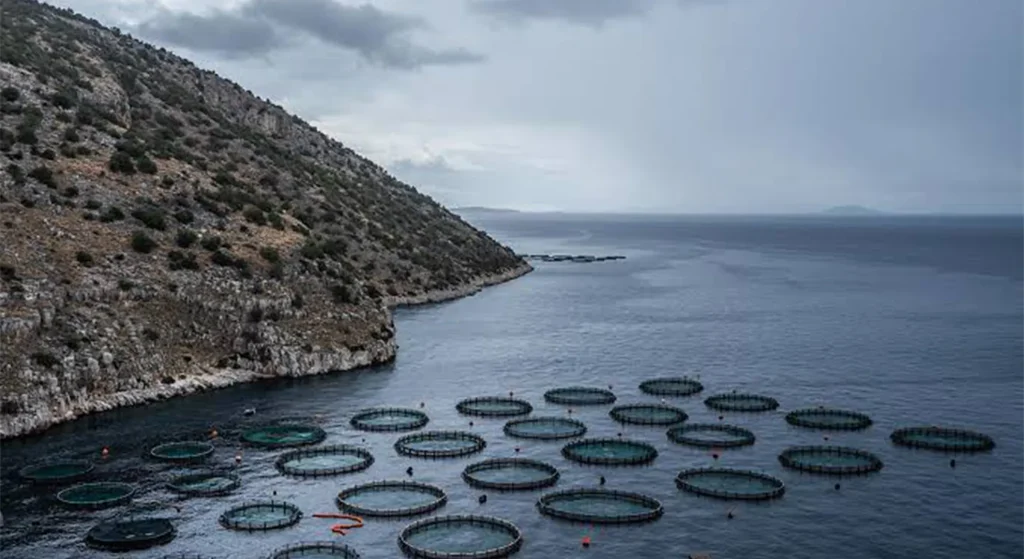
Abu Dhabi is advancing its aquaculture sector with a new initiative designed to generate 30,000 tonnes of seafood annually. The project aims to strengthen local food production, support the emirate’s seafood industry and contribute to long-term food security through sustainable fish farming.
Abu Dhabi Unveils Aquaculture Initiative Aiming to Produce 30,000 Tonnes of Seafood Each Year.
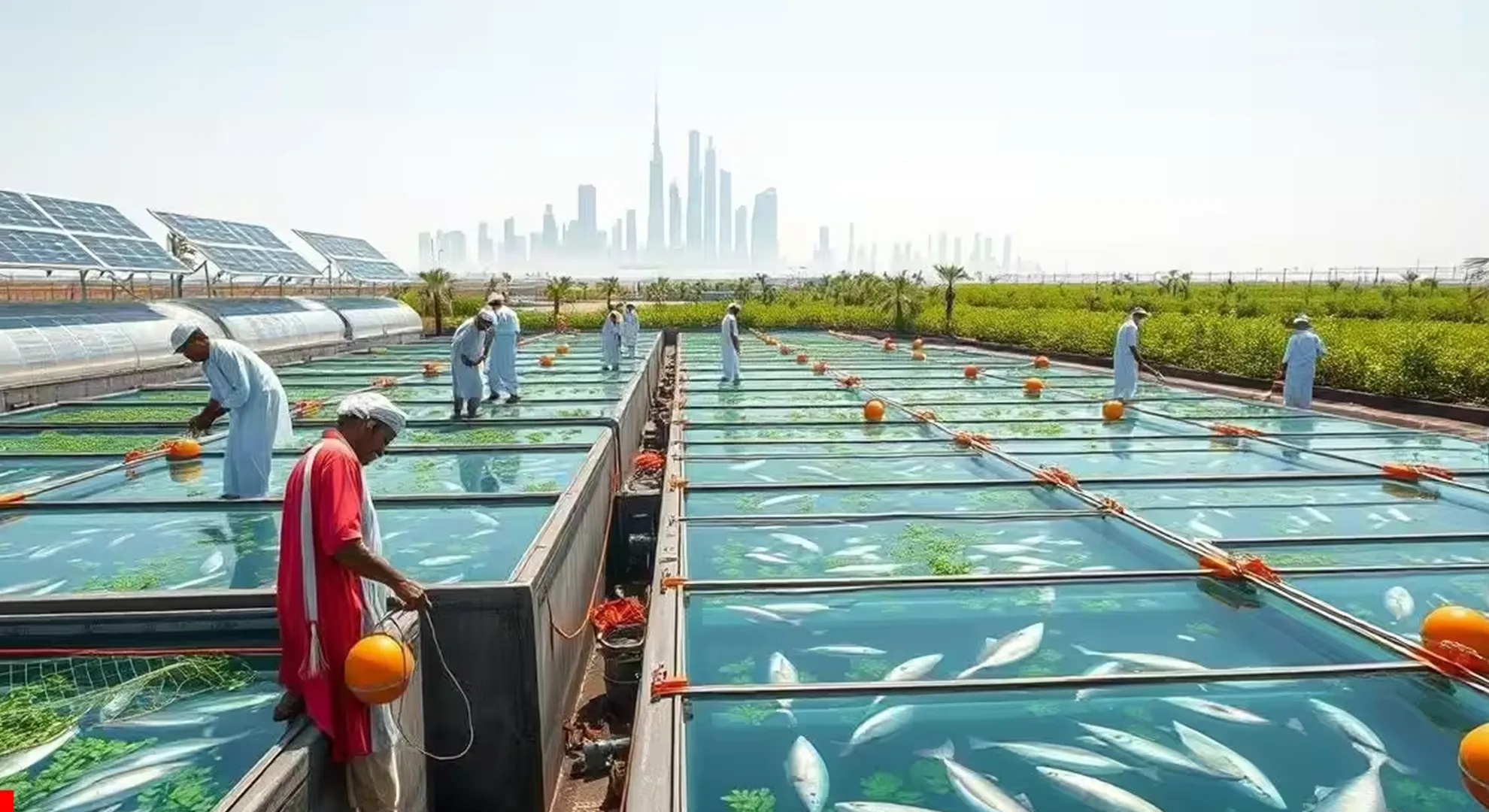
Abu Dhabi Plans Major Seafood Farming Facility With Annual Production Target of 30,000 Tonnes
Abu Dhabi is exploring a major expansion of its seafood production capabilities through a proposed aquaculture development designed to produce approximately 30,000 metric tonnes of seafood each year once fully operational. The initiative follows an agreement between Abu Dhabi-based QITAF Holding and Japan’s Global Academy Limited, which will work together to assess the project’s development potential.
The proposed facility is intended to strengthen the UAE’s domestic food supply, reduce dependence on imported seafood and introduce advanced Japanese fish-farming technologies to Abu Dhabi. The project will focus on modern land-based aquaculture methods designed to support production in a controlled environment while making efficient use of water and other resources.
QITAF Holding, a wholly owned subsidiary of Abu Dhabi National Investment and Development, has signed a memorandum of understanding (MoU) with Global Academy to explore the development of the large-scale facility.
The agreement establishes a framework for evaluating the project’s technical requirements, potential investment structure and phased implementation. The planned annual output of around 30,000 tonnes represents the target once the facility reaches full operating capacity, rather than an immediate production commitment.
The project remains subject to feasibility assessments, the necessary regulatory approvals and further development agreements. Production is expected to increase progressively as the facility moves through its planned stages.
If implemented successfully, the initiative could contribute to Abu Dhabi’s efforts to expand domestic seafood production, strengthen supply-chain resilience and develop a more technologically advanced aquaculture industry.
Land-Based Aquaculture at the Centre of the Proposal
The proposed development will use land-based aquaculture, an approach that allows seafood to be raised in purpose-built facilities rather than relying exclusively on open-water farming.
Under this model, fish and other aquatic species are cultivated in controlled conditions where water quality, feeding, temperature and other environmental factors can be monitored and managed.
The project is expected to use modular Recirculating Aquaculture Systems (RAS). These systems treat and reuse water within the production environment, allowing fish farming to take place with greater control over water circulation and quality.
In a conventional fish-farming operation, water management and environmental conditions can significantly influence production. Recirculating systems are designed to provide a more controlled setting by filtering and treating water before returning it to the farming units.
A modular design can also allow individual production units to be developed in stages. This could support a phased expansion strategy, with capacity increasing as the project progresses and operational requirements are assessed.
The suitability of the technology will depend on factors such as energy consumption, water treatment, fish health, feed management and the cost of operating the facility.
For Abu Dhabi, the proposed approach offers an opportunity to explore a production model that is less dependent on access to suitable open-water farming locations.
However, the project’s eventual output and commercial performance will depend on the results of feasibility studies, the chosen facility design and the successful implementation of the planned production systems.
Which Seafood Products Could Be Produced?
The proposed aquaculture facility is expected to focus initially on seafood species with established commercial demand in regional markets.
The varieties identified for potential production include:
- Hamour (grouper): A popular fish in the UAE and wider Gulf region.
- Cobia: A marine fish considered for commercial aquaculture because of its potential for farmed production.
- Sea bass: A commercially important species used in domestic and international seafood markets.
- Snapper: A group of fish with established demand among seafood consumers.
- Flounder: A flatfish that could form part of the proposed production range.
- Halibut: Another flatfish included in the initial list of potential species.
- Shrimp: A widely consumed seafood product that could diversify the facility’s output.
The final selection and volume of each species will depend on technical assessments, market demand and the suitability of the proposed farming systems.
Producing a range of seafood varieties could help the facility serve different market segments, including restaurants, retailers, food distributors and other commercial buyers.
The inclusion of locally popular species such as hamour is particularly relevant to the UAE market, where consumer demand for familiar regional seafood products remains an important consideration.
A diversified production portfolio could also help the project respond to changes in market preferences and demand across different seafood categories.
The planned facility is not limited to raising fish. The wider development could incorporate additional infrastructure to support the seafood supply chain, from early-stage production through processing, storage and distribution.
Project Could Include Processing, Storage and Distribution Facilities
In addition to the farming units, the proposed development could incorporate several supporting facilities designed to strengthen the project’s operational capabilities.
Potential components include hatcheries, seafood processing areas, rapid-freezing equipment, cold-storage facilities, fish-feed production and distribution networks.
Hatcheries could support the production of young fish for use in farming operations, potentially helping establish a more integrated production cycle. Their inclusion would depend on the final project design and the requirements of the selected species.
Processing facilities could allow seafood to be prepared for sale after harvesting, while freezing and cold-storage infrastructure could help maintain product quality during handling and transportation.
Cold-chain management is an important part of the seafood industry because fish and other aquatic products require appropriate storage conditions to preserve freshness and meet food-safety requirements.
Rapid-freezing capabilities could help the facility supply products to customers that require frozen seafood, while distribution infrastructure could support deliveries to domestic buyers and potentially international markets.
The project could also explore fish-feed production as part of its wider operating model. Feed is a significant consideration in aquaculture because its availability, quality and cost can affect fish growth, production efficiency and the overall economics of a farming operation.
Bringing several stages of the seafood supply chain together could help improve coordination between production and downstream activities.
Nevertheless, the proposed supporting facilities remain potential components of the development. Their inclusion, scale and timing will be determined through further planning and technical assessments.
Japanese Expertise to Support the Development
A central element of the agreement is the planned introduction of Japanese aquaculture technology and specialist knowledge to Abu Dhabi.
Japan has expertise across several areas of fish farming and seafood production, and the partnership aims to explore how relevant technologies and operational practices could be applied to the proposed facility.
The agreement provides a framework for Global Academy to coordinate engagement with Japanese technology suppliers, government bodies, development organisations and prospective international investors.
The precise technologies to be adopted will depend on the project’s requirements and the outcome of discussions with potential providers.
The proposed development is expected to explore several digital and automated systems, including artificial intelligence applications, Internet of Things monitoring, automated water-quality management and advanced feeding technologies.
These tools could help operators collect information about farming conditions, identify changes that require attention and manage production processes more consistently.
The aim is to combine aquaculture expertise with modern monitoring and automation to support efficient, controlled seafood production.
Technology transfer could also provide opportunities for local specialists to gain experience in operating and maintaining advanced aquaculture systems.
However, the use of these technologies will require appropriate technical support, staff training and operating procedures. Their practical value will ultimately depend on how well they perform under the facility’s specific environmental and production conditions.
Artificial Intelligence Could Help Monitor Farming Conditions
Artificial intelligence is among the technologies expected to be considered for the proposed aquaculture development.
In modern fish farming, operators need to monitor several variables to maintain suitable conditions for aquatic species. These can include water quality, feeding requirements and indicators of fish health.
AI-based tools could potentially help analyse information collected from monitoring equipment and identify patterns that may require further investigation.
For example, automated systems may be used to support feeding decisions or flag changes in operating conditions. The specific functions available at the proposed facility will depend on the technologies selected and how they are integrated into the production process.
Internet of Things sensors could complement these tools by collecting and transmitting data from different parts of the facility.
Automated water-quality controls could also help operators manage relevant conditions within the recirculating systems. Consistent monitoring is important because changes in water conditions can affect the health and growth of farmed species.
The use of automation could help improve the consistency of routine operations, but it would not remove the need for qualified staff, regular maintenance and effective fish-health management.
The facility’s operating model will need to establish how digital systems, technical teams and aquaculture specialists work together to maintain safe and reliable production.
Developing Local Skills and Technical Expertise
The partnership also aims to build specialised capabilities within Abu Dhabi’s aquaculture sector.
The areas identified for knowledge development include fish-farming operations, biosecurity, water management, research and seafood processing.
Biosecurity is particularly important in aquaculture because disease outbreaks can affect fish health, disrupt production and create financial losses. Appropriate management procedures can help reduce risks associated with the introduction and spread of disease.
Water management is another essential area, especially for facilities using recirculating systems. Staff must understand how treatment equipment operates, how to monitor relevant conditions and how to respond when systems require intervention.
Research and technical development could support improvements in production methods, while training in processing and handling could help maintain product quality after harvesting.
Building local expertise may also reduce the need to rely exclusively on overseas specialists for routine operations and technical support over the longer term.
The extent of these benefits will depend on the training programmes developed, the number of local professionals involved and the skills required once the facility’s final design has been established.
Through the proposed collaboration, the partners aim to connect Japanese technical knowledge with local operational needs, supporting the development of a more specialised aquaculture workforce.
QITAF Holding to Coordinate Project Development in Abu Dhabi
QITAF Holding will support the development process within Abu Dhabi under the terms outlined in the agreement.
Its responsibilities are expected to include engagement with the relevant authorities and assessment of the land, licensing, utilities and infrastructure needed for the proposed facility.
These considerations are important when planning a large-scale aquaculture operation because the site must accommodate farming systems, water treatment equipment and any additional processing or storage facilities included in the final design.
The company will also explore possible investment and financing arrangements for the development.
Such arrangements will depend on the findings of feasibility studies, the estimated cost of construction and operation, expected market demand and the terms agreed by the parties.
The project’s commercial structure has not been finalised in the information provided. Further assessments will be needed before a definitive investment decision and full implementation plan can be established.
The proposed phased approach would allow development to progress in stages, with production increasing as additional capacity becomes operational.
This approach could help align investment and construction with the facility’s technical requirements and the demand for its products.
However, the timing of construction, commissioning and commercial production has not been confirmed in the supplied information.
Partnership Builds on Earlier Cooperation in Aquaculture
The latest agreement follows previous collaboration between Global Academy and the Abu Dhabi Agriculture and Food Safety Authority (ADAFSA).
The two organisations signed an MoU during Global Food Week 2025 covering cooperation in research, development, innovation, training and knowledge exchange in aquaculture.
That earlier arrangement focused on supporting the development of expertise and innovation in the sector.
The new agreement between QITAF Holding and Global Academy moves the discussion towards exploring a specific large-scale production project in Abu Dhabi.
While the earlier cooperation addressed broader areas of collaboration, the latest MoU establishes a framework for assessing the proposed facility, its production potential and the technologies that could be used.
The relationship between research, technical development and commercial production is important for aquaculture projects, which require careful planning to ensure that farming methods are appropriate for the selected species and operating environment.
The partners will need to assess whether the proposed systems can achieve the intended production levels while maintaining suitable standards for fish health, product quality and operational efficiency.
The project could provide a route for applying technical knowledge to a commercial setting if the necessary studies, approvals and investment arrangements are completed.
Further decisions will determine how the proposal develops from initial assessments into a phased implementation programme.
Supporting the UAE’s Food Security Objectives
The proposed facility is intended to contribute to the UAE’s broader efforts to strengthen food security and improve the resilience of food supply chains.
Seafood is an important part of food consumption in the UAE, but meeting demand involves supply chains that can extend beyond the country.
Expanding domestic aquaculture could provide an additional source of seafood for local markets and help diversify the origins of products available to consumers.
Increasing local production may also provide greater flexibility for buyers and distributors by creating another supply option alongside imported seafood.
However, the extent to which the project could reduce import dependence will depend on the volume and type of seafood eventually produced, market demand and the competitiveness of the operation.
The planned annual output of approximately 30,000 metric tonnes represents the target at full operating capacity. It does not indicate that this volume will be available immediately or that the project will replace imports across all seafood categories.
The facility’s contribution to food security will also depend on its ability to operate consistently, maintain product quality and deliver seafood to the market at commercially viable prices.
If the project proceeds as planned, its production capacity could become one component of the UAE’s wider approach to diversifying food sources and developing domestic agricultural and aquaculture capabilities.
Potential Opportunities for Seafood Markets
Beyond serving customers within the UAE, the proposed development could explore opportunities to supply seafood to regional and international markets.
The potential to reach overseas buyers would depend on the final product range, production costs, logistics arrangements and compliance with the requirements of destination markets.
Processing, freezing and cold-storage facilities could help support distribution by allowing products to be handled and transported under appropriate conditions.
A reliable supply of consistently produced seafood could also be important for buyers such as wholesalers, retailers, restaurants and food-service companies.
The inclusion of several fish species and shrimp in the proposed production plan could provide flexibility in responding to demand across different product categories.
However, export opportunities would need to be assessed alongside domestic requirements. The project’s role in the UAE market will depend on the balance between local demand, production volumes and any future international sales.
If the development becomes commercially viable, it could create opportunities across several parts of the seafood value chain, including farming, processing, storage, transportation and distribution.
The scale of any such impact will depend on the final investment, the number of facilities developed and the project’s eventual operating capacity.
Sustainability and Resource Management Will Be Important
The proposed use of recirculating aquaculture systems places water management among the key technical considerations for the development.
These systems are designed to treat and reuse water, potentially reducing the amount of fresh water required compared with some other production approaches.
For a large-scale facility, effective water treatment and monitoring will be essential to maintaining appropriate conditions for farmed species.
The environmental performance of the project will also depend on its energy requirements, waste-management arrangements, feed sourcing and overall production design.
Automation and digital monitoring may support more precise management of resources, but the actual environmental benefits will need to be assessed using the final system specifications and operating data.
Similarly, the sustainability of seafood production cannot be determined solely by the farming method. The wider process, including the source of feed, the energy used by equipment and the handling of waste, will also influence performance.
The project partners will need to evaluate these considerations as part of the feasibility and design stages.
If the proposed facility is developed, its ability to combine reliable production with responsible resource management will be important to its long-term commercial and environmental performance.
Project Remains Subject to Feasibility Studies and Approvals
Although the agreement sets out an ambition to develop a major aquaculture facility, the project is still at the assessment stage described in the supplied report.
The proposed capacity of 30,000 metric tonnes per year is a long-term target that would be reached only after the facility is fully operational.
Before construction and commercial production can proceed, the partners will need to evaluate technical feasibility, financing, site requirements and the approvals required from the relevant authorities.
They will also need to determine which species can be produced most effectively, how the farming systems should be configured and what supporting infrastructure is necessary.
The phased development plan is intended to allow production capacity to grow over time rather than requiring the entire operation to begin at full scale.
Further announcements will be needed to confirm the construction schedule, investment commitments, operational milestones and expected date for the start of commercial production.
Until these details are established, the proposed facility should be regarded as a development under consideration rather than an operating seafood production site.
Abu Dhabi Explores a Larger Role in Aquaculture
The agreement between QITAF Holding and Global Academy represents a step towards evaluating a large-scale, technology-focused seafood farming project in Abu Dhabi.
With a proposed annual production target of approximately 30,000 metric tonnes, the initiative aims to combine land-based aquaculture, Japanese technical expertise and digital monitoring systems to expand domestic seafood production.
The potential development could include farming facilities alongside hatcheries, processing areas, freezing equipment, storage and distribution infrastructure, depending on the final design.
It also aims to develop local expertise in fish farming, biosecurity, water management and seafood processing.
For the UAE, the proposal aligns with efforts to strengthen food security, diversify seafood supplies and develop a more resilient domestic production base.
The project’s eventual contribution will depend on the outcome of feasibility studies, regulatory approvals, financing arrangements and the successful implementation of its proposed technology.
If those requirements are met, the facility could support local seafood availability while creating opportunities across the wider aquaculture and food-processing sectors.
For now, the agreement establishes the framework for further evaluation, with the full production target expected to be achieved only if the project advances through development and reaches full commercial operation.
Editorial note: This rewrite is based on the details you supplied and has not been independently verified. Before publication, confirm the companies’ official names, the relationship between QITAF Holding and its parent organisation, the 30,000-tonne production target, and the status of the proposed technology and supporting facilities. Keep the conditional language around feasibility studies, approvals and future production.