A maritime incident off Oman has claimed the life of an Indian national, while rescue teams successfully brought 19 other people to safety, according to the Ministry. Authorities are continuing to assess the circumstances surrounding the attack on the vessel and provide assistance to those affected.
Oman Coast Vessel Attack Leaves One Indian Dead, 19 Others Rescued: Ministry.
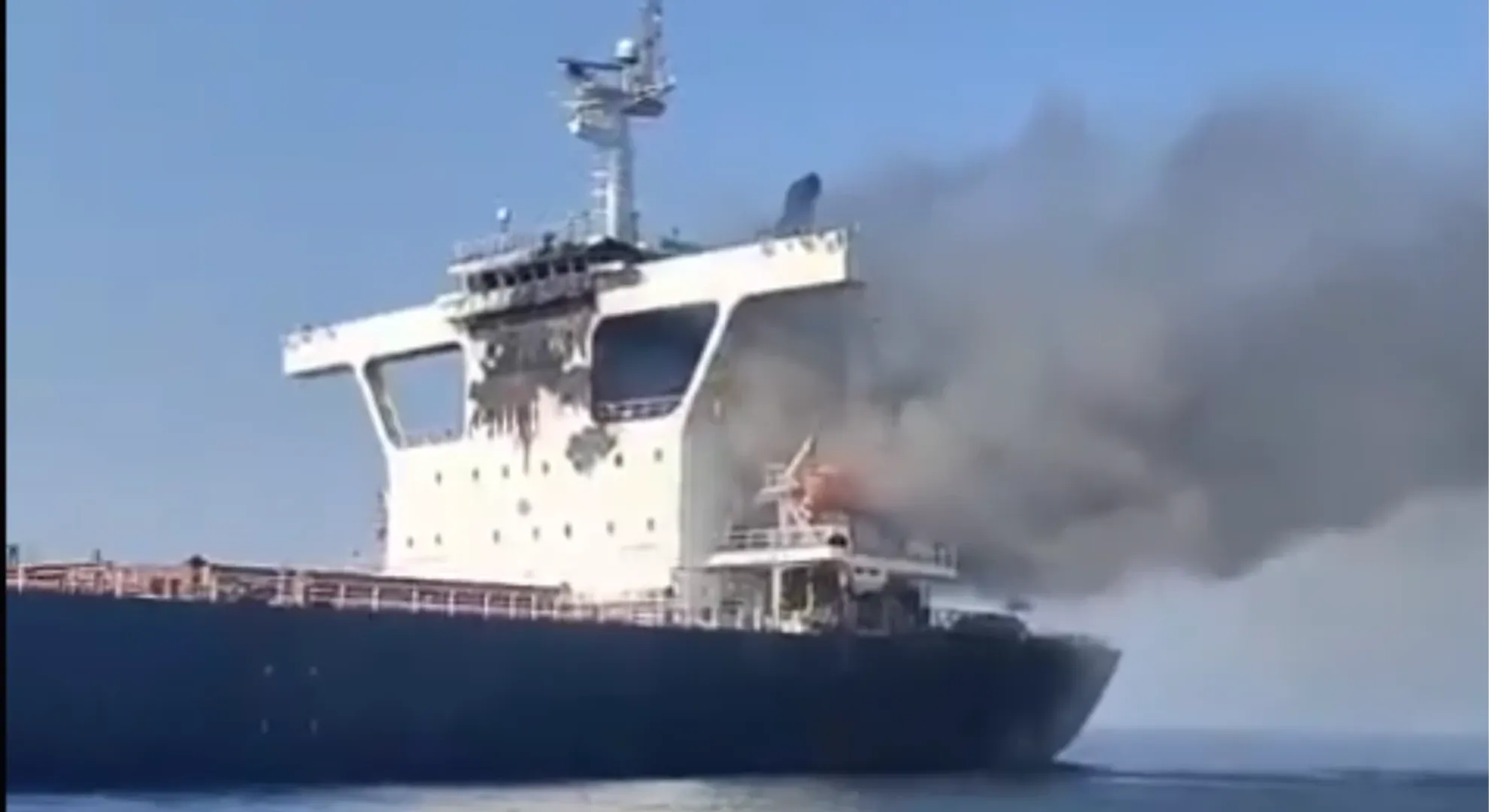
India’s embassy in Muscat said it is working closely with officials in Oman following the reported attack involving the vessel MV Cape Dao on Wednesday. The diplomatic mission is coordinating with local authorities to gather further information and provide necessary support in connection with the incident.
Indian National Killed in Attack on MV Cape Dao Off Oman
One Indian Seafarer Killed After Attack on MV Cape Dao Off Oman
One Indian seafarer lost his life after the merchant vessel MV Cape Dao came under attack while sailing towards India, according to the Indian Embassy in Muscat. The remaining members of the vessel’s Indian crew were rescued following the incident, while a fire broke out on board the ship.
The incident took place off Oman’s Musandam Governorate on Wednesday, prompting an emergency evacuation operation involving the Royal Navy of Oman and other relevant authorities.
The Indian Embassy said it was closely following developments and was working with Omani officials to ensure the safety and welfare of the crew members involved.
The vessel was carrying 20 Indian nationals as part of its crew. According to India’s Ministry of External Affairs, 19 of those Indian seafarers were rescued, while one Indian national died in the attack.
The embassy expressed its condolences to the family of the deceased and said it was maintaining contact with the relevant authorities as arrangements were being made following the incident.
Emergency Evacuation From the Vessel
Oman’s Maritime Security Centre said the vessel was targeted approximately 2.5 nautical miles from the coast of the Musandam Governorate.
Following the attack, a fire reportedly broke out in the ship’s engine room. The incident led to the death of one crew member and triggered an emergency response to evacuate those still aboard.
A Royal Navy of Oman vessel, working alongside the relevant authorities, carried out the evacuation operation.
In total, 27 crew members were removed from the Antigua and Barbuda-flagged merchant vessel and taken to safety. The rescued crew members were also provided with the necessary medical attention following the incident.
The emergency response allowed the remaining crew to leave the affected vessel after the fire and attack created a potentially dangerous situation on board.
Indian Embassy Monitoring the Situation
The Indian Embassy in Muscat said it was closely monitoring the developments surrounding the attack.
With 20 Indian citizens among the vessel’s crew, the incident prompted immediate coordination between Indian diplomatic officials and authorities in Oman.
The embassy said it was working with Omani officials regarding the safety of the crew members and was also coordinating with the relevant parties following the death of one Indian national.
In a statement, the embassy conveyed its condolences to the family of the deceased seafarer.
The diplomatic mission also said it was coordinating with the RPSL and remained in communication with the family following the loss.
The embassy’s involvement includes monitoring the situation on the ground and coordinating with local authorities as the rescued Indian seafarers prepare for the next stages following the incident.
MEA Condemns the Attack
India’s Ministry of External Affairs also responded to the incident, condemning the attack on the vessel off Oman.
The ministry confirmed that 20 Indian seafarers had been aboard MV Cape Dao.
Of those, 19 were rescued, while one Indian national was killed.
The MEA expressed its condolences to the family of the deceased and said the Indian Embassy in Oman was continuing to monitor developments closely.
The ministry also said the embassy was actively coordinating with Omani authorities to facilitate the early repatriation of the Indian seafarers who had been rescued.
India thanked the authorities in Oman for their assistance during the rescue operation.
What Happened Aboard MV Cape Dao
According to information provided by Oman’s Maritime Security Centre, the Antigua and Barbuda-flagged merchant vessel was targeted while operating approximately 2.5 nautical miles from the Musandam Governorate.
The attack resulted in a fire inside the engine room.
The emergency situation required the crew to be evacuated from the vessel.
The Royal Navy of Oman participated in the operation, working in coordination with the relevant authorities to bring the crew members to safety.
A total of 27 people were evacuated from the vessel and subsequently provided with medical care.
One crew member died as a result of the incident.
The Indian Embassy separately confirmed that the deceased was an Indian national.
Indian Crew Members Rescued
The incident has particular significance for India because of the large number of Indian nationals aboard the vessel.
Twenty Indian seafarers were part of the ship’s crew. Nineteen survived the incident and were rescued.
The Indian government is now working with Omani authorities to coordinate their return.
The Ministry of External Affairs said the Indian Embassy was taking steps to facilitate the early repatriation of the rescued Indian seafarers.
The embassy’s continued coordination with Omani authorities is intended to ensure that the affected crew members receive appropriate assistance following the emergency.
The diplomatic mission is also remaining in contact with the family of the Indian national who died.
Rescue Operation Following the Attack
The evacuation was carried out after the vessel was attacked and a fire developed in its engine room.
The Royal Navy of Oman responded with support from the relevant authorities and transported the crew members away from the affected ship.
The rescue operation resulted in 27 crew members being evacuated.
Those rescued received medical attention following their evacuation, according to the Maritime Security Centre.
The response helped ensure that the surviving crew members were removed from the vessel after the incident.
The circumstances surrounding the attack remain under the attention of the relevant authorities.
Embassy in Contact With Omani Authorities
The Indian Embassy in Muscat has been coordinating with authorities in Oman since the incident.
The embassy said it was closely monitoring the situation and working to establish the safety of all crew members connected to the vessel.
Its coordination also includes arrangements concerning the Indian nationals who survived the incident.
With the MEA confirming that 19 Indian seafarers had been rescued, efforts are now focused on supporting them and facilitating their return to India.
The embassy is also communicating with the family of the deceased Indian national.
Vessel Was Sailing Towards India
The Indian Embassy said MV Cape Dao was travelling towards India when the attack occurred.
The incident happened off the Omani coast, near the Musandam Governorate.
The vessel was flying the flag of Antigua and Barbuda.
After the attack, a fire broke out in the engine room, creating an additional emergency situation for those aboard.
The Royal Navy of Oman and other authorities responded to the incident and carried out the evacuation.
The rescued crew members were subsequently provided with medical assistance.
Government Response
The incident has prompted a response from both the Indian diplomatic mission in Oman and India’s Ministry of External Affairs.
The embassy has been working with Omani authorities to monitor the situation and assist the affected Indian citizens.
The MEA has also confirmed the death of one Indian national and the rescue of the other 19 Indian seafarers who were aboard.
India expressed its condolences to the family of the deceased and acknowledged the assistance provided by Omani authorities during the rescue operation.
The ministry said its embassy was continuing to coordinate with the Omani side to arrange for the early return of the rescued Indian seafarers.
Support for the Affected Crew
Following an incident at sea, the immediate priority was to evacuate those aboard the vessel and provide medical assistance.
According to Oman’s Maritime Security Centre, all 27 evacuated crew members received the necessary medical care.
The Indian Embassy is now involved in supporting the Indian nationals among those rescued.
The mission’s coordination with Omani officials is expected to continue as arrangements are made for their repatriation.
At the same time, embassy officials remain in contact with the family of the Indian seafarer who died.
Condolences From India
The Indian government has expressed its condolences following the death of the Indian national.
The Ministry of External Affairs said it was deeply saddened by the loss and conveyed sympathy to the deceased seafarer’s family.
The Indian Embassy in Muscat also expressed its condolences.
The diplomatic mission said it was continuing to coordinate with the relevant authorities while maintaining contact with the family.
The loss comes amid an emergency that involved the evacuation of the vessel’s wider crew after the attack and subsequent engine-room fire.
Oman’s Role in the Rescue
Omani authorities played a central role in the emergency response.
A Royal Navy of Oman vessel was involved in the evacuation, working together with the relevant authorities to remove the crew from the Antigua and Barbuda-flagged ship.
The Maritime Security Centre reported that the vessel was attacked around 2.5 nautical miles off Musandam Governorate.
After the incident, 27 crew members were evacuated and provided with medical assistance.
The operation ensured that the surviving members of the crew could be taken away from the damaged vessel and receive care.
Repatriation Efforts Underway
With 19 Indian nationals rescued, the Indian government is now focusing on their safe return.
The MEA said the Indian Embassy in Oman was proactively working with Omani authorities to facilitate the early repatriation of the Indian seafarers.
The embassy is also continuing to monitor developments and coordinate with the relevant parties.
The process will involve continued communication between Indian diplomatic officials, Omani authorities and other parties connected to the vessel.
For the families of the rescued crew members, the government’s coordination is aimed at ensuring that they receive the necessary support following the incident.
Investigation and Further Information
The attack and subsequent fire have resulted in a major emergency involving an international merchant vessel and crew members from different nationalities.
Omani authorities are handling the incident locally, while Indian officials are focused on the welfare of their citizens.
The available information confirms that MV Cape Dao was attacked off the coast of Oman, a fire broke out in the engine room and the crew was evacuated.
One crew member was killed, while 27 people were rescued and provided with medical attention.
Among those aboard were 20 Indian nationals, of whom 19 survived.
Further information about the circumstances of the attack and the condition of the vessel may emerge as authorities continue their work.
Indian Officials Continue Coordination
The Indian Embassy in Muscat remains in contact with Omani authorities following the incident.
Its immediate priorities include monitoring the condition of the rescued Indian seafarers, coordinating their repatriation and maintaining communication with the family of the deceased.
The MEA has reiterated that the embassy is actively engaged with the Omani side.
India has also acknowledged the role played by Omani authorities in rescuing the crew and providing medical assistance.
The government’s response is expected to continue until the rescued Indian seafarers have been safely repatriated.
Incident Leaves One Indian National Dead
The attack on MV Cape Dao has resulted in the death of one Indian seafarer, while the other 19 Indian nationals aboard the vessel were rescued.
Omani authorities evacuated 27 crew members in total after the vessel was targeted off the Musandam coast.
The ship subsequently suffered a fire in its engine room.
The Indian Embassy and the Ministry of External Affairs have both confirmed the death and the rescue of the Indian crew members.
The embassy has expressed condolences to the bereaved family and is coordinating with Omani officials over the next steps.
Meanwhile, India’s MEA has said that arrangements are being made for the early repatriation of the surviving Indian seafarers.
The incident has brought together Omani rescue authorities and Indian diplomatic officials in an ongoing effort to assist those affected and ensure the safe return of the rescued Indian crew members.
India Urges De-escalation After Deadly Shipping Incident
India has expressed concern over the continued attacks affecting commercial vessels in the region, saying that repeated incidents involving merchant shipping are a serious cause for concern.
The Ministry of External Affairs called for greater reliance on dialogue and diplomatic efforts to reduce tensions and create conditions for peace in the region.
In its statement, the ministry said that commercial vessels, civilian infrastructure and the people working aboard ships should not be targeted. It also stressed the importance of maintaining safe and unrestricted movement through international maritime routes.
India said that uninterrupted navigation and commercial activity through the region’s waterways should be restored as soon as possible.
The statement came after the latest incident involving the merchant vessel MV Cape Dao, in which one Indian seafarer was killed and other crew members were evacuated.
Call for Dialogue and Diplomacy
The Indian government has reiterated its position that dialogue and diplomatic engagement are necessary to prevent further escalation.
The ministry said that the repeated attacks on commercial shipping in the region are deeply concerning and called for steps to lower tensions.
According to the government, the safety of civilian maritime traffic should remain a priority, particularly in international waterways that are essential for global trade.
The ministry also emphasised that commercial ships and their crews are civilian targets and should be protected from the consequences of regional hostilities.
India’s appeal comes as shipping companies and seafarers continue to face security concerns in several strategically important maritime areas.
The government has called for the restoration of free and unrestricted navigation, along with the resumption of normal commercial activity through the affected waterways.
Concern Over the Safety of Seafarers
The latest incident has also renewed concerns about the risks faced by people working in the maritime sector.
Seafarers operating commercial vessels can find themselves exposed to dangerous situations even though they are not participants in military operations.
The Forward Seamen’s Union of India (FSUI), an organisation that says it represents seafarers internationally and advocates for their rights, highlighted the death of the Indian crew member following the MV Cape Dao incident.
In a post on X, the union identified the deceased as Suraj Yadav, who it described as a wiper from Deoria in Uttar Pradesh.
The union subsequently addressed an open letter to Prime Minister Narendra Modi, calling for immediate action following the incident.
Union Says Death Should Not Be Seen in Isolation
The FSUI described the death as part of a wider pattern of dangers facing Indian seafarers operating in conflict-affected maritime regions.
In its open letter, the organisation argued that the incident should not be treated as an isolated event.
The union said that Indian seafarers have previously been killed or reported missing in areas including the Strait of Hormuz, the Gulf of Oman, the Red Sea and the Black Sea.
It called attention to the risks faced by civilian maritime workers who continue to operate commercial vessels despite heightened security concerns in some of these waterways.
The organisation also urged the Indian government to take immediate measures in response to the death of the seafarer.
Deceased Seafarer Identified
According to the FSUI, the Indian national who died in the latest incident was Suraj Yadav, a wiper from Deoria, Uttar Pradesh.
A wiper is a member of a ship’s engine department who performs a range of support and maintenance duties.
The union stressed that Yadav was working as a civilian seafarer and was not involved in combat.
In its statement, the organisation argued that the death of a civilian crew member should not be considered an acceptable consequence of the conflict and security tensions affecting the region.
The union called on the Indian authorities to respond to the incident and strengthen efforts aimed at protecting Indian citizens working aboard commercial vessels.
Wider Maritime Security Concerns
The incident has highlighted the broader security challenges confronting commercial shipping in several parts of the region.
Major international waterways are vital to global trade, with merchant vessels carrying energy supplies, raw materials, manufactured goods and other commodities between different parts of the world.
When these routes become unsafe, the consequences can extend beyond individual ships and their crews.
Shipping operators may face increased security risks, while seafarers can be placed in potentially dangerous situations simply because of the routes on which their vessels operate.
India’s Ministry of External Affairs has therefore stressed the importance of restoring safe and unrestricted maritime movement.
The ministry’s position is that commercial navigation should be allowed to continue without obstruction or attacks.
Importance of International Waterways
The waterways referenced by Indian authorities are important routes for international maritime commerce.
The Strait of Hormuz, Gulf of Oman and Red Sea have all featured prominently in discussions about maritime security in recent years.
The Black Sea has also experienced serious security challenges affecting commercial shipping.
For seafarers, operating in such environments can create additional risks even when their vessels are not connected to military activities.
The Indian government has said that civilian shipping and infrastructure should not be targeted and that international navigation must be protected.
Its latest statement calls for conditions that would allow commercial vessels to travel through the region without facing threats linked to ongoing tensions.
FSUI Appeals to the Prime Minister
The Forward Seamen’s Union of India used its open letter to appeal directly to Prime Minister Narendra Modi.
The union called for immediate intervention following Yadav’s death and raised concerns about the safety of Indian seafarers working in high-risk maritime areas.
The organisation said that previous assurances regarding the safety of seafarers had not prevented further deaths or disappearances.
It pointed to incidents involving Indian maritime workers in several conflict-affected regions and argued that stronger measures are needed to protect them.
The union’s appeal reflects broader concerns among maritime workers about the risks created when commercial vessels operate near areas affected by military confrontation or geopolitical tensions.
Civilian Workers Caught in Regional Tensions
The FSUI emphasised that seafarers are civilian workers rather than combatants.
Its statement focused on the distinction between commercial maritime employees and military personnel involved in armed conflict.
The union argued that workers aboard merchant ships should be able to carry out their professional duties without becoming targets because of wider political or military tensions.
The death of Yadav has therefore become part of a larger discussion about the protection of civilian seafarers operating in dangerous waters.
For Indian maritime workers and their families, the safety of crew members remains a major concern when ships are required to travel through areas affected by conflict or heightened security threats.
Government Calls for Safe Navigation
India’s Ministry of External Affairs has stressed that unrestricted navigation and commercial activity need to be restored through the region’s international waterways.
The ministry’s statement also called for an end to attacks targeting commercial vessels, seafarers and civilian infrastructure.
It said that dialogue and diplomacy should be used to reduce tensions and help restore peace.
The appeal reflects India’s stated concern about the impact of regional instability on civilian maritime traffic and international commerce.
The government has also expressed support for measures that would allow merchant ships and their crews to move safely through international waterways.
Impact on Indian Seafarers
India has a large community of citizens working in the global maritime industry.
Indian nationals serve aboard commercial vessels operating on international routes, meaning that developments in conflict-affected maritime areas can have a direct impact on Indian workers.
When shipping routes become dangerous, Indian seafarers can face increased exposure to attacks, security incidents and other emergencies.
The latest incident involving MV Cape Dao has once again drawn attention to those risks.
The FSUI’s identification of Suraj Yadav has also put a human face on the wider issue of maritime security.
The union has used his death to highlight what it describes as repeated incidents affecting Indian seafarers in different parts of the world.
Appeal for Greater Protection
The FSUI’s message calls for stronger attention to the safety of civilian maritime workers.
The organisation said that Indian seafarers have continued to face deadly incidents and disappearances despite previous assurances about their protection.
Its appeal to the government seeks immediate intervention and greater attention to the security of Indian nationals working on commercial ships.
The union’s position is that seafarers should not have to face the consequences of conflicts in which they are not participants.
It has urged the authorities to take the necessary steps to reduce the risks faced by maritime workers.
India Seeks an End to Attacks
The Ministry of External Affairs has made clear that it wants attacks against commercial shipping and civilian maritime infrastructure to stop.
It has also called for the restoration of unrestricted movement through international waterways.
The ministry’s statement links the safety of seafarers with the broader need to reduce regional tensions.
According to the government, diplomatic engagement and dialogue are important tools for preventing further escalation and creating conditions for peace.
The latest appeal follows an incident that resulted in the death of an Indian seafarer and the evacuation of other crew members from the affected vessel.
A Wider Concern for Global Trade
The safety of international shipping is not only an issue for individual countries or maritime workers.
Commercial waterways connect major economies and serve as important routes for global trade.
Any prolonged disruption can affect shipping schedules, supply chains and the movement of goods.
India’s call for the restoration of free navigation therefore extends beyond the immediate incident involving MV Cape Dao.
The government has emphasised the importance of ensuring that international waterways remain accessible to civilian commercial vessels.
At the same time, maritime organisations such as the FSUI are focusing attention on the human cost when seafarers are exposed to dangerous conditions.
Families Left to Deal With the Consequences
Behind every maritime incident involving a crew member is a family affected by the outcome.
The death of Suraj Yadav has prompted condolences and calls for action from those representing Indian seafarers.
The FSUI’s appeal highlights concerns about the safety of workers who spend long periods away from home while operating commercial ships across international waters.
The union has argued that the risks faced by these workers deserve greater attention, particularly when their vessels pass through regions experiencing conflict or heightened tensions.
For families of seafarers, assurances of safety are important, but the union’s statement argues that concrete protective measures are also required.
Calls for Peaceful Resolution
India’s latest statement places emphasis on reducing tensions through diplomatic means.
Rather than allowing attacks and maritime incidents to continue, the ministry has called for dialogue aimed at de-escalation and restoring peace.
The government has also stressed that civilian infrastructure and commercial shipping should not become targets.
Its position is that international waterways should remain open and safe for legitimate commercial traffic.
The ministry’s call for diplomacy comes amid continuing concerns about the safety of ships operating in several strategically important maritime areas.
The Road Ahead
The latest incident has renewed attention on the risks faced by commercial vessels and their crews in areas affected by regional tensions.
For India, the death of an Indian seafarer has added urgency to concerns about the protection of its citizens working in the maritime sector.
The government has called for an end to attacks against commercial shipping and urged all sides to pursue dialogue and diplomatic solutions.
The FSUI, meanwhile, has called for immediate government intervention and identified the deceased seafarer as Suraj Yadav of Deoria, Uttar Pradesh.
The union has argued that his death should be viewed within the wider context of risks faced by Indian maritime workers in conflict-affected waters.
Both the government’s statement and the union’s appeal underline the importance of protecting civilian seafarers and maintaining safe international maritime routes.
As regional tensions continue to affect commercial shipping, the safety of crews and the uninterrupted movement of merchant vessels remain significant concerns for India and the wider international maritime community.