Dubai has introduced updated safety requirements for schools, with new guidelines covering shaded areas for students, readily available first-aid supplies, swimming pool precautions and laboratory safety measures to strengthen protection and ensure safer learning environments across educational facilities.
Dubai Introduces New School Safety Standards Covering Shaded Play Zones, First Aid, Swimming Pools and Laboratories.
The handbook for private schools provides comprehensive guidance on the safety arrangements and precautionary measures educational institutions are required to implement throughout their campuses, covering facilities, student areas and other key locations to maintain secure and well-managed environments.
Dubai Schools Face Detailed Safety Requirements Under New KHDA Handbook
Private schools in Dubai will be required to follow a broad set of health and safety standards covering key areas of school operations, from classrooms and playgrounds to swimming pools, laboratories and student transport zones.
The requirements form part of a new compliance handbook issued by the Knowledge and Human Development Authority (KHDA) for private educational institutions in the emirate.
The handbook was introduced on Thursday as part of the wider Flexible Regulation Framework and supports the objectives of the Education 33 (E33) strategy.
KHDA has introduced four separate compliance guides covering different parts of Dubai’s education sector. The guides apply to early childhood centres, private schools, higher education institutions and training institutes.
For families with children enrolled in private schools, the school-specific handbook provides an overview of the precautions and safety arrangements institutions are expected to maintain throughout their campuses.
The guidelines cover several everyday areas where students spend time, including learning spaces, play facilities and swimming pools, while also setting out requirements intended to reduce risks during emergencies.
Requirements for kindergarten and Grade 1 classrooms
The new rules include specific provisions for younger pupils.
Classrooms used by kindergarten and Grade 1 students must be situated on the ground floor of school buildings.
The requirement is intended to support safer access and evacuation for younger children, particularly in situations where a rapid exit from the building may be necessary.
Schools must also ensure that classrooms are not excessively crowded. The permitted number of students should be determined according to the available floor space and applicable safety considerations.
The handbook places particular emphasis on maintaining sufficient space during emergencies, including evacuation situations.
Ventilation and classroom conditions
Schools are expected to provide classrooms with adequate natural lighting and appropriate ventilation.
Air-conditioning systems installed throughout school facilities must remain operational and efficient, reflecting the importance of maintaining suitable indoor conditions in Dubai’s climate.
Schools are also expected to monitor the condition of classroom facilities and ensure that equipment remains functional and safe for students and staff.
Furniture used by younger children must be appropriate for their age and should not contain exposed sharp edges that could cause injury.
For kindergarten classrooms specifically, doors must be fitted with mechanisms designed to prevent children from trapping or injuring their fingers.
These measures are intended to address everyday hazards that can arise in classrooms, particularly among younger children who may require additional protection.
Electrical and emergency precautions
Electrical outlets, sockets and connections must be positioned safely and kept securely covered.
Schools are also responsible for ensuring that electrical installations remain properly maintained and in good working order.
Emergency information must be displayed clearly inside classrooms so that students and staff can understand the procedures to follow if an incident occurs.
Schools must establish clear evacuation arrangements and regularly train both employees and students.
Regular drills and training are intended to ensure that members of the school community understand how to respond during emergencies rather than encountering evacuation procedures for the first time during an actual incident.
Safety requirements for play areas
The handbook also establishes requirements for indoor and outdoor areas where children play.
Play equipment and furniture must be suitable for the age of the children using the facilities.
Schools are expected to inspect such equipment regularly and ensure that maintenance is carried out when necessary.
Flooring beneath play equipment must provide protection against falls and be capable of absorbing impact.
This requirement applies to both indoor and outdoor play spaces.
Potentially dangerous surfaces, including sharp edges and hard structural columns, must be protected with suitable shock-absorbing materials.
The measures are designed to reduce the likelihood and severity of injuries if children fall or come into contact with playground structures.
Shade required in outdoor play areas
Outdoor play spaces must also meet specific requirements relating to protection from environmental conditions.
The handbook requires outdoor play areas to have secure fencing and prohibits uncovered drainage openings that could pose a danger to children.
At least 30 per cent of an outdoor play area must be covered by shade structures or canopies.
The requirement is particularly significant in Dubai, where high temperatures and strong sunlight can create additional risks for children spending time outdoors.
Schools must also ensure that materials exposed directly to sunlight remain safe when subjected to high temperatures.
This means outdoor equipment and surfaces should be capable of withstanding the local climate without creating additional hazards for students.
Supervision and first-aid facilities
Children must be supervised continuously while using designated play areas.
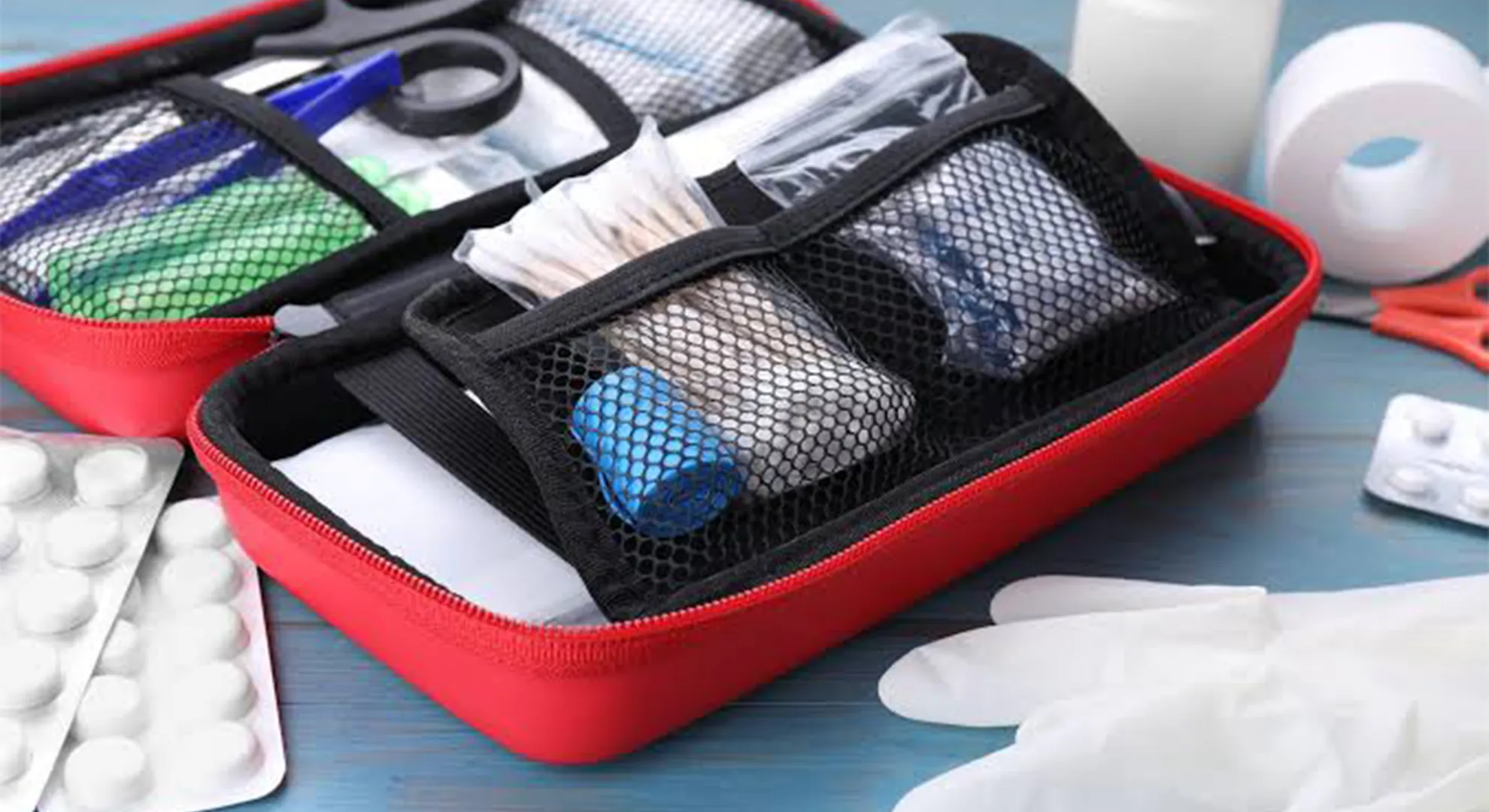
Schools must also have a first-aid kit available in a location that is clearly visible and easy to reach.
Keeping emergency supplies accessible allows staff to respond promptly to minor injuries and other situations that may occur during play.
The broader requirements place responsibility on schools to combine suitable equipment with proper supervision and emergency preparedness.
Additional controls for school swimming pools
Swimming pools are subject to their own set of safety rules under the new handbook.
School pools must comply with relevant Dubai Municipality requirements, the Dubai Building Code and applicable technical standards.
Schools must ensure that pool facilities meet the required construction and operational specifications.
Water quality and pool hygiene are also addressed by the guidelines.
Pools must be cleaned, disinfected and sanitised regularly, with the handbook requiring these procedures to be carried out at least once every six months by a company approved by Dubai Municipality.
Schools are expected to maintain records documenting cleaning and sanitation work.
They must also ensure that water quality remains within the required standards.
Pools cannot operate without lifeguards
One of the key requirements is that swimming pools cannot remain accessible when there is no lifeguard present.
A pool must be securely closed when it is not operating or when an appropriately qualified lifeguard is unavailable.
This restriction is intended to prevent students from entering swimming areas without supervision.
Schools must also implement measures preventing children from accessing pools on their own.
Where pools are used by different age groups, appropriate barriers must be installed between areas designated for younger and older students.
These controls are intended to provide additional protection for younger pupils who may require closer supervision around water.
Lifeguard numbers and qualifications
The number of lifeguards assigned to a school pool must correspond to the number of students using the facility.
Schools are also responsible for ensuring that lifeguards have valid training certificates.
The requirement means institutions must consider both staffing levels and qualifications when organising swimming activities.
Having an appropriate number of trained personnel available is an important part of maintaining supervision while students are in or around the water.
Poolside safety measures
The handbook also specifies requirements for the physical environment around swimming pools.
Poolside surfaces must have anti-slip flooring to reduce the possibility of falls.
Lifebuoys must be readily accessible so they can be used quickly if necessary.
A first-aid kit must also be positioned close to the swimming pool.
These provisions are intended to ensure that basic emergency equipment is available without delay if an incident occurs.
Pool rules must be clearly displayed
Schools must display swimming-pool safety rules clearly in both Arabic and English.
The signs must include warnings such as “No Diving” and “No Jumping”.
The handbook also requires pool depths to be clearly indicated.
This includes identifying shallow and deep sections so that students and supervising adults can easily understand the characteristics of different parts of the pool.
Clear signage is intended to reinforce safe behaviour and help students recognise areas that may require additional caution.
A broader approach to school safety
The new handbook takes a wide-ranging approach to safety, addressing not only emergency procedures but also everyday conditions across school campuses.
For younger students, the rules focus on classroom location, furniture, doors, electrical fittings and evacuation arrangements.
In play areas, the emphasis is on appropriate equipment, protective flooring, fencing, shade and supervision.
Swimming pools have additional controls covering water quality, lifeguards, barriers, emergency equipment and signage.
Together, these measures establish expectations for schools across several areas where students spend significant amounts of time.
Preparing schools for emergencies
Emergency preparedness is another recurring theme throughout the requirements.
Schools must make safety instructions readily available and ensure students and staff receive regular training.
This approach aims to ensure that emergency procedures are familiar before they are needed.
Clear evacuation routes, visible instructions and regular training can help schools organise an effective response when an emergency occurs.
The requirements also extend to the availability of first-aid supplies in areas such as playgrounds and swimming pools.
Focus on younger children
Several provisions specifically address the needs of younger students.
Requiring kindergarten and Grade 1 classrooms to be located on the ground floor can simplify movement and evacuation.
Child-safe furniture, finger-protection mechanisms on doors and properly secured electrical outlets are additional measures aimed at reducing common hazards in early-years environments.
Playgrounds also require age-appropriate equipment and constant supervision.
These provisions recognise that younger children may interact differently with their surroundings and may require additional safeguards.
Safety considerations for Dubai’s climate
The requirement for shade in outdoor play areas reflects the environmental conditions schools must manage in Dubai.
At least 30 per cent of outdoor play spaces must be shaded by canopies.
Schools must also check that materials exposed to direct sunlight remain safe under high-temperature conditions.
The rules therefore address not only physical hazards but also the environmental factors that can affect children using outdoor facilities.
Importance of regular maintenance
The guidelines place considerable emphasis on keeping school facilities in proper condition.
Play equipment must be inspected and maintained regularly.
Air-conditioning systems are expected to remain functional and efficient.
Electrical installations must be properly maintained, while swimming pools require documented cleaning and sanitation procedures.
These requirements highlight the importance of ongoing maintenance rather than relying solely on safety checks after an incident occurs.
What the handbook means for parents
For parents, the private-school compliance handbook provides a clearer picture of the safety standards schools are expected to meet.
The requirements cover areas that children encounter during an ordinary school day, including classrooms, playgrounds, swimming facilities and emergency arrangements.
Parents can use the framework as a reference when considering how schools manage basic health and safety responsibilities.
The handbook also provides a common set of expectations for private educational institutions across Dubai.
A comprehensive framework for school campuses
The requirements cover a wide range of facilities and activities, reflecting the different risks that can exist across a school campus.
In classrooms, schools must consider space, ventilation, furniture, electrical fittings and emergency procedures.
In playgrounds, the focus shifts to equipment safety, impact-absorbing flooring, fencing, shade and supervision.
Swimming pools require additional controls involving lifeguards, barriers, water quality, signage and emergency equipment.
The framework therefore creates separate safeguards for different environments while maintaining an overall emphasis on student wellbeing.
Clear responsibilities for schools
Under the new compliance framework, schools are expected to take responsibility for maintaining safe facilities and ensuring staff and students understand relevant procedures.
That includes conducting regular inspections, maintaining equipment, providing emergency supplies and ensuring trained personnel are available where required.
The swimming-pool rules provide one example of how detailed these responsibilities can be, with requirements covering everything from water sanitation and lifeguard qualifications to pool signage and access controls.
New regulatory framework
The private-school handbook is one of four compliance guides launched by KHDA under the Flexible Regulation Framework.
The broader initiative covers several categories of educational institutions in Dubai, including early childhood centres, private schools, higher education providers and training institutes.
The framework forms part of the wider Education 33 strategy.
For private schools, the detailed safety provisions provide a structured set of expectations covering facilities, emergency preparedness and student protection.
The requirements apply across different parts of the campus and address both routine conditions and potential emergencies.
Key measures schools must address
Among the main requirements outlined for private schools are:
Kindergarten and Grade 1 classrooms must be located on the ground floor.
Classrooms must provide adequate space, natural light and suitable ventilation.
Air-conditioning systems must be operational and efficient.
Furniture must be age-appropriate and free from dangerous sharp edges.
Kindergarten doors must include child finger-protection mechanisms.
Electrical outlets and connections must be safely positioned and covered.
Emergency instructions and evacuation procedures must be clearly communicated.
Students and staff must receive regular emergency training.
Play equipment must be age-appropriate and regularly inspected.
Flooring beneath play equipment must absorb impact.
Outdoor play areas must have secure fencing and no uncovered drainage openings.
At least 30 per cent of outdoor play areas must be shaded.
Outdoor materials must remain safe when exposed to high temperatures.
Play areas require continuous supervision and accessible first-aid kits.
Swimming pools must comply with relevant Dubai Municipality and building requirements.
Pools must be cleaned and sanitised at least once every six months by an approved company.
Schools must keep records of pool cleaning and maintain required water-quality standards.
Pools must be inaccessible when closed or when a lifeguard is absent.
Appropriate barriers must separate swimming areas used by different age groups.
Lifeguard numbers must correspond to the number of students using the pool.
Lifeguards must hold valid training certificates.
Pool areas must have anti-slip flooring, accessible lifebuoys and nearby first-aid supplies.
Pool safety rules must be displayed in Arabic and English.
Warnings such as “No Diving” and “No Jumping” must be clearly visible.
Pool depths, including shallow and deep sections, must be marked.
The new requirements give Dubai’s private schools a detailed framework for managing health and safety across their campuses, with particular attention to younger children, emergency readiness, playground conditions and swimming-pool supervision.
Stronger Chemical Safety Rules for Dubai School Laboratories
Dubai’s updated private-school safety framework places significant emphasis on how educational institutions manage science laboratories, particularly when students and staff are working with potentially dangerous chemicals.
The new requirements cover laboratory design, chemical storage, ventilation, emergency equipment, protective clothing and staff training. Schools are expected to put systems in place that reduce the possibility of chemical exposure, accidental reactions and other laboratory-related incidents.
The guidelines also make clear that students should not be left without appropriate supervision when carrying out practical work.
Laboratories must be suitable for student numbers
Schools are expected to ensure that their science laboratories are appropriately designed and large enough for the number of students who use them.
The number of laboratories available should also be sufficient to accommodate the school’s student population and planned activities.
Adequate space is important not only for normal classroom activities but also for safe movement during practical experiments and in the event of an emergency.
Fume cupboards required for hazardous materials
Where schools prepare or use volatile, hazardous or strongly odorous gases and substances, an appropriate fume cupboard must be available.
The equipment is intended to provide controlled ventilation when experiments involve materials that could release harmful vapours.
Schools must ensure that laboratory facilities are suitable for the types of experiments being conducted and the substances being handled.
Strict separation of chemicals
The handbook places particular emphasis on chemical storage.
Substances that are reactive or incompatible with one another must be kept separately to reduce the risk of accidental reactions.
Hazardous chemicals must be stored securely in locked cabinets.
Where a dedicated storage arrangement is available, these chemicals should be kept in locked cabinets within the preparation room next to the laboratory.
If a separate storage facility is not available, hazardous substances must instead be placed in a tightly sealed cabinet designed to provide appropriate containment.
The requirements are intended to prevent unauthorised access while also reducing the likelihood of incompatible substances coming into contact with each other.
Temperature and ventilation are important
Chemical storage areas must have adequate ventilation.
Schools must also store substances at temperatures recommended for their safe preservation.
Maintaining suitable storage conditions can help prevent chemical deterioration, unwanted reactions or other changes that could increase risks.
Schools are therefore expected to consider both the physical security of chemicals and the environmental conditions in which they are kept.
Emergency equipment must be accessible
Science laboratories must have essential emergency and first-aid equipment readily available.
The handbook requires laboratories to have a first-aid kit, an eyewash station and an emergency shower.
These facilities must be positioned where they can be seen and accessed easily.
Having emergency equipment within immediate reach is particularly important in laboratories because incidents involving chemicals may require rapid action.
Schools must ensure that staff and students can identify the location of the equipment and understand how it should be used.
Staff training is required
Employees who work in laboratories where chemicals are handled must receive appropriate training.
Training should cover safe methods of handling chemicals as well as procedures to follow if an accident, spill, exposure or other emergency occurs.
The objective is to ensure that laboratory staff are prepared to manage routine activities safely and respond appropriately when something goes wrong.
Students must be supervised
The guidelines also establish expectations for student supervision.
Whenever students are working inside a laboratory, a teacher or designated laboratory supervisor must be present.
This requirement applies to practical activities involving laboratory equipment and chemicals.
Continuous supervision allows staff to monitor student behaviour, ensure safety procedures are followed and intervene quickly if an unsafe situation develops.
Protective equipment for laboratory work
Schools must provide appropriate personal protective equipment for students and staff using science laboratories.
The required protective items include gloves, safety goggles, face shields, closed footwear and laboratory coats.
The type of protection required may depend on the activity and materials being used, but schools are expected to ensure the necessary equipment is available.
Protective clothing and equipment can reduce the risk of direct contact with chemicals and help protect users from splashes and other laboratory hazards.
Effective ventilation systems
Laboratories must have suitable ventilation systems capable of maintaining a safe working environment.
Proper ventilation is particularly important when experiments involve substances that can produce fumes, vapours or strong odours.
Schools must ensure that ventilation systems remain effective and appropriately maintained.
Where a fume cupboard is required, it must be available for activities involving hazardous or volatile materials.
Chemical records must be maintained
The handbook also requires schools to maintain records relating to chemicals stored and used in laboratories.
Registers must track chemical expiry dates, allowing schools to identify substances that are no longer suitable for use.
Maintaining accurate records can also help schools monitor their chemical inventory and manage storage more systematically.
The requirements encourage schools to keep track of what substances they have, where they are stored and whether they remain within their recommended period of use.
Safety information must accompany chemicals
Schools must also provide Material Safety Data Sheets, commonly referred to as MSDS, or equivalent safety information and labels for chemicals.
These documents and labels provide important information about the properties of substances and the precautions that should be taken when handling them.
Accessible safety information can help teachers, laboratory supervisors and other authorised personnel understand the risks associated with specific chemicals and determine the appropriate response during an emergency.
A comprehensive laboratory safety approach
Taken together, the laboratory requirements cover several stages of chemical management.
Schools must provide suitable facilities, store substances safely, maintain proper ventilation, supply protective equipment and keep emergency facilities readily available.
They must also train staff, supervise students and maintain records relating to chemical expiry dates and safety information.
The framework therefore focuses not only on what happens during experiments but also on how chemicals are stored and managed before and after laboratory activities.
Safety Rules Also Cover School Arrivals and Departures
The new safety requirements extend beyond classrooms and specialist facilities.
The handbook also addresses the movement of students when they arrive at school in the morning and leave at the end of the day.
Pick-up and drop-off arrangements must be organised in a way that reduces risks to students, parents, staff and vehicles.
Schools must provide suitable parking
Educational institutions are expected to have sufficient parking capacity for cars and school buses.
Having designated spaces can help schools manage vehicle movements and reduce congestion around entrances.
The requirements are intended to ensure that students can enter and leave school premises without having to navigate unsafe or poorly organised traffic areas.
Designated pick-up and drop-off zones
Schools must establish a specific area for students to be collected and dropped off.
This area should be located within the school’s fenced premises where possible.
Where that arrangement is not possible, the designated zone must instead be positioned within a safe walking distance of the school.
The requirement is intended to create a controlled route for students travelling between vehicles and the school campus.
Supervision during arrival and dismissal
Licensed supervisors must be present during student pick-up and drop-off.
Their role is to oversee the movement of students and help maintain orderly arrangements during some of the busiest periods of the school day.
The supervision requirement must comply with Dubai’s regulations governing school transport.
Having trained and authorised personnel present can help schools manage vehicle movements and respond to potential safety concerns.
School buses must remain properly licensed
The rules also address the legal status of school buses.
Vehicles used for school transport must be licensed by the Roads and Transport Authority.
Schools must ensure that the buses they use maintain valid ownership documentation at all times.
This requirement adds another layer of oversight to school transportation and ensures that vehicles operating as part of the school transport system meet the relevant regulatory requirements.
Safety Extends Beyond the Classroom
The combination of laboratory and transport requirements demonstrates that the new compliance framework covers a broad range of situations encountered during a normal school day.
Students may move from classrooms to science laboratories, participate in practical experiments, use specialist facilities and eventually leave the campus using private cars or school buses.
Each stage creates different safety considerations.
The handbook establishes requirements for these environments to ensure that schools have appropriate systems in place.
Reducing risks in science education
Science laboratories provide students with opportunities for practical learning, but experiments can involve chemicals, heat, equipment and other hazards.
The new requirements seek to ensure that these activities take place under controlled conditions.
Chemical compatibility, secure storage, ventilation and protective equipment are all addressed as part of the framework.
Emergency provisions such as eyewash stations, showers and first-aid kits provide additional safeguards if an incident occurs.
Protecting students through supervision
Supervision is a recurring element of the requirements.
Students working in laboratories must have a teacher or laboratory supervisor present.
Similarly, licensed supervisors must oversee student movement during pick-up and drop-off periods.
The emphasis on supervision reflects the need for responsible adults to monitor situations where children may face increased risks.
Proper planning is central to safety
The requirements also place importance on advance planning.
Schools must consider how many students their laboratories can safely accommodate, what chemicals they will use, where those substances will be stored and what emergency equipment is required.
They must also plan how students will arrive and leave safely, where vehicles will be positioned and who will supervise the process.
This means safety management is expected to be incorporated into school operations rather than treated as a response to individual incidents.
Keeping emergency equipment visible
The requirement for first-aid kits, eyewash stations and emergency showers to be visible and accessible is another important element.
Emergency equipment that is difficult to locate may delay a response.
Schools must therefore ensure that students and staff can identify where essential equipment is located.
Staff training should also cover emergency procedures so that personnel know what action to take when necessary.
Managing chemical inventories
Chemical registers provide schools with a way to monitor their laboratory stock.
By recording expiry dates, institutions can identify substances that should no longer be used and manage their inventories more effectively.
Accurate records can also support safer storage arrangements by helping staff understand which materials are present and how they should be handled.
Safety information supports informed handling
MSDS documents or equivalent safety labels provide another important safeguard.
They allow authorised personnel to access information about chemical hazards, handling requirements and emergency measures.
Maintaining this information alongside laboratory chemicals helps ensure that staff have access to relevant safety guidance when carrying out experiments or responding to an incident.
Safe transport is part of the school environment
The arrival and dismissal requirements recognise that school safety does not end at the classroom door.
Traffic around schools can become particularly busy during peak arrival and departure periods.
By establishing designated areas, providing appropriate parking and requiring supervision, schools can better organise the movement of students and vehicles.
The licensing requirements for buses add a regulatory layer to the transportation process.
Key Laboratory Requirements
Under the new framework, schools are expected to address several major laboratory safety measures:
Laboratories must be appropriately sized for the students using them.
Schools must provide a sufficient number of laboratories for their student population.
Fume cupboards must be available when volatile, hazardous or strongly odorous substances are prepared or used.
Reactive and incompatible chemicals must be stored separately.
Hazardous substances must be kept in locked cabinets.
Chemical storage areas must have adequate ventilation.
Chemicals must be maintained at appropriate recommended temperatures.
Laboratories must have accessible first-aid kits.
Eyewash stations and emergency showers must be available and easy to reach.
Staff working with chemicals must receive relevant safety training.
Students must be supervised by a teacher or laboratory supervisor.
Personal protective equipment must be provided.
Required protective equipment includes gloves, goggles, face shields, closed footwear and laboratory coats.
Laboratory ventilation systems must operate effectively.
Schools must maintain records of chemical expiry dates.
MSDS documents or equivalent chemical safety information must be available.
Key Arrival and Dismissal Requirements
Schools must also follow several requirements for student movement to and from campus:
Adequate parking must be provided for cars and school buses.
A designated pick-up and drop-off area must be established.
The area should be within the school’s fenced premises or a safe walking distance from the campus.
Licensed supervisors must oversee student pick-up and drop-off.
School transport arrangements must comply with Dubai’s applicable transport regulations.
School buses must be licensed by the Roads and Transport Authority.
Valid ownership of school buses must be maintained.
Together, these measures create a broader safety framework covering both specialist learning environments and the daily movement of students. The laboratory provisions focus heavily on chemical management, emergency readiness and supervision, while the transport requirements are designed to organise the movement of children and vehicles around schools more safely.