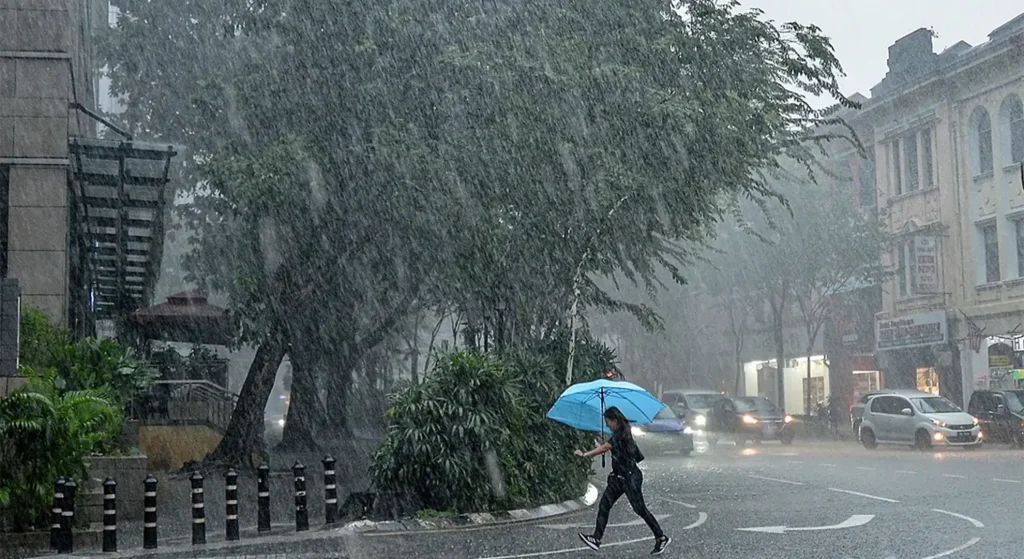
Meteorologists indicate that as intensifying Pacific climate oscillations evolve, the Emirates will likely encounter elevated precipitation levels beginning in the autumn months, driven by shifting atmospheric moisture and regional pressure systems.
October Expected to Bring Increased Rainfall to the UAE as El Niño Weather Patterns Gain Strength.

Weather experts emphasize that Pacific climate cycles alone do not guarantee severe downpours or floods; instead, regional barometric pressure dynamics and local atmospheric factors ultimately dictate how severe meteorological events unfold across the Emirates.
Navigating the UAE’s Meteorological Horizon: Long-Range Weather Projections, El Niño Dynamics, and Local Climate Realities
As the United Arab Emirates prepares for its annual transition into the cooler, more temperate months, long-range meteorological indicators have once again captured the public’s attention. Extended seasonal models suggest that the nation could experience above-average precipitation between October and January. However, leading experts urge caution, emphasizing that global climate phenomena must be understood through the lens of local atmospheric realities rather than sensationalized digital narratives.
Interpreting Extended Seasonal Projections
Long-range forecasting serves as an essential tool for national preparedness, yet it comes with inherent limitations regarding precision. According to specialized insights shared by experts at the National Centre of Meteorology (NCM), several international climate models point toward an increased likelihood of wetter-than-usual conditions during the upcoming autumn and winter period.
Despite these broad indicators, meteorologists emphasize that quantifying exact precipitation volumes months in advance is scientifically impossible. Statements from NCM specialists highlight that while models project a general trend toward higher-than-average rain accumulation between October and January, nobody can predict precise totals with absolute certainty. The primary value of these extended outlooks lies in overall seasonal readiness rather than the anticipation of specific storm events.
Understanding the Mechanisms of El Niño
Much of the current public curiosity—and occasional anxiety—stems from discussions surrounding this year’s prominent El Niño cycle. Characterized by anomalous warming of sea surface temperatures in the eastern tropical Pacific Ocean, El Niño is a powerful macro-scale climate driver that alters atmospheric circulation across the globe, impacting regions as diverse as the Americas, Europe, and East Asia.
In a formal clarification issued by the NCM, this year’s El Niño phase has been categorized as notably robust. While historically regarded as a favorable indicator for beneficial seasonal rain, authorities stress that the phenomenon does not automatically translate into severe weather or localized crises for any single nation.
Because El Niño operates on a global scale, its influence on the Middle East is indirect. It modifies overarching atmospheric currents rather than dictating localized weather in isolation. Consequently, the NCM has actively countered viral and misleading social media posts that falsely warn of imminent, catastrophic floods driven entirely by the Pacific climate pattern. Residents are continuously urged to bypass unverified digital rumors and rely exclusively on official NCM channels for accurate weather risk assessments.
The Decisive Role of Local Atmospheric Dynamics
While global climate patterns help shape the macro-environment, whether rain actually materializes over the UAE depends almost entirely on localized and regional atmospheric ingredients. For meaningful precipitation to occur, several distinct meteorological components must align perfectly:
- Atmospheric Moisture and Vapor: Adequate humidity and moisture transport into the regional airspace.
- Thermal Differentials: Favorable temperature gradients between surface environments and upper-air levels.
- Barometric Pressure Configurations: Suitable high- or low-pressure systems capable of forcing air upward and initiating cloud development.
Furthermore, complex upper-air disturbances—such as planetary-scale Rossby waves—play a critical role in steering weather tracks and dictating where heavy precipitation systems ultimately form. Experts note that while these waves influence conditions across the broader Middle East, pinpointing whether an intense weather system will impact the Northern Gulf, a specific neighboring state, or bypass the area entirely cannot be determined far in advance.
At present, although El Niño remains active in the Pacific Ocean, local pressure systems over the Arabian Peninsula are not configured in a way that triggers extreme weather conditions. As the season progresses, atmospheric dynamics will inevitably evolve, meaning long-range projections must always be evaluated separately from short-term, high-confidence weather forecasts.
Seasonal Transition: High Temperatures, Humidity, and Fog
For the immediate future, residents across the UAE are experiencing the gradual, characteristic shift toward autumn. While the intense heat of summer begins to wane, daytime temperatures remain elevated, frequently reaching between 44°C and 46°C during peak afternoon hours.
At the same time, shifting regional wind patterns and rising nighttime humidity are laying the groundwork for early-morning meteorological phenomena. Increased moisture levels overnight significantly elevate the probability of fog or mist formation, particularly along coastal stretches and low-lying inland corridors.
By maintaining a balanced perspective, respecting the distinction between global climate signals and local weather drivers, and relying on verified NCM updates, the community can smoothly navigate the seasonal transition with confidence and safety.