An 80-kilometre corridor is set to strengthen connectivity across Dubai, Abu Dhabi and Sharjah, creating links with Dubai World Central and the Etihad Rail network while supporting smoother movement of passengers, freight and commercial traffic between key economic and transport hubs.
Dubai Plans 80km Transport Link to Connect Abu Dhabi and Sharjah, DWC and Etihad Rail.

The planned route is expected to comprise a major 12-lane roadway in each direction, supported by an extensive network of 72 bridges and 17 tunnels, designed to improve traffic flow, strengthen regional connectivity and provide more efficient links between important destinations.
Dubai Approves Major 80-Kilometre Road Corridor to Expand Regional Connectivity
Dubai has approved plans for a new 80-kilometre transport corridor that is expected to add significant capacity to the emirate’s road network and strengthen connections with the wider UAE federal transportation system.
The project forms part of Dubai’s broader programme of investment in large-scale infrastructure, with the new route intended to improve the movement of people and goods between Dubai and neighbouring emirates. By creating another major link across the region, the corridor is expected to provide additional capacity on the road network and improve access to several important transport and economic centres.
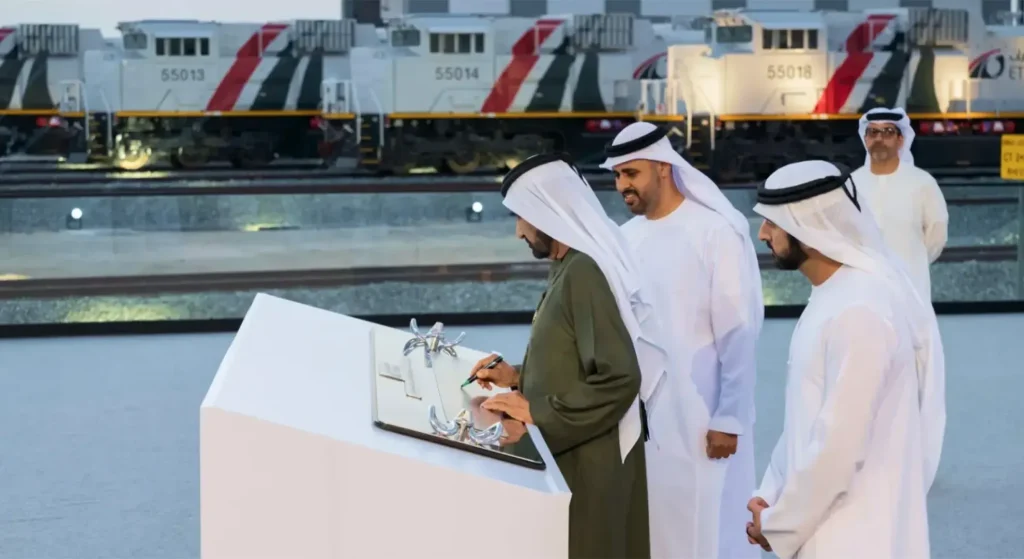
The announcement was made by Sheikh Hamdan bin Mohammed bin Rashid Al Maktoum, Crown Prince of Dubai, who said the project had received approval in accordance with the directives of Sheikh Mohammed bin Rashid Al Maktoum. The initiative is intended to support continued infrastructure development and reinforce Dubai’s position as a major centre for business, trade, transportation and economic activity.
The planned Fourth Corridor will stretch for approximately 80 kilometres, beginning at Al Faya Road in Abu Dhabi and extending towards Al Shanouf Road in Sharjah. Its route will pass through strategically important areas and create an additional connection between major roads and transport facilities across the UAE.
A key feature of the project will be its substantial road capacity. The corridor is planned to include 12 lanes in each direction, giving it a total of 24 lanes across both sides of the route. The large-scale design is intended to accommodate significant volumes of traffic and provide additional capacity as demand for road travel continues to grow.
The development will also incorporate 72 bridges and 17 tunnels. These structures are expected to help the corridor cross existing roads, infrastructure and other physical obstacles while allowing traffic to move more efficiently along the route.
The combination of multiple lanes, bridges and tunnels reflects the scale of the planned infrastructure investment. Rather than functioning simply as another road connection, the corridor is designed as a major transport route that will integrate with Dubai’s existing road network and provide connections to important infrastructure elsewhere in the country.
One of the most significant expected benefits is a reduction in travel times. According to the project plans, journey durations could be cut by as much as 60 per cent for people using the new route. The improvement is expected to result from the additional road capacity and more direct connections created by the corridor.
The project is also expected to serve a population of more than 3.1 million people. Its potential reach means that the corridor could have an impact on a large number of commuters, residents, businesses and logistics operators travelling between Dubai and surrounding areas.
The new route will provide connections to Al Maktoum International Airport, one of the UAE’s major long-term aviation infrastructure projects. Linking the road corridor with the airport is expected to strengthen access to the aviation hub and improve its integration with the wider transport network.
The corridor will also connect with Etihad Rail, providing an important link between road and rail infrastructure. The integration of different forms of transportation is intended to support more efficient movement of passengers and freight and improve connections between major logistics and commercial centres.
The relationship between road infrastructure, airport facilities and the national railway network is increasingly important as the UAE develops an interconnected transportation system. By linking these facilities through major road infrastructure, the project is expected to create additional options for people and businesses moving across the country.
Construction will be carried out in phases. The first stage will cover the section between Al Shanouf Road and Dubai-Al Ain Road. This phase is expected to involve an investment of Dh3.5 billion.
The initial section will establish an important part of the wider corridor and provide new capacity between key points within Dubai’s road network. Further development of the overall project will extend the benefits of the 80-kilometre route as additional sections are completed.
The project comes at a time when Dubai continues to experience growth in population, commercial activity and economic development. Increasing demand for mobility places pressure on existing roads and transport infrastructure, creating a need for continued expansion and improvements.
Dubai has invested heavily in transportation infrastructure over the years, developing a network of highways, bridges, tunnels and public transport systems designed to accommodate the needs of residents, visitors and businesses. The Fourth Corridor represents another major addition to that infrastructure programme.
By increasing the number of available routes, the new corridor could also provide motorists with additional options for travelling across the emirate and between neighbouring areas. Additional road capacity can help distribute traffic across the network, particularly when existing routes experience periods of heavy demand.
The planned 12-lane configuration in each direction is particularly significant given the scale of traffic expected to use the corridor. The design provides substantial capacity from the outset and is intended to support long-term transportation requirements.
The 72 bridges and 17 tunnels will form an important part of the corridor’s engineering design. These structures will allow the route to cross existing roads and infrastructure while helping maintain movement along the corridor without requiring frequent interruptions to traffic.
For commuters, the anticipated reduction in journey times could be one of the most visible benefits of the project. The stated target of cutting travel times by up to 60 per cent indicates the scale of improvement expected once the corridor becomes operational.
However, the actual time savings experienced by individual road users will depend on factors such as traffic volumes, travel routes, time of day and the capacity of connecting roads. The corridor is nevertheless being designed with the objective of improving overall network efficiency.
The project’s planned connection to Al Maktoum International Airport is also significant from a wider economic and logistical perspective. Airports play a central role in Dubai’s international connectivity, supporting passenger travel, cargo operations, tourism and business activity.
Improved road access to the airport can make it easier for passengers, employees and commercial operators to reach the facility. It can also contribute to the movement of goods between the airport and other parts of Dubai and the wider UAE.
The connection with Etihad Rail adds another dimension to the project. Rail infrastructure is expected to play an increasingly important role in the movement of freight and passengers across the UAE. A road corridor that links directly with the rail network can help create more integrated transportation options.
For logistics companies, efficient connections between roads, railways and airports can be particularly important. Goods may need to move between warehouses, ports, airports, distribution centres and commercial destinations, making reliable transport links a key part of supply-chain operations.
The new corridor is therefore being developed within a larger transportation framework rather than as an isolated road project. Its connections with major infrastructure facilities are intended to improve the movement of people and goods across several parts of the country.
The route’s geographical position will also allow it to connect areas in Abu Dhabi, Dubai and Sharjah. This regional reach could make the corridor an important part of the UAE’s broader road network.
The project is expected to complement existing highways and transportation routes rather than replace them. By introducing additional capacity and new connections, the corridor can become another option for traffic moving through the region.
The approval also reflects Dubai’s continued emphasis on infrastructure as part of its long-term economic development strategy. Large-scale transport projects can support population growth, commercial expansion and the development of new residential and business areas.
As Dubai continues to expand, transportation infrastructure must develop alongside the emirate’s urban environment. New roads and connections can help accommodate additional traffic generated by population growth and economic activity.
Infrastructure development can also influence the accessibility of different areas. Better road connections can reduce the time required to travel between residential communities, commercial districts, airports, logistics facilities and other major destinations.
Sheikh Hamdan described the project as part of Dubai’s ongoing commitment to infrastructure investment. He said such development plays an important role in economic growth and contributes to quality of life while preparing the emirate for future requirements.
The Crown Prince stated: “This project reflects our continued commitment to investing in infrastructure as a driver of economic growth, a foundation for enhancing quality of life, and a key pillar of Dubai’s readiness for the future.”
The statement underlines the broader objectives associated with the project. While transportation improvements are an immediate focus, the corridor is also being positioned as part of Dubai’s longer-term plans for economic and urban development.
Transport infrastructure can influence economic activity by making it easier for workers to reach employment centres, businesses to access markets and goods to move between production and distribution facilities. Improved connectivity can also reduce the amount of time spent travelling between important locations.
For Dubai, which has developed a highly connected economy based on sectors including trade, tourism, aviation, logistics, real estate and financial services, transportation infrastructure remains an important component of future growth planning.
The Fourth Corridor is expected to contribute to that network by creating a new east-west and inter-emirate connection between Al Faya Road and Al Shanouf Road.
Its integration with Dubai-Al Ain Road will be particularly relevant during the first phase. The Dh3.5 billion initial stage will provide a foundation for the wider corridor and establish a connection between the new route and an existing major road.
The project’s scale also demonstrates the engineering requirements involved in developing modern transportation infrastructure in a densely developed and rapidly expanding urban environment. The inclusion of dozens of bridges and tunnels is intended to allow the new road to interact with existing infrastructure while maintaining traffic movement.
The planned infrastructure could also provide greater flexibility for emergency services, commercial vehicles and other road users by offering another major route across the region. The extent of these benefits will become clearer as individual sections of the project are completed and integrated into the existing road network.
The corridor’s links with Abu Dhabi and Sharjah are another important element of the development. Dubai’s transportation network does not operate independently from those of neighbouring emirates, as thousands of people and vehicles travel between the emirates each day for employment, business, trade and other activities.
A new high-capacity route connecting the three emirates can therefore contribute to smoother inter-emirate mobility. It can also strengthen connections between different economic zones and transport facilities.
The 3.1 million people expected to be served by the corridor illustrates its potential scale. Such a large catchment area means the project is intended to address transportation requirements affecting a substantial section of the UAE’s population.
The anticipated 60 per cent reduction in journey times is another indication of the project’s intended impact. Shorter journeys can provide benefits for commuters and businesses by reducing time spent on the road and improving access between key destinations.
For commercial operators, travel-time savings can have practical implications for delivery schedules, fleet utilisation and logistics planning. Faster connections between warehouses, airports, rail facilities and commercial areas can potentially support more efficient supply-chain operations.
The corridor’s connection to Etihad Rail could be particularly relevant as the UAE continues to expand its national railway infrastructure. Combining road and rail connectivity can provide businesses with additional transportation options and potentially improve the movement of goods across different parts of the country.
The connection with Al Maktoum International Airport similarly places the corridor within Dubai’s wider aviation and logistics infrastructure. As airport facilities and surrounding areas develop, road access will remain an important component of their connectivity.
The Fourth Corridor is consequently being planned as a multi-purpose infrastructure link serving commuters, businesses, freight operators and other road users.
Dubai’s continued investment in transportation also reflects the need to prepare for future demand rather than focusing solely on current traffic conditions. Large infrastructure projects typically require substantial planning and construction time, meaning capacity must be considered over the longer term.
The corridor’s 24 total lanes, bridges and tunnels are part of that long-term approach. The scale of the project is intended to provide a substantial transportation link capable of supporting future requirements as the emirate and surrounding areas continue to develop.
The approval of the project represents another step in Dubai’s infrastructure programme. With the first phase valued at Dh3.5 billion, the development will involve a significant investment in the emirate’s transportation network.
As work progresses, attention will likely focus on construction milestones, the completion of individual sections and the integration of the new road with existing highways. The eventual effectiveness of the corridor will depend not only on the road itself but also on how well its connections function with surrounding infrastructure.
The project’s regional scope means coordination between different transportation systems and areas will be important. Connections to Abu Dhabi and Sharjah, along with links to Dubai’s existing roads, Al Maktoum International Airport and Etihad Rail, make the corridor part of a broader national mobility network.
For residents, the most direct benefit could come through improved road connectivity and potentially shorter travel times. For businesses, the infrastructure could offer new routes for employees, customers and freight. For the wider economy, the project is intended to support the continued expansion of Dubai’s transport and commercial infrastructure.
The development also forms part of Dubai’s preparations for future urban growth. As new communities, commercial areas and economic zones develop, transport links become increasingly important in ensuring that these areas remain accessible.
The Fourth Corridor is therefore being presented as a long-term infrastructure project rather than simply a response to current traffic requirements. Its design, scale and connections indicate an objective of supporting mobility across the emirate and strengthening Dubai’s position within the UAE’s wider transportation system.
With the route extending from Al Faya Road in Abu Dhabi to Al Shanouf Road in Sharjah, the project will establish a major connection across three emirates. Its extensive network of bridges and tunnels, together with its high-capacity road design, is intended to facilitate movement while reducing travel times.
The first phase, costing Dh3.5 billion and running from Al Shanouf Road to Dubai-Al Ain Road, will form the initial stage of the wider development. Subsequent progress on the corridor will determine how the full 80-kilometre route is ultimately integrated into the region’s transport network.
The project’s links to Al Maktoum International Airport and Etihad Rail add strategic importance to the development. By connecting major road infrastructure with aviation and rail facilities, the corridor is intended to support a more integrated transportation system.
Dubai’s government has continued to identify infrastructure development as an important component of the emirate’s future planning. The latest project follows that approach by combining additional road capacity with connections to major national transport assets.
Ultimately, the Fourth Corridor is designed to provide a new high-capacity route for Dubai and its neighbouring emirates. With 12 lanes in each direction, 72 bridges and 17 tunnels, the 80-kilometre project represents a substantial addition to the UAE’s transportation infrastructure.
Once completed, the corridor is expected to serve more than 3.1 million people and potentially reduce journey times by as much as 60 per cent. Its connections with Dubai’s major roads, Al Maktoum International Airport and Etihad Rail are intended to strengthen links between key residential, commercial, aviation and logistics destinations.
The development reflects Dubai’s continuing focus on expanding its infrastructure in line with population growth and economic activity. As the emirate looks toward future transportation requirements, the new corridor is being positioned as an important component of its long-term road network and its connection with the UAE’s wider federal transport system.