The UAE has reacted to Algeria’s decision to sever diplomatic relations, expressing optimism that the current disagreement will be short-lived and that both countries can overcome their differences and restore stronger bilateral ties in the near future.
UAE Responds to Algeria’s Diplomatic Break, Expresses Hope for Swift Reconciliation.
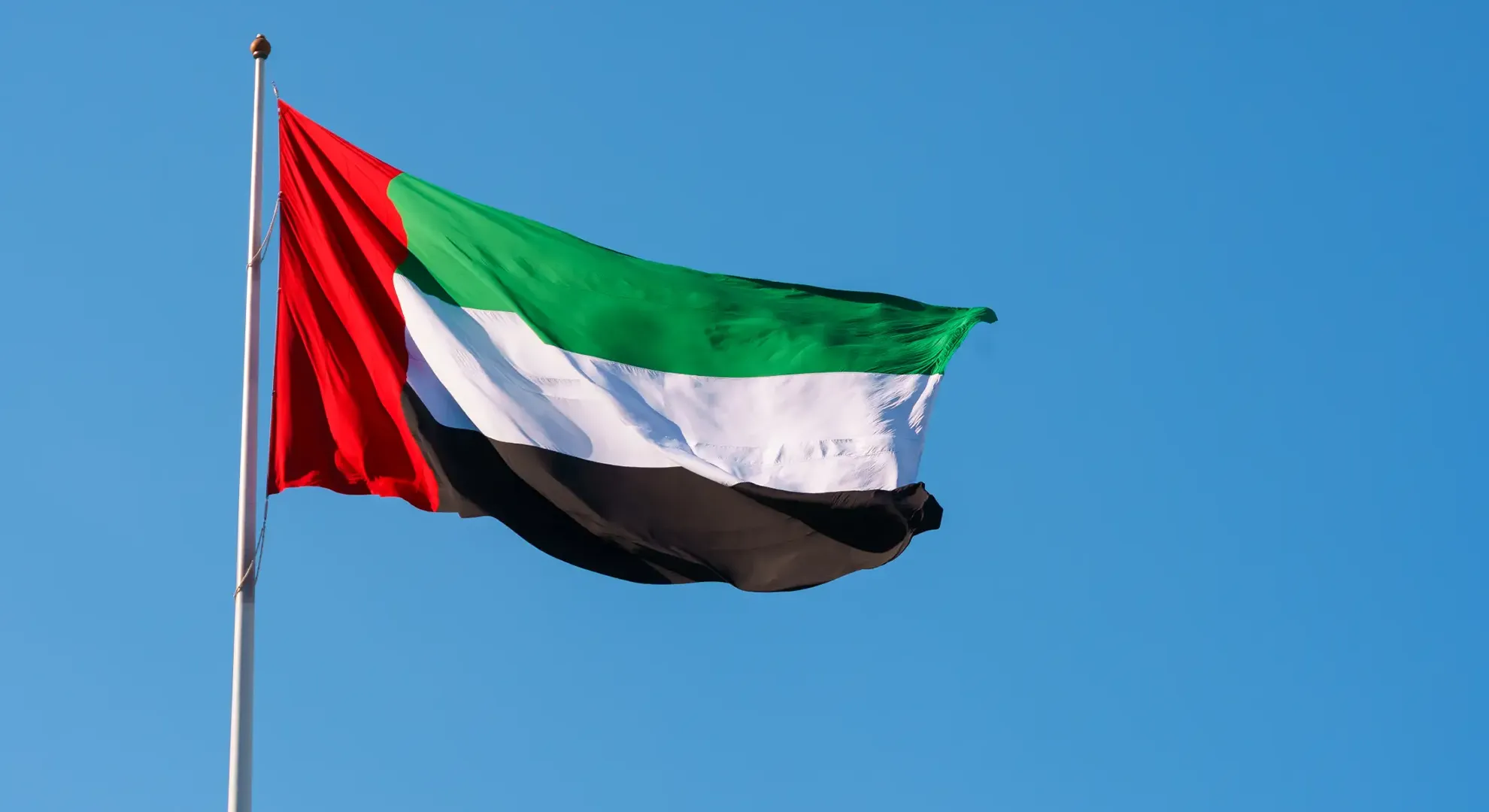
The UAE also reiterated its deep respect and appreciation for the people of Algeria, including members of the Algerian community living and working in the country, while emphasizing the positive regard it holds for their presence and contributions.
UAE Hopes Diplomatic Rift With Algeria Will Be Short-Lived
The United Arab Emirates has expressed hope that Algeria’s decision to sever diplomatic relations between the two countries will only be temporary, following an announcement from Algiers that marked a significant development in bilateral ties.
The UAE issued its response on Thursday, shortly after Algeria announced its decision and instructed the Emirati ambassador in the country to leave within a specified period.
According to the Algerian statement, the UAE ambassador was given 48 hours to comply with the decision. The move introduced fresh uncertainty into relations between the two countries and prompted an official response from Abu Dhabi.
In its statement, the UAE Ministry of Foreign Affairs emphasized the importance it places on maintaining constructive relations with countries around the world. It reaffirmed the country’s approach of seeking to establish, develop and strengthen diplomatic partnerships based on mutual interests and cooperation.
The UAE also highlighted its longstanding appreciation for the Algerian people, stressing the importance of the relationship between the two populations.
Particular attention was given to the Algerian community in the UAE, as well as Algerian citizens who travel to the country. Abu Dhabi said it valued the ties connecting the people of the two nations, regardless of the current diplomatic developments.
UAE stresses importance of international relations
The UAE’s response focused on its broader diplomatic approach and its commitment to maintaining constructive relations with countries around the world.
The Ministry of Foreign Affairs said the country attaches considerable importance to its ties with other nations and remains committed to strengthening those relationships.
The statement comes at a time of heightened uncertainty following Algeria’s announcement. Rather than presenting the diplomatic dispute as a permanent rupture, the UAE expressed hope that the situation would eventually be resolved.
The reference to the decision being temporary suggests that Abu Dhabi continues to view the relationship with Algeria as one that can potentially be restored.
The UAE’s position also reflects its emphasis on dialogue and diplomatic engagement. Its statement highlighted the importance of preserving relationships and developing them through continued communication and cooperation.
Focus on people-to-people ties
Alongside its comments on government-to-government relations, the UAE placed emphasis on the connection between the peoples of the two countries.
The Ministry reaffirmed its appreciation for Algerians and acknowledged the longstanding links created by Algerian nationals living, working or visiting the UAE.
People-to-people relationships can remain significant even when diplomatic ties between governments face difficulties. The UAE’s reference to Algerians in the country highlights the human dimension of the relationship and the connections that exist beyond official diplomatic channels.
Although recent figures were not available in the original statement, approximately 30,000 Algerian nationals were living in the UAE in 2020.
The presence of an Algerian community in the UAE has contributed to social, professional and cultural links between the two countries. Algerians who have made the UAE their home, as well as those who regularly visit the country, form part of the wider relationship between the two nations.
The UAE’s recognition of these connections indicates that its appreciation for Algeria extends beyond formal diplomatic relations.
Algeria gives UAE ambassador 48 hours
Algeria’s decision came with a specific instruction concerning the UAE’s diplomatic representative.
Algiers announced that the UAE ambassador would have 48 hours to comply with the decision to end diplomatic relations.
The announcement represented a serious deterioration in official ties and placed the relationship between the two countries at an uncertain point.
The Algerian government did not simply announce the diplomatic break; it also set a deadline for the Emirati ambassador to leave or comply with the new decision.
The UAE subsequently responded by reiterating its position on the importance of international relations and its desire to maintain strong ties with countries around the world.
The two statements created a clear contrast in tone, with Algeria announcing a formal diplomatic measure while the UAE emphasized its continued commitment to international relationships and expressed hope that the current situation would not become permanent.
Anwar Gargash comments on diplomacy
Amid the developments, Anwar Gargash, a UAE diplomat and adviser to the UAE President, also commented on the broader issue of diplomatic relations.
Gargash argued that diplomacy should be based on rational discussion, direct communication and a clear understanding of interests.
In remarks earlier on Thursday, he said diplomatic relationships are handled through reason, dialogue and clarity rather than through unclear messages or indirect signals that leave room for interpretation.
His comments appeared to underline the UAE’s preference for clear communication when dealing with international disputes.
Gargash also stressed that uncertainty should not be mistaken for a diplomatic strategy.
He described ambiguity as ineffective in diplomacy and argued that successful engagement between countries depends on clearly stated positions, careful handling of competing interests and effective management of differences.
His comments came as the diplomatic dispute between Algeria and the UAE was unfolding, giving them added significance in the context of the wider developments.
‘Ambiguity is not a policy’
A central point in Gargash’s remarks was the importance of clarity.
He maintained that unclear positions can make diplomatic disputes more difficult to resolve and that countries need to communicate their interests and positions directly.
For Gargash, diplomacy is not simply about avoiding disagreement. It also involves managing differences in a structured and transparent manner.
He stressed that countries will inevitably have different interests and positions, but those differences can be addressed through communication and sound diplomatic management.
His comments emphasized the importance of understanding what each side wants and communicating those positions clearly.
The remarks also appeared to reinforce the UAE’s broader message that international relations should be managed through dialogue and a clear assessment of mutual interests.
Importance of managing differences
Gargash’s comments highlighted another key principle: disagreement does not necessarily have to lead to a permanent breakdown in relations.
Countries can have different views on regional or international issues while continuing to communicate and work through their disagreements.
According to the approach reflected in his remarks, effective diplomacy requires governments to identify areas of disagreement while also recognizing opportunities for cooperation.
Clear communication can help prevent misunderstandings and reduce uncertainty, while careful management of interests can create room for diplomatic solutions.
His emphasis on the management of differences comes at a significant moment for UAE-Algeria relations, following Algiers’ decision to sever diplomatic ties.
The UAE’s hope that the decision will be temporary similarly leaves open the possibility of future engagement.
Broader significance of the diplomatic dispute
The development has drawn attention because Algeria and the UAE maintain important links across political, economic and people-to-people spheres.
The decision to sever diplomatic ties represents a major step in bilateral relations, particularly because diplomatic relationships provide the formal framework through which governments communicate and cooperate.
However, the UAE’s response suggests that Abu Dhabi does not regard the current situation as necessarily permanent.
By emphasizing its appreciation for Algerians and its commitment to relations with countries worldwide, the UAE’s statement sought to separate the current diplomatic disagreement from its broader attitude towards the Algerian people.
The distinction is important because diplomatic disagreements between governments do not necessarily erase social or cultural connections between their populations.
Algerian community remains an important link
The UAE’s reference to Algerians living and visiting the country also draws attention to one of the strongest links between the two nations: their people.
Thousands of Algerian citizens have lived in the UAE, contributing to different sectors of the country’s economy and society.
The community provides an important human connection between Algeria and the UAE, even during periods of political disagreement.
By specifically mentioning Algerians in its statement, the UAE signalled that its appreciation for the Algerian people remains intact despite the diplomatic dispute.
The statement also recognized Algerians who visit the UAE, reinforcing the idea that travel, personal relationships and cultural connections contribute to the broader relationship between the two nations.
UAE leaves door open for future engagement
The UAE’s hope that Algeria’s decision will be temporary is perhaps the most significant element of its response.
Rather than indicating that the diplomatic break would permanently redefine relations, Abu Dhabi expressed optimism that the current situation could eventually change.
This wording leaves open the possibility of renewed diplomatic engagement at a later stage.
Diplomatic ties can experience periods of tension, with countries sometimes suspending or reducing relations before eventually restoring communication.
The UAE’s statement appears to reflect an expectation that the current disagreement can eventually be addressed and that relations could return to a more constructive path.
The emphasis on developing and strengthening international relationships further supports this position.
The role of clear communication
Gargash’s remarks about diplomacy added another layer to the UAE’s response.
His argument was that diplomatic engagement works best when countries clearly explain their positions and interests.
In his view, uncertainty and indirect communication can make already complicated international disputes more difficult to understand.
Instead, successful diplomacy requires governments to communicate their priorities, recognize areas where interests differ and manage those differences carefully.
This approach places communication at the centre of international relations.
It also suggests that diplomatic disagreements should be addressed through a process in which each side understands the other’s position, rather than relying on assumptions or ambiguous messages.
Diplomacy based on interests and dialogue
Gargash’s comments also stressed the practical side of diplomacy.
International relations involve different national interests, and disagreements are inevitable. The challenge, according to the approach he outlined, is to manage those differences without allowing them to undermine broader relationships.
This requires governments to understand their own priorities while also recognizing the interests of their counterparts.
Dialogue provides a mechanism through which those differences can be discussed and potentially resolved.
For the UAE, this philosophy appears to be part of a broader approach to international engagement that places importance on maintaining communication even when disagreements arise.
What happens next
The future of UAE-Algeria relations remains uncertain following Algeria’s announcement.
For now, the UAE has indicated that it hopes the diplomatic break will be temporary and has reiterated its appreciation for the Algerian people.
The 48-hour deadline given to the UAE ambassador represents an immediate diplomatic consequence of Algeria’s decision, while the UAE’s response points towards the possibility of eventual reconciliation.
The coming period will determine whether communication between the two countries can be restored and whether the current dispute can be managed through diplomatic channels.
For both governments, the handling of the situation could have implications for their future bilateral relationship.
A relationship that extends beyond governments
Despite the diplomatic dispute, the UAE’s statement emphasized that the relationship between the two countries is not limited to government institutions.
The presence of Algerians in the UAE and the movement of people between the two countries have created connections that exist independently of official diplomatic relations.
These links can remain important even when political relations experience difficulties.
The UAE’s expression of appreciation for Algerians therefore provides a clear indication that it continues to value the people-to-people dimension of the relationship.
It also reflects the country’s wider emphasis on maintaining positive relations with communities from different parts of the world.
A cautious response from Abu Dhabi
The UAE’s reaction can be characterized as measured and focused on the possibility of restoring relations.
While acknowledging Algeria’s decision, Abu Dhabi emphasized its commitment to international partnerships and its appreciation for the Algerian people.
The reference to the diplomatic break being temporary conveys hope that the disagreement will eventually be overcome.
Gargash’s separate remarks about clarity in diplomacy reinforce the UAE’s preference for communication based on clearly defined positions and interests.
Together, the statements suggest that the UAE continues to see value in engagement and does not want the current dispute to become a permanent obstacle to bilateral relations.
Looking ahead
The immediate diplomatic situation remains serious, but the UAE’s response indicates that it continues to see scope for a future relationship with Algeria.
Its emphasis on international cooperation, people-to-people connections and the importance of clear diplomacy provides insight into how Abu Dhabi is approaching the latest development.
The UAE has made clear that it values its relationships with countries around the world and appreciates the ties it shares with the Algerian people.
At the same time, Gargash’s comments underline the importance of direct communication and practical management of disagreements.
Whether these principles can help pave the way for renewed UAE-Algeria relations will depend on developments in the coming period.
For now, Abu Dhabi’s position remains one of cautious optimism: despite Algeria’s decision to sever diplomatic ties, the UAE hopes the current rift will eventually prove temporary and that channels for constructive engagement can be restored.
Algeria Begins Process to End Air Services Agreement With UAE
Earlier in February, Algeria took another significant step in its aviation relationship with the United Arab Emirates by formally notifying authorities that it had initiated procedures to terminate the Air Services Agreement between the two countries.
The bilateral agreement, which was originally signed in 2013, established the framework governing air connectivity and aviation cooperation between Algeria and the UAE.
Algeria’s notification marked the beginning of a formal process rather than an immediate suspension of flights. The development attracted attention among travellers and the aviation sector because of the potential implications for air services linking the two countries.
Despite the announcement, UAE authorities moved to reassure passengers that there would be no immediate disruption to existing air traffic operations.
The Emirates emphasized that flights and related aviation activities would continue under the arrangements then in place, meaning travellers were not expected to face an instant change as a result of Algeria’s notification.
No immediate disruption to passengers
Following Algeria’s announcement, UAE authorities sought to provide clarity to passengers and airlines about the practical implications of the decision.
Travellers were reassured that air traffic operations would not be immediately affected. This meant that the notification to begin the process of ending the agreement did not automatically translate into an immediate halt or suspension of flights between the two countries.
The clarification was particularly important for passengers who had already booked journeys or were planning to travel between Algeria and the UAE.
A change to a bilateral aviation agreement can raise questions about flight schedules, airline operations and passenger arrangements. However, the UAE’s response indicated that there would be no immediate changes to air connectivity as a direct consequence of Algeria’s decision to begin the termination process.
The reassurance also helped distinguish between the initiation of a legal or diplomatic procedure and the implementation of any future changes to air services.
Agreement dates back to 2013
The Air Services Agreement at the centre of the development was signed by Algeria and the UAE in 2013.
Such bilateral aviation agreements provide the legal framework under which airlines from participating countries can operate international services.
They can cover a range of issues associated with air connectivity, including operating rights and other arrangements that allow airlines to provide services between the countries involved.
The 2013 agreement therefore formed an important part of the aviation relationship between Algeria and the UAE for more than a decade.
Algeria’s decision to begin the process of bringing the agreement to an end represented a notable change in the framework governing those bilateral air services.
However, because the notification initiated a process rather than producing an instant operational change, aviation activities could continue while the relevant procedures were being addressed.
UAE aviation authorities explain the procedure
The UAE’s General Civil Aviation Authority also responded to the development, providing an explanation of the nature of the measure.
According to the authority, Algeria’s move fell within the procedures and mechanisms provided for under international agreement frameworks.
This clarification indicated that the termination process was being handled through established international aviation and diplomatic mechanisms rather than outside the legal framework governing bilateral agreements.
The statement from the UAE aviation authority was intended to provide greater context around the announcement and explain that such agreements contain procedures through which changes or termination can be formally pursued.
As a result, the announcement did not necessarily mean that aviation links would stop immediately.
Difference between notification and implementation
One of the important aspects of the development was the distinction between notifying the other side about the intention to end an agreement and actually bringing the agreement to an end.
Algeria’s February notification represented the beginning of the process.
The UAE’s reassurance to travellers indicated that the practical consequences would not take effect immediately.
This distinction is significant for international aviation because bilateral agreements often contain specific procedures and timelines for their termination.
Until those procedures are completed, existing arrangements can continue to provide the legal and operational basis for air services.
Passengers therefore had reason to continue with their travel plans without expecting an immediate suspension of flights solely because Algeria had announced the start of the process.
Importance for air connectivity
Air links between Algeria and the UAE have provided a direct connection between North Africa and the Gulf.
Such routes are important not only for tourism but also for business travel, family visits, employment and wider economic and social exchanges.
Any potential change to the bilateral aviation framework can therefore have consequences for airlines and passengers on both sides.
The UAE’s decision to reassure travellers reflected the need to avoid unnecessary uncertainty while the diplomatic and legal procedures continued.
For airlines, clarity around the status of operating rights is particularly important because flight schedules and commercial planning often depend on the regulatory arrangements established between governments.
For passengers, the immediate concern is whether flights will operate as scheduled.
The UAE’s statement sought to make clear that the February notification did not automatically result in an immediate disruption.
International aviation frameworks
The General Civil Aviation Authority’s reference to international agreement mechanisms also highlights the structured nature of aviation relations between countries.
International air services are generally governed by legal and regulatory arrangements that determine how airlines can operate across borders.
When a country seeks to modify or terminate such an arrangement, the process is normally subject to provisions contained in the relevant agreement and applicable international frameworks.
The UAE authority’s statement suggested that Algeria’s action was being addressed through those established procedures.
This provided an important distinction between the political significance of the announcement and its immediate practical consequences for the aviation industry.
While the decision could be viewed as a development in bilateral relations, it did not automatically mean that flights would stop at once.
Reassurance for airlines and travellers
The UAE’s response was also significant from a passenger perspective.
Announcements concerning bilateral aviation agreements can create uncertainty among people who have upcoming travel plans.
By confirming that there was no immediate impact on air traffic operations, UAE authorities sought to prevent confusion among travellers and aviation stakeholders.
Passengers could therefore understand that the process of ending the agreement and any possible future changes were separate from the immediate operation of flights.
Airlines also benefited from the clarification because they could continue operating under the existing arrangements while the formal process developed.
Broader diplomatic context
The aviation dispute emerged against a wider backdrop of changing relations between Algeria and the UAE.
The decision to begin ending the Air Services Agreement in February represented one aspect of a broader deterioration in bilateral relations.
Although the aviation measure had direct relevance to airlines and passengers, its significance extended beyond the aviation sector.
Air agreements are often part of wider diplomatic and economic relationships. Changes to such arrangements can therefore become an indication of shifting relations between governments.
Nevertheless, the UAE’s response remained focused on the immediate operational situation.
Rather than suggesting an instant interruption to flights, authorities stressed that air traffic would continue while the procedures set out under international agreements were followed.
What the notification meant
The February announcement should therefore be understood as the start of a formal process rather than an immediate cancellation of air services.
Algeria notified the UAE that it had begun the steps required to end the 2013 agreement.
The UAE, meanwhile, reassured travellers that there would be no immediate change to aviation operations.
The General Civil Aviation Authority further explained that the action was taking place within mechanisms established by international agreements.
Together, these statements provided a clearer picture of the situation: while the future of the bilateral aviation agreement had become uncertain, existing air traffic operations were not immediately affected.
Continuing operations during the transition
For passengers, the most important takeaway from the UAE’s response was that normal aviation operations could continue despite the announcement.
The process surrounding the agreement could take place separately from the day-to-day running of flights.
This allowed airlines and travellers time to adjust to any eventual regulatory changes if they were introduced later.
It also demonstrated the importance of following the procedures set out in bilateral and international aviation agreements.
Rather than creating an instant disruption, the process provided a regulatory pathway through which the two sides could address the future of their aviation relationship.
Potential implications for the future
The long-term impact of Algeria’s decision would depend on how the termination process progressed and whether the two countries reached any new arrangements governing air services.
If the existing agreement were ultimately brought to an end, airlines could potentially need to operate under another legal framework or negotiate alternative arrangements.
However, at the stage described in the original announcement, no immediate operational disruption had been identified by the UAE authorities.
The emphasis remained on maintaining continuity while the formal procedures were carried out.
For travellers, this meant that the announcement itself did not necessarily require immediate changes to their travel plans.
A measured response from the UAE
The UAE’s response demonstrated a cautious approach to the aviation implications of the diplomatic development.
While acknowledging Algeria’s decision to begin the termination process, Emirati authorities focused on reassuring the public that flights would not be immediately affected.
The General Civil Aviation Authority’s explanation also placed the development within the context of established international procedures.
This approach helped separate the diplomatic decision from the immediate practical functioning of air services.
For the aviation industry, such clarity is essential because airlines need to understand whether regulatory changes have immediate operational consequences or are part of a longer process.
Aviation ties amid diplomatic uncertainty
The development illustrates how changes in diplomatic relations can affect sectors that operate under formal bilateral agreements.
Aviation is particularly sensitive to such developments because international flight operations depend on government-to-government arrangements.
At the same time, the existence of established procedures means that changes do not necessarily happen overnight.
Algeria’s February notification began a process concerning the 2013 Air Services Agreement, while the UAE maintained that air traffic operations would continue without an immediate impact.
The UAE aviation authority’s reference to international mechanisms reinforced that point.
For now, the key distinction remains between the political decision to begin ending the agreement and the practical operation of flights.
While the announcement represented a notable development in UAE-Algeria relations, travellers were told that there would be no immediate disruption to air services.
The situation therefore marked the beginning of a potentially important change in the countries’ aviation relationship, but the consequences for passengers and airlines were not expected to take effect immediately.