Travel across Gulf countries is expected to become faster and more convenient for GCC nationals, with plans to recognise driving licences across member states and introduce dedicated lanes designed to simplify border procedures and reduce delays for travellers.
GCC Travel Set to Become Smoother with Driving Licence Recognition and Dedicated Border Lanes.
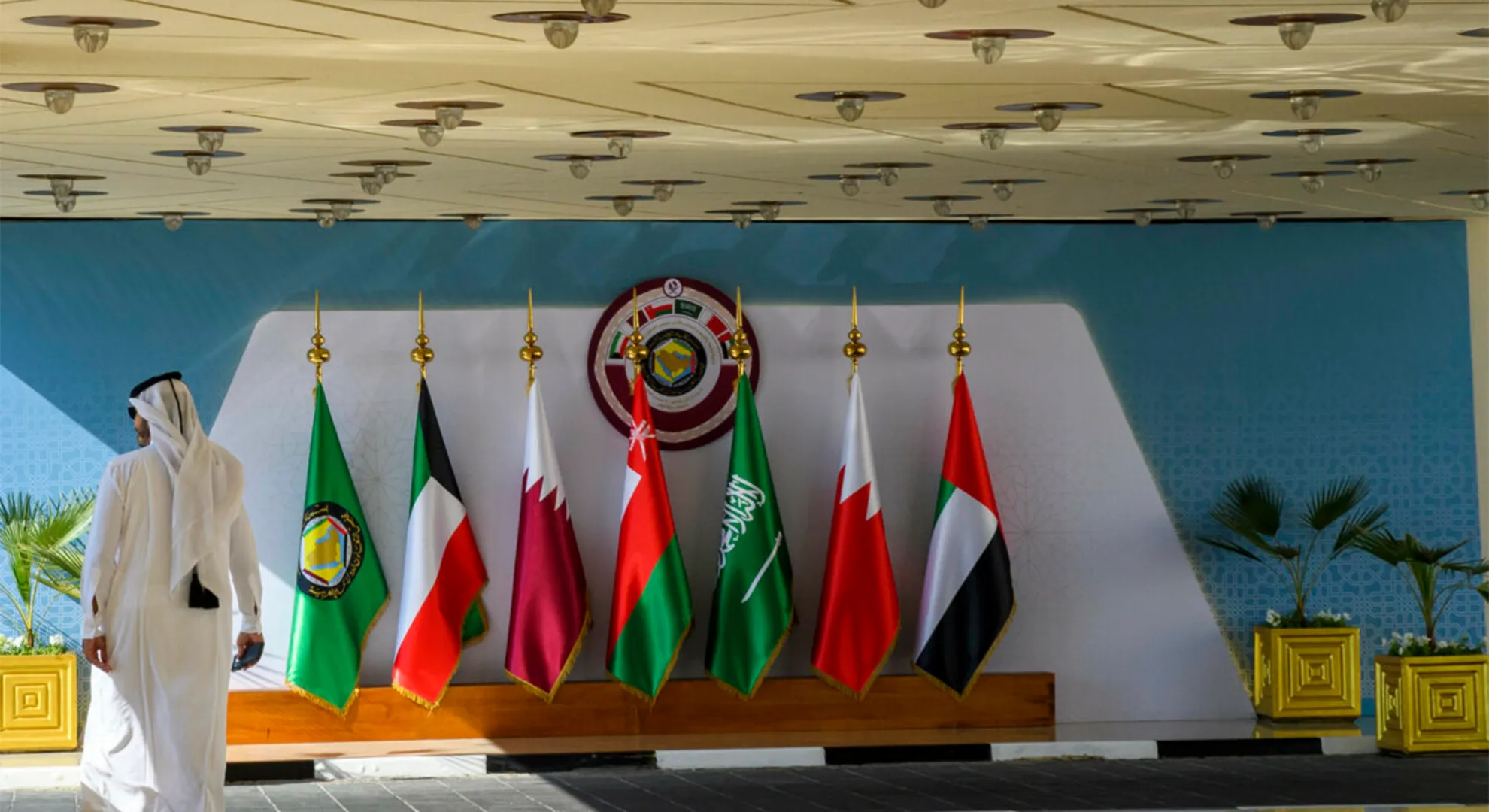
GCC Secretary-General Jasem Mohamed Albudaiwi outlined the latest initiatives during a special meeting held in Riyadh, highlighting measures aimed at strengthening regional coordination and making movement between Gulf Cooperation Council member states more efficient and convenient.
Gulf Cooperation Council nationals could soon benefit from a more streamlined travel experience across the region as member states continue to develop common systems and services designed to make movement between Gulf countries easier.
The measures include recognition of driving licences issued by other GCC countries, dedicated lanes for citizens at land border crossings and closer electronic integration of security systems. Together, the initiatives represent a broader effort to move regional cooperation beyond policy coordination and toward practical services that directly affect the daily lives of Gulf citizens.
Jasem Mohamed Albudaiwi, Secretary-General of the Gulf Cooperation Council, discussed the developments during a special session at the Security and History Dialogue 2026 in Riyadh on September 6.
During the discussion, Albudaiwi was asked about examples of cooperation that demonstrate the GCC’s evolution from making joint security decisions to establishing shared services and interconnected systems.
In response, he pointed to several initiatives that have a direct impact on citizens travelling and living across the six GCC member states.
Among the measures highlighted was the mutual recognition of driving licences. The arrangement is intended to make it easier for GCC citizens who relocate from one member state to another to continue driving without having to repeat the entire licensing process.
Another initiative involves the creation of dedicated lanes for GCC nationals at land border crossings. These lanes are intended to simplify border procedures and make travel between member states more efficient for citizens.
The GCC is also working on greater electronic integration between security systems. This includes the sharing of information such as traffic violations, allowing authorities in different member states to access and process relevant records more efficiently.
Taken together, the initiatives point toward a more integrated system of mobility within the Gulf, where citizens can move between member states with fewer administrative obstacles.
What mutual driving licence recognition means
One of the most practical changes for GCC nationals is the recognition of driving licences issued by other member states.
The arrangement is particularly relevant to citizens who move to another GCC country and establish residency there. It should not be confused with the rules governing short-term visits.
A GCC citizen travelling temporarily to another member state can already generally use a valid driving licence issued by their home country for driving during a brief visit. In such circumstances, there is normally no need to exchange the licence for another one simply because the person is visiting.
The situation is different when a person moves permanently or establishes residency in another GCC country.
Under the mutual recognition system, a citizen relocating within the GCC can generally exchange their existing licence for a local licence rather than beginning the driving-licensing process from the beginning.
This means that, in applicable cases, the driver does not have to repeat the full training and testing procedure that would normally be required of a new applicant.
The arrangement can be particularly useful for GCC nationals who move between member states for employment, family reasons, business, education or other long-term purposes.
Instead of treating the individual as someone obtaining a driving licence for the first time, authorities can recognize the licence already issued by another GCC member state and provide a corresponding local licence.
However, the precise administrative requirements are not identical across all six countries.
Each member state retains its own procedures, documentation requirements, medical checks and fees. The broader principle of mutual recognition therefore exists alongside national administrative rules.
Bahrain example
Bahrain provides one example of how the exchange process can work in practice.
The country’s Ministry of Interior, through the General Directorate of Traffic, handles the replacement of qualifying foreign or GCC driving licences.
For GCC citizens meeting the relevant conditions, the process can be completed within a single working day. The stated fee is BD25, equivalent to approximately Dh244.
The fee includes the mandatory eyesight examination as well as the initial issuance of a driving licence valid for five years.
The relatively straightforward procedure illustrates one of the practical benefits of mutual recognition. A person moving to Bahrain from another GCC state can potentially obtain a Bahraini licence without having to undergo the complete process associated with a first-time licence applicant.
The exact conditions remain subject to the rules applied by the Bahraini traffic authorities.
Oman has its own requirements
Oman also provides a direct exchange mechanism, although applicants are required to submit specific documentation.
The Royal Oman Police requires applicants to provide an approved vision-test result, a completed application and copies of relevant residency documentation.
The original driving licence must also be presented, along with a blood-group certificate.
Another condition concerns the age of the existing licence. Under the stated requirements, the original driving licence must generally have been issued at least one year before it can qualify for the relevant exchange process.
These requirements demonstrate why mutual recognition does not necessarily mean that every GCC country applies an identical procedure.
The principle allows member states to recognize one another’s licences, but national authorities can continue to impose administrative conditions intended to verify residency, identity, medical fitness and the validity of the licence being exchanged.
UAE and Kuwait
The United Arab Emirates and Kuwait also provide mechanisms allowing eligible GCC nationals to exchange their driving licences through the appropriate authorities.
In the UAE, the relevant services are administered through government traffic and interior authorities, while Kuwait provides corresponding services through its own Ministry of Interior and traffic administration.
For citizens moving between GCC states, these arrangements can reduce the administrative burden associated with relocation.
Without mutual recognition, someone establishing residency in another country could potentially have to apply as a new driver, complete required lessons and sit examinations before receiving a local licence.
The exchange system instead recognizes that the applicant has already demonstrated eligibility to drive in another GCC member state.
The result is greater continuity for citizens whose lives span multiple Gulf countries.
Recognition does not mean identical rules
Although the six GCC states are working toward greater integration, mutual recognition should not be interpreted as meaning that all driving regulations are identical.
Each country continues to maintain its own traffic laws, licensing procedures, road rules and enforcement mechanisms.
A driver who moves from one GCC country to another remains subject to the traffic laws of the country in which they are driving.
Similarly, requirements concerning documentation, medical examinations, residency status and licence exchange can differ from one jurisdiction to another.
The broader objective is to remove unnecessary duplication while maintaining national regulatory systems.
This distinction is important for GCC citizens because the process is designed to make licensing easier without eliminating the role of individual national authorities.
Dedicated lanes at land borders
Driving licence recognition is only one part of the wider effort to simplify movement across the GCC.
Albudaiwi also highlighted dedicated lanes for GCC citizens at land border crossings.
Land travel is an important part of regional mobility, particularly because the GCC countries are connected by road networks that allow citizens to travel between neighboring states.
For many Gulf residents, road journeys are a regular part of business, family and leisure travel.
Dedicated lanes can help reduce waiting times by providing a designated route for eligible GCC nationals. Instead of processing citizens through the same lanes as all other travelers, border authorities can create separate channels for GCC citizens.
The measure is intended to make crossings more efficient while maintaining the necessary identity and security checks.
The development is particularly relevant during periods of high travel demand, including holidays and weekends, when land crossings can experience heavy traffic.
Connected security systems
Another major component of the GCC integration effort is the electronic connection of security systems between member states.
According to Albudaiwi, this cooperation includes the sharing of traffic violation information.
The ability to electronically connect relevant records can make it easier for authorities to identify violations committed by motorists across national borders.
For example, a driver who travels between GCC countries may accumulate traffic-related records in more than one jurisdiction. Linking systems can help ensure that relevant information is available to the appropriate authorities rather than remaining isolated within individual national databases.
The approach can also support more effective enforcement and improve coordination among security and traffic authorities.
At the same time, the operation of such systems depends on national laws, technical infrastructure and agreements governing the exchange of information.
A long-running GCC initiative
Cooperation on driving licences is not a completely new concept within the GCC.
Efforts to coordinate traffic regulations among member states date back several decades.
At the 16th meeting of GCC interior ministers, held in Doha in November 1997, member states adopted a joint traffic strategy.
The strategy included efforts to establish common standards in areas such as driving licence eligibility.
One of the measures involved agreeing on minimum ages for different categories of licences across the GCC.
Under the agreed framework, the minimum age for obtaining a private driving licence was set at 18, while the minimum age for public or commercial driving licences was established at 21.
The move reflected an early attempt to create greater consistency between the traffic systems of the six countries.
Since then, cooperation has continued to develop as technology and cross-border mobility have expanded.
The latest initiatives can therefore be seen as part of a longer process aimed at making movement between GCC states more integrated.
From policy coordination to everyday services
The significance of the measures outlined by Albudaiwi extends beyond driving and border procedures.
They reflect a broader shift in the way GCC cooperation is being implemented.
Historically, much of the bloc’s cooperation has focused on political, economic, military and security coordination. Increasingly, however, the emphasis is also being placed on systems and services that citizens can directly experience.
Mutual driving licence recognition is one example.
A citizen who moves from one GCC state to another can benefit directly from not having to repeat a full licensing process.
Dedicated border lanes represent another visible benefit because travelers can potentially spend less time completing border procedures.
Electronic security cooperation provides a less visible but equally important form of integration by allowing authorities to exchange information more efficiently.
Together, these measures contribute to the broader objective of creating greater practical connectivity between GCC member states.
Benefits for people who move within the Gulf
The initiatives could be especially valuable for GCC citizens whose personal or professional lives involve more than one member state.
The Gulf economies are closely connected, and citizens frequently travel between countries for employment, business, education, family commitments and tourism.
A person who relocates from one GCC country to another may already possess a valid driving licence, vehicle and established travel arrangements.
Recognition of the existing licence can make the relocation process easier.
Similarly, faster land-border procedures can make regular cross-border journeys less complicated for people who travel frequently.
Businesses may also benefit when employees and company representatives can move between GCC markets with fewer administrative obstacles.
For families, simplified border procedures and driving arrangements can make travel between neighboring countries more convenient.
Remaining national requirements
Despite the progress toward common systems, GCC citizens should still check the requirements of the specific country to which they are travelling or relocating.
Mutual recognition does not remove all administrative procedures.
Applicants may still be required to demonstrate residency, provide identification documents, undergo an eyesight examination or submit other supporting certificates.
The rules can also depend on the type of licence held, the period for which it has been valid and the applicant’s residency status.
The examples from Bahrain and Oman illustrate these differences.
Bahrain has a defined replacement procedure with a stated fee and validity period, while Oman requires several supporting documents and imposes a minimum period since the original licence was issued.
These national procedures can evolve as authorities update their systems and policies.
Toward a more connected Gulf
The initiatives discussed in Riyadh point to an increasingly interconnected GCC.
Instead of requiring citizens to navigate completely separate systems every time they cross a national border, member states are developing mechanisms that allow information and services to operate more seamlessly between jurisdictions.
Driving licence recognition addresses one of the most common practical issues associated with relocation.
Dedicated border lanes address the physical movement of people across land crossings.
Linked security systems address the exchange of information between authorities.
Together, these measures create a more integrated environment for Gulf citizens.
The long-term impact could extend beyond these specific initiatives if member states continue developing shared databases, digital services and common administrative procedures.
The GCC’s broader integration agenda has the potential to make regional movement increasingly straightforward for citizens while maintaining the security controls required by individual states.
What GCC citizens can expect
For citizens, the most immediate benefits are likely to be practical rather than symbolic.
Someone moving to another GCC country may be able to exchange an existing driving licence rather than starting from the beginning.
A traveler crossing a land border may be able to use a dedicated lane designed specifically for GCC nationals.
Traffic and security authorities may be able to access relevant information more efficiently through interconnected electronic systems.
These changes can reduce duplication, improve administrative coordination and make everyday travel more convenient.
However, implementation will continue to depend on the procedures established by individual member states.
The announcement by the GCC Secretary-General nevertheless signals that regional cooperation is increasingly focused on services that citizens can directly use.
The development also builds on years of coordination among GCC interior and traffic authorities, including the joint traffic strategy adopted in Doha in 1997.
Nearly three decades after those initial efforts to harmonize traffic standards, the focus has expanded toward digital connectivity and practical cross-border services.
For GCC nationals, that could mean a future in which moving, driving and travelling between member states involves fewer administrative hurdles.
The combination of recognized licences, dedicated border facilities and interconnected security systems represents another step toward deeper regional integration.
As the six GCC countries continue to coordinate their systems, citizens are likely to see more of these initiatives reflected in their everyday interactions with government services.
The broader objective is clear: make movement within the Gulf more seamless while strengthening cooperation between national authorities.
For millions of GCC citizens who regularly cross borders for work, family, business or leisure, even relatively small administrative improvements can make a meaningful difference.
The latest measures therefore represent more than isolated changes to driving and border procedures. They form part of a wider effort to turn regional cooperation into practical services that make life and mobility easier across the Gulf.
Dedicated border lanes for GCC nationals
Travel between the six Gulf Cooperation Council countries is already relatively straightforward for citizens of the member states. GCC nationals can generally move across the bloc’s internal borders using their national identity cards, meaning they do not normally need to present a passport or obtain a visa for travel between member countries.
The introduction of dedicated lanes at land crossings is intended to take that existing arrangement a step further.
Rather than changing the basic rules governing entry between GCC countries, the new measures are focused on making the physical process of crossing a border quicker and more efficient.
Dedicated lanes can provide GCC citizens with a separate route at selected land checkpoints, allowing authorities to process eligible travelers through systems specifically designed for intra-GCC movement.
The objective is to reduce congestion, simplify procedures and make cross-border journeys more convenient, particularly at busy road crossings.
The initiative is part of a broader effort to improve connectivity between the GCC member states. As travel, business activity and movement of citizens between the countries continue to increase, authorities have been looking for ways to modernize border infrastructure while maintaining the necessary security checks.
For GCC nationals, this could mean shorter processing times and a more predictable experience when traveling by road between neighboring countries.
The dedicated-lane system should therefore be viewed as an enhancement to an existing framework rather than the introduction of visa-free travel itself.
GCC citizens already benefit from the ability to use their national identity documents when crossing internal borders. The new approach is intended to improve the speed and efficiency with which those travelers are processed once they arrive at a land crossing.
King Fahd Causeway offers an early example
One of the strongest examples of efforts to simplify GCC land travel can be seen at the King Fahd Causeway, which connects Saudi Arabia and Bahrain.
The crossing has operated a “one-stop” arrangement since 2018. Under this system, travelers can complete passport and customs procedures at a single location rather than having to go through separate processing points.
The arrangement has helped reduce duplication in border procedures and provides a more streamlined experience for people traveling between the two countries.
The King Fahd Causeway is one of the region’s most important road links. Large numbers of people use it for business, family visits, tourism and other purposes, making the efficiency of its border operations particularly important.
A single-point processing system can save time because travelers are not required to stop repeatedly for similar procedures.
It also demonstrates how GCC countries can coordinate their border operations while retaining responsibility for their respective national security and customs systems.
The experience of the causeway provides a useful model for understanding the direction in which other GCC land crossings may be moving.
Rather than requiring travelers to navigate multiple stages of processing, authorities can combine or coordinate procedures to reduce unnecessary delays.
Other Gulf crossings are also being upgraded
The effort to make land travel more efficient is not limited to the Saudi Arabia-Bahrain route.
Other crossings in the region have also introduced measures designed to speed up the movement of GCC travelers.
Among them are the Al Nuwaiseeb border crossing between Saudi Arabia and Kuwait and the Abu Samra crossing connecting Saudi Arabia and Qatar.
These crossings have introduced faster processing arrangements and updated systems in recent months, reflecting a wider trend toward modernizing land-border operations across the Gulf.
The improvements are particularly relevant because road travel remains an important method of transportation within the GCC.
While air travel provides rapid connections between Gulf capitals and major cities, land routes are often more convenient for short-distance journeys and family travel.
For residents and citizens living close to international borders, driving can be the most practical option.
Modernizing border facilities can therefore have a direct impact on everyday mobility.
Faster processing can also help reduce vehicle queues and congestion during busy periods, when large numbers of travelers attempt to cross borders at the same time.
Why dedicated lanes matter
A dedicated lane may appear to be a relatively simple infrastructure change, but it can have broader implications for regional mobility.
Border crossings must process travelers while also carrying out identity verification, customs procedures and security checks.
When different categories of travelers are required to use the same processing channels, congestion can develop quickly during periods of high demand.
Creating designated lanes for GCC citizens can allow authorities to organize travelers more efficiently and direct them toward procedures appropriate to their status.
This can help reduce waiting times without eliminating security controls.
The idea is therefore not to bypass border checks but to make the checks more efficient.
For citizens who frequently travel between GCC countries, even modest reductions in processing time can make a noticeable difference over the course of repeated journeys.
The measure can be particularly valuable during public holidays, school vacations and other periods when road travel increases sharply.
Existing ID-based travel framework
It is important to distinguish the dedicated-lane initiative from the existing arrangements governing identification documents.
GCC nationals already enjoy relatively simplified movement within the bloc. Their national identity cards can generally be used for travel between member states, without the need for traditional passport-based visa procedures.
The dedicated lanes build upon that existing system.
In other words, the new arrangements are primarily concerned with the mechanics of crossing the border rather than changing the underlying right of GCC citizens to travel between member states.
The broader objective is to make an already simplified travel framework work more efficiently in practice.
This approach reflects the GCC’s continuing efforts to deepen regional integration.
Electronic connection of security systems
Border infrastructure is only one part of the wider integration process.
GCC Secretary-General Jasem Mohamed Albudaiwi has also highlighted the electronic integration of security systems between member states.
The initiative involves the exchange of information between national authorities and includes cooperation on traffic violations.
A shared or interconnected system can allow information recorded in one GCC country to become accessible to relevant authorities in another member state.
This represents an important development because citizens and residents can travel across multiple GCC jurisdictions, while government databases have traditionally been maintained separately by individual countries.
Linking those systems can help authorities obtain a more complete picture when dealing with traffic or security-related matters.
For example, if an individual has a traffic violation recorded in one GCC country, relevant information can potentially be made available to authorities in another member state under the appropriate information-sharing arrangements.
The goal is to prevent important records from remaining isolated within the country where they were originally created.
How shared traffic information can help
Traffic violations are an obvious area where electronic cooperation can have practical value.
Drivers regularly cross GCC borders in their own vehicles, particularly between neighboring countries.
A system that allows traffic authorities to exchange violation information can help ensure that records remain connected to the appropriate individual or vehicle even when the driver travels outside the jurisdiction where the offense occurred.
This can improve enforcement and reduce administrative gaps created by cross-border movement.
For authorities, interconnected systems can make it easier to verify records and share information.
For citizens, the development means that traffic-related obligations may increasingly follow a person across GCC borders rather than remaining confined to one national database.
The system is part of a broader digital transformation of government services across the region.
Beyond traffic violations
The electronic cooperation described by Albudaiwi is not limited to traffic records.
GCC states are also working on wider digital initiatives involving shared security services.
The long-term objective is to increase coordination between national systems and make it possible for relevant government authorities to exchange information more effectively.
Such cooperation can support a variety of security functions, although the exact information shared and the circumstances in which it can be accessed remain governed by the applicable laws and agreements of the participating countries.
The development of interconnected systems reflects the changing nature of regional security.
As people, vehicles, businesses and digital services increasingly operate across national borders, security agencies also require mechanisms for cooperation that extend beyond individual jurisdictions.
Electronic integration can provide those mechanisms more quickly than traditional paper-based or manually coordinated processes.
A move toward digital GCC services
The linking of security databases is part of a wider transformation taking place across the GCC.
Governments in the region have invested heavily in digital platforms, electronic identification, online government services and integrated databases.
The shared security projects described by the GCC leadership indicate that regional cooperation is increasingly moving into the digital sphere.
Instead of simply agreeing on common policies, member states are developing systems that can communicate with each other.
This distinction is important.
A common policy establishes what countries intend to do, while an interconnected digital system creates the infrastructure needed to implement that cooperation in practice.
For citizens, the benefits may become increasingly visible through faster border processing, simpler government procedures and greater continuity when moving between GCC countries.
What this means for frequent travelers
For people who regularly travel between GCC countries, the combination of dedicated border lanes and interconnected systems could make road journeys considerably more convenient.
A traveler could benefit from faster processing at participating border crossings while authorities on both sides have access to relevant information through linked systems.
This could reduce repetitive checks and improve the coordination of border and security authorities.
Business travelers may also benefit, particularly those who frequently cross borders for work.
Families living in one GCC country while maintaining close connections with relatives in another could similarly experience shorter and more predictable journeys.
The benefits could be especially noticeable for citizens who travel by road several times a month.
Security remains part of the process
Although the focus is on making travel easier, the new arrangements do not mean that border security requirements are being removed.
Dedicated lanes are designed to streamline procedures rather than eliminate them.
Travelers will still be subject to the identification, customs and security requirements applicable at the relevant crossing.
Likewise, linking security databases does not mean that every piece of information held by one country is automatically made available to every other authority.
Information exchange operates within the legal and administrative frameworks established by the participating states.
The objective is to allow authorized authorities to access relevant information more efficiently when necessary.
This balance between convenience and security is central to the GCC’s approach.
Regional cooperation with practical benefits
The initiatives highlighted by Albudaiwi demonstrate how GCC integration is increasingly being translated into services that citizens can experience directly.
The ability to travel using national ID cards has already simplified movement within the bloc.
Dedicated land-border lanes seek to reduce the time required to complete physical crossing procedures.
Electronic links between security systems can improve the exchange of traffic and other relevant information.
Each measure addresses a different part of the travel process, but together they contribute to a common goal of making movement between member states more seamless.
The role of major land corridors
The importance of these initiatives is closely connected to the geography of the Gulf.
Several GCC countries share land borders, creating major road corridors used by citizens, residents and commercial operators.
The Saudi Arabia-Bahrain connection through the King Fahd Causeway is one of the most prominent examples.
Saudi Arabia also has major land connections with Kuwait, Qatar and the United Arab Emirates, while other GCC states are connected through extensive road networks.
Improving border infrastructure along these routes can have an impact not only on individual travelers but also on tourism, commerce and regional economic activity.
Efficient crossings can help reduce delays for private vehicles and commercial traffic alike.
Building on earlier cooperation
The latest measures are not isolated developments.
They build upon years of cooperation among GCC governments in areas such as security, transportation, customs and traffic administration.
The use of national ID cards for intra-GCC travel itself reflects the bloc’s long-standing objective of facilitating movement among member states.
The development of one-stop border arrangements, faster lanes and electronic information-sharing systems represents a further stage in that process.
Technology has made it possible for governments to coordinate information much more rapidly than in the past.
As those capabilities improve, the potential for further integration also increases.
What travelers should know
GCC citizens traveling by road should continue to follow the requirements communicated by the authorities operating the specific border crossing they intend to use.
The availability and operation of dedicated lanes can vary between crossings, and travelers should follow official instructions when entering a border facility.
Similarly, electronic security cooperation does not remove individual responsibility for complying with traffic laws and other regulations.
The purpose of the new systems is to improve coordination and efficiency, not to change the legal obligations of travelers.
A more connected Gulf
The development of dedicated border lanes and interconnected security systems points toward a broader vision of a more integrated Gulf region.
For GCC citizens, regional cooperation is becoming increasingly visible through practical measures rather than remaining limited to high-level agreements.
A traveler crossing from one GCC country to another may increasingly encounter faster processing, more coordinated digital systems and fewer administrative obstacles.
The King Fahd Causeway’s one-stop model demonstrates how coordinated border procedures can reduce duplication, while improvements at crossings such as Al Nuwaiseeb and Abu Samra show that modernization is taking place on several routes.
Meanwhile, the electronic linking of security systems provides an additional layer of cooperation by allowing relevant authorities to exchange information across national boundaries.
The combination of these developments could make cross-border mobility significantly easier for GCC nationals.
Ultimately, the objective is not simply to increase the speed of border crossings. It is to create a system in which the six GCC states can cooperate more closely while preserving national security and regulatory responsibilities.
As digital integration expands and more border facilities adopt streamlined procedures, Gulf citizens could increasingly experience the benefits of regional cooperation in their everyday travel.
For frequent road travelers in particular, the changes could mean fewer delays, better-connected government systems and a smoother journey across the GCC.