The UAE has addressed recent media reports concerning alleged discussions with Israeli government officials, offering clarification on the nature of the reported communications as attention grows around diplomatic contacts and the country’s position on developments involving Israel.
UAE Government Responds to Media Claims About Israel Discussions.
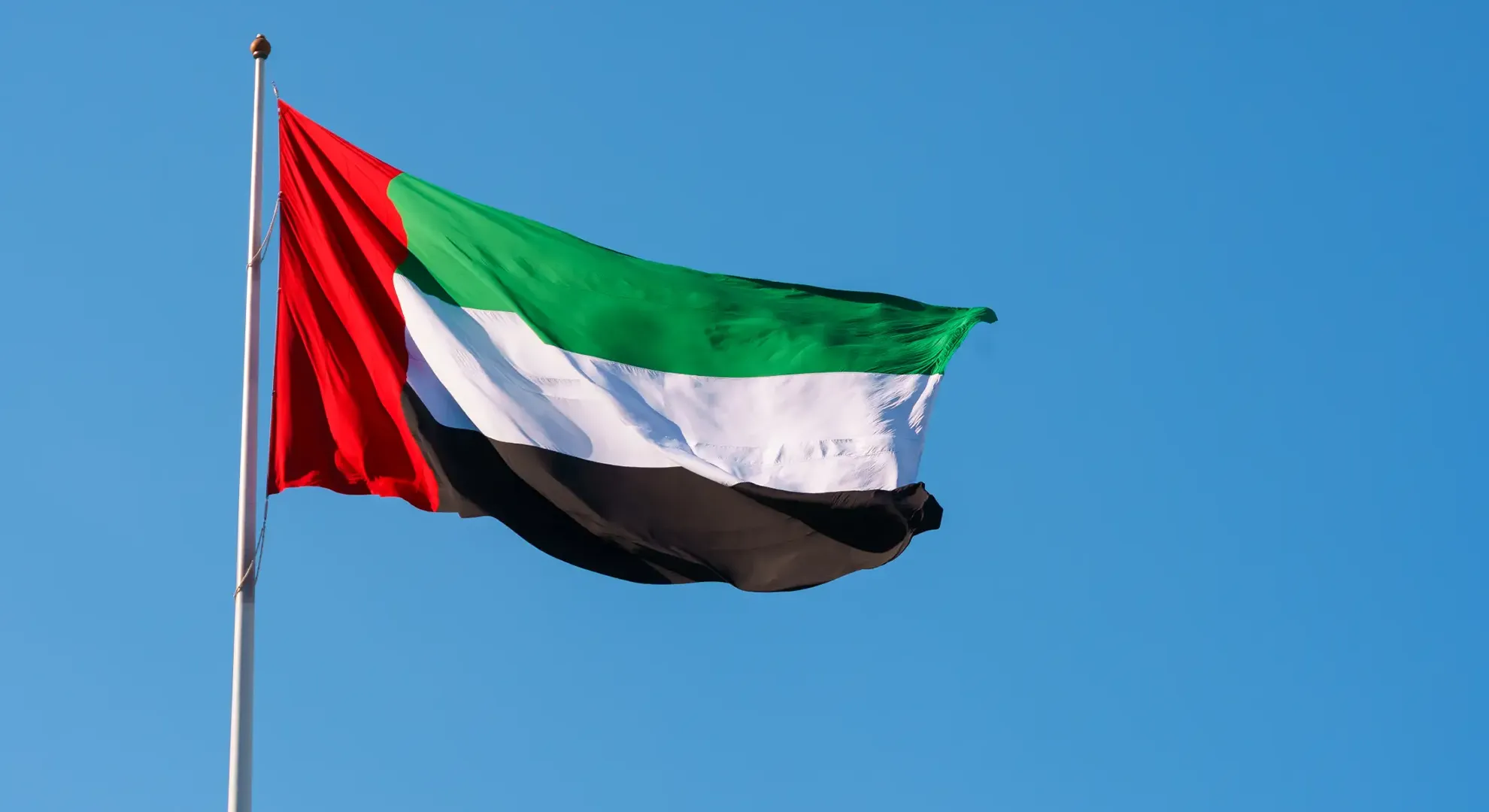
The UAE Ministry of Foreign Affairs stated that, since October 7, the country’s diplomatic efforts have remained focused on reducing tensions, supporting stability across the region, and encouraging measures aimed at preventing further escalation and promoting greater security.
UAE Reaffirms De-escalation Efforts and Clarifies Communication With Israel
The United Arab Emirates has reiterated that it does not engage publicly with media reports or speculation concerning private discussions between senior government officials. The clarification comes amid renewed attention to claims about communications between the UAE leadership and Israeli officials in the period preceding the October 7 attack.
According to the UAE Ministry of Foreign Affairs, the government’s policy is not to comment on reports that attempt to describe private conversations involving national leaders. The ministry stressed that such accounts should not be interpreted as official confirmation of the details attributed to those discussions.
The UAE also emphasized that its approach since October 7 has remained focused on reducing tensions, supporting regional security and limiting the possibility of further violence. Officials said the country’s diplomatic and political engagement during the period has been guided by the broader objective of preventing escalation and encouraging stability across the region.
The statement comes against the backdrop of continuing scrutiny over the nature of relations between the UAE and Israel. The two countries established formal diplomatic relations through the Abraham Accords, creating channels for political, diplomatic and security cooperation. Since then, government institutions on both sides have maintained direct communication on matters considered relevant to their respective national and regional interests.
The UAE said those communication channels have remained active since the beginning of the relationship. Where circumstances have required the exchange of sensitive information, relevant agencies have continued to communicate directly, including on intelligence-related matters.
The clarification followed a report published by Israeli newspaper Haaretz. The report was based on an excerpt from a forthcoming book written by journalists at the newspaper and made a claim concerning an alleged conversation between UAE President Sheikh Mohamed bin Zayed Al Nahyan and Israeli Prime Minister Benjamin Netanyahu.
According to the report, the alleged conversation took place approximately a week and a half before the October 7 attack. Haaretz reported that the UAE president purportedly warned Netanyahu that Yahya Sinwar, who was then the head of Hamas in the Gaza Strip, was preparing an operation.
The account, reported internationally by Agence France-Presse, has drawn attention because of the significance of the period in which the alleged exchange is said to have occurred. The October 7 attack by Hamas and the subsequent Israeli military campaign in Gaza transformed the political and security landscape of the Middle East and triggered an extended period of diplomatic activity involving regional and international governments.
However, the UAE Foreign Ministry has stopped short of confirming or denying the specific details contained in the report. Instead, its position has been that the government does not comment on media reports or speculation surrounding conversations between government leaders.
This distinction is important because diplomatic communications between heads of government and senior officials frequently involve confidential discussions. Governments generally avoid publicly verifying the precise content of such exchanges, particularly when they involve intelligence assessments, security concerns or sensitive regional developments.
The UAE’s statement therefore appears designed to reinforce its longstanding position on confidential government communications while also emphasizing the broader objectives that have guided its regional diplomacy.
Since the October 7 attacks, the UAE has repeatedly presented its regional engagement as being centered on humanitarian concerns, diplomatic de-escalation and the prevention of a wider conflict. The country has sought to maintain relationships with different regional actors while supporting measures intended to contain violence and promote stability.
The UAE’s relationship with Israel has added another dimension to that diplomatic role. Unlike several other Arab countries, the UAE established formal relations with Israel before the current conflict, meaning that it retained established government-to-government channels during a period of severe regional tension.
Those channels have provided a mechanism through which officials on both sides could communicate directly when necessary. The UAE has indicated that such communication is not limited to public diplomatic matters but can also involve information considered relevant to national and regional security.
The ministry’s reference to intelligence communication is particularly significant. It indicates that information-sharing mechanisms between the two countries have continued to operate when circumstances have warranted it. At the same time, the statement does not publicly disclose what specific information may have been exchanged, when it was shared or which individuals or institutions were involved.
The distinction between confirmed government statements and media accounts is especially relevant in the case of the reported conversation. While the Haaretz account attributes a warning to Sheikh Mohamed, the UAE has not publicly endorsed the report’s description of the alleged exchange.
The report nevertheless raises questions about what governments in the region knew about the preparations for the October 7 assault and how information concerning Hamas activity may have circulated among regional and international security agencies before the attack.
The attack itself represented one of the most serious security shocks in the region in decades. Hamas-led militants crossed into southern Israel on October 7, killing civilians and members of the Israeli security forces and taking hostages. Israel subsequently launched a large-scale military operation in Gaza, declaring the destruction of Hamas and the return of hostages among its central objectives.
The conflict rapidly developed into a broader regional crisis, with concerns growing over the possibility that fighting could spread beyond Gaza. Attacks and confrontations involving armed groups linked to the wider regional conflict increased pressure on governments across the Middle East to pursue diplomatic efforts aimed at preventing further escalation.
For the UAE, the developments presented a difficult diplomatic environment. Abu Dhabi has maintained formal relations with Israel while also emphasizing the importance of Palestinian rights, humanitarian assistance and a political resolution to the Israeli-Palestinian conflict.
The UAE has therefore sought to balance its diplomatic relationship with Israel with its broader regional policy. Maintaining communication with Israeli officials has allowed Abu Dhabi to convey its positions directly, while its engagement with other regional and international governments has provided additional avenues for diplomatic coordination.
The ministry’s latest comments should be understood within that wider context. Rather than addressing the reported conversation directly, the UAE has highlighted the principles that it says have guided its actions: reducing tensions, supporting regional stability and working to prevent additional violence.
The statement also reinforces the UAE’s description of its relationship with Israel as one involving established institutional channels rather than occasional or informal contact. According to the ministry, relevant government entities have maintained direct lines of communication since the relationship began.
That communication can be particularly important during periods of crisis. Governments often require rapid exchanges of information when security conditions change quickly, and direct channels can allow officials to convey warnings, clarify positions or coordinate responses without relying exclusively on public statements.
At the same time, the existence of such channels does not necessarily mean that governments publicly disclose the content of their discussions. Sensitive diplomatic and intelligence exchanges are generally treated as confidential, and governments may consider public disclosure potentially damaging to national security or diplomatic relationships.
This helps explain the UAE’s decision not to confirm the substance of the allegation reported by Haaretz. The ministry’s statement leaves the specific claim unverified while affirming that communication between UAE and Israeli government institutions has continued.
The report also highlights the broader challenges involved in assessing intelligence warnings before major attacks. In the aftermath of significant security failures, considerable attention is often directed toward what information was available beforehand, which agencies possessed it and whether warnings were sufficiently understood or acted upon.
Determining the significance of any alleged warning requires access to the original communication, its context and the intelligence available to the officials involved. Without those details, it is difficult to independently assess what was allegedly communicated, how specific the information was or what response it generated.
The UAE has not provided those details publicly. Its position remains that it will not comment on media accounts or speculation regarding private discussions between government leaders.
The reported conversation is therefore part of a broader debate about the events leading up to October 7 rather than a publicly confirmed account of UAE-Israel communication. The distinction is particularly important because claims involving senior political figures can quickly become part of competing narratives surrounding responsibility, intelligence failures and the decisions made before the attack.
What is clear from the UAE’s statement is that direct communication between the two governments has existed for several years and that those channels have remained available during the conflict. The UAE has also indicated that relevant information has been exchanged between appropriate entities when necessary.
The country’s emphasis on de-escalation reflects its broader foreign-policy approach in the region. Abu Dhabi has increasingly positioned itself as a state seeking stability, economic development and diplomatic engagement while maintaining relationships with a range of governments and political actors.
Since October 7, that approach has faced considerable pressure. The intensity of the conflict, the humanitarian situation in Gaza and the risk of regional confrontation have made diplomatic engagement significantly more complicated.
The UAE has continued to advocate measures aimed at containing the conflict and preventing it from developing into a wider regional war. Its officials have also emphasized the importance of humanitarian assistance and efforts to create conditions for longer-term stability.
Against this background, the ministry’s response to the Haaretz report can be viewed as a reaffirmation of both confidentiality and diplomatic continuity. The UAE is not publicly validating the details of the alleged conversation, but neither is it suggesting that communication between the two governments has been absent.
Instead, the statement places emphasis on the established mechanisms through which the countries communicate. It also underlines that intelligence and security-related information can be transmitted between relevant authorities when circumstances demand it.
The controversy surrounding the reported warning is likely to remain part of discussions about the period immediately preceding October 7. However, the available public statements do not establish the precise contents of any private conversation between Sheikh Mohamed bin Zayed and Benjamin Netanyahu.
For now, the UAE’s official position is straightforward: it does not comment on media reports or speculation concerning private discussions among government leaders. Its government has instead chosen to highlight its broader regional objectives and the continuation of official communication channels with Israel.
The distinction between those two points is significant. A government can maintain active diplomatic and intelligence communication with another country without publicly confirming individual conversations. Similarly, the existence of communication channels does not by itself establish the accuracy of every claim subsequently attributed to those channels.
The UAE’s statement therefore provides confirmation of the broader relationship while leaving the specific allegation unanswered.
The episode illustrates the sensitivity surrounding intelligence and diplomacy in the Middle East, particularly in the aftermath of a major security crisis. Reports concerning warnings exchanged before October 7 are likely to continue attracting attention as governments, journalists and investigators examine the circumstances that preceded the attack.
Until the UAE or another directly involved government provides further information, the specific account reported by Haaretz remains an allegation attributed to sources and material from a forthcoming book rather than a publicly confirmed description of a conversation.
What the UAE has clearly stated is that its regional engagement has been aimed at reducing tensions and preventing further violence. It has also confirmed that communication between UAE and Israeli government institutions has remained open and that relevant information can be shared between appropriate authorities when necessary.
The ministry’s response consequently shifts the focus away from speculation over the precise details of a reported conversation and toward the UAE’s stated policy of maintaining diplomatic engagement, supporting regional stability and encouraging de-escalation.
As the wider conflict continues to shape political calculations throughout the Middle East, those communication channels are likely to remain important. The UAE’s ability to maintain direct contact with Israeli officials while also pursuing broader diplomatic and humanitarian objectives gives it a distinctive position within the region’s complex political landscape.
For the UAE, the central message remains that its actions since October 7 have been guided by an effort to contain the crisis rather than intensify it. While questions surrounding the reported pre-attack warning may continue to generate debate, the government has chosen not to publicly address the details of alleged private exchanges.
Instead, Abu Dhabi has reaffirmed its commitment to diplomatic communication, regional stability and the reduction of violence, while making clear that sensitive discussions between government leaders and security institutions are not matters on which it intends to comment publicly.
Netanyahu Rejects Report of UAE Warning Ahead of October 7 Attack
A report published by the Israeli newspaper Haaretz has triggered a fresh political dispute in Israel after it alleged that Prime Minister Benjamin Netanyahu had been informed about a possible Hamas operation before the October 7, 2023 attack. The newspaper’s account, which relied largely on unnamed sources, has drawn renewed attention to questions surrounding the warnings that Israeli officials may have received before the assault.
According to the report, Netanyahu responded in a composed manner when the alleged warning was communicated to him. The account did not publicly identify most of the individuals who provided the information, leaving important details about the reported exchange unavailable for independent verification.
The allegations quickly became part of Israel’s domestic political debate. Opposition figures seized on the report as another example of what they describe as serious failures in the government’s handling of warnings before the unprecedented Hamas attack.
Gadi Eisenkot, a former senior military commander and prominent opposition figure, criticized Netanyahu following the publication of the report. Eisenkot, who has positioned himself as one of Netanyahu’s principal political challengers ahead of the October 27 election, argued that the prime minister had been exposed to numerous warnings before the attack and failed to respond adequately.
In a message posted on X, Eisenkot accused Netanyahu of disregarding repeated alerts concerning the possibility of an attack. He said the prime minister had received numerous warnings ahead of October 7 and described Netanyahu as unsuitable to continue serving in the country’s highest elected office.
The criticism adds another layer to an already intense political controversy surrounding the events that preceded the Hamas assault. Since October 7, Israeli political leaders, military officials and security agencies have faced sustained scrutiny over whether sufficient warning existed before the attack and, if so, whether those warnings were properly assessed and acted upon.
Netanyahu’s office, however, rejected the central allegation contained in the Haaretz report. In a statement issued late Tuesday, the prime minister’s office categorically denied that Netanyahu had received a warning from the United Arab Emirates before the Hamas attack.
The statement specifically disputed the claim that Abu Dhabi had alerted the Israeli prime minister about preparations for an operation by Hamas. According to Netanyahu’s office, no such warning was delivered to the prime minister by the UAE before October 7.
The denial places the Israeli government’s position directly against the account published by Haaretz. While the newspaper reported that a warning had allegedly been conveyed, Netanyahu’s office maintains that no warning from the UAE reached the prime minister before the attack.
The disagreement is significant because the alleged communication, if independently established, would add another element to the continuing investigation into Israel’s intelligence and security failures before October 7. Conversely, the denial from Netanyahu’s office means that the reported account remains contested.
The controversy must also be viewed against the extraordinary scale of the October 7 attack and its consequences. On that day, Hamas-led militants launched a coordinated assault on southern Israel, crossing the border and attacking communities and military positions. The attack resulted in the deaths of approximately 1,200 people, according to Israeli figures, while 251 people were taken hostage.
The assault represented one of the most devastating attacks in Israel’s modern history. The scale and speed of the operation shocked Israeli society and generated widespread questions about how Hamas had managed to organize and execute the attack despite Israel’s extensive intelligence and security capabilities.
In the immediate aftermath, the Israeli government declared war on Hamas and launched a major military campaign in the Gaza Strip. Israeli forces conducted extensive airstrikes and ground operations, saying that their objective was to dismantle Hamas’s military infrastructure and secure the release of hostages taken during the October 7 assault.
The resulting conflict caused enormous destruction across Gaza. Large portions of the territory’s residential areas and infrastructure were damaged or destroyed, while millions of Palestinians were affected by displacement, shortages and the disruption of essential services.
The Gaza Health Ministry has reported a death toll of 73,658 people in the territory. The figure reflects the enormous human cost of the conflict, although casualty reporting in wartime remains politically and operationally difficult and the precise figures are subject to continuing scrutiny.
The dispute over the alleged UAE warning is therefore unfolding against a much broader backdrop of political accountability and military decision-making.
For months and years after the attack, questions have been raised about what Israeli authorities knew before October 7. Investigations and media reports have examined intelligence assessments, warnings from military and security personnel, information concerning Hamas’s preparations and the decisions made by political leaders.
The new report has added the UAE to that discussion by alleging that the Gulf state’s leadership may have communicated concerns directly to Israel before the assault.
The UAE has previously maintained that its policy following October 7 has focused on reducing tensions, supporting regional stability and preventing additional violence. Abu Dhabi has also emphasized that UAE and Israeli government institutions have maintained direct channels of communication since the establishment of formal relations between the two countries.
The existence of those channels means that communication between officials from the two countries is not unusual. However, whether a specific warning about Hamas was conveyed directly to Netanyahu remains disputed.
The Haaretz report, according to the account, relied mainly on anonymous sources. Such sourcing can make it difficult for outside observers to independently establish the accuracy of an alleged private conversation. At the same time, anonymous sources are frequently used in reporting involving intelligence, national security and diplomatic affairs because participants may face restrictions on publicly discussing sensitive information.
The competing accounts from Haaretz and Netanyahu’s office consequently leave unresolved questions about what, if anything, was communicated to the Israeli prime minister.
The political response has been swift because the allegation touches directly on the question of responsibility for the failures that allowed Hamas to conduct its attack.
Eisenkot’s criticism reflects a broader argument made by Netanyahu’s opponents that the government failed to respond adequately to warnings before the attack. Opposition politicians have repeatedly called for political accountability and have questioned whether Netanyahu and other senior officials should remain in office following the security breakdown.
Netanyahu, meanwhile, has faced mounting political pressure since the attack. His government has been criticized over security failures, the handling of the hostage crisis, the conduct of the war in Gaza and broader questions about the country’s political direction.
The latest dispute could further intensify those arguments, particularly because it concerns an alleged warning that reportedly came from a foreign government.
If the allegation were established, political opponents could argue that the prime minister had access to additional information that should have prompted greater concern. Netanyahu’s office’s denial, however, makes clear that the government does not accept that characterization.
The timing of the alleged warning is also central to the controversy. The report claims that the conversation occurred roughly a week and a half before the October 7 attack. That would place the alleged exchange close enough to the assault to raise questions about whether the information could have influenced Israeli security preparations.
Yet the precise content of the alleged message remains unclear in the public record. It is not evident from the competing accounts how detailed the supposed warning was, what evidence allegedly accompanied it, whether it referred specifically to a large-scale attack or whether it was understood at the time as a more general indication of Hamas activity.
Those distinctions are crucial when evaluating intelligence warnings. Security agencies routinely receive information about possible threats, but not every warning provides enough detail to predict the timing, location or scale of an attack. A warning may identify an intention without revealing operational plans, or it may indicate increased activity without establishing that a major assault is imminent.
Determining whether an official ignored a warning therefore requires more than establishing that information existed. Investigators would need to determine what was known, how credible it appeared, who received it, what interpretation was placed on it and what actions followed.
The political argument in Israel, however, has increasingly centered on whether the government did enough with the information available before October 7.
The Hamas assault exposed significant weaknesses in Israel’s security preparedness along the Gaza border. Militants were able to breach the heavily monitored boundary and attack numerous locations before Israeli forces were able to fully respond.
The failure prompted investigations and widespread public anger. Families of hostages and victims have demanded answers, while political opponents have called for those responsible for the security breakdown to be held accountable.
Netanyahu has faced particular scrutiny because of his position as prime minister and because his government bears ultimate political responsibility for national security policy. His supporters have argued that responsibility for the intelligence and operational failures extends across the political and security establishment rather than resting with one individual.
The argument over the alleged UAE warning fits into this wider struggle over accountability.
The UAE itself has not publicly confirmed the specific conversation described in the report. Instead, its Ministry of Foreign Affairs has maintained that the government generally does not comment on media stories or speculation concerning private conversations between government leaders.
That position means that the competing versions of events remain unresolved in the public domain.
Netanyahu’s office has provided the clearest direct rejection of the allegation, stating that the prime minister received no warning from the UAE before October 7. Haaretz, by contrast, has published an account that attributes such a warning to its sources and says the information formed part of material associated with a forthcoming book by the newspaper’s reporters.
The disagreement demonstrates the sensitivity surrounding the reconstruction of events before the attack. Much of the information concerning intelligence warnings remains classified, while individuals with knowledge of government and security discussions may be unable or unwilling to identify themselves publicly.
As a result, the public debate is likely to continue as journalists, investigators and political figures examine the circumstances surrounding October 7.
The human consequences of the attack and subsequent war remain at the center of the broader crisis. The initial Hamas assault killed about 1,200 people in Israel and resulted in 251 hostages being taken, according to Israeli figures. Israel’s subsequent military campaign in Gaza has caused widespread destruction and a very high Palestinian death toll.
The Gaza Health Ministry has reported 73,658 deaths in the territory. The conflict has also displaced large numbers of Palestinians and caused extensive damage to homes, hospitals, schools, roads and other civilian infrastructure.
These consequences have made the question of how the war began, and whether it could have been prevented or mitigated, particularly politically sensitive.
For Netanyahu’s opponents, reports of warnings before October 7 strengthen the case for examining the decisions made by the government before the attack. For the prime minister’s office, the denial of the alleged UAE warning rejects one of the central claims now being discussed.
The forthcoming book referenced in the Haaretz report could potentially provide additional information about the sources and circumstances behind the newspaper’s account. Until further evidence becomes publicly available, however, the precise nature of any alleged communication remains uncertain.
What is not in dispute is that the October 7 attack produced an unprecedented political and security crisis in Israel and triggered a devastating war in Gaza. The attack has prompted continuing investigations into intelligence failures and the conduct of Israel’s political and military leadership.
The latest controversy adds another disputed element to that investigation. It raises the question of whether a warning from the UAE was allegedly conveyed to Netanyahu before the assault, while the prime minister’s office insists that no such warning was received.
The opposing claims are likely to remain part of Israel’s political debate, particularly as opposition parties continue to challenge Netanyahu’s leadership and demand greater accountability for the events that preceded the attack.
Ultimately, establishing what happened before October 7 will require evidence beyond political accusations or individual media reports. Investigators would need to examine intelligence records, official communications, testimony from those involved and the decisions taken by Israeli authorities during the critical period before the attack.
Until such information is made available, the alleged UAE warning should be treated as a disputed report rather than an established fact.
The controversy nevertheless underscores the continuing significance of the questions surrounding October 7. More than the details of one alleged conversation, the central issue remains whether the warning systems, intelligence assessments and political decision-making processes in Israel were capable of recognizing and responding to the threat posed by Hamas.
Those questions have consequences far beyond the immediate political rivalry between Netanyahu and his opponents. They concern the security of Israel, the devastating consequences suffered by Palestinians in Gaza and the wider regional instability that followed the attack.
As political and public scrutiny continues, the competing claims over the alleged warning are likely to remain part of the broader effort to understand how the October 7 assault became possible and whether different decisions beforehand could have changed its course.