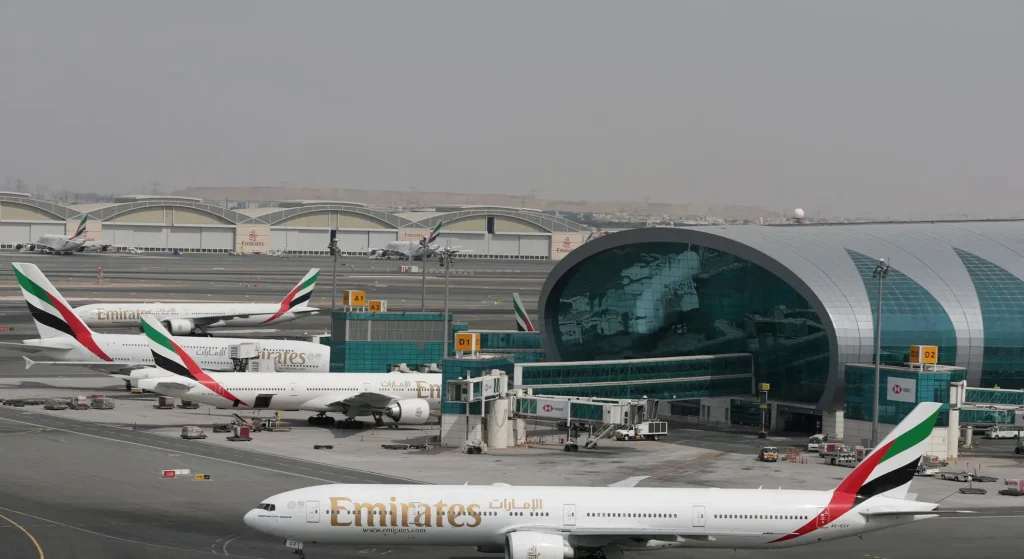
A technical problem affecting the UK’s air traffic control system has prompted Emirates and Qatar Airways to alert passengers about possible disruptions. Travellers flying to or from Britain could experience delays as authorities work to resolve the issue and restore normal operations.
Air Traffic Control Glitch Sparks Delay Warnings From Emirates and Qatar Airways.

Passengers travelling with Emirates and Qatar Airways have been advised to monitor their flight information closely after a technical malfunction involving the UK’s air traffic control system disrupted operations and led to delays on several services.
Airlines Warn Passengers About UK Flight Disruptions
Travellers flying between the Gulf and the United Kingdom have been advised to keep a close watch on their flight information after a technical problem disrupted the UK’s air traffic control system.
Emirates and Qatar Airways both issued notices to passengers following an operational problem involving NATS, the organisation responsible for providing air traffic control services across the UK.
The issue affected aviation operations at airports around Britain on Tuesday, creating delays for some services and raising the possibility of further disruption for passengers travelling to, from or through UK airspace.
For travellers with upcoming journeys, the airlines have recommended checking flight information before leaving for the airport. Passengers have also been encouraged to pay attention to airline communications because schedules can change at short notice when air traffic restrictions are introduced.
Emirates Issues Passenger Advisory
Emirates informed customers late Tuesday that flights operating to and from airports in the UK were being affected by the air traffic control problem.
The Dubai-based carrier said the technical issue was causing disruption to its UK services and apologised to passengers who might experience inconvenience as a result.
Rather than relying solely on the original itinerary, travellers were advised to check their flight status regularly. Emirates also encouraged customers to consult the latest operational information published through the airline’s official channels.
Passengers were specifically asked to monitor their email inboxes for notifications concerning their journey. Such messages could include information about delays, schedule adjustments or cancellations if the situation affected a particular flight.
The airline also reminded customers to ensure that their contact information was current.
Travellers can update their details through the airline’s Manage Your Booking facility, allowing Emirates to contact them if there are changes affecting their reservation.
The advice is particularly relevant during periods of air traffic disruption because passengers may receive revised information after their original booking details were issued.
What Passengers Should Do
The airlines’ warnings highlight the importance of checking flight information before travelling to the airport during an operational disruption.
Passengers who have not yet started their journey can check whether their flight is operating as scheduled and look for any updates before setting out.
Those already travelling may also need to remain alert for changes to departure times, routes or other arrangements.
For Emirates customers, the airline recommended using its online flight-status services and keeping an eye on operational updates. Ensuring that contact details are accurate can also help passengers receive notifications directly.
The carrier’s advice reflects the fact that air traffic control problems can have effects beyond the airport where an initial technical issue occurs. When aircraft movements are restricted or schedules are adjusted, delays can spread to other flights and airports as aircraft and crews are moved through the network.
Qatar Airways Reports Similar Disruption
Qatar Airways also alerted its passengers about the situation, confirming that services involving UK airports were being affected.
The Doha-based airline said flights travelling to and from Britain were experiencing delays. Services passing through UK-controlled airspace could also face disruption, including the possibility of changes to their planned routes.
The carrier advised passengers to obtain the latest information through its website and mobile application before travelling.
The warning was particularly important for passengers whose journeys involved connecting flights or travel through UK airspace. Even when a flight does not originate or terminate in Britain, restrictions affecting the airspace can potentially influence its planned route.
Qatar Airways did not provide a specific figure for the number of flights affected by the incident. The airline also did not give a definite time for when its UK operations would return fully to their normal schedule.
Extent of the Disruption Remains Unclear
At the time of the airlines’ announcements, neither Emirates nor Qatar Airways disclosed the total number of flights affected by the technical problem.
There was also no firm indication of when the disruption would be completely resolved.
This means passengers with upcoming journeys were advised to rely on the latest information rather than assuming that previously published schedules would remain unchanged.
Airline schedules can be particularly sensitive to problems involving air traffic control because aircraft movements depend on coordination between airports, controllers and operators.
A technical problem within the air traffic management system can therefore have consequences that extend beyond the immediate location of the fault.
Even if an airline’s own aircraft and airport facilities are operating normally, restrictions imposed on the wider airspace can require flights to wait, take alternative routes or operate under revised schedules.
Why Air Traffic Control Problems Can Cause Delays
Air traffic control plays a central role in keeping aircraft movements organised and safe.
Controllers coordinate the flow of aircraft in the skies and around airports, helping determine when flights can take off, land or pass through particular sections of airspace.
When a technical problem affects an air traffic control provider, normal traffic-management procedures can be disrupted.
Depending on the nature and scale of the issue, aircraft may have to be spaced further apart or follow alternative arrangements. That can reduce the number of flights that can move through a particular area during a given period.
For airlines operating busy international routes, even relatively short interruptions can create knock-on effects.
An aircraft delayed at one airport may arrive late at its next destination, potentially affecting the following service. Crew schedules, connecting passengers and aircraft rotations can also be affected.
This is why passengers may continue to experience delays even after the original technical issue has been addressed.
Impact on Gulf-UK Travel
The disruption is significant for Emirates and Qatar Airways because both carriers operate extensive international networks connecting the Gulf with Britain.
Emirates operates its international network from Dubai, while Qatar Airways uses Doha as its primary hub. Both airlines serve several major destinations in the UK.
Their services are used by business travellers, tourists, students, families and passengers making connections to destinations elsewhere around the world.
For many travellers, flights between the Gulf and Britain form part of longer international journeys. A delay on the UK portion of a trip can therefore have consequences for onward connections.
Passengers travelling through Dubai or Doha may have connecting flights scheduled soon after their arrival. Any significant change to the first sector could make it necessary to adjust subsequent travel arrangements.
Similarly, travellers beginning their journeys in the UK may have onward connections through either Gulf hub.
This makes timely airline updates particularly important for passengers who have tight connection windows.
Emirates’ Advice to Customers
Emirates encouraged passengers to take a proactive approach rather than travelling to the airport without checking for updates.
Customers were advised to verify their flight status regularly, particularly if they were due to depart from or arrive at a UK airport.
The airline also recommended monitoring its operational announcements and checking email accounts for direct notifications.
Keeping contact information updated was another part of the guidance.
Passengers who have changed their telephone number or email address since making a reservation may wish to review their booking information so that important notifications can reach them.
The airline’s Manage Your Booking service provides a way for customers to review and update relevant details connected to their reservation.
Such steps can be useful when flight schedules are changing because airlines may send passengers revised information as operational conditions develop.
Qatar Airways Encourages Passengers to Check Its Digital Channels
Qatar Airways provided similar guidance to its customers.
Passengers were encouraged to use the airline’s website and mobile application to obtain the latest information concerning their flights.
The airline’s warning covered services travelling to and from UK airports as well as flights that could be affected while passing through UK airspace.
For passengers, this means that simply checking the departure airport may not always be enough. A flight that does not land in Britain could still potentially be affected if its route passes through an area experiencing restrictions.
The possibility of rerouting could also mean that journey times or schedules change even when a flight continues to operate.
Passengers were therefore advised to remain informed and check for the latest updates before beginning their journey.
No Immediate Estimate on Recovery
Neither airline provided passengers with a specific timeline for a complete return to normal operations.
The absence of a clear recovery time means that travellers should continue checking for updates rather than assuming that flights will operate according to their original schedules.
Air traffic control incidents can vary considerably in their duration and impact. The consequences may also continue after the technical problem itself has been resolved because airlines and airports may need time to work through accumulated delays.
Aircraft and crews can be in different locations from where they were originally scheduled to be, while passengers may also require assistance with revised connections.
As a result, normal operations may take some time to resume even after the underlying technical fault has been addressed.
Major UK Destinations Served by Both Airlines
Emirates and Qatar Airways are major players in international travel between the Gulf and the UK.
From Dubai and Doha respectively, the airlines connect passengers with several prominent British cities.
Their extensive networks mean that disruption affecting UK airspace can potentially affect a large number of travellers, particularly during periods of heavy international traffic.
For passengers, the situation demonstrates why checking the latest operational information is important even when a booking was confirmed well in advance.
A flight listed as scheduled when the ticket was purchased may later receive a revised departure time or other operational change.
This is especially relevant when an air traffic control issue affects a broad area rather than a single airline.
Travellers Advised to Plan Ahead
Passengers with upcoming Emirates or Qatar Airways flights involving the UK should allow for the possibility of changes to their itinerary.
Checking the flight status shortly before leaving home can help travellers avoid unnecessary trips to the airport if their service has been significantly delayed or cancelled.
Passengers should also keep their phones and email accounts accessible so that they can receive notifications from their airline.
Those with connecting flights may want to pay particular attention to their onward travel arrangements.
If the first part of a journey is delayed, the connecting service could potentially be affected as well. Travellers should therefore monitor the entire itinerary rather than focusing only on the first flight.
Where possible, passengers should also ensure that their booking information contains accurate contact details.
A Reminder of How Connected Aviation Networks Are
The incident provides another example of how closely connected the international aviation system has become.
A problem affecting one part of the network can have consequences for airlines and passengers operating hundreds or even thousands of kilometres away.
For Emirates and Qatar Airways, UK services are part of much larger global networks. Aircraft arriving in Britain may later operate other services, while planes departing the UK can continue to destinations across Asia, Africa, the Middle East and beyond.
When one part of that schedule is disrupted, airlines may need to make adjustments elsewhere in their network.
The same principle applies to passengers. A traveller may begin a journey in one country, connect through Dubai or Doha and continue to a completely different destination.
An air traffic issue affecting the UK can therefore influence travel plans far beyond Britain itself.
What This Means for Passengers
For the moment, the most important message from both airlines is for passengers to remain informed.
Emirates customers should regularly check their flight status, review operational updates and watch for messages sent to their registered contact details.
Qatar Airways passengers have similarly been encouraged to use the airline’s website and mobile application to monitor their journeys.
Travellers should avoid relying solely on earlier booking confirmations when an operational disruption has been announced.
Instead, checking for the latest information closer to departure can provide a clearer picture of whether a flight is operating normally.
Passengers whose plans change may also need to reconsider onward connections, airport transfers and other arrangements linked to their original schedule.
Gulf Carriers Continue to Monitor the Situation
Both airlines have acknowledged the disruption while continuing to operate their UK services.
The precise impact on individual flights may vary depending on the airport, route and conditions at the time of departure.
Some flights could experience only a short delay, while others may face more substantial schedule changes or rerouting.
Because the situation can develop quickly, the airlines have directed customers toward their official information channels rather than providing a single timetable for recovery.
The approach allows passengers to receive updates relevant to their particular flight.
For anyone travelling between Dubai, Doha and the UK, staying connected to the airline is therefore likely to remain the best way to understand any changes to their journey.
Wider Implications for International Travel
The incident also underlines the importance of resilient air traffic management systems as international aviation continues to handle enormous numbers of passengers.
Major airports depend on sophisticated technology and constant coordination to manage aircraft safely and efficiently.
When a technical problem occurs, the effects can be felt across multiple airports and airlines.
For passengers, the experience can be frustrating, particularly when the problem is outside the airline’s direct control.
However, the ability to receive timely information can make it easier for travellers to adjust their plans.
Both Emirates and Qatar Airways have encouraged customers to make use of their digital services and communication channels during the disruption.
Travellers Should Check Before Heading to the Airport
For passengers scheduled to fly between the UK and the Gulf while the disruption continues, the simplest precaution is to check the latest status of the flight before travelling to the airport.
A quick review of the airline’s website or app can help establish whether the scheduled departure remains unchanged.
Passengers should also keep an eye on email notifications and other communications associated with their booking.
If a flight has been delayed, rerouted or cancelled, the airline may provide updated instructions through those channels.
Travellers should also consider the possibility that a delay could affect a connecting service, particularly when travelling on a multi-flight itinerary.
The Situation Remains Subject to Change
The disruption caused by the NATS technical issue remains a developing situation, and the operational impact can change as air traffic restrictions are adjusted.
Neither Emirates nor Qatar Airways has announced a definitive figure for the number of affected services or provided a fixed timetable for a complete return to normal operations.
For that reason, passengers should continue to rely on the most recent information provided directly by their airline.
The disruption serves as a reminder that international flights can be influenced by factors beyond an airline’s own operations.
With Emirates and Qatar Airways both maintaining extensive services between their Gulf hubs and the UK, even a temporary problem within the British air traffic network can affect a large number of travellers.
For passengers, staying informed, checking flight details frequently and ensuring that contact information is up to date will be particularly important until normal air traffic operations are fully restored.
Technical Failure Triggers Flight Chaos Across Major UK Airports
Air travellers across the United Kingdom faced significant disruption on Tuesday after a technical malfunction affected the country’s air traffic control system, resulting in widespread delays and cancellations at several of the nation’s busiest airports.
Hundreds of scheduled services were affected during the evening as airlines and airports dealt with the consequences of the problem involving NATS, the organisation responsible for managing air traffic control across the UK.
Among the airports experiencing disruption were Heathrow, Gatwick, Manchester and Stansted. These major aviation hubs handle large numbers of domestic and international passengers every day, meaning that even a temporary interruption to air traffic management can quickly affect a substantial number of journeys.
Passengers reported delays as airlines attempted to manage revised schedules, while some flights were cancelled altogether. The disruption also created the potential for further knock-on effects as aircraft and crews were left out of their planned positions.
NATS Identifies the Source of the Problem
NATS confirmed that the disruption was linked to a technical problem within its flight-processing system.
According to the air traffic control provider, engineers were sent to work on the issue as quickly as possible in an effort to restore normal operations.
The organisation said its technical teams were actively addressing the fault and working urgently to bring the system back to normal.
The problem did not result in a complete closure of UK airspace. Flights continued to depart, although operations were affected by the technical difficulties.
NATS indicated that restoring normal service would not immediately eliminate the disruption because delays had already accumulated across the aviation network.
Once a technical problem affects flight-processing systems, airlines and airports may need time to work through the resulting backlog. Aircraft that have been delayed may arrive at their next destinations later than planned, potentially affecting subsequent flights.
Major Airports Among Those Affected
Heathrow, Gatwick, Manchester and Stansted were among the major UK airports impacted by the disruption.
Each of these airports plays an important role in the country’s aviation network.
Heathrow is one of the UK’s primary international gateways and handles flights connecting Britain with destinations around the world.
Gatwick is another major London-area airport, serving a wide range of international and leisure destinations.
Manchester Airport is one of the UK’s largest airports outside London, with extensive domestic and international connections.
Stansted also handles substantial passenger traffic, particularly across European routes.
Because these airports are highly connected to the wider aviation network, delays can have consequences that extend beyond individual departure times.
A passenger waiting for a delayed flight may miss a connecting service, while an aircraft arriving late can subsequently operate behind schedule on another route.
Flights Continued Despite the Problem
Although the disruption was significant, NATS stressed that UK airspace remained open.
Flights continued to operate, but the system problem affected the normal flow of aircraft.
This distinction was important for passengers because the incident did not amount to a complete shutdown of British airspace.
Instead, aviation operations were being conducted while the technical problem was addressed and the resulting backlog was gradually managed.
NATS explained that flights were still departing, but warned that the recovery process would require time.
The statement reflected the difficulty of returning a large and interconnected aviation network to its normal schedule after an unexpected technical interruption.
Engineers Worked to Restore Normal Operations
NATS said engineers were working at the site to resolve the technical fault.
The organisation’s technical teams were tasked with identifying the problem, repairing the affected system and supporting the return to normal air traffic operations.
The incident demonstrated the importance of the technology used to process and manage flights.
Modern air traffic control depends on complex computer systems that allow controllers to monitor aircraft and manage their movements.
When part of that infrastructure stops functioning correctly, additional measures may be required to maintain safe operations.
The disruption therefore had an immediate impact on the ability of the aviation network to operate according to its original timetable.
Recovery Takes Longer Than Expected
As the situation progressed, NATS acknowledged that the recovery process was taking longer than initially hoped.
The organisation later confirmed that the original technical issue had been resolved, but the aviation system still faced a considerable backlog of flights.
In an update published on its website at around 7.30pm UK time, NATS said the system problem had been fixed and that normal operations had resumed.
However, the organisation warned that airlines and airports would still need time to clear the accumulated disruption.
This meant that passengers could continue experiencing delays even after the underlying technical fault was no longer affecting the system.
Clearing the Backlog Becomes the Next Challenge
Resolving the technical fault was only the first stage in restoring normal operations.
Once hundreds of flights have been delayed or cancelled, aircraft may no longer be in the locations originally planned for them.
Crew schedules can also be affected, while passengers may need to be rebooked or accommodated on alternative services.
As a result, aviation networks can take several hours to recover after a major operational interruption.
NATS said it was working as hard as possible to reduce the backlog and return services to their normal schedules.
Passengers were advised to continue communicating with their airlines for the most accurate information about individual flights.
Apology Issued to Affected Passengers
NATS apologised for the disruption and recognised the frustration experienced by passengers.
The organisation acknowledged that ongoing delays were causing considerable inconvenience and expressed regret to travellers whose plans had been affected.
For passengers already at airports, the disruption meant potentially lengthy waits, uncertain departure times and changes to travel arrangements.
Those whose flights were cancelled could also face the additional challenge of finding alternative services.
NATS said it was aware of the impact on travellers and apologised for the continued disruption while recovery efforts were under way.
Why Delays Can Continue After a Technical Fault Is Fixed
For passengers, one of the most confusing aspects of a large-scale aviation disruption is that delays can continue even after the original problem has been resolved.
The reason is that air travel operates as a tightly connected network.
An aircraft scheduled to leave London, for example, may have arrived earlier from another destination. If that inbound flight is delayed, the aircraft may not be ready for its next departure at the planned time.
The same aircraft could then be scheduled for another flight later in the day. A delay at the beginning of the sequence can therefore move through several subsequent services.
Crew members can face similar scheduling problems. Pilots and cabin crew have regulated working hours and may not always be able to operate a flight if earlier delays have significantly changed their schedules.
Passengers can also be affected when connections are missed.
This combination means that restoring the technical system does not automatically restore the entire timetable.
Advice for Travellers
With the technical problem resolved but the backlog still being cleared, passengers were advised not to assume that their flights would operate exactly according to the original schedule.
NATS specifically directed passengers to remain in contact with their airlines.
Airlines generally provide the most relevant information about individual bookings, including revised departure times, cancellations, rebooking options and other arrangements.
Travellers should therefore check their flight status before travelling to the airport and continue monitoring updates while at the terminal.
Passengers with onward connections should also check whether changes to their first flight could affect subsequent services.
Heathrow Faces Disruption
Heathrow was among the major airports affected by the incident.
As one of Britain’s principal international gateways, Heathrow handles a large volume of passenger and cargo traffic.
Delays at such a major hub can have a significant effect on international travel because many flights are connected through tightly scheduled aircraft rotations.
Even a relatively short disruption can therefore create a large number of delayed journeys when it occurs during a busy period.
Passengers travelling through Heathrow were among those advised to monitor their airline’s latest information.
Gatwick Also Hit by Delays
Gatwick, another major airport serving the London region, was also affected.
The airport operates a large number of flights to domestic and international destinations, particularly across Europe and popular holiday routes.
Disruptions to air traffic control can affect both departing and arriving services, potentially creating delays throughout the airport’s schedule.
Passengers at Gatwick were therefore faced with the same uncertainty experienced elsewhere in the UK aviation network.
Manchester Among the Airports Affected
Manchester Airport also experienced disruption following the NATS technical problem.
The airport serves passengers across northern England and operates a substantial network of international routes.
Because of its role as a major regional hub, delays can affect travellers beginning their journeys in Manchester as well as passengers arriving from other countries.
The impact can also extend to connecting flights and later services operated by aircraft that have been delayed earlier in the day.
Stansted Services Disrupted
Stansted was another major airport affected by the incident.
The airport has a significant network of European and international services, meaning that disruption to its flight schedule can affect travellers across multiple destinations.
As with the other airports, the problem was linked to the wider air traffic control system rather than an individual airline.
This meant that multiple carriers could be affected at the same time.
Airlines Face the Consequences
While NATS was responsible for resolving the technical problem, airlines had to manage the practical consequences for their customers.
Carriers affected by the disruption needed to monitor changing air traffic conditions and adjust schedules accordingly.
Depending on the circumstances, airlines could face delayed departures, revised arrival times, aircraft changes and disrupted crew schedules.
Passengers whose flights were cancelled or significantly delayed could also require assistance with alternative travel arrangements.
For international airlines, the consequences can extend across multiple countries because a delayed aircraft may have several further services scheduled later.
The Importance of Air Traffic Control Systems
The incident also highlighted how dependent modern aviation is on sophisticated technology.
Air traffic controllers need reliable systems to process information and coordinate aircraft movements.
These systems help manage the flow of planes through UK airspace and around airports.
When a technical problem affects flight-processing capabilities, the system may have to operate under different conditions while engineers work to restore full functionality.
Safety remains the overriding consideration in such circumstances, meaning that reducing the number of aircraft moving through affected areas can be necessary.
Although that can create delays, managing traffic safely takes priority over maintaining the original timetable.
The Difference Between Resolution and Recovery
The NATS updates illustrated an important distinction between fixing a technical fault and fully recovering from its consequences.
The organisation later confirmed that the system issue itself had been resolved.
However, hundreds of flights had already been affected, leaving airlines with a backlog to clear.
Recovery therefore required the aviation network to gradually return aircraft, crews and passengers to their intended schedules.
This process can take time because airports cannot simply allow every delayed flight to depart simultaneously.
Aircraft movements still have to be carefully coordinated, and the normal sequence of departures and arrivals must be restored.
Passengers Asked to Remain Patient
With operations returning to normal, travellers were nevertheless likely to face continued disruption while the backlog was cleared.
NATS acknowledged the inconvenience and apologised to passengers.
The organisation also encouraged travellers to remain in contact with their airlines for the latest information.
For passengers, this meant that the best course of action was to rely on updated information rather than earlier departure times shown on booking documents.
Airlines can provide flight-specific details that broader airport announcements cannot always offer.
Potential Knock-On Effects
The impact of a technical air traffic control issue can extend well beyond the initial period of disruption.
An aircraft delayed on one route may subsequently arrive late for another service. That can affect passengers who were not travelling through the airports that experienced the earliest disruption.
Likewise, crews may need to be reorganised to comply with operational and working-time requirements.
Airports can also experience congestion as delayed flights are rescheduled into later periods.
These factors can make recovery a gradual process.
Even once the air traffic control system is operating normally, airlines may continue adjusting schedules until the accumulated delays have been worked through.
NATS Confirms Normal Operations
Later in the day, NATS confirmed that the technical problem had been resolved and that its systems were operating normally.
The organisation said its teams were continuing to work to remove the backlog created by the disruption.
The update offered reassurance that the underlying fault had been addressed, although passengers were warned that the effects would not disappear immediately.
NATS again apologised for the disruption and acknowledged the frustration experienced by travellers.
Passengers were advised to continue checking with their respective airlines for the latest details concerning individual flights.
What Travellers Should Expect
Passengers affected by the incident should be prepared for the possibility that their original schedule may change even after normal air traffic control operations have resumed.
Some services may depart later than planned, while others could require further adjustments.
Travellers with connecting flights should pay particular attention to updated timings because even a relatively small delay can reduce the time available to make an onward connection.
Those travelling later in the day should also check their airline’s latest information before leaving for the airport.
A Major Test for the UK Aviation Network
The NATS technical failure provided a reminder of how quickly an unexpected problem can affect a complex aviation network.
The UK’s major airports operate thousands of flights across domestic, European and international routes, all of which depend on effective air traffic management.
When a central technical system encounters difficulties, the consequences can spread quickly across different airports and airlines.
The incident also demonstrated why recovery can take longer than the initial repair.
Fixing the technology is essential, but restoring the wider schedule requires airlines, airports and air traffic controllers to coordinate the movement of aircraft and passengers until normal operations are re-established.
Normal Service Gradually Resumes
With NATS confirming that the system issue had been resolved, attention shifted toward clearing the backlog and helping passengers complete their journeys.
Although the technical fault itself was no longer active, delays could continue while airlines worked through the disruption created earlier in the day.
Travellers were therefore urged to remain alert to airline notifications and check their flight information regularly.
The situation serves as a reminder that a technical problem within air traffic control can have consequences far beyond the system itself.
For passengers at Heathrow, Gatwick, Manchester, Stansted and other UK airports, the priority remained getting accurate information and understanding how any changes would affect their individual journeys.
As airlines gradually worked through the backlog, services were expected to move back toward their regular schedules. However, the return to normal operations was likely to be a gradual process rather than an immediate switch back to the original timetable.