Gulf countries are increasingly investing in stronger domestic defence and security capabilities to reduce reliance on external powers, while continuing to view cooperation and strategic partnerships with the United States as an important part of their regional security framework.
Gulf Nations Seek Stronger Independent Defence Capabilities While Maintaining US Ties.
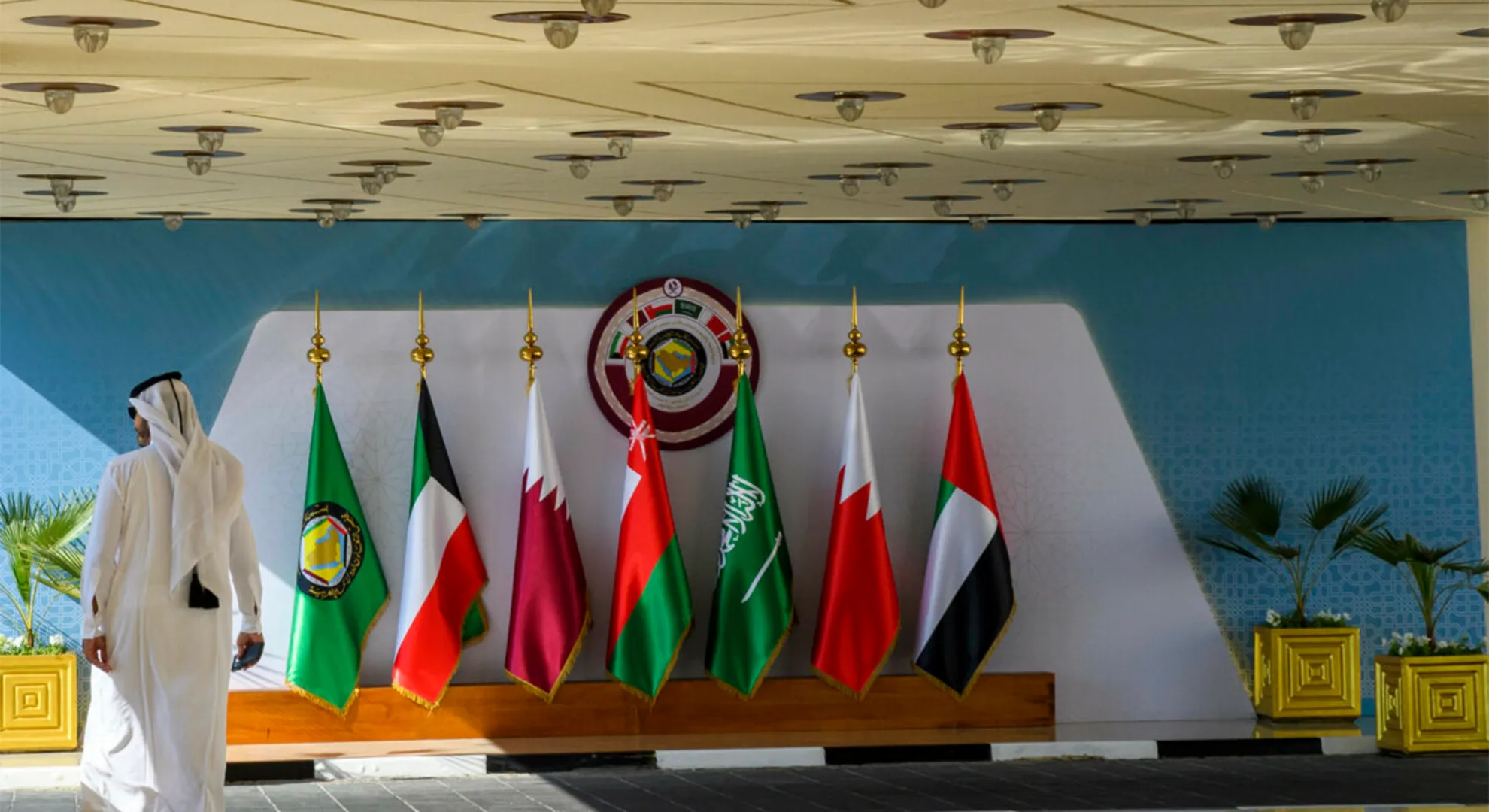
Specialists are urging Gulf nations to strengthen their own defence systems, improve cooperation among GCC members and expand relationships with a wider range of international partners, enabling them to respond more effectively as security challenges and regional risks continue to change.
Gulf Countries Seek Stronger Defence Capabilities Amid Changing Regional Threats
Gulf countries need to build stronger defence capabilities of their own while continuing to maintain close security relations with the United States, experts said during a panel discussion at the Hili Forum.
The discussion focused on how the security environment in the Gulf is changing and what countries in the region need to do to prepare for a wider range of potential threats. While there was broad recognition of the importance of developing national and regional capabilities, the panellists also stressed that the United States continues to provide military and strategic capabilities that would be difficult for other partners to replace in the short term.
The debate therefore centred on finding the right balance between self-reliance and international cooperation.
For Gulf states, greater defence independence does not necessarily mean ending established partnerships with Washington. Instead, it can involve improving domestic military capabilities, strengthening cooperation among members of the Gulf Cooperation Council, expanding relationships with other friendly countries and developing the ability to respond more quickly to threats without always depending on external intervention.
Iran Remains a Major Long-Term Concern
Prof. Abdulkhaleq Abdulla, Non-Resident Senior Associate at the Emirates Center for Strategic Studies and Research, identified Iran as the principal long-term security challenge facing the Gulf.
He argued that the scale and complexity of the threat meant that individual Gulf states could not reasonably expect to manage it entirely on their own.
According to Abdulla, national defence remains essential, but it must form part of a broader security framework. Gulf countries need to combine their own capabilities with regional cooperation and support from strategic partners.
He stressed that the external security dimension remains relevant and is likely to become even more important in the years ahead.
The argument reflects a longstanding reality for Gulf states. Although individual countries have invested heavily in modern military equipment and increasingly sophisticated defence systems, the region faces security challenges that can extend across national borders.
Missile threats, drones, maritime security concerns and geopolitical tensions can affect several countries simultaneously. A purely national response may therefore be insufficient when a crisis develops rapidly or involves multiple directions of attack.
At the same time, Abdulla pointed to the UAE as an example of how a Gulf country can demonstrate significant independent capability.
He highlighted the country’s ability to respond to serious attacks and said the UAE had shown that it could, in certain circumstances, defend itself against severe threats.
The UAE’s experience illustrates an important part of the wider discussion. Building national capabilities does not necessarily conflict with maintaining strategic relationships with major powers.
Instead, stronger domestic defence capabilities can give Gulf states greater flexibility when dealing with security challenges.
Independence Does Not Mean Isolation
One of the main themes emerging from the panel was that greater defence autonomy should not be interpreted as a decision to abandon the United States.
The Gulf states may want to reduce vulnerabilities and improve their ability to act independently, but the panellists did not suggest that China, Russia or other international powers could immediately take Washington’s place in the region’s security architecture.
The United States continues to possess major advantages in areas such as long-range military deployment, intelligence, surveillance, logistics and the ability to move substantial military resources into the region quickly.
For Gulf countries, these capabilities remain important because regional crises can develop rapidly.
At the same time, uncertainty about future US policy has encouraged Gulf governments to consider how much greater flexibility they should have in managing their own security.
That has contributed to growing interest in domestic defence industries, regional cooperation and relationships with additional international partners.
The objective is not necessarily to choose one external power over another. Rather, Gulf countries are increasingly looking for a broader network of relationships that can provide economic, technological and security benefits.
Low-Cost Weapons Are Changing the Equation
Firas Maksad, Managing Director of the Middle East and North Africa Practice at Eurasia Group in the United States, drew attention to another major development: the growing effectiveness of relatively inexpensive weapons.
He described the phenomenon as a “democratisation of violence”, referring to the way relatively low-cost technologies can now create challenges that require extremely expensive systems to counter.
Drones are one of the clearest examples.
A relatively inexpensive unmanned aircraft can potentially force an opponent to deploy a missile or other sophisticated defensive system costing hundreds or thousands of times more.
That creates a difficult economic equation for countries investing in air and missile defence.
If a low-cost drone can be neutralised only by a very expensive interceptor, repeatedly defending against such attacks can place significant financial pressure on the defender.
The challenge becomes even more complicated when an attacker uses large numbers of inexpensive systems.
Traditional defence models were often based on the assumption that sophisticated weapons would be countered by similarly advanced and expensive systems. The spread of relatively cheap drones and other asymmetric technologies is challenging that assumption.
For Gulf states, this means defence planning increasingly needs to consider not only the quality of weapons but also the cost of defending against them.
The Rise of Asymmetric Warfare
The changing cost relationship between offensive and defensive systems could have major implications for Gulf security.
A country may possess advanced aircraft, missile systems and radar networks, but those capabilities can still face pressure from cheaper technologies that are easier to produce and deploy.
Drones can be used for surveillance, attacks and other military purposes, while their relatively low cost can make them attractive to states and non-state groups.
This has pushed air defence higher on the regional security agenda.
Gulf governments have already invested heavily in sophisticated systems designed to detect and intercept missiles and aircraft. The growing use of drones adds another layer to that challenge.
Defence planners now have to consider how to protect critical infrastructure and population centres against threats that may be smaller, cheaper and more numerous than traditional weapons.
This could encourage greater investment in technologies such as electronic warfare, counter-drone systems, improved radar networks and less expensive interception methods.
Reducing Vulnerability Through Local Capability
Maksad also addressed the question of how Gulf states should respond to uncertainty surrounding US policy.
One possible answer is to develop stronger domestic capabilities so that national security does not depend excessively on decisions made outside the region.
Building local defence industries can contribute to that objective by improving access to equipment, technology, maintenance and expertise.
However, Maksad cautioned against interpreting diversification simply as a choice between Washington, Beijing and Moscow.
He suggested that Gulf countries have opportunities to work with a wider group of international partners, particularly middle powers that can contribute to defence, technology and economic development.
This broader approach could give Gulf states additional options while allowing them to maintain their longstanding relationships with the United States.
Diversification can therefore be viewed as expanding the number of available partnerships rather than replacing one major ally with another.
Middle Powers Gain Greater Importance
The growing role of countries such as Türkiye and Pakistan illustrates this changing approach.
Both countries have developed military capabilities and defence industries that can contribute to Gulf security cooperation in different ways.
Their involvement could provide Gulf states with additional expertise, training opportunities, technology partnerships and defence relationships.
However, such partnerships have limitations.
Dr. Zafer Al-Ajmi, Executive Director of the Gulf Monitoring Group in Kuwait, noted that countries such as Pakistan and Türkiye could not replicate the United States’ ability to deploy large military forces over long distances and move substantial capabilities into the Gulf on short notice.
This distinction is important.
Diversifying partnerships can strengthen the region’s overall security network, but it does not automatically create an alternative to American military power.
Different partners offer different strengths.
One country may provide defence manufacturing expertise, another may contribute military personnel or training, while another may offer diplomatic or technological support.
The United States, meanwhile, retains distinctive advantages in large-scale military deployment and regional power projection.
Five Layers of Gulf Defence
Al-Ajmi described Gulf security as a system involving five interconnected levels.
The first is the national level, where individual countries maintain their own armed forces and defensive systems.
The second involves collective security through the Gulf Cooperation Council.
The third consists of international allies that provide additional military and strategic support.
The fourth concerns wider Arab defence arrangements.
The fifth includes relationships with friendly countries outside those structures.
This layered model reflects the increasingly complex nature of Gulf security.
No single institution or partnership is necessarily capable of addressing every potential threat.
National forces provide immediate defensive capabilities. GCC cooperation can help coordinate responses between neighbouring states. International allies can provide additional military resources and strategic support, while relationships with other Arab and friendly countries can broaden the region’s security network.
The value of such a structure is that weaknesses at one level can potentially be supplemented by capabilities at another.
Air Defence Moves to the Top of the Agenda
Al-Ajmi said recent developments had already influenced the military thinking of Gulf countries, particularly by placing air defence at the forefront of national security planning.
The change reflects the growing range of aerial threats confronting the region.
Modern Gulf cities contain critical infrastructure such as airports, energy facilities, ports, industrial sites and densely populated urban areas. Protecting these assets requires the ability to detect and respond to different types of aerial threats.
The increasing use of drones has made the challenge more complicated because conventional air-defence systems may not always be the most cost-effective answer to small, low-flying and relatively inexpensive targets.
Gulf states therefore face the task of developing layered defence systems capable of addressing threats at different speeds, altitudes and costs.
This could involve combining traditional missile-defence systems with newer counter-drone technologies and other defensive tools.
The Importance of GCC Cooperation
While national capabilities are important, the experts also stressed the need for stronger coordination among Gulf countries.
The geography of the region means that threats do not necessarily stop at national borders.
A missile or drone launched from one location can potentially affect several neighbouring states, while disruptions to shipping or critical infrastructure can have consequences across the Gulf.
Greater information sharing, coordinated surveillance and compatible defence systems could therefore improve the region’s ability to respond collectively.
GCC countries have already developed various mechanisms for cooperation, but the changing threat environment creates additional incentives to deepen that coordination.
Joint exercises, shared early-warning systems and closer communication between defence authorities could help strengthen collective preparedness.
At the same time, greater cooperation could allow countries to make more efficient use of their existing resources.
Instead of each state developing completely separate capabilities, regional coordination could help create complementary defence arrangements.
Technology Is Becoming Central to Defence Planning
The evolution of military technology is another reason Gulf countries are reassessing their defence strategies.
The increasing availability of drones, precision weapons and other relatively accessible technologies means that military threats can emerge from a wider range of actors.
Defence systems therefore need to become more adaptable.
The traditional model of matching one sophisticated weapon against another may no longer be sufficient.
Gulf states may increasingly need systems capable of detecting and neutralising large numbers of inexpensive threats without exhausting extremely costly defensive resources.
This could lead to greater interest in artificial intelligence, automated surveillance, electronic warfare and other technologies that can improve the speed and efficiency of defence operations.
Developing these capabilities domestically could also strengthen national technological expertise.
Balancing Strategic Partnerships
For Gulf countries, the challenge is to expand their options without weakening relationships that remain strategically important.
The United States continues to be a central security partner for the region, particularly because of its ability to provide military support on a large scale.
At the same time, Gulf states have strong incentives to build additional relationships.
Working with countries such as Türkiye and Pakistan can contribute to a broader security ecosystem, while cooperation with other international partners can support economic development and technological advancement.
The emerging strategy is therefore one of balance.
Rather than depending completely on a single external power, Gulf states can seek a combination of national capabilities, GCC coordination and international partnerships.
Such an approach could give governments greater freedom to respond to different types of crises.
The UAE’s Position in the Regional Security Picture
The UAE has increasingly focused on developing its own defence capabilities while maintaining relationships with major international powers.
The country’s ability to respond independently to threats was highlighted during the Hili Forum discussion as evidence of the progress made in strengthening national deterrence.
However, national capability does not eliminate the value of alliances.
The UAE, like other Gulf states, operates within a broader regional and international security environment.
The ability to act independently in some situations can complement, rather than replace, strategic partnerships.
That distinction is likely to remain important as Gulf countries continue to reassess their security policies.
A More Flexible Defence Model
The overall message from the panel was that Gulf security is moving toward a more diversified model.
National defence remains the foundation, but it is increasingly being supported by regional cooperation and a wider network of international relationships.
The approach recognises that different threats require different responses.
A major conventional attack may require large-scale military support from powerful allies. A drone attack may require a cost-effective counter-drone system. A regional crisis may require GCC coordination, while a long-term technological challenge may depend on partnerships with countries that have specialised expertise.
This makes flexibility increasingly important.
The Gulf cannot assume that future threats will resemble those of the past.
Military planners must consider a wider range of scenarios and develop capabilities that can be adapted as circumstances change.
Preparing for an Uncertain Security Environment
The experts’ comments point toward a broader transformation in how Gulf countries approach national security.
The goal is not complete military isolation or the removal of American influence from the region.
Instead, Gulf states appear increasingly interested in creating greater room for independent action while preserving the strategic advantages provided by established alliances.
That means improving national defence industries, strengthening GCC cooperation, investing in technologies capable of countering new threats and developing relationships with a wider range of friendly states.
At the same time, the United States is likely to remain an important part of the region’s security architecture because of its unique military reach and ability to deploy substantial forces rapidly.
Countries such as Türkiye and Pakistan can contribute valuable capabilities, but they do not currently possess the same level of global military reach.
The emerging Gulf strategy can therefore be understood as one of layered security.
National capabilities provide the first line of defence. GCC coordination adds a collective dimension. The United States and other major allies provide additional strategic depth, while relationships with Arab and friendly states broaden the network further.
This structure gives Gulf countries more options when responding to crises.
Building Security Through Multiple Options
The changing nature of threats means that flexibility may ultimately prove more important than reliance on any single defence arrangement.
Low-cost drones, asymmetric weapons and rapidly evolving technologies have changed the economics of modern conflict. At the same time, geopolitical uncertainty has encouraged Gulf countries to examine how they can become more capable of managing threats independently.
The experts at the Hili Forum did not present this as a choice between self-reliance and American partnership.
Instead, the discussion suggested that the two objectives can exist together.
Gulf states can strengthen their national military capabilities while continuing to work closely with Washington. They can deepen GCC cooperation while expanding relationships with middle powers. They can invest in sophisticated defence systems while also searching for affordable ways to counter inexpensive weapons.
The result would be a more flexible regional security structure capable of responding to different types of challenges.
For the Gulf, the central task is therefore not to predict exactly where the next threat will come from. It is to ensure that governments have enough capabilities, partnerships and coordination mechanisms to respond effectively when circumstances change.
As regional security challenges become more complex, building those layers of protection could become increasingly important to the stability of the Gulf.
Moving Towards a Modular Security Strategy
A more adaptable approach to Gulf security could give regional governments greater freedom to respond to different crises, according to Dr. Khalid Al-Jufairi, Adjunct Associate Professor of International Politics at Georgetown University in Qatar.
Speaking during the discussion, Al-Jufairi proposed what he described as a “modular” model rather than a conventional layered security structure.
His argument centres on flexibility. Instead of building the region’s entire defence architecture around a fixed group of countries, suppliers or institutions, Gulf states could maintain access to a variety of capabilities and decide which partners to rely on depending on the circumstances of a particular crisis.
The idea recognises that no single security arrangement is likely to be equally effective in every situation.
A major military confrontation may require one set of capabilities, while a cyber incident, maritime disruption, drone attack or diplomatic crisis could require an entirely different response.
Under a modular system, Gulf countries would have the ability to assemble the most appropriate combination of national resources, regional cooperation and international support for each situation.
Flexibility Rather Than Complete Independence
Al-Jufairi’s proposal does not suggest that Gulf states should attempt to eliminate their dependence on foreign partners.
Instead, the objective would be to reduce excessive dependence on any one country, supplier or security provider.
Complete self-sufficiency may be unrealistic, particularly given the sophisticated military technologies and extensive resources required to maintain modern defence systems.
The more practical goal is to ensure that dependence does not remove strategic choice.
If a Gulf country has relationships with several suppliers and defence partners, it can potentially make decisions based on the circumstances rather than being forced to rely on a single source.
That flexibility could become particularly important during a rapidly developing crisis.
A government may need additional air-defence capabilities in one situation, intelligence or surveillance support in another, and diplomatic assistance in a third.
A modular system would allow different partners to contribute where they are most capable.
This would give Gulf governments greater political and operational room to manoeuvre.
Expanding the Number of Available Options
The concept also changes the way diversification is understood.
Diversification is sometimes viewed simply as purchasing weapons or equipment from multiple countries. Al-Jufairi’s approach suggests that it should be broader than that.
Gulf states could develop relationships that provide different forms of assistance, including defence technology, intelligence, training, logistics, industrial cooperation and diplomatic support.
The value of a partner would therefore not be determined solely by its ability to supply military hardware.
A country with advanced manufacturing capabilities might contribute technology and production expertise. Another could provide training or specialised military capabilities. A third might offer diplomatic support or logistical assistance.
The Gulf could then draw on these different relationships depending on the nature of the challenge.
This approach would also encourage governments to assess their partnerships in terms of capabilities rather than simply political alignment.
Why Choice Matters During a Crisis
Having multiple options can be particularly valuable when established supply chains or alliances are disrupted.
A crisis may affect the availability of certain weapons, spare parts, transportation routes or other military resources.
If a country depends almost entirely on one supplier, replacing those resources could be difficult.
However, if alternative relationships have already been established and tested, governments may have greater flexibility.
The same principle applies to political relationships.
A diverse network of international partnerships can provide additional diplomatic options when tensions rise.
For Gulf countries, this could mean maintaining strong ties with the United States while also developing relationships with other countries that can contribute to specific security or economic requirements.
The objective is therefore not necessarily to replace existing alliances, but to create additional choices around them.
Technology as a Foundation of Future Security
Dr. Dania Thafer, Executive Director of the Gulf International Forum in the United States, highlighted another critical element of long-term security: access to technology and the development of local industrial capabilities.
For Gulf states, acquiring advanced defence systems is only one part of the challenge.
The region also needs to consider how it can develop the expertise, infrastructure and industrial capacity required to maintain and eventually produce more of its own technologies.
Thafer argued that Gulf governments need a long-term strategy for working with international partners that are prepared to share technology.
Technology transfer can potentially provide benefits that go beyond the immediate acquisition of equipment.
When international companies and governments cooperate on technology development, local industries can gain knowledge, technical expertise and manufacturing capabilities.
Over time, this can help strengthen domestic defence sectors and reduce some forms of external dependence.
From Buying Equipment to Building Capability
The distinction between purchasing technology and developing technological capability is becoming increasingly important.
Buying a sophisticated system can provide an immediate defence advantage, but the long-term value may be greater if local personnel and companies also gain the knowledge needed to operate, maintain and develop similar technologies.
That could support the creation of domestic research and development capabilities.
It could also help Gulf countries respond more quickly to emerging threats because local companies and institutions would have greater technical expertise.
The development of these industries may take years, however.
For that reason, technology partnerships need to be designed as long-term relationships rather than short-term procurement arrangements.
Governments may need to consider whether international partnerships provide opportunities for local training, research cooperation, manufacturing and knowledge transfer.
Such arrangements could gradually strengthen national capabilities while maintaining access to international expertise.
Security Is No Longer Just About Borders
Thafer also pointed to a wider transformation in the meaning of national security.
Traditional defence planning has often concentrated on protecting physical territory, military bases and strategic installations.
Those priorities remain important, but modern economies are increasingly dependent on networks and digital systems.
As a result, protecting connectivity has become an essential part of national security.
Connectivity includes telecommunications networks, digital infrastructure, transportation systems, energy networks, financial platforms and other systems that allow modern economies to function.
An attack or disruption targeting one of these systems could have consequences far beyond a traditional battlefield.
A country could therefore face serious security problems even when its physical borders remain intact.
Protecting Critical Systems
For Gulf states, this issue is especially relevant because the region contains major energy, transportation, financial and logistics hubs.
Ports connect the Gulf to international trade networks. Airports support tourism and business activity. Energy infrastructure is central to national economies. Digital systems connect government agencies, companies and individuals.
Disrupting any of these systems could create significant economic and social consequences.
Security planning therefore needs to consider how these networks can be protected and how quickly they can be restored if they are disrupted.
This requires cooperation between governments and the private sector because much of the infrastructure supporting connectivity is operated by commercial organisations.
Cybersecurity, physical protection, redundancy and emergency recovery planning can all become components of a broader national-security strategy.
The Importance of Resilience
The focus on connectivity also reinforces the importance of resilience.
It may not always be possible to prevent every attack or disruption. A more realistic objective is to ensure that critical systems can continue operating or recover quickly when problems occur.
That could involve developing backup systems, maintaining alternative communication channels and ensuring that essential services are not dependent on a single point of failure.
For Gulf governments, such measures can complement traditional military capabilities.
A strong defence force may deter or respond to a conventional attack, but national resilience also depends on the ability of civilian and economic systems to withstand disruption.
This creates a much broader definition of security.
Deterrence Remains Important
The panel also considered the role of deterrence.
A credible deterrent requires potential adversaries to believe that aggression will carry significant costs.
National military capabilities contribute to that calculation, as do alliances and collective defence arrangements.
However, deterrence can also involve diplomacy and communication.
If governments have established channels for dialogue, they may have more opportunities to manage tensions before they escalate.
The combination of military preparedness and diplomacy can therefore be an important part of a comprehensive regional security strategy.
Gulf countries face the challenge of demonstrating that they are capable of defending themselves while also avoiding unnecessary escalation.
Diplomacy as Part of the Security Architecture
The discussion also touched on the possibility of a future regional security framework that could involve Iran.
Such a framework would represent a different dimension of Gulf security.
Military preparedness can help states respond to threats, but long-term regional stability may also depend on diplomatic mechanisms capable of reducing misunderstandings and managing disputes.
The prospect of broader regional dialogue does not eliminate the need for defence capabilities.
Instead, diplomacy and deterrence can operate alongside one another.
Countries may seek to maintain strong defensive capabilities while also exploring mechanisms that can reduce the risk of conflict.
This combination could potentially create a more stable environment in which security competition is managed rather than allowed to escalate uncontrollably.
Different Views, Similar Strategic Direction
The panel brought together experts with different perspectives on how Gulf security should evolve.
Their proposals were not identical.
Some emphasised national military capabilities, while others highlighted GCC cooperation, international alliances, technological development or diplomatic engagement.
Al-Jufairi’s modular concept placed particular emphasis on flexibility and the ability to choose between different partners.
Thafer focused more strongly on technology access, industrial development and the need to protect the systems that support modern economies.
Other participants in the broader discussion stressed the continuing importance of the United States and the value of regional coordination.
Despite these differences, the ideas share a common direction.
The Gulf’s future security architecture is unlikely to depend on a single solution.
A Network Rather Than a Single Pillar
Instead, the region could gradually develop a security network made up of several interconnected capabilities.
National defence would remain the foundation.
GCC cooperation could provide a collective dimension.
The United States would continue to play a major role because of its military reach and strategic capabilities.
Other international partners could provide specialised technologies, training, manufacturing expertise and additional diplomatic options.
Domestic industries could increasingly contribute to defence production and technological innovation.
Diplomatic engagement could provide another tool for managing tensions.
Together, these elements could create a system that is less vulnerable to the failure or withdrawal of any single component.
The Role of the United States
The discussion does not suggest that the United States is becoming irrelevant to Gulf security.
Instead, the changing strategy appears to involve maintaining American support while reducing the risks associated with excessive dependence.
The US has capabilities that would be difficult for other partners to reproduce quickly, particularly in areas such as military logistics, long-distance deployment, intelligence and advanced defence technologies.
For that reason, Gulf states are likely to continue valuing their security relationships with Washington.
At the same time, stronger domestic capabilities can give those states greater confidence and flexibility within those partnerships.
A more capable Gulf can potentially act as a stronger partner rather than simply a security consumer.
Stronger GCC Cooperation
Regional coordination is another important part of the emerging model.
Gulf countries face many common challenges, meaning that cooperation can increase the effectiveness of individual national capabilities.
Shared information, coordinated planning and compatible defence systems could help governments respond more efficiently to threats that cross national boundaries.
Stronger cooperation could also make the region more resilient by allowing countries to support one another during emergencies.
The development of collective capabilities does not necessarily require countries to surrender national control.
Instead, governments can coordinate areas where cooperation provides clear benefits while retaining their own independent defence structures.
A Long-Term Strategy Is Needed
The experts’ proposals also point to the importance of long-term planning.
Security partnerships, technology transfer and industrial development cannot be created immediately when a crisis begins.
They require years of investment, negotiations, training and institutional development.
The same is true of domestic defence capabilities.
Building a sophisticated local industry requires skilled workers, research institutions, manufacturing facilities and relationships with international technology providers.
Gulf states therefore need to think beyond immediate procurement requirements and consider what kind of security capabilities they want to possess over the next decade and beyond.
Preparing for Different Types of Crises
A modular security model could be particularly useful because modern crises are increasingly diverse.
A country may face a military confrontation, a drone attack, a cyber incident, a disruption to shipping or a threat to critical infrastructure.
Each challenge may require a different combination of resources.
A flexible system allows governments to respond according to the problem rather than relying on a single predetermined formula.
That is the central strength of the modular idea.
Instead of asking which one country or organisation should guarantee Gulf security, policymakers can ask which combination of national, regional and international capabilities is most appropriate for a particular situation.
Toward a More Adaptable Gulf Security System
The discussion at the Hili Forum ultimately highlighted a fundamental shift in the way Gulf security is being considered.
The objective is no longer simply to acquire more weapons or depend on a powerful external ally.
Security increasingly involves developing choices.
Those choices can include domestic military capabilities, collective GCC arrangements, partnerships with the United States and other countries, access to advanced technologies, local industrial development and diplomatic engagement.
The more options Gulf governments possess, the more flexibility they may have when confronting an uncertain regional environment.
The panel was moderated by Mohamed Al Dhuhoori, a researcher specialising in US and Middle Eastern affairs at the Emirates Center for Strategic Studies and Research.
While the experts approached the issue from different angles, their arguments broadly converged around a pragmatic objective: Gulf states should become more capable of acting independently without abandoning the partnerships that remain valuable.
That could mean developing stronger national defence forces, improving coordination between GCC members, expanding international relationships and investing in domestic technological expertise.
At the same time, the United States is likely to remain a significant part of the regional security equation.
The emerging model is therefore less about choosing between independence and dependence and more about creating the flexibility to manage both.
A resilient Gulf security architecture would give governments enough national strength to respond to threats, sufficient regional coordination to act collectively and a broad enough network of international relationships to obtain additional support when necessary.
In an increasingly unpredictable security environment, that ability to choose could become one of the region’s most important strategic assets.