Trump has intensified economic measures targeting Iran, while issuing a strong warning to governments and entities that continue providing support to Tehran, signalling that those assisting the country could face serious financial or diplomatic repercussions.
Trump Steps Up Economic Pressure on Iran and Threatens Consequences for Those Aiding It.
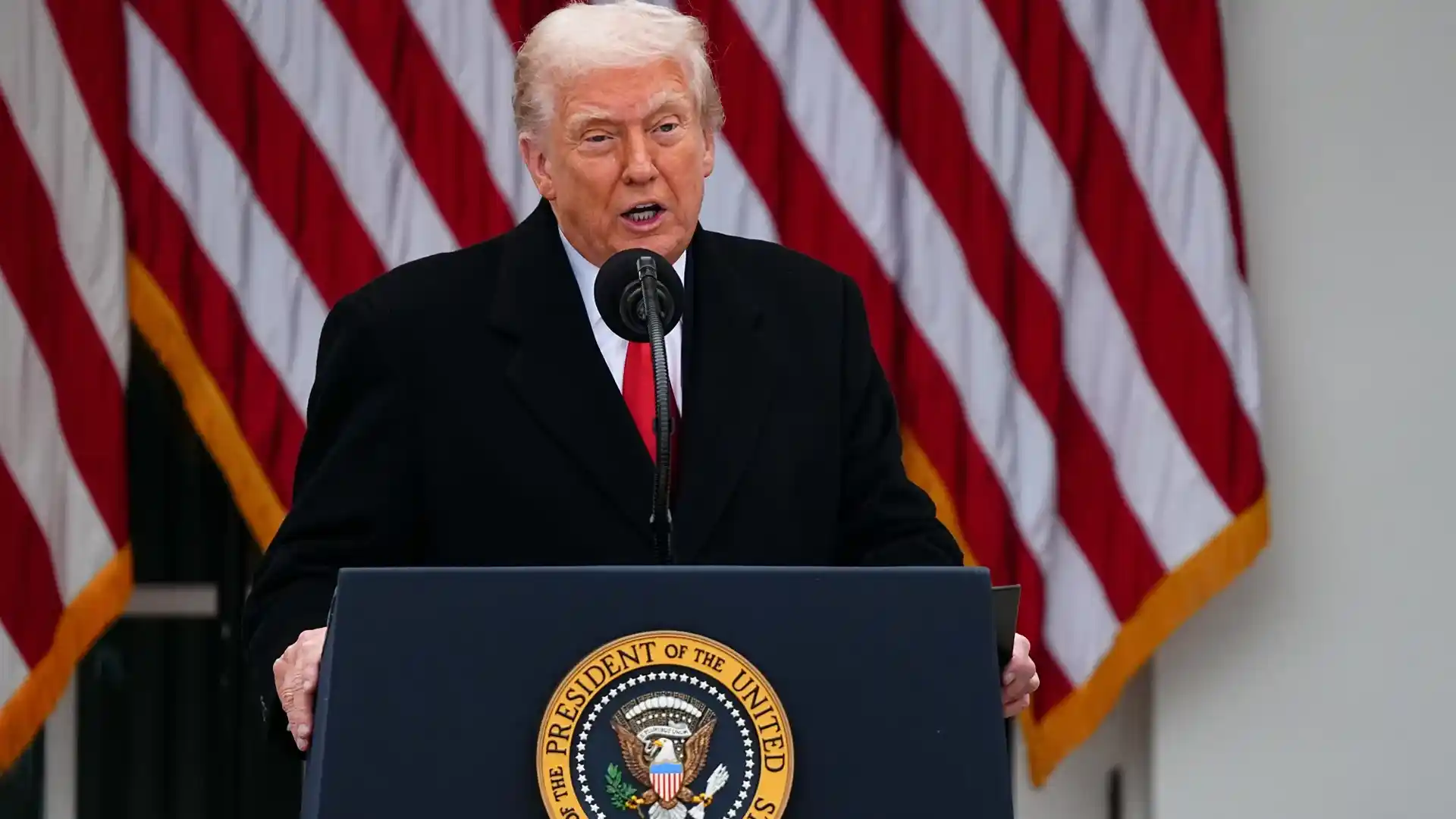
Describing the moment as an “Economic D-Day,” Trump called on allied nations to join Washington’s campaign against Iran, urging them to cooperate in cutting Tehran off economically and helping the United States counter what he described as a growing Iranian threat.
Trump announces fresh economic campaign against Iran, warns countries supporting Tehran
US President Donald Trump has announced a new economic campaign against Iran, describing it as a major expansion of pressure on Tehran as tensions between the two countries continue.
The announcement marks a shift toward increasing financial and economic pressure alongside the wider confrontation with Iran.
Trump described the initiative as an unprecedented effort designed to isolate Iran economically. He also warned governments, companies and institutions in other countries that they could face serious consequences if they provide support that helps Tehran maintain access to international finance, trade or other essential services.
The US president made the announcement in a post on Truth Social, where he outlined his administration’s position on countries and organisations that continue to maintain links with Iran.
Warning issued to Iran’s international partners
Trump said the United States would target entities that provide what he described as a financial or economic lifeline to Iran.
His warning extended beyond governments. He referred to financial institutions, businesses, airports and government bodies that could potentially assist Tehran.
According to Trump, countries that allow such support to continue could themselves become subject to significant economic measures from Washington.
The warning represents an attempt to broaden the economic pressure campaign beyond Iran itself.
Rather than limiting sanctions or other measures to Iranian entities, Trump indicated that governments and organisations in third countries could also face consequences if they facilitate activities that benefit Tehran.
Trump calls campaign ‘Economic D-Day’
Trump described the new initiative as an “Economic D-Day”, using the phrase to underline the scale and significance he attaches to the campaign.
He called on countries aligned with the United States to participate in efforts aimed at isolating Iran.
The president urged allies to cooperate with Washington in restricting Iran’s economic options and countering what he described as an Iranian threat.
His appeal suggests that the US administration wants partner countries to take a coordinated approach rather than allowing Iran to maintain access to alternative economic channels through international partners.
Focus on economic isolation
The announcement places economic isolation at the centre of Trump’s latest strategy toward Iran.
The US president said the measures would represent an unusually forceful campaign against Tehran and claimed they would significantly weaken Iran’s ability to operate internationally.
Trump also linked the economic campaign to Iran’s military and regional activities.
He argued that cutting off economic resources would reduce Tehran’s ability to project power and support what he characterised as terrorist activity around the world.
The statement reflects Trump’s broader approach of combining diplomatic pressure, economic restrictions and military pressure in dealing with Iran.
Trump says Iran missed an opportunity
Trump said the new measures followed what he described as Iran’s failure to take an opportunity to reach an agreement with the United States.
According to the US president, Tehran had been given an opening to negotiate but did not take advantage of it.
He presented the economic campaign as a consequence of that failure and suggested that Washington would now intensify its pressure.
The comments continue a pattern of statements from Trump in which he has argued that Iran has been given opportunities to reach an agreement but has failed to respond in the way Washington wanted.
Claims about Iran’s military capabilities
In his latest statement, Trump repeated claims about the condition of Iran’s military infrastructure.
He said Iran was “hanging by a thread” and claimed that significant portions of the country’s military capabilities had already been destroyed.
The president specifically referred to Iran’s navy, air force and military manufacturing facilities.
He also claimed that the country’s currency had lost most of its value.
These statements were presented by Trump as evidence that Iran is under severe pressure and has limited capacity to continue the confrontation.
Economic pressure and military confrontation
The latest announcement comes as the wider conflict involving the US and Iran continues to affect the region.
While military developments have remained a central part of the confrontation, economic pressure provides Washington with another mechanism for attempting to influence Tehran.
Economic sanctions and restrictions can affect a country’s access to international financial systems, trade networks and commercial services.
Trump’s latest warning appears designed to discourage third-party organisations from helping Iran bypass those restrictions.
The threat of secondary economic consequences could increase pressure on businesses and governments that maintain commercial relationships with Tehran.
Warning extends beyond Iran
A significant element of Trump’s announcement is that the potential consequences would not necessarily be limited to Iranian organisations.
His warning was directed at countries that permit their institutions to provide assistance to Iran.
That could include financial services, commercial activity, transportation links or other forms of support.
By threatening consequences for third parties, Washington could seek to make international companies and governments reconsider their dealings with Tehran.
Such an approach can make it more difficult for a sanctioned country to rely on external partners to maintain economic activity.
Call for allies to cooperate
Trump also called on US allies to support the new economic campaign.
His appeal was framed as a collective effort to isolate Iran and counter what he regards as a threat from Tehran.
The call for cooperation indicates that Washington wants the measures to have an impact beyond the United States.
If allied countries adopt similar restrictions, the economic pressure on Iran could potentially become broader.
However, the extent to which individual governments respond to the appeal could vary depending on their economic relationships with Iran and their own foreign-policy priorities.
Pressure on businesses and financial institutions
Trump’s warning has implications for companies that conduct business involving Iran.
Financial institutions could face particular scrutiny because international transactions often depend on banks and payment networks in multiple countries.
Businesses with commercial interests in Iran may also need to consider whether continuing those activities could expose them to US measures.
The same concern could apply to companies involved in transportation, logistics and other services.
Trump’s reference to airports and government entities suggests that the campaign could extend across multiple sectors.
Attempt to restrict Iran’s economic options
The broader objective of the strategy appears to be reducing the number of ways Iran can access international resources.
Economic isolation can involve restrictions on financial transactions, trade, investment and access to services.
By warning countries against providing support, Washington could seek to prevent Tehran from finding alternative routes around US restrictions.
Trump’s language indicates that the administration intends to use economic pressure as a major component of its strategy.
Tehran’s response remains important
Iran’s response to the announcement could determine how the situation develops.
Trump’s comments suggest that Washington believes Iran is already under substantial military and economic pressure.
Iran, however, has continued to reject or dispute various US claims regarding the conflict and its capabilities.
The response from Tehran and other regional actors will therefore be closely watched as the latest economic measures take shape.
Regional implications
The economic campaign could also have consequences beyond the US-Iran relationship.
Countries across the Middle East maintain varying degrees of trade and economic connections with Iran.
Businesses operating in the region may need to assess how the new US measures affect existing relationships.
Financial institutions and transport companies could also face additional compliance requirements if Washington expands restrictions or imposes penalties on entities accused of assisting Tehran.
The potential impact could therefore extend to companies and governments that are not directly involved in the conflict.
A broader pressure strategy
Trump’s latest announcement fits into a wider strategy aimed at putting maximum pressure on Iran.
The US president has repeatedly argued that Tehran must make concessions and accept a deal with Washington.
His latest comments suggest that, in the absence of an agreement, the administration intends to increase the economic cost facing Iran.
The president’s use of strong language also signals that the United States intends to portray the campaign as a decisive moment in the confrontation.
Calling it an “Economic D-Day” was intended to emphasise the seriousness of the measures and the importance Trump places on allied participation.
Trump links economic measures to Iran’s global activities
The US president also argued that weakening Iran economically would affect its ability to project influence outside its borders.
He claimed that the measures would reduce Tehran’s capacity to support militant or terrorist activities internationally.
The statement therefore presents the economic campaign as serving two objectives: pressuring the Iranian government directly and restricting its ability to support activities abroad.
Trump described the measures as historic and argued that they could significantly undermine Iran’s capabilities.
Currency concerns
Trump also pointed to the condition of Iran’s currency as evidence of the country’s economic difficulties.
He described the currency as effectively worthless, reinforcing his broader argument that Tehran is already facing severe financial pressure.
Currency weakness can have a major impact on an economy, particularly when combined with restrictions on international trade and access to foreign currency.
However, Trump’s characterisation represents his assessment of the situation and forms part of his argument for intensifying economic pressure.
Iran’s military position
Alongside his economic claims, Trump again highlighted what he described as extensive damage to Iran’s military capabilities.
He said the country’s navy, air force and military production facilities had suffered major destruction.
He used those claims to argue that Iran’s ability to continue the confrontation has been severely weakened.
The president also said Tehran was in an extremely vulnerable position, describing it as being “hanging by a thread”.
The comments were part of his justification for the new economic campaign.
What the new policy could mean
If implemented on a broad scale, the new economic strategy could increase pressure on companies and governments that maintain financial or commercial connections with Iran.
Businesses could face difficult decisions over whether to continue serving the Iranian market.
Governments could also have to balance their relations with Washington against their own economic and diplomatic interests.
For Iran, the campaign could further restrict access to international markets and financial services.
The impact will depend partly on how extensively other countries cooperate with the United States.
Diplomatic consequences
The announcement could also complicate diplomatic efforts between Washington and Tehran.
Trump said the measures were announced after Iran failed to accept an opportunity for an agreement.
The escalation of economic pressure could therefore be intended to encourage Iran to return to negotiations from a weaker economic position.
At the same time, broader sanctions and threats against third countries could make diplomacy more difficult if other governments object to the US approach.
International businesses face uncertainty
Companies with links to Iran may now face greater uncertainty.
Businesses may need to review their relationships with Iranian partners, financial institutions and suppliers to determine whether they could fall within the scope of new US measures.
For multinational companies, compliance with US restrictions can be particularly important because violating sanctions may expose them to significant financial and legal risks.
Trump’s warning therefore has implications for international commerce as well as governments.
The next phase of the conflict
The economic announcement adds another dimension to an already complex confrontation.
Military pressure, diplomatic efforts and economic restrictions are now intertwined in the US approach to Iran.
Trump’s comments suggest that Washington is prepared to use financial and commercial pressure on a much broader scale.
Whether the strategy produces negotiations, further escalation or increased international disagreement remains uncertain.
For now, the US president has made clear that he wants allies to participate in an effort to isolate Tehran economically.
Final takeaway
US President Donald Trump has announced a new and intensified economic campaign against Iran, describing it as an unprecedented effort to restrict Tehran’s access to international financial and commercial support.
He warned that countries allowing banks, businesses, airports or government bodies to provide assistance to Iran could face serious economic consequences themselves.
Trump labelled the campaign “Economic D-Day” and called on US allies to join Washington in isolating Iran.
He said the move followed what he described as Iran’s failure to pursue a potential agreement with the United States.
The president also repeated his claims that Iran’s military infrastructure has suffered extensive damage and that its economy, including its currency, is under severe strain.
Trump argued that the new measures would further weaken Tehran’s ability to operate internationally and project power.
The announcement signals that economic pressure is becoming an increasingly important part of Washington’s strategy toward Iran, while also placing additional pressure on countries and businesses that maintain economic links with Tehran.
Is the US-Iran peace agreement still in force?
The temporary understanding reached between the United States and Iran was intended to provide a framework for ending the conflict and creating time for both sides to work towards a more comprehensive agreement.
The US-Iran Memorandum of Understanding (MoU) established an initial 60-day period during which Washington and Tehran were expected to work towards a final settlement. The agreement also included a provision allowing the timeframe to be extended if both sides agreed to prolong it.
However, that deadline passed on August 17 without any publicly announced extension. With no confirmation that the two countries had mutually agreed to continue the arrangement, uncertainty emerged over the status of the interim understanding.
The development came amid increasingly difficult relations between Washington and Tehran, with both sides taking increasingly firm positions over the conditions required to end the conflict.
Deadline passes without an extension
The MoU had provided the two countries with a limited window in which to negotiate a longer-term agreement.
The 60-day period was not necessarily intended to represent an absolute end point, as the document allowed the timeframe to be extended through mutual agreement.
However, when the deadline arrived on August 17, there was no indication that such an extension had been formally agreed.
The absence of an extension raised questions about whether the interim arrangement remained operational and whether the two sides were still working within the framework established by the MoU.
The uncertainty was compounded by comments from US President Donald Trump the following day.
Trump said Iran was not prepared to accept the type of agreement that he believed was necessary.
His remarks suggested that significant differences remained between Washington and Tehran despite earlier efforts to reach a lasting settlement.
Trump signals growing frustration
Trump’s comments reflected a tougher position towards Tehran.
Although the US president had previously spoken about the possibility of negotiations, his latest remarks indicated that he remained dissatisfied with Iran’s position.
Trump has repeatedly argued that any agreement must meet specific US demands and has portrayed Washington as being in a stronger position.
His assessment of Iran’s willingness to negotiate has varied alongside developments in the conflict, creating uncertainty over whether a diplomatic breakthrough remains possible.
The lack of a confirmed extension to the MoU has added another layer of uncertainty.
Iran adopts a more aggressive stance
Iran’s position also appeared to harden as the deadline approached.
On August 17, a senior Iranian official told Reuters that Tehran had decided to move away from what had previously been described as a defensive posture.
According to the official, Iran was preparing to adopt a more offensive approach because efforts to establish a permanent end to the conflict had reached an impasse.
The statement represented a significant escalation in rhetoric from Tehran.
Rather than signalling a willingness to continue indefinitely with the existing arrangement, the Iranian official indicated that the country’s military strategy could become more aggressive if diplomatic efforts failed.
Warning over the Strait of Hormuz
The Iranian official also issued a warning concerning the Strait of Hormuz, one of the world’s most strategically important maritime routes.
Tehran indicated that it was prepared to increase pressure in the waterway and elsewhere across the region if negotiations failed to produce an acceptable outcome.
The official said Iran could launch what was described as a “timely and precise” military operation aimed at challenging the US naval blockade.
Such a development would represent a major escalation because the Strait of Hormuz is a crucial route for global energy shipments.
Any prolonged disruption in the area could have consequences well beyond the immediate US-Iran confrontation.
Why the Strait of Hormuz matters
The Strait of Hormuz connects the Persian Gulf with the Gulf of Oman and the wider Arabian Sea.
Because of its strategic location, events in the waterway can affect shipping, energy markets and regional security.
Iran’s warning therefore carried significance not only for Washington but also for neighbouring Gulf countries and international markets.
The possibility of increased military activity in or around the strait has the potential to raise concerns among shipping companies, energy producers, governments and businesses operating throughout the region.
For countries dependent on energy imports, any sustained disruption could also contribute to higher costs.
Are negotiations still taking place?
Another major question concerns whether Washington and Tehran are still engaged in direct or indirect negotiations.
Throughout the conflict, Trump has maintained that diplomatic efforts were possible or ongoing, even while describing the United States as having achieved a position of strength.
Iran, meanwhile, has at various times disputed claims that active communication with Washington was taking place.
This difference in messaging has made it difficult to determine the precise state of diplomatic contacts between the two governments.
Statements from both sides have frequently provided contrasting descriptions of the situation.
Trump says talks are not happening
On August 18, Trump appeared to provide a much clearer assessment.
The US president said that discussions between Washington and Tehran were not taking place and were not currently scheduled.
The statement represented a notable change from his previous references to negotiations.
Trump’s remarks suggested that there was no active meeting process underway at that point.
The development raised fresh concerns about whether the two governments had moved further away from diplomacy following the expiration of the 60-day period established under the MoU.
Contradictory signals from Washington and Tehran
The situation remains complicated because statements from the two sides have not always matched.
Washington has continued to present itself as being in a strong position while also discussing the possibility of an agreement.
Tehran, on the other hand, has frequently rejected or disputed US statements concerning diplomatic contacts.
This creates uncertainty over whether indirect communication channels remain available even when formal talks are not taking place.
Diplomatic negotiations can sometimes continue through intermediaries even when senior officials are not meeting publicly.
However, Trump’s August 18 statement indicated that there were no US-Iran talks underway or scheduled at that time.
US naval blockade remains in place
In the same statement, Trump also addressed the situation at sea.
He said the US naval blockade was continuing at full strength.
The reference to the blockade adds another significant element to the current standoff.
A naval blockade can place additional economic and logistical pressure on a country by restricting the movement of goods and resources.
Trump’s statement suggested that Washington had no immediate intention of easing that pressure.
Strait of Hormuz remains open
Despite saying that the US blockade remained fully operational, Trump also said that the Strait of Hormuz was open.
That distinction is important because the waterway is critical to international shipping.
An open Strait of Hormuz allows commercial vessels to continue moving through one of the world’s most important maritime passages.
However, the continuing military confrontation means shipping companies and governments remain closely focused on developments in the area.
Even when a major shipping route remains open, heightened military activity can increase insurance costs, create delays and force companies to reassess routes.
Mines reportedly cleared
Trump also said that all water mines in the area had either been removed or detonated.
The statement was presented as another indication that maritime traffic could continue through the waterway.
The removal or destruction of mines would reduce one potential threat to vessels operating in the region.
Nevertheless, the broader security situation remains uncertain because the US and Iran continue to exchange warnings and maintain opposing positions.
No clear final peace settlement
At present, the situation does not point to a clear and lasting peace settlement.
The 60-day period established under the MoU has expired, and there has been no publicly confirmed agreement to extend it.
At the same time, there is no indication that a comprehensive final agreement has been reached.
Trump’s remarks suggest that Washington believes Tehran has not accepted the conditions necessary for a lasting deal.
Iran’s statements indicate that it remains prepared to increase military pressure if diplomacy fails.
What happens next?
The next stage could depend heavily on whether the two countries return to negotiations.
A renewed diplomatic process could potentially create another opportunity for the sides to address their differences.
However, the increasingly confrontational statements from both governments suggest that such a development is far from certain.
Iran’s warning concerning the Strait of Hormuz and Trump’s decision to maintain the naval blockade indicate that military and economic pressure remain central to the current standoff.
The absence of scheduled talks further reduces confidence in an immediate diplomatic breakthrough.
Risk of further regional escalation
The situation also carries implications for other countries in the Middle East.
The Gulf states are geographically close to the conflict and could be affected by developments involving shipping, energy supplies and military operations.
Any escalation around the Strait of Hormuz could have consequences for international trade and oil markets.
Similarly, increased military activity could raise concerns about airspace, maritime security and commercial transportation across the region.
The uncertainty surrounding the expired MoU therefore extends beyond Washington and Tehran.
Economic consequences
The possibility of renewed confrontation could also influence global markets.
The Strait of Hormuz is an important route for energy exports, and any threat to maritime traffic can quickly affect oil prices and market expectations.
Businesses operating in the Gulf may also face higher logistical and insurance costs if security risks increase.
For consumers, prolonged instability could eventually affect energy and transportation costs.
These economic concerns provide another reason why governments and international organisations continue to monitor developments closely.
The diplomatic path remains uncertain
Despite the absence of confirmed talks, diplomacy has not necessarily become impossible.
The history of US-Iran relations demonstrates that communication can resume after periods of intense confrontation.
However, any new negotiations would likely face substantial obstacles.
The two sides continue to disagree over the terms required for a settlement, while military pressure and economic restrictions have further damaged trust.
The expiration of the MoU has made the diplomatic situation even more uncertain.
The significance of August 17
August 17 was an important date because it marked the end of the original 60-day period established under the interim understanding.
The MoU had allowed for an extension if both parties agreed.
No such extension was publicly announced by the deadline.
The absence of an extension means that the original framework can no longer be treated as a straightforward, continuing 60-day arrangement.
That does not necessarily mean all communication between the parties has permanently ended, but it does indicate that the diplomatic process has entered a more uncertain phase.
Trump’s August 18 comments
Trump’s comments one day after the deadline added to the uncertainty.
He said Iran was unwilling to accept the kind of agreement he considered necessary and later stated that there were no US-Iran talks taking place or scheduled.
The comments suggested that Washington was not currently preparing for an immediate diplomatic meeting with Tehran.
At the same time, the US president said the naval blockade remained in place, indicating that economic and military pressure would continue.
Iran’s warning
Iran’s August 17 warning offered a sharply different message.
The Iranian official said Tehran was prepared to move from a defensive strategy toward a more offensive posture.
The official also warned that Iran could take military action around the Strait of Hormuz if diplomatic efforts failed.
Such statements demonstrate how quickly the situation could deteriorate if negotiations remain stalled.
What the current situation means
For now, the clearest conclusion is that the temporary diplomatic framework has reached a critical point.
The 60-day deadline has passed without a publicly announced extension.
There is no confirmed final peace agreement.
Trump says talks are not currently occurring or scheduled.
Iran has warned that it could intensify military activity if diplomacy fails.
Meanwhile, the US naval blockade remains in place, while Trump says the Strait of Hormuz remains open and maritime mines have been cleared or destroyed.
These developments indicate that the conflict remains unresolved.
Final takeaway
The US-Iran Memorandum of Understanding was designed to provide a temporary framework for negotiations, with an initial 60-day period that could be extended if Washington and Tehran mutually agreed.
That deadline expired on August 17, but no extension was publicly confirmed.
The following day, Trump said Iran had failed to agree to the type of settlement he considered necessary. Around the same time, an Iranian official warned that Tehran was prepared to adopt a more aggressive military posture if efforts to achieve a permanent end to the conflict continued to fail.
The Iranian side also warned of possible action around the Strait of Hormuz, while Trump said the US naval blockade remained fully operational.
Trump subsequently stated that there were no talks between Washington and Tehran and that no negotiations were scheduled.
At the same time, he said the Strait of Hormuz remained open and that water mines had been removed or detonated.
Taken together, the developments point to an uncertain diplomatic situation, with no clearly announced final peace agreement and no confirmed extension of the temporary MoU. The possibility of renewed negotiations remains, but the increasingly hard-line statements from both sides suggest that the path towards a lasting settlement remains difficult.