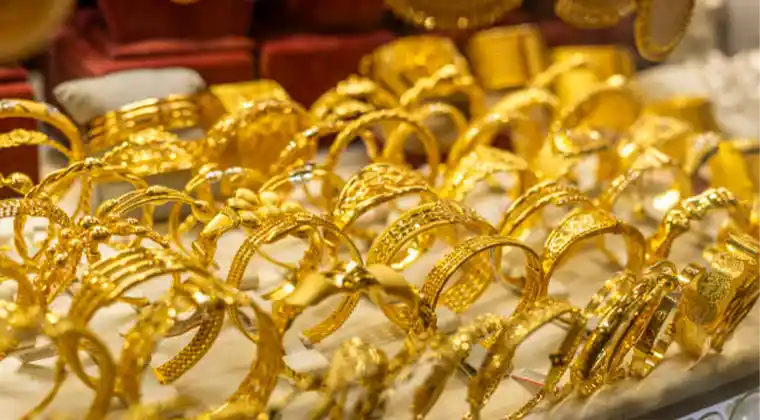
Gold prices in Dubai have risen sharply to Dh541 per gram, recording a notable Dh17.5 increase over the past seven days as stronger market demand and movements in international bullion prices continue to influence local rates.
Dubai Gold Rates Surge to Dh541 a Gram, Marking a Dh17.5 Weekly Increase.
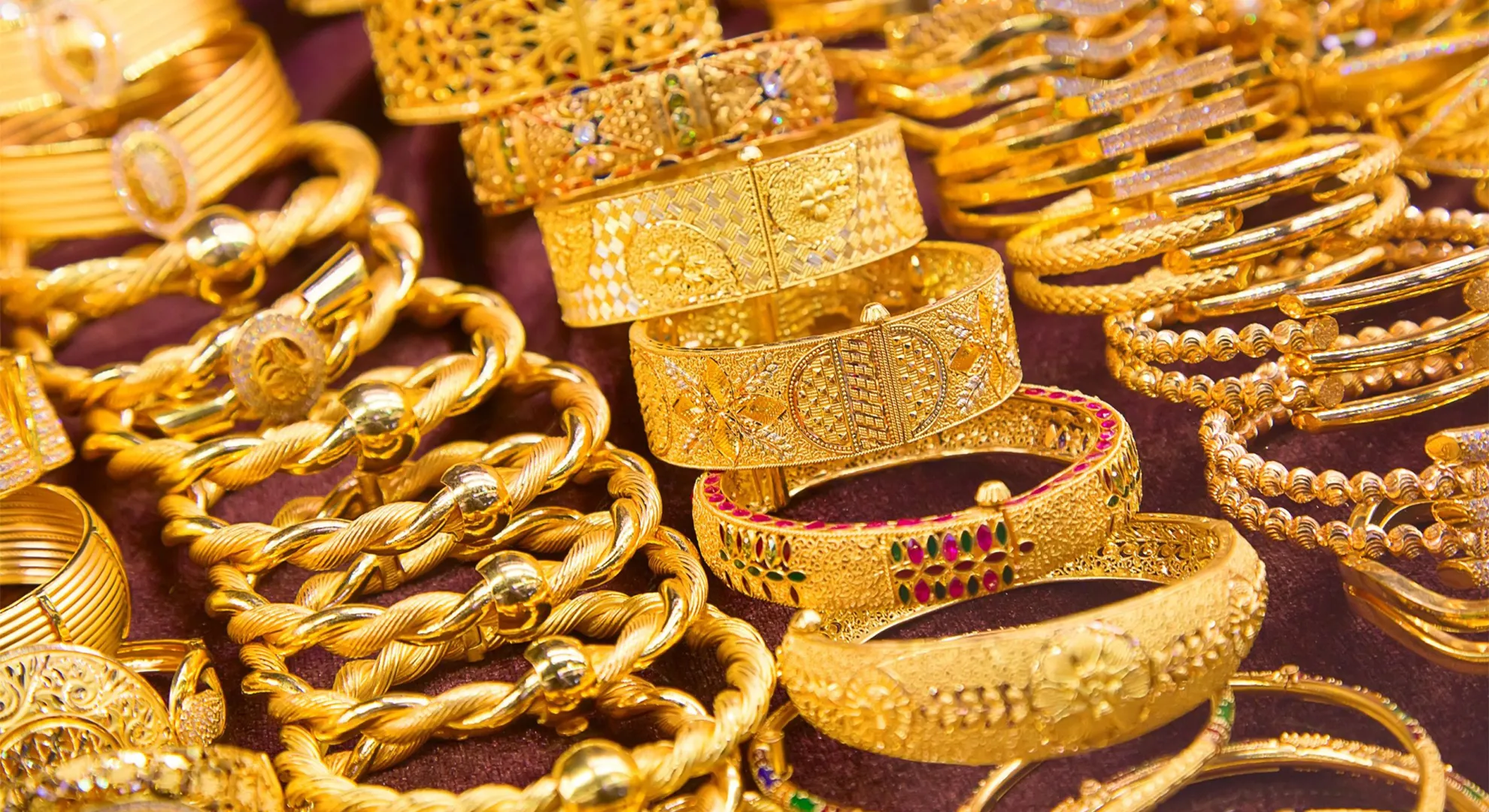
International gold prices edged higher by 0.09 per cent to reach $4,491.47 an ounce. Meanwhile, silver recorded a stronger gain of 2.16 per cent, climbing to $67.14 per ounce as precious metals continued to attract market attention.
Gold prices in Dubai extended their upward movement on Thursday morning, with the precious metal recording a notable increase over the course of the week. Local bullion rates have risen by Dh17.5 compared with levels seen seven days earlier, reflecting a combination of softer US Treasury yields, a weaker US dollar and continued strength in international precious-metal markets.
The latest movement comes as US Treasury yields have eased from their recent multi-year peaks. At the same time, the US dollar has remained close to multi-month lows, creating a more supportive environment for gold prices. Because gold is priced internationally in US dollars, movements in the currency can influence demand for the metal among buyers using other currencies.
The continued rise in Dubai’s gold market means consumers are now facing noticeably higher prices than they were at the beginning of the week. The increase has been visible across several commonly traded gold purities, with 24K, 22K, 21K, 18K and 14K all registering gains.
24K gold reaches Dh541
The 24-karat gold rate was quoted at Dh541 on Thursday morning, representing a Dh1 increase from Wednesday’s closing level. Compared with Tuesday’s market close, the price was Dh15 higher, highlighting the pace of the recent movement in local bullion prices.
The 24K category represents the highest-purity gold commonly traded in the UAE retail market. Its price is closely linked to international gold quotations, although the amount ultimately paid by consumers can also depend on factors such as making charges, retailer margins and other applicable costs.
The latest increase has therefore placed the Dubai gold market at a considerably higher level than earlier in the week. For consumers planning to purchase jewellery or investment-grade bullion, even relatively small daily movements can become significant when accumulated over several trading sessions.
The weekly rise of Dh17.5 is particularly notable because gold prices can fluctuate throughout the day in response to changes in international markets, currency movements, bond yields, economic data and investor sentiment.
Other gold purities also advance
The increase was not limited to 24K gold. Other popular categories also moved higher on Thursday, continuing the broader trend across Dubai’s retail bullion market.
The 22K gold rate stood at Dh501 per gram, while 21K gold was priced at Dh480.5. The 18K category reached Dh411.75, and 14K gold was quoted at Dh321.25.
The different rates reflect the varying levels of pure gold contained in each category. Higher-karat gold contains a greater proportion of the precious metal, while lower-karat varieties include larger amounts of other metals used to create jewellery with different properties.
For shoppers, the quoted gold rate is an important component of the final jewellery price, but it is not necessarily the total amount they will pay at the counter. Jewellery prices can include making charges and other costs, which vary between products and retailers.
As a result, consumers comparing jewellery prices should look beyond the headline gold rate and consider the complete price of the item.
International gold market remains firm
The movement in Dubai is also being supported by developments in the international bullion market. Spot gold prices edged higher by 0.09 per cent, reaching $4,491.47 per ounce.
Although the percentage increase in the latest session was relatively modest, the metal has remained at an elevated level, helping support prices in major regional markets such as Dubai.
Gold is widely viewed by investors as a store of value and a potential safe-haven asset, particularly during periods of economic uncertainty or market volatility. Changes in expectations around interest rates, inflation, currencies and global economic conditions can all influence demand for bullion.
The latest rise has come alongside a decline in US Treasury yields from their recent highs. Lower yields can make non-interest-bearing assets such as gold relatively more attractive because the opportunity cost of holding bullion becomes less pronounced.
The US dollar has also remained near multi-month lows. Since gold is generally traded internationally in dollars, a softer US currency can make bullion comparatively cheaper for buyers holding other currencies. This can potentially encourage additional demand and provide support for prices.
Silver records stronger gains
Silver has also been performing strongly in the international market. Spot silver advanced 2.16 per cent to $67.14 an ounce, marking a considerably larger percentage gain than the latest move in gold.
Silver occupies a different position in global markets because it has both investment and industrial uses. Demand can therefore be influenced by financial-market conditions as well as expectations surrounding industrial activity and manufacturing.
The stronger movement in silver compared with gold illustrates that different precious metals can respond differently to changes in market sentiment. While both are affected by factors such as currency movements and interest-rate expectations, their supply-and-demand dynamics are not identical.
For investors and traders watching the precious-metals sector, movements in both gold and silver can provide an indication of broader sentiment toward commodities and alternative assets.
Why Treasury yields matter for gold
US Treasury yields are closely followed by gold investors because they influence the relative attractiveness of interest-bearing assets. When government bond yields rise significantly, investors may have a greater incentive to hold assets that provide a return through interest.
Gold, by contrast, does not generate interest income. Its appeal comes primarily from its value as a physical asset and store of wealth, as well as its potential role as a hedge during periods of uncertainty.
When Treasury yields decline, some of the pressure created by higher yields can ease. This can create a more favourable backdrop for gold, particularly when the decline occurs alongside a weaker dollar.
The recent movement in Dubai gold prices therefore reflects more than local buying activity. International financial-market developments are playing an important role in determining the underlying value of bullion.
Dollar weakness adds support
The performance of the US dollar is another important factor behind the recent strength in gold. The currency has remained close to multi-month lows, providing additional support to the precious-metal market.
Gold and the dollar often have an inverse relationship, although the connection is not fixed. When the dollar weakens, gold can become less expensive for buyers using other currencies. That can increase international demand and contribute to upward pressure on prices.
Currency movements also influence investor expectations. A weaker dollar can lead market participants to reassess the relative attractiveness of different assets, including commodities and precious metals.
For Dubai, where gold prices are closely connected to global bullion quotations, international currency trends can quickly be reflected in local retail rates.
What the weekly increase means for buyers
The Dh17.5 weekly increase means that customers purchasing gold in Dubai are now paying more for the same quantity of the metal than they would have a week earlier, before considering any additional jewellery-related charges.
For someone purchasing a substantial amount of gold, even a relatively small movement in the per-gram price can translate into a significant difference in the total purchase cost.
The impact is particularly relevant to consumers buying jewellery for weddings, celebrations, gifts or investment purposes. Buyers who have been waiting for prices to fall may now find that the market has moved in the opposite direction.
However, gold prices can change frequently, and a single day’s movement does not necessarily determine the direction of the market over a longer period. Consumers should therefore consider their individual needs and budget rather than attempting to predict short-term market movements solely from recent price changes.
Dubai remains a major gold market
Dubai has long been recognised as an important centre for gold trading and jewellery retail. The city’s large network of gold shops, bullion dealers and jewellery businesses attracts both local consumers and international visitors.
Daily gold-rate movements are therefore closely watched by residents and tourists alike. The published rates provide a useful reference point for shoppers who want to understand how much gold is worth before entering a retail transaction.
Because international bullion markets operate continuously across different time zones, local prices can change as global markets move. This is why Dubai’s gold rates can vary from one trading session to another.
Retail customers should also remember that the displayed gold rate generally refers to the value of the gold itself. Jewellery purchases may include workmanship costs, design charges and retailer-specific fees.
Gold prices remain sensitive to global developments
The precious-metal market is influenced by a wide range of economic and geopolitical factors. Interest-rate expectations, inflation concerns, central-bank policies, currency movements and global political developments can all affect investor demand for gold.
When uncertainty increases, some investors may turn to gold because of its long-standing reputation as a defensive asset. Conversely, when financial markets become more confident and yields rise, demand for bullion can face pressure.
The current combination of lower US Treasury yields and a relatively soft dollar has provided a supportive backdrop for gold. That environment has helped keep international bullion prices elevated and has contributed to the rise seen in Dubai.
The latest price action also shows why local gold rates should be viewed in the context of international markets. Dubai does not operate as an isolated gold market; prices are closely linked to global bullion trading.
Comparing the latest rates
The Thursday morning prices show a clear difference between the various gold purities.
24K gold was quoted at Dh541, making it the highest-priced category among the rates listed.
22K gold stood at Dh501, while 21K gold reached Dh480.5.
18K gold was priced at Dh411.75, and 14K gold was quoted at Dh321.25.
The differences reflect the varying gold content of each purity. The higher the karat level, the greater the proportion of pure gold contained in the material.
For consumers purchasing jewellery, the choice of purity can depend on several factors, including budget, intended use, durability and personal preference. Higher-purity gold generally carries a higher raw-metal value, while lower-purity varieties may offer greater durability because of their higher proportion of alloy metals.
International market snapshot
The latest international figures show gold trading at $4,491.47 per ounce following a 0.09 per cent increase. Silver, meanwhile, climbed 2.16 per cent to $67.14 per ounce.
The differing performances of the two metals show that precious-metal markets can experience varying degrees of volatility. Silver’s larger percentage move suggests stronger short-term momentum in that market compared with gold during the latest session.
Nevertheless, gold remains the dominant focus for many consumers in Dubai because of the city’s extensive jewellery market and the popularity of gold as both a luxury purchase and a store of value.
The international price provides the underlying benchmark, while local market conditions and retail considerations determine the price consumers encounter in Dubai’s shops.
Outlook remains closely watched
With gold already up Dh17.5 over the past week, market participants will be watching closely to see whether the upward trend continues. Future movements will depend on developments in US bond yields, the dollar, interest-rate expectations and broader investor sentiment.
A further decline in Treasury yields could continue to provide support for bullion. Similarly, sustained weakness in the US dollar could help maintain international demand.
On the other hand, a sharp rebound in the dollar or a significant increase in bond yields could create renewed pressure on gold. Changes in economic data and expectations about monetary policy could also influence the direction of prices.
For consumers, this means the gold rate could continue changing even after the latest increase. Those planning a purchase should check the current rate on the day they intend to buy rather than relying on an earlier quotation.
A stronger week for Dubai bullion
Overall, Thursday’s market movement represents another step higher for Dubai gold prices. The 24K rate has reached Dh541, rising by Dh1 from Wednesday’s close and by Dh15 from Tuesday’s level. Across the full week, the metal has gained Dh17.5.
The increase has been supported by a combination of international and financial-market factors, particularly easing US Treasury yields and a dollar that remains relatively weak.
At the same time, global spot gold has maintained its strength, with prices at $4,491.47 an ounce after a 0.09 per cent gain. Silver has shown even stronger momentum, rising 2.16 per cent to $67.14 an ounce.
The gains across the precious-metals market underline the importance of watching international trends when assessing Dubai’s daily gold rates. Local prices can respond quickly to changes in global bullion values, currency markets and investor sentiment.
For shoppers, the latest increase means that purchasing gold now comes at a higher rate than it did a week ago. Whether buying jewellery or bullion, customers should check the latest market quotation and compare the full retail cost before completing a transaction.
With international gold prices still elevated and financial-market conditions continuing to evolve, Dubai’s gold market is likely to remain closely watched in the sessions ahead. The direction of US Treasury yields and the dollar will remain among the key factors influencing bullion prices, while developments in global markets could determine whether the recent upward momentum continues or begins to ease.
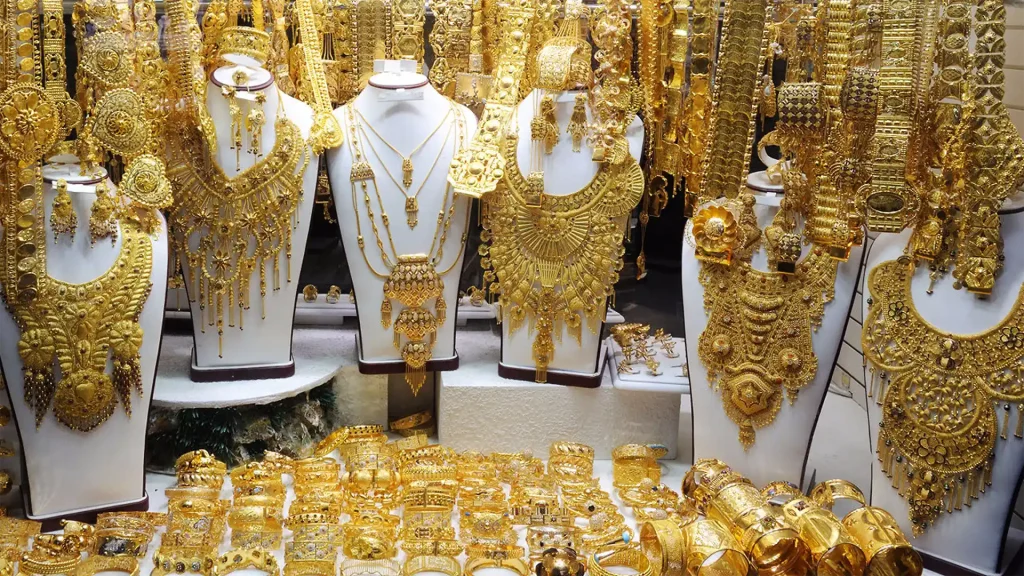
Gold and silver are showing signs of stabilising after experiencing a sharp decline during Tuesday’s trading session, according to market analysts. The two precious metals have been attempting to regain lost ground as US Treasury yields retreat from their recent multi-year peaks and the US dollar remains close to its lowest levels in several months.
The latest recovery attempt comes after a period of significant volatility in precious-metal markets. Investors are closely watching movements in bond yields and the dollar because both can have a substantial influence on the attractiveness of gold and silver. Changes in expectations surrounding US monetary policy are also playing an important role in determining the direction of bullion prices.
Gold and silver do not generate interest income, unlike many traditional financial assets. As a result, changes in government bond yields can influence investor decisions about whether to hold precious metals or interest-bearing assets. When yields decline, the relative appeal of gold and silver can improve, particularly if the move is accompanied by weakness in the US dollar.
Treasury yields and the UAE market
The relationship between US financial markets and the UAE is particularly relevant because the UAE dirham is pegged to the US dollar. This currency arrangement means developments in US monetary policy and Treasury yields can have an important influence on financial conditions in the Emirates.
Changes in US interest-rate expectations can therefore affect the broader monetary environment in the UAE. When US policymakers adjust rates or markets anticipate a change in the direction of monetary policy, the implications can extend to other economies whose currencies are closely linked to the US dollar.
For Dubai’s gold market, this connection is especially important because local bullion prices are closely tied to international gold prices, which are quoted in US dollars. As a result, movements in US yields, the dollar and global investor sentiment can quickly feed through to local gold rates.
The recent decline in Treasury yields has therefore been viewed as supportive for precious metals. At the same time, the dollar’s continued weakness has provided another potential source of support.
Markets reassess the Federal Reserve outlook
Analysts are also paying close attention to expectations surrounding the US Federal Reserve. Recent economic data from the United States has led markets to reduce expectations for additional monetary tightening, shifting investor attention toward upcoming signals from Federal Reserve officials.
Vijay Valecha, chief investment officer at Century Financial, said softer US economic figures have weakened expectations that the Federal Reserve will need to pursue further tightening. Market participants are now looking toward the minutes from the July Federal Open Market Committee meeting and comments expected around the Jackson Hole economic symposium for additional clues about the central bank’s policy direction.
The upcoming policy signals could help investors determine whether US interest rates are likely to remain restrictive for an extended period or whether conditions could eventually allow for a less aggressive approach.
For precious metals, the distinction is important. A more restrictive monetary policy can support higher yields and potentially strengthen the dollar, both of which can weigh on gold. Conversely, expectations of less restrictive policy can reduce yields and weaken the currency, creating a more favourable backdrop for bullion.
Gold retains a medium-term positive outlook
Despite the recent sell-off, Valecha believes gold continues to maintain a positive medium-term outlook. He pointed to several factors that could support the metal, including declining yields, weakness in the dollar and expectations that US monetary policy may become less restrictive.
However, the analyst also warned that the market is not without risks. Elevated oil prices and concerns surrounding government finances could contribute to additional volatility in precious metals.
Oil prices can influence expectations about inflation and interest rates, while fiscal concerns can affect broader market sentiment. These factors can sometimes produce sudden changes in investor positioning, leading to sharp movements in gold and silver.
As a result, while the medium-term backdrop remains constructive, traders should expect periods of volatility rather than a straight upward move.
Important support levels for gold and silver
From a technical-analysis perspective, the $4,323 level has emerged as an important area of support for gold. The metal recently managed to remain above this threshold, which analysts view as a constructive sign for the broader trend.
Gold is now attempting to rebuild momentum and move above the $4,360 area. If buyers are able to push the metal through this level, attention could shift toward the next major resistance zone around $4,435.
A sustained move above $4,435 could strengthen the bullish technical structure and potentially open the door to a test of the $4,450 to $4,500 range.
The ability of gold to hold above key support levels will therefore remain important in determining whether the latest decline represents a temporary correction or the beginning of a deeper reversal.
According to the technical outlook, $4,323 is the first major support area to watch. If that level fails, the next significant downside reference is around $4,227.
As long as gold remains above $4,323, the recent pullback can still be interpreted as a normal correction within a wider upward trend rather than evidence that the longer-term bullish structure has been broken.
Why the $4,323 level matters
Support levels are closely followed by technical traders because they can indicate areas where buying interest may emerge. When a market repeatedly holds above a particular price, traders may regard that level as a potential floor.
Gold’s ability to defend the $4,323 area has therefore attracted attention. A sustained hold could encourage buyers to re-enter the market, particularly if the dollar remains weak and Treasury yields continue to decline.
However, a decisive move below that level could change the technical picture. Traders may then focus on the next support area around $4,227 and reassess whether the broader bullish trend remains intact.
Technical levels do not guarantee future price movements, but they can provide market participants with reference points for assessing momentum and risk.
The $4,360 threshold
Gold’s next challenge is to regain strength above approximately $4,360. A move beyond this level would indicate that the metal is beginning to recover from Tuesday’s sell-off and could encourage further buying.
If gold successfully clears $4,360, attention is expected to shift toward the $4,435 resistance level. The market’s reaction around this area could provide a clearer indication of the strength of the recovery.
A convincing move above $4,435 could signal that buyers have regained control of the market. Such a development could potentially push prices toward the $4,450-$4,500 region.
The speed and strength of any move through these levels will also matter. A brief move above resistance followed by a rapid retreat would provide a different signal from a sustained breakout accompanied by stronger buying activity.
The importance of $4,435 resistance
The $4,435 area represents the next significant technical hurdle for gold. Resistance levels are areas where selling pressure can emerge, particularly after a strong price advance.
If gold reaches this region, traders will watch closely to determine whether buyers can absorb the available selling pressure. A successful breakout could reinforce the broader bullish pattern.
A move beyond $4,435 could potentially bring the $4,450-$4,500 zone into focus. Reaching that area would represent a further recovery from the recent decline and could strengthen confidence among traders who believe the longer-term uptrend remains intact.
On the other hand, failure to break through resistance could result in another period of consolidation or a renewed test of lower support levels.
Silver also remains in focus
While much of the technical discussion has centred on gold, silver is also being closely monitored. The metal has experienced volatility alongside gold and is attempting to recover from the recent decline.
Valecha identified $62.65 as an important level for silver. Maintaining this threshold could help preserve the metal’s constructive medium-term outlook.
Silver’s price behaviour can differ from gold because the metal has both investment and industrial demand. Economic expectations, manufacturing activity and broader commodity-market trends can therefore influence silver in addition to factors such as interest rates and currency movements.
The combination of monetary-policy expectations and industrial demand makes silver particularly sensitive to changes in market sentiment.
Dollar weakness provides a supportive backdrop
The US dollar remains another central factor in the precious-metals outlook. The currency has stayed near multi-month lows, which can make dollar-denominated commodities more affordable for international buyers.
A weaker dollar can therefore help support gold and silver prices. If the currency remains under pressure while Treasury yields continue to decline, precious metals could receive additional support.
However, currency markets can move rapidly. A sudden rebound in the dollar could put pressure on bullion, especially if it coincides with rising Treasury yields.
This is why investors are closely watching both the currency and bond markets rather than focusing solely on the gold price.
Softer economic data changes market expectations
Recent US economic data has also influenced expectations about the Federal Reserve. Signs of slower economic momentum can reduce the likelihood of additional interest-rate increases, depending on the broader inflation and employment picture.
When markets become less concerned about further tightening, Treasury yields may decline and the dollar can weaken. Both developments can be supportive for gold and silver.
However, investors remain cautious because the Federal Reserve’s future decisions will depend on incoming data. A few weaker economic reports do not necessarily guarantee a shift toward easier monetary policy.
Market participants will therefore be watching future economic releases as well as statements from Federal Reserve officials for evidence about the direction of interest rates.
July FOMC minutes could provide clues
The minutes from the July Federal Open Market Committee meeting are expected to receive significant attention because they could reveal how policymakers assessed the US economic outlook and the balance between inflation risks and growth concerns.
Investors will be looking for indications of how many officials favoured maintaining a restrictive stance and whether there was growing support for eventually easing policy.
Any language suggesting that policymakers are becoming more comfortable with lower inflation or slower economic activity could influence bond yields and the dollar.
For gold traders, the implications could be significant. A more dovish interpretation could strengthen the case for lower yields and provide additional support for bullion.
Conversely, signs that policymakers remain concerned about inflation could push yields higher and potentially weigh on precious metals.
Jackson Hole also in focus
Market participants are also preparing for remarks from central-bank officials around the Jackson Hole economic symposium. Such events are closely watched because senior policymakers can use them to communicate their assessment of the economy and provide hints about the future direction of monetary policy.
Even subtle changes in language can move financial markets. Investors may look for indications about whether interest rates are likely to stay elevated, whether inflation remains a concern and what conditions might lead policymakers to adjust their approach.
For gold and silver, any indication that rates could eventually become less restrictive could provide support through lower yields and a weaker dollar.
Risks remain despite bullish conditions
Although the medium-term outlook for gold remains constructive, analysts are not suggesting that prices will move higher without interruption. Precious metals can experience sharp corrections even during broader bull markets.
The recent Tuesday sell-off is an example of how quickly prices can move when investors adjust their positions. Short-term traders may respond to technical levels, economic data, currency movements or changes in interest-rate expectations.
Oil prices and fiscal concerns could also contribute to volatility. Rising energy costs can influence inflation expectations, while concerns about government finances can affect bond markets and investor confidence.
These factors mean that the bullish outlook should be considered alongside the possibility of sudden price swings.
Correction or trend reversal?
One of the central questions for gold investors is whether the recent decline represents a temporary correction or a more significant change in direction.
Valecha’s assessment suggests that the broader trend remains positive as long as the metal stays above the $4,323 support area. Holding this level would indicate that buyers continue to defend the broader bullish structure.
A deeper break below support, however, could prompt traders to reconsider the outlook. The next level around $4,227 would then become increasingly important.
For now, the market’s ability to remain above $4,323 supports the interpretation that the latest decline is a pullback within a larger upward movement.
What could drive the next move?
Several factors could determine gold’s next major move. The first is the direction of US Treasury yields. Continued easing in yields could help bullion regain momentum, while a renewed rise could create pressure.
The second factor is the US dollar. Persistent weakness would generally provide a favourable environment for dollar-denominated precious metals, while a stronger currency could limit gains.
The third consideration is Federal Reserve policy. Any change in expectations about interest rates could quickly affect both yields and the dollar, creating a secondary impact on gold and silver.
Finally, broader geopolitical and fiscal developments could contribute to market volatility and influence demand for safe-haven assets.
Medium-term picture remains constructive
Despite the recent volatility, the fundamental backdrop remains supportive of gold and silver, according to the analyst assessment. Lower yields, a softer dollar and expectations of a less restrictive Federal Reserve stance all provide potential support.
At the same time, investors should remain aware that markets rarely move in a straight line. Corrections are common even when the underlying trend remains bullish.
The current technical structure gives traders several important reference points. For gold, $4,323 is the key downside level, while $4,360 represents an area where the metal is attempting to rebuild momentum. Above that, $4,435 is the next major resistance.
A sustained break through $4,435 could potentially take gold toward the $4,450-$4,500 range. Conversely, a failure to maintain $4,323 could expose the market to further weakness, with $4,227 becoming the next major support.
For silver, the $62.65 level remains an important benchmark.
Market outlook
Gold and silver are entering the next phase of trading with investors balancing two competing forces. On one side, softer US economic data, declining Treasury yields and dollar weakness are creating a supportive environment for precious metals. On the other, elevated oil prices, fiscal concerns and uncertainty over monetary policy are keeping volatility elevated.
The upcoming Federal Reserve minutes and Jackson Hole remarks could provide important clues about the path of US interest rates. Any meaningful change in expectations could have an immediate impact on bond yields, the dollar and precious-metal prices.
For gold, the technical picture remains positive while the $4,323 support level holds. The immediate challenge is to regain strength above $4,360 and then test the $4,435 resistance area.
If buyers succeed in pushing prices decisively beyond $4,435, the $4,450-$4,500 range could become the next area of interest. If the market instead falls below $4,323, traders may turn their attention to $4,227.
Overall, the recent sell-off has not yet invalidated the broader bullish outlook. Instead, the latest price action can still be interpreted as a correction within an established upward trend, provided key support levels continue to hold.
The coming sessions are therefore likely to be important for both metals. Investors will be watching the interaction between technical levels and macroeconomic developments, particularly movements in Treasury yields, the US dollar and expectations surrounding Federal Reserve policy.
For now, gold’s ability to remain above $4,323 and silver’s defence of $62.65 will remain central to the medium-term outlook. A combination of easing yields, continued dollar weakness and expectations of less restrictive monetary policy could keep the precious-metals market supported, although traders should remain prepared for further periods of volatility.