Dubai International Holy Quran Award Draws 20,500 Applications From Contestants Across 135 Nations, Highlighting Its Growing Global Reach and Strong International Participation in the Prestigious Quran Memorisation and Recitation Competition.
Dubai Quran Award Attracts 20,500 Entries From Participants Representing 135 Countries.
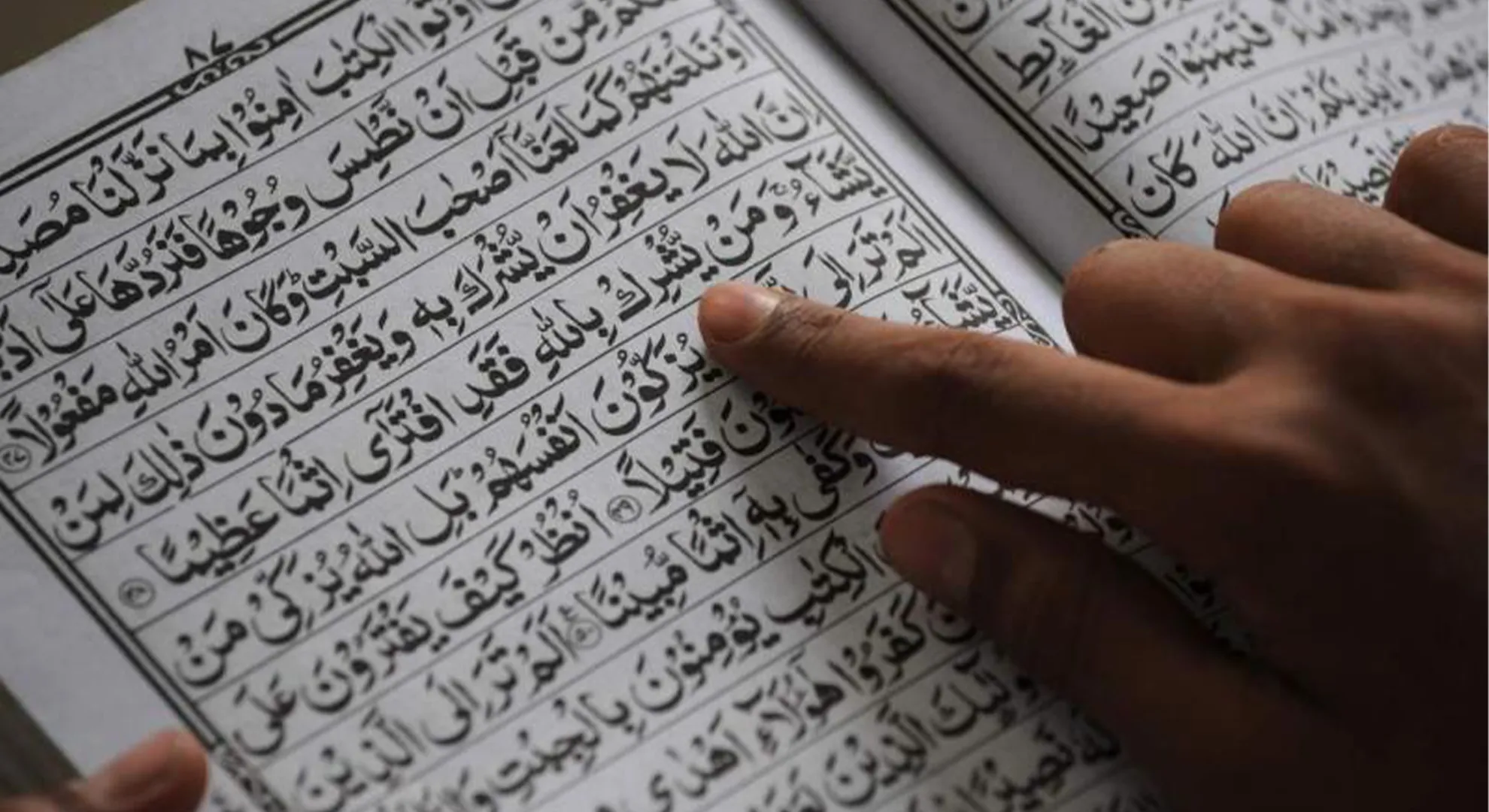
As part of the 29th edition, a group of outstanding finalists will travel to Dubai during the holy month of Ramadan, where they will have the opportunity to lead Taraweeh prayers at prominent mosques across the emirate.
The Dubai International Holy Quran Award has reached a new milestone in its history, attracting 20,500 applications from contestants representing 135 countries for its 29th edition.
The figure marks the highest level of international participation recorded since the award was established, highlighting the growing global interest in the Dubai-based Quran competition.
Registration for the 1448H–2027 edition has now closed, with applicants submitting their entries from countries across different regions of the world. The latest participation figures represent a significant increase in the reach of the competition and come as organisers introduce a series of changes aimed at developing the award and expanding its international profile.
The competition is held under the patronage of Sheikh Mohammed bin Rashid Al Maktoum, Vice President and Prime Minister of the UAE and Ruler of Dubai.
Record number of applications
A total of 20,500 applications were recorded for the latest edition, making it the largest field of participants in the award’s history.
The organisers attributed the strong response to several changes introduced as part of the award’s new development strategy.
One of the most notable changes is the expansion of the application process.
Previously, participation traditionally involved candidates being nominated through their respective countries or through recognised Islamic centres. Under the revised system, individuals can now submit applications directly, giving potential contestants another route to enter the competition.
The change is intended to broaden access to the award and allow talented Quran reciters and memorizers from a wider range of backgrounds to put themselves forward.
By opening the registration process to direct applicants as well as traditionally nominated contestants, organisers have created a larger pool from which participants can be selected.
The record number of applications suggests that the revised approach has attracted considerable interest internationally.
A new vision for the competition
The latest edition forms part of a wider development programme for the award under the vision titled “In Search of the Most Beautiful Quran Recitation in the World.”
The initiative aims to strengthen the competition’s position as an international platform for Quran memorisation and recitation.
The organisers have also introduced changes in several areas, including competition categories, eligibility conditions, assessment procedures and participation arrangements.
Together, these changes are intended to modernise the way the competition is organised while preserving its central focus on excellence in Quran memorisation and recitation.
The expansion of participation also reflects an effort to make the award accessible to a broader international audience.
With applications now coming from 135 countries, the competition has attracted participants from a wide geographical area.
Prize fund reaches record level
Another major change for the 29th edition is the size of the prize fund.
Organisers have allocated more than Dh12 million, equivalent to approximately $3.3 million, for prizes associated with the competition.
This represents the largest prize pool in the award’s history.
The increased financial rewards add another significant feature to this year’s edition and underline the organisers’ efforts to develop the competition on a larger scale.
The record prize fund comes alongside the changes to the competition structure and application system.
The combination of broader eligibility, revised participation procedures and increased rewards is intended to strengthen the appeal of the award and encourage greater international involvement.
Egypt leads application numbers
Among the participating countries, Egypt recorded the largest number of applications.
A total of 6,838 applications were submitted from Egypt, placing the country well ahead of the other nations represented in the latest registration figures.
Indonesia ranked second with 1,923 applications, followed by Pakistan with 1,862.
Syria recorded 1,511 applications.
The figures demonstrate the particularly strong interest in the competition from countries with large communities of Quran learners, memorizers and reciters.
Egypt’s position at the top of the application rankings represents a substantial share of the overall total, while the participation figures from Indonesia, Pakistan and Syria further demonstrate the competition’s broad appeal across different parts of the Muslim world.
The remaining applications came from numerous other countries, collectively contributing to the record total of 20,500.
Different age groups will compete
The latest edition includes separate categories based on age and gender.
The largest category is for male contestants aged above 16.
This group accounted for 14,040 applications, representing the majority of all entries received for the competition.
A separate category is available for younger contestants aged below 16.
This section is open to both boys and girls and received 6,495 applications.
Of those applications, 2,394 were submitted by female participants.
The age-based structure allows younger contestants to participate while maintaining a separate category for more mature competitors.
It also provides organisers with a way to assess participants within broadly comparable age groups.
Growing opportunities for young participants
The substantial number of applications from contestants under the age of 16 highlights the continuing interest among younger people in Quran memorisation and recitation.
With 6,495 applications submitted to the junior category, young participants represent a significant proportion of the overall field.
The participation of 2,394 girls in this category also demonstrates the involvement of female contestants in the competition.
The organisers’ decision to maintain a category open to both male and female participants under 16 creates an avenue for younger candidates to take part in the international event.
The large number of applications in this group also provides evidence of strong interest among the younger generation.
International reach continues to expand
The participation of 135 countries gives the award a broad international footprint.
Contestants are drawn from a wide range of countries and regions, allowing the competition to bring together participants with different linguistic, cultural and educational backgrounds.
Despite those differences, the applicants share a common focus on Quran memorisation and recitation.
The international nature of the competition is one of its defining characteristics.
The record number of applications indicates that the award continues to attract attention beyond the UAE and the immediate Gulf region.
The latest figures also suggest that the new registration system has helped reach individuals who may previously have had fewer opportunities to enter through traditional nomination channels.
Direct applications change the selection process
Allowing individuals to apply independently represents one of the more significant developments introduced for the latest edition.
Under the previous approach, candidates could enter through nominations from their home countries or accredited Islamic centres.
The new system retains those established channels but adds direct registration.
This creates a more flexible pathway for contestants who believe they meet the competition’s requirements.
It can also help organisers identify talent that might not otherwise have been nominated through national or institutional channels.
The change forms part of the award’s broader effort to increase participation and strengthen its international reach.
The record registration figures provide an early indication that the new approach has generated substantial interest.
Assessment and eligibility rules also updated
The changes introduced for the 29th edition are not limited to registration.
The organisers have also revised elements of the competition relating to categories, eligibility, evaluation and participation.
These adjustments are intended to provide a more developed framework for selecting and assessing contestants.
Evaluation is particularly important in an international competition involving thousands of applicants.
The organisers must establish a process capable of identifying candidates who meet the required standards and determining the strongest participants from a very large pool.
The revised assessment structure is therefore another component of the award’s development strategy.
Strong response to the new approach
Ahmed Darwish Al Muhairi, Director General of the Islamic Affairs and Charitable Activities Department in Dubai and Chairman of the Board of Trustees of the Dubai International Holy Quran Award, said the unprecedented level of participation reflected the effect of the award’s updated approach.
According to Al Muhairi, the record response demonstrates the growing international reach of the competition.
The latest registration figures provide tangible evidence of that expansion.
With more than 20,000 applications from 135 countries, the award has attracted a substantially diverse field of potential contestants.
The response also indicates that the changes to the application system and competition structure have resonated with prospective participants.
A broader platform for Quran recitation
The award’s latest edition is being positioned as more than a traditional competition.
Through its new development vision, organisers are seeking to establish a wider international platform for identifying and recognising outstanding Quran reciters and memorizers.
The title of the new vision, “In Search of the Most Beautiful Quran Recitation in the World”, reflects the emphasis placed on identifying exceptional standards of recitation.
The competition’s international application base gives organisers the opportunity to bring together talent from a particularly wide range of countries.
It also reinforces Dubai’s role as the host city for an event with an increasingly global profile.
From registration to competition
With registration now closed, the next stages will involve processing the applications and determining which contestants progress through the competition.
The unusually high number of entries presents both an opportunity and an organisational challenge.
Organisers must manage applications from 135 countries while applying the competition’s eligibility and assessment standards consistently.
The different categories will also require contestants to be evaluated according to the appropriate criteria.
The eventual finalists will emerge from this large international pool.
Their selection will determine which participants have the opportunity to compete in the later stages of the 29th edition.
The significance of the record
The latest figures are significant not only because of the number of applicants but also because they demonstrate the geographical breadth of participation.
A total of 135 countries are represented, meaning the competition has attracted interest from a wide international community.
The 20,500 applications also show that participation extends well beyond a small group of traditionally strong countries.
Egypt, Indonesia, Pakistan and Syria account for some of the largest numbers, but the overall figure includes applications from many other nations.
This diversity is consistent with the award’s stated ambition to expand its international reach.
A major edition for the Dubai award
The 29th edition arrives at a significant point in the development of the Dubai International Holy Quran Award.
The competition has introduced a larger prize fund, opened a new direct application route and revised aspects of its categories and assessment framework.
The combination of these changes has coincided with the highest number of applications recorded since the award began.
The 20,500 entries therefore represent more than a registration statistic.
They provide an indication of the scale at which the competition is now operating and the level of international interest it has generated.
Participation across generations
The division between older and younger contestants also highlights the competition’s reach across different generations.
The 14,040 applications from males aged over 16 make up the largest group.
Meanwhile, the 6,495 applications for contestants under 16 demonstrate substantial participation among younger applicants.
The inclusion of 2,394 female contestants within the junior category adds another dimension to the participation figures.
Together, the numbers show that the competition is attracting applicants across different age groups and includes significant participation from young female candidates.
Looking ahead to the 29th edition
As the organisers move beyond the registration stage, attention will turn to the selection and evaluation of contestants.
The large number of applications means the competition will have a substantial pool of candidates from which to identify finalists.
Those selected will represent their countries and communities at an international event in Dubai.
The process will also provide an opportunity to assess how effectively the new application and evaluation mechanisms operate at an unprecedented scale.
The outcome of this year’s edition could help shape future developments in the award as organisers continue to pursue their stated vision.
Dubai’s growing international role
The record participation also contributes to Dubai’s wider reputation as a host for major international cultural and religious events.
By attracting applications from 135 countries, the Quran award has established a significant international presence.
The city’s role as host provides a central meeting point for contestants from different parts of the world.
The competition’s growing scale also reflects the broader international connections that Dubai has developed across cultural, educational and religious initiatives.
A milestone in the award’s history
The 29th edition has already achieved a notable milestone before the competition itself begins.
With 20,500 applications from 135 countries, it has recorded the largest participation level in the award’s history.
Egypt leads the country rankings with 6,838 applications, followed by Indonesia, Pakistan and Syria.
The majority of applicants are male contestants aged over 16, while thousands of younger participants have also registered, including a substantial number of girls.
The record participation comes at the same time as organisers introduce a new development vision, broaden access through direct applications and increase the prize fund to more than Dh12 million.
These changes collectively represent a significant expansion of the competition.
As the selection process moves forward, the focus will shift from registration numbers to the contestants themselves and their performance.
For organisers, however, the record application figure is already a clear indication that the Dubai International Holy Quran Award continues to attract strong interest internationally.
The 29th edition is therefore set to begin with an unprecedented level of participation, reflecting the competition’s expanding reach and the response to its latest changes.
$3.3 million in prizes
The 29th edition of the Dubai International Holy Quran Award introduces a substantially expanded prize structure, alongside a new public-voting element that will give audiences a role in determining the winner of the “Most Beautiful Quran Recitation in the World” title.
Under the revised prize system, contestants who secure first place in each of the two principal categories will receive $1 million. The second-place winners in those categories will each be awarded $100,000, while contestants finishing third will receive $50,000.
The competition’s financial rewards have therefore been significantly strengthened as organisers introduce a new format aimed at increasing the international profile of the award and recognising outstanding Quran recitation and memorisation.
In addition to the prizes awarded to competition winners, the Global Quranic Personality award will also carry a prize of $1 million.
New opportunity for finalists
One of the most notable changes planned for the 29th edition is the opportunity for selected finalists to travel to Dubai during Ramadan.
Those chosen will be invited to lead Taraweeh prayers at major mosques in the emirate, giving the finalists an opportunity to demonstrate their recitation before worshippers during the holy month.
The initiative adds a new dimension to the competition.
Rather than limiting the finalists’ participation to a judging environment, the new format will allow selected contestants to showcase their Quran recitation in prominent religious settings.
Their performances will subsequently become part of a public-selection process.
Public voting to determine the top recitation
For the first time under the new format, members of the public will have a role in selecting the recipient of the “Most Beautiful Quran Recitation in the World” title.
Public voting is planned as a later stage of the competition after contestants have passed the initial evaluation and selection processes.
The introduction of public participation gives the competition a broader audience dimension.
Instead of the final outcome relying exclusively on an expert judging panel, the organisers will allow the public to express its preference among the selected finalists.
The system is intended to connect the competition with a wider international audience while giving finalists an opportunity to present their recitation skills to listeners beyond the formal judging process.
Preliminary assessment begins
Before contestants can reach the later stages, they must first undergo an initial assessment.
Applicants are being evaluated according to several elements of Quran recitation, including Tajweed, vocal ability, quality of recitation and overall performance.
Tajweed is particularly important because it concerns the correct pronunciation and articulation of Quranic verses according to established rules of recitation.
Judges will therefore assess not only the beauty of a contestant’s voice but also technical accuracy and the quality with which the Quran is recited.
The broader performance assessment provides another way of evaluating contestants beyond a single technical element.
The preliminary stage is designed to identify candidates who demonstrate the standards required to progress to the next phase of the competition.
Different stages for different age groups
The competition process has been structured differently for contestants above and below the age of 16.
Applicants aged over 16 will first undergo the preliminary evaluation.
Those who successfully pass this stage will then move forward to the public-voting process.
Following the selection of the strongest candidates, finalists will be invited to Dubai during Ramadan, where selected contestants will have the opportunity to lead Taraweeh prayers at major mosques.
The public will subsequently participate in the voting process to help determine the recipient of the top recitation title.
The voting period for the 29th edition is scheduled to run from February 8 through February 16, 2027.
Junior contestants follow a separate route
Contestants under the age of 16 will follow a different evaluation schedule.
After the initial assessment, the second stage for younger participants will take place through live video judging.
This phase is scheduled to run from September 1 to September 14, 2026.
The live-video format allows judges to evaluate young contestants remotely while maintaining direct interaction with the participants.
It also enables the competition to manage a large international field without requiring every contestant to travel to Dubai at the beginning of the process.
Once the strongest younger contestants have been identified, they will progress to the public-voting phase.
Their performances will then be considered alongside the wider competition during the voting period scheduled for February 8 to February 16, 2027.
A longer selection process
The schedule demonstrates that the 29th edition will unfold across several months.
The preliminary assessment begins the process by establishing which applicants meet the required standards.
For younger contestants, live video judging will take place in September 2026.
The final public-voting period, however, is not scheduled until February 2027.
This extended timeline gives organisers time to evaluate the large number of applications received for the latest edition.
The competition has attracted a record 20,500 applications from 135 countries, making the selection process considerably larger than in previous editions.
The multi-stage structure allows the organisers to narrow the field progressively rather than attempting to assess all applicants in a single phase.
Public voting adds a new dimension
The decision to introduce public voting represents a significant change to the traditional competition format.
Expert evaluation remains important during the initial stages, particularly when judges assess technical aspects such as Tajweed, pronunciation, vocal quality and recitation.
Public voting comes later, after the field has already been reduced to selected finalists.
This means contestants must first demonstrate their abilities before receiving access to the final stage.
The voting process then allows the wider audience to participate in choosing the most admired recitation among the finalists.
The organisers’ approach combines specialist assessment with public participation.
Prize structure increases the stakes
The new financial rewards also make the 29th edition particularly significant.
A $1 million first prize in each of the two main categories represents a substantial increase in the recognition attached to the competition.
Second-place contestants will receive $100,000, while third-place winners will receive $50,000.
The Global Quranic Personality award also comes with a $1 million prize.
The scale of the awards reflects the organisers’ efforts to position the competition as a major international event.
The increased rewards also complement the broader changes being introduced in the latest edition, including direct applications, revised eligibility requirements and updated judging procedures.
The role of the Global Quranic Personality award
The Global Quranic Personality award forms a separate part of the Dubai Quran Award programme.
Unlike the main competition categories, which focus on contestants demonstrating Quran recitation and memorisation skills, the personality award recognises individuals and institutions for their broader contributions.
Since the award was introduced, 24 individuals and three institutions have received the Global Quranic Personality honour.
The new $1 million prize associated with the category further increases its significance within the overall programme.
Nearly three decades of competition
The 29th edition builds on a history extending across 28 previous editions.
Since the award was established, a total of 7,826 contestants from 123 countries have taken part in its competitions.
The participation figures demonstrate the international nature of the event and its development over almost three decades.
The competition has brought together contestants from numerous countries and provided them with an international platform to demonstrate their Quran recitation and memorisation abilities.
The number of participants over the first 28 editions also provides context for the scale of the latest registration.
The 20,500 applications received for the 29th edition represent an especially significant expansion compared with the participation recorded across previous competitions.
More than Dh67 million awarded
The award has also distributed more than Dh67 million in prize money since its first edition.
The financial commitment reflects the organisers’ longstanding emphasis on recognising successful contestants and supporting the development of Quranic scholarship and recitation.
With the introduction of the latest prize structure, the total value associated with the competition is expected to increase further.
The new awards provide substantial financial recognition to contestants who reach the highest positions in the main categories.
A competition built around several forms of evaluation
The judging process for the 29th edition combines technical assessment, live evaluation and public participation.
At the beginning, applicants are examined according to established standards of Tajweed, voice, recitation and overall performance.
The strongest candidates then progress to additional stages depending on their age category.
For older contestants, successful applicants move towards the public-voting phase and eventual participation in Dubai during Ramadan.
For younger contestants, live video judging provides the next stage before finalists advance to public voting.
The structure allows organisers to maintain expert assessment while also introducing a broader audience component.
Ramadan will become an important part of the final stage
The invitation for selected finalists to come to Dubai during Ramadan adds a particularly visible element to the competition.
Taraweeh prayers are held during the holy month and involve the recitation of portions of the Quran during evening prayers.
Having selected finalists lead these prayers at major mosques will give worshippers an opportunity to hear the contestants directly.
It also provides a setting in which their recitation can be experienced outside the formal competition environment.
For the finalists, the invitation represents an opportunity to perform before large congregations and demonstrate the qualities that brought them through the earlier selection stages.
From thousands of applications to selected finalists
The scale of the 29th edition means that only a small proportion of applicants can ultimately reach the final stages.
With 20,500 applications received from 135 countries, the preliminary assessment will play a crucial role in narrowing the field.
Judges must consider multiple aspects of each contestant’s performance while applying the relevant standards to the different categories.
The process is intended to ensure that candidates progressing through the competition demonstrate a high level of ability.
For applicants, reaching the public-voting stage will therefore represent a significant achievement after progressing through the earlier assessments.
The timetable for the competition
The competition’s schedule has been designed to spread the different evaluation stages across several months.
The preliminary assessment is currently underway.
For contestants under 16, the next major stage is the live-video evaluation scheduled between September 1 and September 14, 2026.
The public-voting stage for finalists in the competition is scheduled for February 8-16, 2027.
The Ramadan stage will then provide selected finalists with the opportunity to participate in prayers at major Dubai mosques.
The extended timeline allows the organisers to process the record number of applications while providing sufficient time for the different stages of assessment.
A new approach to selecting excellence
The 29th edition reflects a broader effort to develop the competition beyond its previous format.
The introduction of direct applications has widened access.
The expanded prize fund has increased the financial recognition available to winners.
The new public-voting mechanism gives audiences a direct role in the final selection.
The invitation for finalists to lead Taraweeh prayers adds a live performance element during Ramadan.
Together, these changes create a competition that combines traditional Quranic assessment with new methods of participation and public engagement.
International participation and public engagement
The award’s growing international reach means that the eventual finalists could represent a wide range of countries and backgrounds.
Public voting provides an opportunity for audiences around the world to engage with those contestants once they reach the final stage.
This could give the competition an even wider audience than previous editions.
The combination of international contestants, substantial prizes and public voting is likely to make the 29th edition one of the most closely watched editions in the award’s history.
A milestone edition
The 29th edition is already distinguished by its record application numbers, with 20,500 entries from 135 countries.
Its revised prize structure and new final-stage format add further significance.
The first-place winner in each of the two main categories will receive $1 million, while second- and third-place winners will receive $100,000 and $50,000 respectively.
The Global Quranic Personality award will also carry a $1 million prize.
Meanwhile, selected finalists will be invited to Dubai during Ramadan to lead Taraweeh prayers, after which public voting will help determine the “Most Beautiful Quran Recitation in the World.”
The competition’s organisers are therefore combining financial recognition, expert evaluation, live participation and public choice.
Building on a long-established legacy
The latest edition is being held against the backdrop of nearly three decades of the award’s history.
Across 28 previous editions, 7,826 contestants from 123 countries have participated.
More than Dh67 million has been distributed in prize money since the competition began.
The Global Quranic Personality award has also recognised 24 individuals and three institutions.
These figures illustrate the scale of the programme and provide a foundation for the changes being introduced in the 29th edition.
The latest edition is expected to build on that history while introducing a format designed to attract an even broader international audience.
What happens next
The immediate focus is on the preliminary assessment of applicants.
Judges are examining contestants according to Tajweed, vocal quality, recitation and overall performance before determining who will progress.
Younger contestants will undergo live video judging in September, while older participants who clear the initial stage will advance towards the later phases of the competition.
The public-voting period is scheduled for February 8-16, 2027.
Selected finalists will then have the opportunity to appear in Dubai during Ramadan and lead Taraweeh prayers at major mosques.
For contestants, the route from application to the final stage will involve several rounds of assessment.
For the organisers, the process represents a major undertaking because of the unprecedented number of applications received.
The 29th edition is consequently set to combine record international participation with a substantially revised competition structure.
With larger prizes, new opportunities for finalists, live judging, public voting and a long-established international reputation, the Dubai International Holy Quran Award is entering its latest edition with a format designed to expand both participation and public engagement.