Gold prices in Dubai moved lower during the opening hours of trading, with the rate for 18-karat gold dipping beneath the Dh400-per-gram threshold as the precious metal market recorded a softer start to the day.
Dubai Gold Rates Ease in Early Trading, With 18K Gold Falling Below Dh400 a Gram.
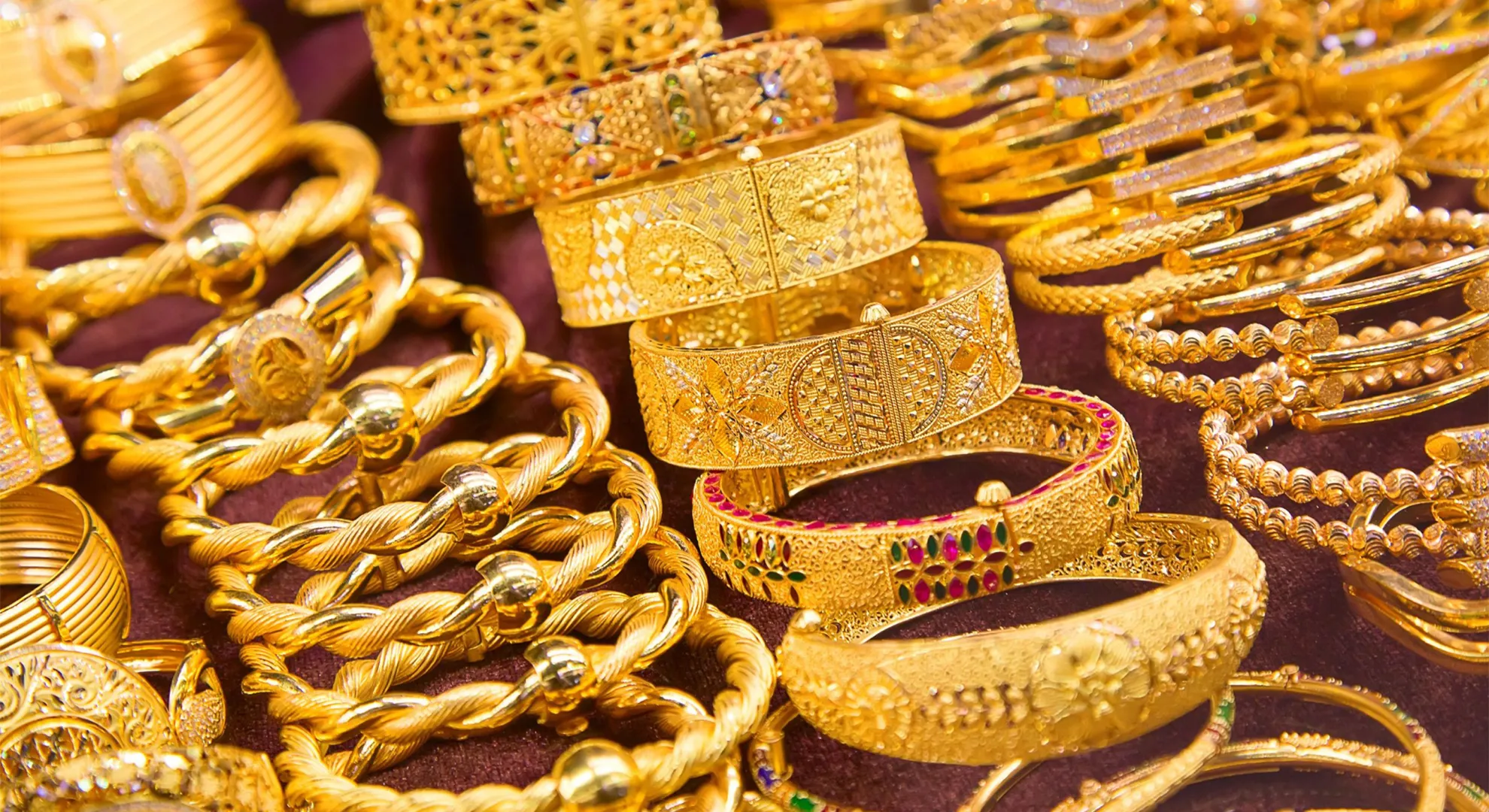
Dubai’s 24K gold rate fell to Dh524.25 per gram on Wednesday, reflecting weaker spot prices ahead of the release of the Federal Reserve minutes, while 18K gold also dropped below the Dh400-per-gram mark.
Gold prices in Dubai opened lower on Wednesday as international bullion markets experienced some weakness ahead of the release of the latest minutes from the US Federal Reserve meeting.
The movement in local gold rates followed a softer trend in global precious metal prices, with investors closely watching developments from the US central bank for indications about the future direction of monetary policy.
At the start of trading in Dubai, 24-karat gold was priced at Dh524.25 per gram, according to data from the Dubai Jewellery Group. The rate represented a decline from the Dh526 per gram recorded at the opening of trading on Tuesday.
The latest move placed the benchmark 24K rate lower than the previous day’s level as traders assessed market expectations ahead of the Federal Reserve minutes.
Gold prices are often sensitive to changes in expectations surrounding US interest rates and monetary policy. Investors therefore tend to monitor Federal Reserve communications closely, particularly when markets are looking for clues about the central bank’s approach to future rate decisions.
The release of meeting minutes can provide additional insight into policymakers’ discussions and their assessment of inflation, economic growth and interest rates. Although the minutes relate to an earlier policy meeting, traders can use them to assess how officials viewed the economic outlook at that time.
The anticipation surrounding the release contributed to cautious trading in precious metals on Wednesday morning. With investors waiting for further information from the US central bank, gold prices remained under pressure in both international markets and Dubai.
The decline was also reflected across other commonly traded gold categories in the UAE.
Twenty-two-karat gold was changing hands at approximately Dh485.50 per gram, while 21K gold stood at around Dh465.50 per gram during the opening part of Wednesday’s session.
The figures represented modest declines across the different grades of gold compared with the previous trading session, following the softer movement in the international bullion market.
Gold jewellery prices in Dubai are closely linked to movements in global bullion markets. Local rates can change throughout the trading day as international prices fluctuate, meaning the opening price may not remain unchanged by the time markets close.
For consumers, daily movements in the per-gram price can affect the overall cost of jewellery purchases, particularly for higher-value items. The final amount paid for jewellery can also depend on factors such as making charges, design and the retailer.
The latest decline came after a period in which gold prices had been closely watched by investors around the world. Precious metals have remained sensitive to developments in interest rates, currency movements and expectations for the global economy.
The US Federal Reserve is particularly important to gold markets because changes in monetary policy can influence the attractiveness of bullion compared with interest-bearing assets.
When investors expect interest rates to remain elevated, gold can face pressure because the precious metal does not generate interest or dividends. Conversely, expectations of lower rates can sometimes support demand for bullion as investors reassess the relative appeal of different asset classes.
For this reason, even signals contained in central bank meeting records can have an impact on market sentiment.
The Federal Reserve minutes were expected to receive particular attention from traders seeking a clearer understanding of policymakers’ views. Market participants were likely to examine comments concerning inflation and the broader economic outlook, as well as any indications about the possible path of interest rates.
The Dubai market reflected that cautious sentiment during the early hours of trading.
The 24K rate, widely used as a reference for pure gold, began Wednesday at Dh524.25 per gram. This compared with Dh526 per gram at Tuesday’s open, showing a decline of Dh1.75 per gram between the two sessions.
The lower rate was accompanied by softer prices for 22K and 21K gold.
At Dh485.50 per gram, 22K gold remained below the Dh500 level, while 21K stood at Dh465.50 per gram. These grades are widely associated with jewellery markets because they contain a smaller proportion of pure gold than 24K bullion.
The differences between the various grades reflect their respective gold content. Twenty-four-karat gold is considered the highest-purity commonly traded form, while 22K and 21K contain additional metals used to increase durability and suitability for jewellery.
As a result, changes in the underlying gold market are reflected across the different categories, although their individual per-gram prices vary.
For shoppers in Dubai, fluctuations in gold prices can be particularly relevant because the emirate is one of the region’s major jewellery trading centres. Consumers frequently monitor daily rates before making purchases, especially when buying larger quantities.
A relatively small change in the price per gram can translate into a noticeable difference in the total cost of a jewellery purchase when several grams are involved.
However, the headline gold rate is only one component of the final retail price. Jewellery buyers also need to consider workmanship or making charges, which can differ from one retailer or design to another.
The opening prices reported by the Dubai Jewellery Group therefore provide a useful reference point for the market, while the amount ultimately paid by an individual customer can vary depending on the product purchased.
Wednesday’s movement also illustrates how developments outside the UAE can quickly influence local gold prices. Because gold is traded internationally, Dubai’s bullion market responds to changes in global prices, investor sentiment and major economic announcements.
The Federal Reserve’s communications are among the events that can influence those expectations.
Investors typically assess whether central bank policy is likely to remain restrictive or become more accommodative. Such expectations can influence the US dollar and bond yields, which in turn may affect demand for gold.
The precious metal’s performance is therefore shaped by a combination of factors rather than by jewellery demand alone.
While Wednesday’s decline was relatively limited based on the opening rates provided, traders remained focused on the broader market picture. The release of the Federal Reserve minutes later in the day had the potential to provide fresh information and influence market sentiment.
Until then, gold trading remained cautious.
The move from Dh526 to Dh524.25 per gram for 24K gold represented a modest adjustment rather than a dramatic change. Nevertheless, daily fluctuations are closely followed by both investors and consumers because they can indicate the direction of the market over the short term.
The lower opening also continued a pattern of close attention to global economic developments among gold traders.
Gold is often viewed as a store of value and can attract investor interest during periods of uncertainty. At the same time, its price can come under pressure when market participants anticipate stronger returns from assets such as bonds or when the US dollar strengthens.
This makes economic data and central bank policy especially important for precious metal markets.
The Federal Reserve minutes were therefore a key focus for Wednesday’s trading session. Investors were expected to look beyond the headline policy decision and study the details of the discussion among policymakers.
Any indication that officials were more concerned about inflation, economic growth or the timing of future rate adjustments could influence expectations for the months ahead.
Those expectations can then feed into currency and bond markets before affecting the price of gold.
For Dubai’s gold market, the result can be reflected relatively quickly in local per-gram rates.
The Wednesday opening figures showed that effect, with all three quoted categories—24K, 22K and 21K—starting the session below their previous levels.
The 24K price stood at Dh524.25 per gram, compared with Dh526 on Tuesday. Meanwhile, 22K and 21K gold were priced at Dh485.50 and Dh465.50 per gram respectively.
The market could remain sensitive to further international developments as traders assess the Federal Reserve’s latest signals.
For consumers considering a gold purchase, the early morning rates provide an indication of prevailing prices but do not necessarily represent the final price throughout the day. International gold prices can move during trading hours, and Dubai retailers may adjust their quoted rates accordingly.
Shoppers looking to buy jewellery may therefore want to check the current rate at the time of purchase and ask retailers about additional charges before completing a transaction.
Investors, meanwhile, are likely to remain focused on the broader direction of bullion prices and the factors driving market sentiment.
Wednesday’s softer opening in Dubai highlights the close relationship between local gold prices and global financial developments. A central bank announcement in the United States can have an impact on a commodity market thousands of kilometres away, demonstrating the increasingly interconnected nature of financial markets.
For now, Dubai’s gold market began the session on a weaker footing, with the benchmark 24K rate slipping to Dh524.25 per gram. The direction of prices later in the day was expected to depend in part on how investors interpreted the Federal Reserve’s meeting minutes and what those details suggested about the future course of US monetary policy.
The next moves in international bullion markets could consequently determine whether Dubai’s gold rates extend the decline or recover later in the trading session.

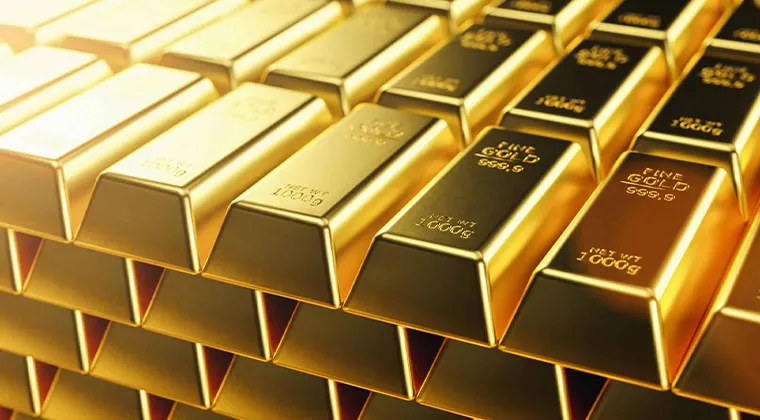
Gold prices in the UAE moved lower during Wednesday morning trading, with 18-karat gold slipping beneath the Dh400-per-gram mark as international bullion prices weakened.
The 18K rate stood at Dh399 per gram, putting it just below the psychological threshold that traders and consumers closely watch. The decline came as gold prices in international markets also retreated after the precious metal had climbed above the $4,400-per-ounce level earlier in the week.
At the lower end of the UAE gold market, 14K gold was trading at Dh311.25 per gram. The 14K category generally carries the lowest price among the commonly quoted gold grades because it contains a smaller proportion of pure gold compared with higher-karat varieties.
Internationally, spot gold was changing hands at around $4,340 an ounce on Wednesday, representing a decline of approximately 0.56 per cent.
The latest movement came after gold had recently crossed the $4,400 level, demonstrating the volatility that has characterised the precious metal market. Investors have been closely monitoring developments in the US economy and expectations surrounding the Federal Reserve’s monetary policy, both of which can have a significant influence on bullion prices.
The retreat from the recent high did not necessarily signal a reversal of the broader trend, according to market analysts. Instead, the latest movement reflected a combination of profit-taking, changing interest-rate expectations and continued sensitivity to geopolitical developments.
Rania Gule, senior market analyst for Mena at XS.com, said the importance of the current price levels extends beyond their numerical value. In her assessment, the levels reflect a broader change in the factors influencing gold and the balance between forces supporting and weighing on the precious metal.
According to Gule, the market environment has become more supportive of gold’s potential to regain upward momentum. However, she noted that the continuation of that move would depend on whether the metal can hold on to recent gains.
She also pointed to the possibility that geopolitical developments could create additional inflationary pressure. If such pressure becomes significant enough, it could influence the Federal Reserve to take a more restrictive approach to monetary policy, potentially creating a challenge for gold.
The outlook for US interest rates has emerged as one of the most important drivers of gold prices. Investors closely examine economic indicators for signs of whether the Federal Reserve is likely to maintain, lower or increase interest rates.
Recent US economic figures have contributed to changing expectations in financial markets. In particular, weaker-than-anticipated nonfarm payroll figures for July have encouraged investors to reassess the outlook for monetary policy.
Inflation data has also played a role. More moderate inflation readings have reduced some of the pressure on the Federal Reserve to respond with tighter monetary policy, according to Gule.
These developments have influenced expectations about the central bank’s next meeting and the direction of US interest rates.
Gold does not provide an interest payment, meaning its appeal can change depending on the returns available from interest-bearing assets. When expectations for interest rates rise, investors may become more inclined to favour assets that offer yields. Conversely, expectations of lower rates can make non-yielding assets such as gold relatively more attractive.
This relationship has made every major US economic release particularly important for the bullion market.
The recent weakening in employment data has therefore attracted considerable attention. A softer labour market can influence expectations about economic growth and the Federal Reserve’s policy choices.
If policymakers believe economic conditions are losing momentum while inflation remains manageable, markets may begin to anticipate a less restrictive interest-rate environment. Such expectations can provide support for gold.
However, the outlook remains dependent on incoming data and developments in the wider economy.
The UAE market is closely connected to international gold prices, meaning movements in the global bullion market are reflected in local per-gram rates. Changes in the international price of gold can therefore affect jewellery buyers and investors in Dubai and across the UAE.
For shoppers, the move below Dh400 for 18K gold is notable because round-number price levels often attract attention. A rate of Dh399 per gram means the category has moved below a threshold that consumers may have been monitoring.
The difference may appear small on a per-gram basis, but it can become more significant when purchasing jewellery weighing several grams.
The final retail price of a jewellery item, however, is not determined solely by the quoted gold rate. Buyers may also need to account for making charges and other costs, which can vary depending on the retailer, design and craftsmanship.
Consequently, the headline market rate provides an important reference but does not necessarily represent the complete price a customer will pay at a jewellery store.
The 14K rate of Dh311.25 per gram was significantly lower than the prices of the higher-purity categories. This reflects the difference in gold content between the various grades.
Karats indicate the proportion of pure gold contained in an item. Twenty-four-karat gold represents the highest commonly quoted purity, while lower-karat varieties contain a greater proportion of other metals.
As a result, 18K and 14K gold are generally priced below 24K gold, although their suitability for jewellery can differ depending on the desired durability and design.
The Wednesday figures illustrate how movements in the international bullion market are transmitted through the UAE’s gold sector.
With spot gold at approximately $4,340 an ounce, the market was below the $4,400 level reached earlier in the week. The decline of 0.56 per cent showed that prices had eased but remained at historically elevated levels compared with many previous periods.
The ability of gold to remain above important support levels will be closely watched by traders.
Gule’s assessment suggests that the broader environment remains potentially favourable for gold, but further gains cannot be taken for granted. The precious metal needs to maintain its recent advances and avoid a reversal triggered by changing economic or geopolitical conditions.
One of the key risks is the possibility that geopolitical tensions could contribute to higher inflation.
Geopolitical developments can influence commodity prices, supply chains and energy costs. If those effects result in sustained inflationary pressure, central banks may face greater pressure to maintain tighter monetary policies.
For gold, that could create a less favourable environment if investors begin expecting interest rates to stay higher for longer.
The Federal Reserve’s response to inflation remains therefore an important consideration for the bullion market.
Recent economic data has helped ease some expectations of tighter monetary policy. The weaker July employment figures mentioned by Gule were particularly significant because labour-market conditions are an important component of the Federal Reserve’s assessment of the US economy.
Moderating inflation has also supported the argument that the central bank may not need to adopt a more aggressive stance in the immediate future.
However, monetary policy decisions are rarely based on a single economic report. Federal Reserve officials typically assess a broad range of indicators, including employment, inflation, economic growth and financial conditions.
This means gold traders will continue watching new data and official comments for evidence that could alter current expectations.
The release of Federal Reserve meeting minutes can also be important because the document can provide additional insight into policymakers’ thinking. Investors may look for clues about the degree of concern surrounding inflation, economic activity and future interest-rate decisions.
Changes in those expectations can quickly influence the US dollar and bond yields, both of which can affect gold.
The precious metal’s recent move above $4,400 demonstrated the strength of demand that has emerged during the current period. Its subsequent retreat to around $4,340 shows that prices remain vulnerable to short-term corrections.
For investors, the key question is whether such declines represent temporary adjustments or the beginning of a more sustained change in direction.
For UAE consumers, meanwhile, movements in gold prices can influence purchasing decisions. Some buyers may view lower rates as an opportunity to purchase jewellery, while others may prefer to wait for additional declines.
The difference between 18K and 14K rates also gives consumers a range of options depending on their budget and preferences.
An 18K price of Dh399 per gram places the grade below the Dh400 threshold, while the 14K rate of Dh311.25 offers a considerably lower entry price. However, consumers should compare the full cost of jewellery rather than focusing exclusively on the gold rate.
Making charges can have a meaningful impact on the final bill, particularly for elaborate or customised pieces.
Gold investors, on the other hand, tend to focus more closely on international spot prices, currency movements, interest-rate expectations and broader market sentiment.
The current market illustrates why those factors matter. A change in expectations about US monetary policy can influence global gold prices, which can then feed through to retail markets such as the UAE.
The recent employment and inflation data have altered some expectations about the Federal Reserve, creating a potentially supportive backdrop for bullion.
Nevertheless, the market remains exposed to risks.
A resurgence in inflation, stronger-than-expected economic data or a shift toward a more hawkish Federal Reserve stance could place renewed pressure on gold. Similarly, a significant strengthening of the US dollar could affect the attractiveness of bullion.
On the other hand, further evidence of slowing economic activity or easing inflation could strengthen expectations for a less restrictive monetary policy and potentially provide additional support to gold.
Geopolitical uncertainty remains another variable.
Gold is often closely watched during periods of geopolitical stress because investors may seek assets perceived as stores of value. But geopolitical developments can also have an indirect impact by affecting energy prices and inflation.
That creates a complicated relationship between geopolitical risk and gold. While uncertainty can increase demand for bullion, an inflationary shock could ultimately lead central banks to maintain tighter monetary conditions.
This is the balance that market participants are currently assessing.
Gule’s comments suggest that gold has an opportunity to rebuild its upward momentum, but that opportunity depends on the market maintaining its recent gains and avoiding developments that could force a major shift in interest-rate expectations.
For now, the UAE market reflects the modest pullback seen internationally.
The 18K rate at Dh399 per gram represents a move below the Dh400 psychological level, while 14K gold was quoted at Dh311.25. Meanwhile, spot gold stood around $4,340 an ounce, down 0.56 per cent.
These figures followed the precious metal’s move above $4,400 earlier in the week, indicating that the market has experienced a notable amount of movement within a short period.
The coming sessions will likely remain focused on US economic indicators and signals from the Federal Reserve. Investors will be looking for evidence that can confirm or challenge current expectations regarding interest rates.
Any change in those expectations could have implications for international bullion prices and, in turn, gold rates across the UAE.
For consumers, the fall in 18K gold below Dh400 provides a clear reference point for the current market. However, prices can change during the day as international trading continues.
The broader outlook remains dependent on the interaction between monetary policy, inflation, economic data and geopolitical developments.
While the latest decline has taken some of the heat out of gold’s recent rally, the underlying market remains closely watched. The ability of bullion to stabilise around current levels could determine whether the recent advance resumes or whether prices face a deeper correction.
For now, gold traders are weighing the supportive effect of softer US economic indicators against the risks posed by inflation and potential changes in Federal Reserve policy.
That delicate balance is likely to remain central to the precious metal’s direction in the near term, with Dubai and the wider UAE market continuing to reflect the movements taking place in global gold trading.