Watch: The UAE Ministry has released new video footage capturing the country’s air defence systems operating during a live response, offering viewers a closer look at how the advanced equipment is deployed to detect, track and counter potential aerial threats.
Watch: UAE Ministry Shares Footage of Air Defence Systems in Operation.
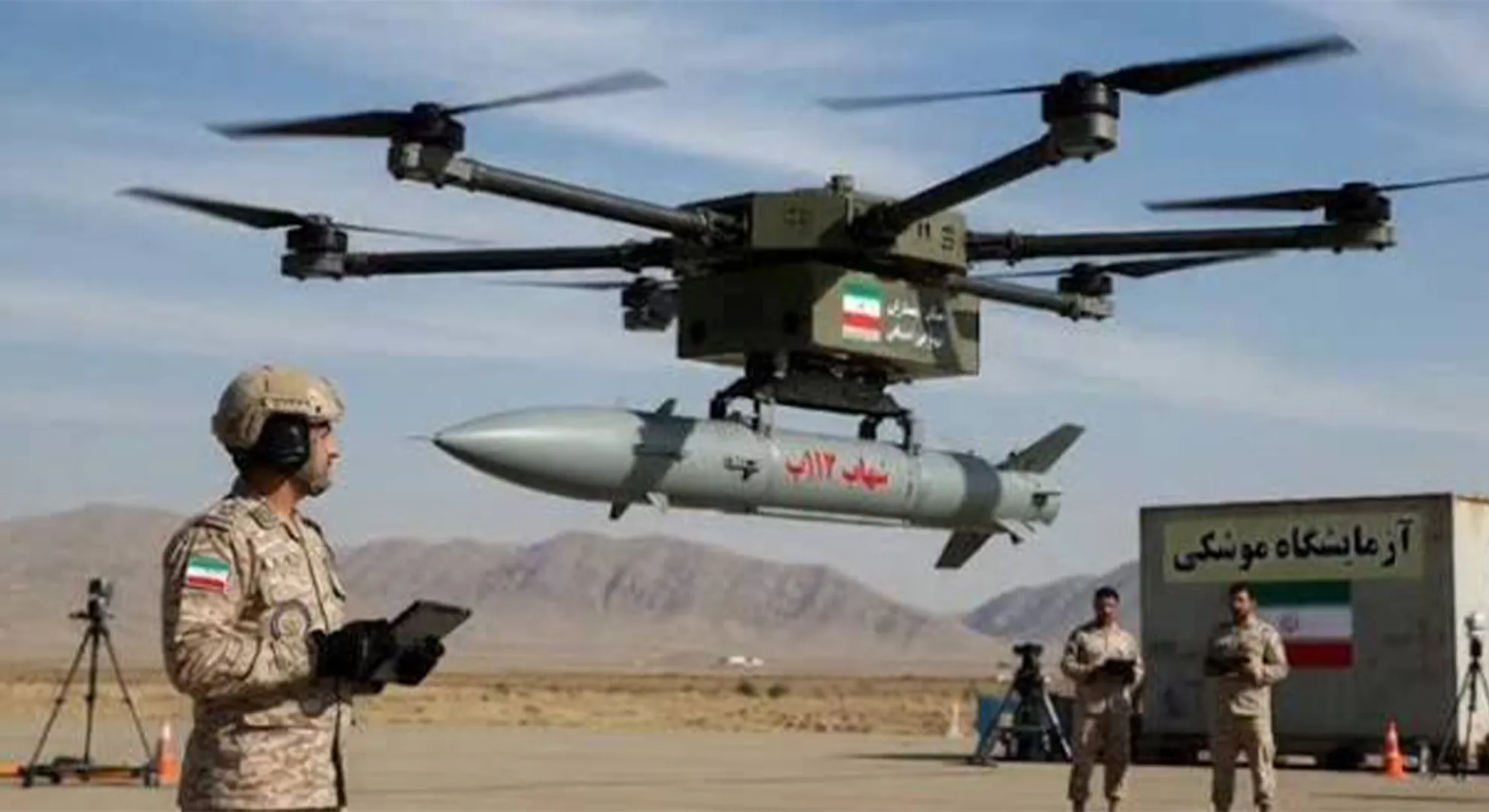
The development follows the UAE’s confirmation that its air defence units identified two ballistic missiles launched from Iran and heading toward its territory, prompting defensive measures to counter the incoming threat.
UAE Releases Air Defence Footage as Missile Threat Raises Security Alert
The UAE Ministry of Defence has released video footage showing elements of the country’s air defence capabilities operating in response to potential aerial threats, providing a rare view of how the nation monitors and protects its airspace.
The footage, released on Tuesday, August 18, highlights the activities of the UAE Air Force and other defence systems deployed to safeguard the country. The ministry said the forces remain prepared to respond decisively to threats and protect the UAE’s security and stability.
The release came on the same day that Emirati authorities reported detecting two ballistic missiles travelling towards the country from Iran. According to the Ministry of Defence, neither missile resulted in an impact on populated areas. Officials said one projectile fell outside the UAE’s territorial waters, while the second came down within the country’s territorial waters.
The missile detection was followed by an emergency warning issued to residents across the UAE. Authorities urged people who received the alert to immediately move to a secure location, preferably the nearest protected building, and remain there until further instructions were provided.
The warning generated concern among residents because of its sudden nature and the relative calm that had characterised the evening. The alert was issued at around 6.52pm, prompting people to quickly assess the situation and follow official safety instructions.
It was also notable because it represented the first such emergency warning issued in the UAE since July 12. The latest notification therefore drew particular attention from residents, many of whom were caught by surprise when the alert appeared on their phones.
The release of the defence footage provided additional context surrounding the heightened security situation. Rather than simply announcing the existence of defensive measures, the Ministry of Defence offered a visual demonstration of some of the systems and personnel responsible for monitoring aerial activity and responding to possible threats.
The UAE maintains an extensive network of air defence capabilities designed to identify and respond to incoming aerial objects. Such systems play an important role in protecting civilian areas, critical infrastructure and the country’s wider territory from potential missile and drone attacks.
The ministry’s video also sought to underline the readiness of the UAE’s armed forces. By showing defence personnel and equipment in operation, the footage conveyed a message that the country’s security forces remain prepared to react when necessary.
The latest developments occurred amid wider regional tensions involving the United States, Israel and Iran. The changing security environment has increased attention on the potential for missile and drone threats to affect countries across the Gulf.
For residents, however, the immediate priority remained following official safety guidance. Authorities have repeatedly stressed the importance of responding quickly to emergency notifications and moving away from exposed locations when instructed to do so.
The UAE’s emergency alert system is intended to provide residents with rapid information when authorities identify a serious potential danger. Such notifications can instruct people to seek shelter, remain indoors or follow other measures depending on the nature of the threat.
Tuesday’s alert demonstrated the importance of that system as the country responded to the reported missile activity. While the Ministry of Defence confirmed the detection of the two missiles, officials also provided reassurance by explaining where the projectiles ultimately fell.
The incident illustrates the role of early-warning and interception capabilities in modern air defence. Detecting an incoming missile at an early stage gives authorities more time to assess its trajectory, determine whether it poses a danger to populated areas and activate appropriate protective measures.
The publication of the footage also served to highlight the coordination between the UAE’s military personnel and its defence infrastructure. Maintaining constant surveillance is essential for identifying potential threats and ensuring that appropriate responses can be initiated without delay.
For the UAE, protecting its airspace is particularly important because of the concentration of major population centres, airports, energy facilities and other strategic infrastructure across the country. A credible air defence network therefore forms a key part of the nation’s broader security arrangements.
Tuesday’s developments also underscored how quickly regional tensions can translate into heightened security measures in Gulf countries. Even when an incoming projectile does not strike a populated area, the detection of a missile can trigger emergency procedures designed to minimise risks to civilians.
The Ministry of Defence’s decision to release operational footage following the incident may also have been intended to reassure the public that national defence systems remain active and prepared. Public communication can be especially important during periods of heightened regional uncertainty, when residents may be seeking reliable information about potential threats.
Officials have continued to encourage residents to rely on authorised government notifications and instructions rather than unverified information circulating online. During emergencies, timely and accurate information can help prevent confusion and ensure that people take appropriate precautions.
The latest incident therefore combined two elements of the UAE’s security response: military readiness and public warning. While air defence forces worked to detect and assess the incoming missiles, the emergency alert system provided residents with immediate instructions on how to protect themselves.
The ministry’s footage offered a glimpse of the first part of that response, while the emergency notification demonstrated the second. Together, they showed how authorities can combine surveillance, defence capabilities and civilian alerts when dealing with a potential aerial threat.
Although the reported missiles did not strike populated territory, the episode served as a reminder of the security challenges facing countries in the region. It also highlighted the importance of preparedness, rapid detection and clear communication during periods of uncertainty.
For UAE residents, the message from authorities remained straightforward: when an official emergency alert is issued, people should follow the instructions immediately, move to a secure location and wait for further guidance.
The release of the defence footage came as the UAE sought to demonstrate its preparedness amid a tense regional environment. By showing its air defence systems in operation, the Ministry of Defence emphasised the role of the country’s armed forces in protecting its territory and maintaining national security.
As regional developments continue to evolve, UAE authorities are expected to remain alert to possible aerial threats and keep residents informed through official channels.
Previous emergency alerts in the UAE
The UAE has issued several emergency notifications to residents in recent months as authorities have responded to developments involving aerial threats and heightened regional tensions. These alerts have varied in nature, with some linked to active security situations and others later determined to have been caused by technical problems.
One of the more recent incidents occurred on July 12, when residents across the country reported hearing sounds that prompted concern. UAE authorities subsequently explained that the sounds were associated with ongoing air defence interception activity.
Residents were asked to remain calm and comply with official safety instructions while the interception operations were underway. The guidance reflected the authorities’ broader approach of providing the public with immediate information when potential aerial threats are detected.
The July incident occurred against the backdrop of a wider escalation involving Iran and the United States. On the same day, the US military announced that it had carried out another series of strikes against targets in Iran.
The announcement followed an incident involving the Islamic Revolutionary Guard Corps and a commercial container vessel travelling through the Strait of Hormuz. The strategically important waterway has remained a major focus during periods of heightened regional tension because of its importance to international shipping and energy supplies.
The developments on July 12 therefore came at a time when concerns over the potential expansion of regional hostilities were already high. For countries in the Gulf, the possibility of missiles, drones or other aerial threats reaching their territory has remained an important security concern.
The UAE’s response has included maintaining active air surveillance and defence capabilities while also using its emergency communications network to inform residents when necessary.
The July 12 notification was not the first occasion in recent months when UAE residents were advised to take precautions because of possible aerial threats.
Earlier, on May 4, UAE authorities activated air defence measures following the detection of aerial threats. Residents in several parts of the country received emergency notifications instructing them to remain indoors or move to safe locations while authorities assessed the situation.
Those warnings marked a significant development because they were the first emergency alerts of this nature issued since a ceasefire that had taken effect on April 8.
The May incident demonstrated the importance of the UAE’s public warning infrastructure during periods of regional instability. Emergency notifications allow authorities to communicate directly with residents and provide immediate instructions when officials believe that a potential threat could affect civilian areas.
For residents, such alerts can be unsettling, particularly when they arrive without advance notice. Authorities have therefore repeatedly stressed the importance of remaining calm, following official instructions and avoiding speculation based on unverified reports.
The purpose of an emergency warning is to give people enough time to take sensible precautions. Depending on the circumstances, residents may be instructed to stay indoors, move away from exposed areas or seek shelter in a secure building.
The May 4 episode also highlighted how the UAE’s security situation can be affected by events occurring elsewhere in the region. Aerial threats do not necessarily originate within the country itself, meaning authorities must maintain continuous monitoring of airspace and remain prepared to respond rapidly.
However, emergency notifications received by UAE residents during this period have not always indicated an actual security threat.
A notable example occurred on June 26, when a large number of residents received an emergency notification that appeared to warn of a possible missile-related danger. The message initially caused concern, given the recent history of genuine alerts and the broader regional security environment.
Officials later clarified that the June 26 notification had been sent because of a technical error. Authorities confirmed that the alert was not connected to an actual security incident and advised residents not to treat it as a genuine warning.
The clarification helped distinguish the technical malfunction from previous alerts that had been issued in response to real security developments.
The incident also illustrated the challenges associated with maintaining a nationwide emergency warning system. While such systems are essential for communicating quickly with the public, an incorrect notification can cause confusion, particularly during periods when residents are already sensitive to reports of military activity in the region.
For the UAE, emergency communications have become an increasingly important part of its broader preparedness strategy. The country has invested in systems capable of delivering warnings to residents rapidly when authorities identify circumstances that could threaten public safety.
The system is intended to provide residents with clear instructions rather than leave them dependent on social media reports or unofficial information. During an unfolding emergency, authorities can use these channels to tell people what action to take and when normal activities can safely resume.
The repeated alerts in May and July also demonstrate the importance of air defence systems in protecting the UAE’s territory. Modern air defence networks rely on multiple layers of detection and response, allowing authorities to identify potential threats and assess their trajectory before deciding what action is required.
For civilians, much of this process happens out of sight. Residents may hear interception sounds or receive an emergency notification without knowing precisely what is occurring. Official communication therefore plays an important role in reducing uncertainty.
The July 12 warning, for example, sought to explain that sounds heard across the country were connected to interception activity. By providing that explanation, authorities aimed to prevent unnecessary panic and encourage residents to follow safety guidance.
The May 4 alerts similarly encouraged people to remain indoors or in secure locations until the perceived threat had passed.
The contrasting experience of June 26 demonstrates why accurate emergency communication is equally important. When a notification is generated by mistake, authorities need to clarify the situation quickly so residents understand that no corresponding security incident has occurred.
Taken together, the incidents show how UAE residents have encountered different types of emergency notifications over recent months. Some have been connected to active air defence responses, while another was ultimately traced to a technical malfunction.
The pattern also reflects the wider security environment surrounding the Gulf. The UAE sits in a region where military confrontations involving Iran, the United States and other actors can have consequences beyond the immediate battlefield.
Missile launches, drone activity, attacks on commercial shipping and military operations can all increase concerns about potential spillover. Gulf countries therefore maintain heightened vigilance and continue to strengthen their ability to detect and respond to aerial threats.
The Strait of Hormuz remains particularly significant in this context. The waterway is one of the world’s most important maritime routes, and incidents involving commercial vessels can rapidly become part of broader geopolitical tensions.
The July 12 developments illustrated this connection, with military activity involving Iran, US operations and concerns about the safety of regional airspace occurring within the same broader period of heightened tension.
Despite the seriousness of such developments, UAE authorities have consistently urged residents to avoid unnecessary alarm. The preferred response is to follow official notifications, take the requested safety measures and wait for further instructions.
This approach is especially important because emergency situations can generate a large volume of information online. Reports shared through social media may be incomplete, inaccurate or unrelated to events occurring in the UAE.
Official alerts are therefore intended to provide residents with authoritative information at the moment when they need it most.
The UAE’s recent experience also underscores the importance of distinguishing between an actual threat and a false or accidental warning. The May and July alerts were associated with security responses, while the June 26 notification was later attributed to a technical problem.
For residents, however, each unexpected alert can initially create uncertainty. This makes rapid clarification from authorities particularly important.
The overall message from officials has remained consistent: residents should stay calm, pay attention to official announcements and take immediate safety precautions when instructed.
The emergency system serves not only as a warning mechanism but also as a way for authorities to manage public safety during rapidly changing circumstances. By providing residents with clear instructions, officials can help reduce confusion and ensure that people respond appropriately.
The incidents of May 4, June 26 and July 12 consequently provide three different examples of how emergency communications have been used in the UAE in recent months.
In May, residents were warned amid reported aerial threats and were instructed to remain in safe locations. In June, a technical malfunction resulted in an alert that was later confirmed not to be connected to a security event. In July, residents were informed that sounds heard across the country were linked to air defence interception operations.
Each incident generated a different response, but all highlighted the importance of reliable communication between authorities and the public.
As regional tensions continue to evolve, the UAE is expected to maintain close monitoring of developments that could potentially affect its airspace or territory. The country’s air defence capabilities and emergency warning systems remain important components of its broader national security and civilian protection measures.
For residents, the practical advice remains straightforward. When an official emergency notification is received, people should read the instructions carefully, follow the recommended safety measures and rely on verified government information for updates.
At the same time, authorities’ clarification of incidents such as the June 26 technical error demonstrates the importance of promptly correcting misinformation and preventing unnecessary public concern.
The recent sequence of events ultimately highlights two sides of emergency preparedness: the ability to respond to genuine threats and the ability to communicate accurately with the public when circumstances change.
With regional security conditions remaining unpredictable, both capabilities are likely to remain central to the UAE’s efforts to protect residents and maintain stability.