**UAE’s Extradition Efforts Bring Five High-Profile Italian Fugitives Home, Including a Suspected Drug Kingpin, Highlighting Abu Dhabi’s Growing Role in International Criminal Transfers.**
From Drug Lord to Italy’s Most-Wanted: How the UAE Handed Over Five Notorious Criminals.

Local law enforcement agencies have moved quickly to track down and arrest wanted individuals, responding to international warrants and Interpol Red Notices targeting prominent fugitives.
The United Arab Emirates has built a strong reputation for maintaining public safety, with its cities often regarded as places where people can go about their daily lives with a high degree of confidence. But the country’s law-enforcement record extends well beyond keeping crime under control within its own borders. In recent years, authorities in the UAE have also become increasingly involved in international efforts to track down fugitives wanted in connection with serious crimes.
The country’s security agencies have worked closely with foreign governments and international law-enforcement bodies to identify, arrest and extradite individuals who are wanted in other jurisdictions. These operations have involved people accused of a wide range of offences, from organized criminal activity and violent crimes to financial offences and armed robbery.
The growing cooperation between the UAE and other countries reflects the increasingly international nature of criminal investigations. Criminal networks often operate across borders, with suspects moving from one country to another in an attempt to avoid arrest or prosecution. International arrest warrants and Interpol Red Notices can therefore play an important role in helping authorities identify individuals who are wanted elsewhere.
For the UAE, cooperation with international partners has become an important part of its broader law-enforcement strategy. Dubai Police, in particular, has handled numerous cases involving fugitives sought by authorities in different parts of the world. When information is shared through international channels, local authorities can take action against suspects located within the country and begin the legal procedures required for their extradition.
Figures released in 2022 illustrate the scale of these efforts. According to the data, Dubai Police arrested 432 international fugitives between 2020 and 2022. The individuals were wanted in connection with a variety of serious criminal allegations and offences.
The cases included people suspected of establishing or participating in criminal organizations, as well as individuals wanted over premeditated murder, money laundering and armed robbery. The figures demonstrate that international fugitive investigations handled by Dubai authorities have involved suspects linked to both violent and financially motivated crimes.
Arresting a wanted individual, however, is only one part of the process. Once a suspect is detained, extradition proceedings may have to be completed before the person can be transferred to the country seeking their return. Such procedures generally involve coordination between law-enforcement authorities, judicial bodies and government agencies in the countries concerned.
During the same period, Dubai Police reportedly extradited 379 wanted individuals to authorities in 30 countries. The number highlights the extent of cooperation between the UAE and foreign governments in dealing with people wanted for criminal offences outside the Emirates.
The data also showed that the UAE was involved in the opposite side of the process as well. Between 2020 and 2022, Dubai authorities repatriated 65 wanted fugitives from abroad. In other words, cooperation was not limited to handing over suspects who had been arrested inside the UAE. Authorities also worked with international counterparts to locate and bring back individuals wanted by UAE authorities.
Such cooperation is particularly important in cases involving organized crime. Criminal groups can have connections in multiple countries, making it difficult for any single jurisdiction to deal with the entire network on its own. The exchange of intelligence, information about suspects and details contained in international warrants can help authorities locate individuals who might otherwise remain difficult to trace.
Interpol also plays a significant role in facilitating international police cooperation. A Red Notice can be circulated to member countries to alert authorities that an individual is wanted by a particular jurisdiction. While a Red Notice itself is not an international arrest warrant, it can assist national authorities in identifying and provisionally detaining people who are being sought by another country, subject to the laws of the country where the person is located.
For fugitives with international profiles, being placed on such an alert can significantly reduce their ability to move between countries without attracting the attention of law-enforcement agencies. When authorities in the UAE receive information about a wanted individual, local agencies can investigate the person’s presence, verify the relevant information and take appropriate legal action.
Over the years, several high-profile fugitives have been detained in the UAE before being transferred to countries seeking their extradition. Some of these cases have attracted international attention because of the seriousness of the allegations involved or the prominence of the individuals concerned.
The cases have ranged from alleged drug trafficking and organized criminal activity to murder, financial crimes and other major offences. Their arrests have demonstrated how international investigations can extend across national borders and how cooperation between law-enforcement agencies can help authorities pursue suspects who attempt to escape prosecution by leaving their home countries.
The UAE’s role in these cases also reflects the importance of international partnerships in modern policing. With criminals increasingly able to use international travel, financial systems and communication networks to operate across borders, authorities need mechanisms that allow them to share information and coordinate investigations.
The extradition process provides one such mechanism. Once an individual wanted by another country is located and detained, the relevant authorities can work through established legal and diplomatic channels to determine whether the person can be returned. The process is subject to applicable laws and procedures, but effective cooperation can ultimately ensure that suspects are brought before the authorities seeking to prosecute them.
For Dubai Police, the figures from 2020 to 2022 underline the scale of this international effort. The arrest of 432 wanted fugitives, the extradition of 379 people to 30 different countries and the repatriation of 65 fugitives from overseas point to an extensive network of cooperation between the UAE and law-enforcement agencies around the world.
Beyond the numbers, individual cases involving internationally wanted suspects have helped draw attention to the UAE’s growing role in cross-border criminal investigations. These operations show that the country’s security efforts are not confined to offences committed within its territory. They can also involve locating people wanted elsewhere and supporting foreign authorities in bringing them back to face legal proceedings.
As international crime becomes more complex, cooperation between countries is likely to remain an important part of law enforcement. Arrest warrants, Interpol alerts, intelligence sharing and extradition agreements can all help governments respond when suspects attempt to evade justice by crossing borders.
The UAE has consequently emerged as an important partner for countries seeking the return of wanted individuals. Through cooperation involving police agencies, judicial authorities and international organizations, authorities have been able to locate and detain numerous fugitives and facilitate their transfer to the jurisdictions where they are wanted.
Against this backdrop, several notable names have appeared among the international fugitives arrested in the UAE and subsequently extradited. Their cases provide a closer look at how international arrest requests are acted upon and how cooperation between the Emirates and foreign governments can lead to the capture and transfer of individuals wanted for major crimes.
Here are some of the most prominent international fugitives who were wanted by authorities abroad and were subsequently arrested and extradited from the UAE.
Daniel Kinahan
Daniel Kinahan: Irish Crime Figure Extradited from the UAE
The United Arab Emirates has in recent years strengthened its cooperation with international law-enforcement agencies to locate and apprehend fugitives wanted for serious crimes around the world. One of the most prominent cases involved Irish national Daniel Kinahan, a senior figure associated with the Kinahan Transnational Criminal Organisation, who was arrested in Dubai and subsequently transferred to Ireland.
The UAE announced on Sunday, August 9, that Kinahan had been extradited and handed over to Irish authorities. His return to Ireland marked a significant development in a long-running international investigation into the activities of the Kinahan crime network.
Kinahan is expected to face prosecution in Ireland in connection with allegations involving transnational organised crime. The cases against him include accusations of directing a criminal organisation, involvement in murder and participation in illegal drug trafficking.
His alleged links to the Kinahan criminal network had already made him a major target for international law-enforcement agencies. In 2022, the United States identified Daniel Kinahan as one of three alleged leaders of the Kinahan Organised Crime Group. American authorities announced a reward of up to $5 million for information leading to the arrest or conviction of the group’s senior figures.
Kinahan had moved to Dubai in 2016 after becoming embroiled in a violent conflict involving rival criminal groups in Ireland. His departure followed a shooting at a Dublin hotel, an incident that heightened concerns over his personal safety and marked another stage in the increasingly violent feud surrounding the Kinahan organisation.
The rise of the Kinahan criminal network
The Kinahan organisation developed from criminal activities centred on the distribution of illegal drugs. According to law-enforcement allegations, the group initially became involved in supplying cocaine and heroin originating from South America into Ireland.
Its activities subsequently expanded beyond Ireland. The organisation was accused of developing connections across the United Kingdom and several European countries, turning what had initially been a regional criminal operation into a network with international reach.
Drug trafficking was not the only activity associated with the group. Authorities have also linked members of the organisation to alleged money laundering, illegal firearms trafficking and violent crimes, including murder.
The international nature of the network made cooperation between different countries particularly important. As individuals connected with the organisation moved between jurisdictions, police forces in Ireland and elsewhere increasingly relied on international intelligence-sharing and coordination to track suspects.
Kinahan’s eventual arrest in Dubai therefore represented one part of a much wider international effort to pursue senior figures connected with the organisation.
Sean McGovern: Another major Kinahan figure
Daniel Kinahan was not the only senior figure connected to the organisation to become the focus of an international manhunt. Sean McGovern, another prominent member of the Kinahan network, was also arrested in Dubai after being sought by Irish authorities.
McGovern is now being held in a maximum-security prison in central Ireland. Before his arrest, he had been wanted in connection with allegations relating to the direction of an organised crime group and the killing of a member of a rival gang in 2016.
Following the murder, McGovern reportedly left Ireland and travelled to the UAE. His presence in Dubai eventually attracted the attention of international law-enforcement agencies, which began working together to establish his location and gather information about his movements.
Interpol played an important role in the investigation. Before the arrest, the international police organisation had circulated a Blue Notice concerning McGovern. Such notices are used to help countries obtain additional information about a person’s identity, whereabouts or activities.
The investigation later entered a more decisive phase when an Interpol Red Notice was issued. Unlike a Blue Notice, which primarily seeks information, a Red Notice alerts police forces internationally that an individual is wanted by a member country and requests cooperation in locating and provisionally arresting the person, subject to national law.
Operation Harvest and the international manhunt
McGovern’s case was the result of years of cooperation between law-enforcement agencies. According to Interpol, officers from the international organisation, Dubai Police and the Irish authorities held a series of meetings as part of an investigation that became known as “Operation Harvest.”
The cooperation continued while McGovern was believed to be living in Dubai. Investigators maintained communication and exchanged information in an effort to establish his location and determine the appropriate time to act.
The operation eventually reached a breakthrough in October 2024. According to Interpol, McGovern was arrested in Dubai within approximately an hour of the Red Notice being published on October 10, 2024.
The speed of the arrest demonstrated the importance of real-time cooperation between police agencies. Once the international alert became active, information could be rapidly shared with authorities on the ground, allowing Dubai Police to identify and detain the wanted individual.
McGovern’s arrest was subsequently followed by extradition proceedings, eventually leading to his transfer to Ireland, where he remains in custody while facing the legal process connected with the allegations against him.
His case illustrates how international fugitives can be pursued even after leaving the country where alleged offences occurred. Through Interpol notices, police cooperation and formal extradition procedures, authorities can continue investigations across borders.
Othman El Ballouti: Belgium’s alleged ‘Cocaine King’
Another major international fugitive arrested in Dubai was Othman El Ballouti, a Belgian-Moroccan national who had become one of Belgium’s most wanted suspected drug traffickers.
Dubai Police announced his arrest on December 9 following an international manhunt. His detention came after Belgian authorities submitted a formal request and an Interpol Red Notice was issued over allegations connected to transnational organised crime and drug trafficking.
El Ballouti had been the subject of international attention because of allegations that he was involved in running a large-scale drug-smuggling network operating through Antwerp.
The Belgian port city is one of Europe’s major commercial gateways and has become a central focus of European investigations into the movement of illegal drugs. Authorities accused El Ballouti of being involved in a major trafficking operation using the port and surrounding networks to move narcotics into Europe.
His name had appeared on international wanted lists, including those associated with Interpol and Europol. He had also become the subject of sanctions imposed by the United States.
The international nature of the allegations meant that locating him required cooperation between several law-enforcement agencies. His arrest in Dubai followed coordinated efforts involving Dubai Police and the UAE Ministry of Justice’s International Cooperation Department, the government body involved in handling international judicial and extradition matters.
Following his arrest, El Ballouti was referred to the Dubai Public Prosecution. The referral formed part of the legal process associated with the Belgian request for his extradition.
UAE-Belgium cooperation
The case also highlighted the formal legal relationship between the UAE and Belgium. The two countries signed an extradition agreement in 2021, creating an established framework for cooperation when individuals wanted by one country are found in the other.
Such agreements can provide the legal basis for authorities to process extradition requests and coordinate the transfer of suspects or convicted individuals between jurisdictions, subject to the applicable legal requirements.
For Belgian authorities, El Ballouti’s detention in Dubai represented a major development in efforts to pursue an alleged drug-trafficking figure who had remained outside the country’s reach.
El Ballouti had gained considerable notoriety in European law-enforcement circles and was widely described as the “Cocaine King” because of the allegations surrounding his involvement in the international narcotics trade.
His arrest was not an isolated case. El Ballouti was extradited along with two other high-profile criminal suspects, Matthias Akyazili and Georgi Faes, in a development that underlined the growing level of cooperation between the UAE and foreign governments in pursuing wanted individuals.
A broader international crackdown
The cases involving Kinahan, McGovern and El Ballouti demonstrate the increasingly international character of modern criminal investigations. Individuals accused of serious offences can move between countries, establish new networks and attempt to distance themselves from investigations taking place in their home jurisdictions.
For law-enforcement agencies, this creates a challenge that cannot always be addressed through domestic policing alone. International notices, intelligence exchanges and direct cooperation between police forces can become essential tools for locating suspects who cross borders.
The UAE has become an important partner in several such investigations. Dubai, in particular, has attracted significant attention because of its role in international policing operations involving fugitives wanted by authorities in Europe and elsewhere.
The use of Interpol notices can be particularly significant in these cases. When a country identifies an individual as wanted in connection with a serious offence, information can be circulated internationally so that other member countries can assist in locating the person.
However, an Interpol Red Notice is not itself an international arrest warrant. The decision to arrest a person remains subject to the laws of the country where the individual is located. Once a suspect is detained, extradition proceedings can then take place through the relevant legal and diplomatic channels.
The cases of Kinahan, McGovern and El Ballouti show how these different mechanisms can work together. Information provided by foreign authorities, international alerts, police investigations and formal extradition requests can collectively help bring wanted individuals back to the jurisdictions seeking to prosecute them.
For the UAE, such operations also demonstrate its willingness to cooperate with international partners on serious criminal cases. The arrests have involved individuals accused of offences ranging from organised crime and murder to large-scale drug trafficking and financial wrongdoing.
The eventual extradition of these high-profile suspects marks the final stage of lengthy investigations that often cross several countries and involve numerous law-enforcement agencies.
From Dubai to facing justice abroad
For years, international fugitives have attempted to avoid arrest by moving outside their home countries. But the growing use of international policing networks has made it increasingly difficult for wanted individuals to remain beyond the reach of investigators.
Daniel Kinahan’s extradition to Ireland, Sean McGovern’s arrest and subsequent transfer, and Othman El Ballouti’s detention in Dubai all illustrate this changing landscape.
In Kinahan’s case, investigators were pursuing allegations involving one of Ireland’s most notorious organised crime networks. McGovern was wanted in connection with alleged organised crime and a murder involving a rival gang. El Ballouti, meanwhile, was sought by Belgian authorities over allegations of large-scale international drug trafficking.
Although the circumstances of each case were different, they shared a common element: the suspects were located outside the countries where they were wanted, requiring international cooperation to bring them within reach of the relevant authorities.
The UAE’s role in these cases has therefore extended beyond domestic policing. Its law-enforcement agencies have worked alongside foreign counterparts and international organisations to identify wanted individuals, carry out arrests and facilitate the legal procedures necessary for extradition.
These high-profile cases also underline the importance of sustained cooperation rather than relying solely on individual police operations. Investigations can continue for years, with authorities exchanging intelligence and monitoring suspects before sufficient information becomes available to take action.
For fugitives who have attempted to build lives away from their countries of origin, international arrest notices and coordinated police operations can ultimately bring those efforts to an end.
The extradition of these prominent suspects serves as another example of how countries can work together to pursue individuals accused of serious crimes, regardless of where those individuals may be located.
From the alleged leadership of a major Irish organised crime network to accusations surrounding one of Europe’s significant drug-trafficking operations, the cases have involved some of the most prominent names on international wanted lists.
Their arrests in the UAE and subsequent extraditions demonstrate the role that cross-border cooperation can play in ensuring that suspects wanted for serious offences are returned to the jurisdictions seeking to hold them accountable.
Raffaele Imperiale: Italy’s Wanted Crime Figure Tracked Down in Dubai
The UAE’s growing role in international law-enforcement cooperation has led to the arrest of several fugitives who had managed to remain outside the reach of authorities in their home countries. One of the most notable cases involved Raffaele Imperiale, an alleged senior figure in Italy’s Camorra organised crime network.
Imperiale was arrested by Dubai Police on July 30, 2021, after an Interpol Red Notice had been issued against him. At the time, Interpol said he had been wanted by Italian authorities since 2016 in connection with allegations involving drug trafficking and organised crime.
The operation did not end with Imperiale’s arrest. Dubai Police also apprehended his alleged associate, Raffaele Mauriello, on August 14, 2021. Mauriello was the subject of two separate Interpol Red Notices linked to arrest warrants involving two different murder cases. Both men were detained in the UAE while extradition proceedings were being pursued.
Imperiale’s alleged position within the Camorra made his arrest particularly significant. The organisation, based in the Naples region, has long been associated by Italian authorities with organised criminal activity, including drug and weapons trafficking. Dubai Police described Imperiale as an alleged kingpin within the network.
How Dubai Police located Imperiale
Imperiale had apparently taken considerable precautions to avoid being identified. According to Dubai Police, investigators discovered that he was using a false identity and presenting himself as “Antonio Rocco.”
He also attempted to make his movements difficult to follow. Police said he used different vehicles rather than relying on a single car and selected an isolated residence that gave him a clear view of people approaching the property. The location effectively provided him with an opportunity to monitor activity around his home and detect anyone who might be watching him.
Authorities said he had also deliberately avoided registering an address, another measure that allegedly helped him remain difficult to trace.
Despite these precautions, investigators were able to establish his true identity and begin monitoring his movements. Dubai Police said the investigation made use of advanced technological capabilities and surveillance systems to follow the suspect and understand his methods of avoiding detection.
The operation ultimately culminated in a raid on the property. Police moved in after monitoring his activities and arrested him. Authorities also reported seizing cash, luxury watches and other valuable items, including paintings, during the operation.
The case illustrated how traditional police investigation can be combined with technology and international intelligence. Imperiale had allegedly attempted to conceal his identity and minimise his movements, but the investigation eventually connected him with the person sought under the international alert.
The wider international connection
The arrest also demonstrated the importance of Interpol’s global network in locating fugitives who cross international borders.
A Red Notice allows information about a wanted person to be circulated among member countries. It can assist national police forces in identifying and locating individuals sought by another jurisdiction. However, it is important to note that a Red Notice is not itself an international arrest warrant. Any arrest is carried out according to the laws of the country where the individual is found.
In Imperiale’s case, the international alert provided Dubai Police with an important link to the Italian investigation. Once the suspect’s identity and location were established, UAE authorities were able to take action under their own legal procedures.
The case became an example frequently cited in discussions about international police cooperation because it involved a fugitive who had allegedly taken deliberate steps to conceal his identity and whereabouts.
Imperiale was eventually extradited to Italy. The case demonstrates that crossing borders does not necessarily end a criminal investigation, particularly when the countries involved are able to share intelligence and coordinate law-enforcement action.
Michael Paul Moogan: Eight Years on the Run
Another high-profile fugitive captured in Dubai was Michael Paul Moogan, a British national wanted over allegations connected to a large-scale international cocaine-trafficking operation.
Moogan had reportedly remained outside the reach of UK authorities for approximately eight years before his arrest in Dubai in 2021. He was among the fugitives featured in Operation Captura, a campaign focused on individuals wanted by British authorities. Dubai Police arrested him following cooperation with the UK’s National Crime Agency and after receiving an Interpol Red Notice.
Moogan’s alleged involvement was connected to an investigation that stretched across the United Kingdom and the Netherlands.
Authorities had been pursuing him after a police operation at a café in Rotterdam. Investigators suspected the establishment had been used as a meeting point for individuals involved in the international drug trade and criminal networks.
The investigation was linked to allegations concerning a plan to move hundreds of kilograms of cocaine into Britain every week. The scale of the suspected operation meant that authorities in several countries had an interest in identifying the people behind it.
Moogan’s ability to remain outside Britain for years made his eventual capture particularly significant. His case demonstrated how suspects involved in international criminal networks can use different jurisdictions to avoid arrest.
A false identity did not stop the investigation
Moogan also attempted to make himself more difficult to identify. According to Dubai Police, he entered the UAE using a different name and nationality.
Investigators were nevertheless able to establish his identity. Once his identity had been confirmed, officers placed him under surveillance and continued monitoring his movements.
Dubai Police said its Criminal Data Analysis Centre and other investigative capabilities assisted in identifying the fugitive. The operation was carried out in coordination with Britain’s National Crime Agency.
The arrest followed the circulation of the Interpol Red Notice. Officials from Britain’s National Crime Agency subsequently praised the cooperation between the British and UAE authorities, as well as the role of Interpol in facilitating international coordination.
Moogan’s arrest showed another important element of modern fugitive investigations: a person can change their name, travel to another country and attempt to create a new identity, but international information-sharing can allow investigators to connect the new identity with an existing criminal investigation.
His capture was therefore not simply the result of a police officer recognising a wanted face. It involved intelligence gathering, data analysis, international communication and cooperation between agencies in different countries.
How Does the UAE Track International Fugitives?
The arrest of people such as Imperiale and Moogan raises a broader question: how can authorities locate individuals who have deliberately crossed borders to avoid arrest?
There is no single method. Successful fugitive investigations generally involve several layers of policing, intelligence work, international cooperation and legal procedures.
1. International alerts and Interpol cooperation
One of the most important tools available to law-enforcement agencies is the international information-sharing system operated through Interpol.
When a person is wanted in connection with serious criminal allegations, the requesting country can seek the circulation of an Interpol notice. A Red Notice can alert police forces in member countries that an individual is wanted based on an arrest warrant or equivalent judicial decision.
Such notices can become particularly important when fugitives leave their country of origin. Instead of investigators in one country having to locate the suspect independently, information can be shared across international law-enforcement networks.
The Imperiale case is a clear example. Interpol confirmed that Dubai Police arrested him on the basis of a Red Notice issued in connection with the Italian investigation.
2. Cooperation between foreign police agencies
International investigations rarely depend on a single police force.
In Moogan’s case, Dubai Police worked with Britain’s National Crime Agency. The investigation had links to criminal activity spanning the UK and the Netherlands, making cooperation between agencies essential.
Similar cooperation can involve police forces, financial-crime investigators, prosecutors and international organisations.
Information can include details about a suspect’s identity, travel history, associates, financial activities, vehicles and other information that could help investigators establish where a wanted individual is living.
The more information investigators can exchange, the easier it can become to connect a person using a false identity with the individual named in an international arrest request.
3. Surveillance and technological tools
Modern policing increasingly relies on technology to support traditional investigative methods.
In the Imperiale investigation, Dubai Police said officers used advanced technology and smart-camera capabilities to monitor his movements. Authorities said the surveillance helped investigators understand how he attempted to avoid detection before the final operation was carried out.
Technology can assist investigators by identifying patterns, connecting information from different sources and monitoring movements that might otherwise be difficult to track.
However, technology alone does not solve such cases. Investigators still need to verify identities, assess intelligence and ensure that any action taken complies with the applicable law.
4. Data analysis and identity verification
Fugitives may attempt to avoid detection by changing their names, using false documents or presenting themselves as someone else.
This makes identity verification a critical part of international investigations.
Both the Imperiale and Moogan cases demonstrate the importance of establishing the true identity of a person who is attempting to remain hidden.
In Imperiale’s case, Dubai Police said he was using the identity “Antonio Rocco.” In Moogan’s case, authorities said he had used a different name and nationality when entering the UAE. Investigators were nevertheless able to identify the individuals.
5. Legal procedures after an arrest
Finding and arresting a wanted individual does not automatically mean that the person can immediately be sent to another country.
Extradition is a legal process involving the authorities and courts of the countries concerned. The requesting country must submit the required documentation and meet the applicable legal requirements.
The individual may also have legal rights to challenge aspects of the extradition process.
In the case of Imperiale and Mauriello, Interpol said the suspects were held in the UAE while extradition proceedings were completed.
This distinction is important because international police cooperation and extradition are separate stages. Police may locate and detain a suspect, but the eventual transfer to another country must proceed through the relevant legal framework.
Why International Cooperation Matters
Criminal organisations increasingly operate across multiple countries. A drug-trafficking network, for example, may source narcotics in one country, move them through several others and distribute them in a completely different jurisdiction.
The same is true of financial crime. Money generated through illegal activity can be transferred through different financial systems, companies and jurisdictions in an attempt to conceal its origins.
As a result, a criminal investigation that begins in one country can quickly become an international case.
This is why cooperation between agencies has become such an important part of modern law enforcement.
The arrests of Imperiale and Moogan illustrate two different investigations with a similar underlying challenge: the suspects were outside the jurisdiction where they were wanted.
Rather than ending the investigations when the suspects left their home countries, authorities continued gathering information and working with international partners.
In Imperiale’s case, the cooperation involved Italian authorities, Interpol and Dubai Police. In Moogan’s case, Dubai Police worked with Britain’s National Crime Agency, with Interpol also involved in the process.
These cases show that international borders can complicate criminal investigations, but they do not necessarily prevent law-enforcement agencies from pursuing fugitives.
When Can UAE Authorities Publicly Name a Suspect?
While police investigations can attract significant public attention, authorities do not necessarily identify every suspect immediately.
There can be legal, investigative and operational reasons for limiting the release of information. Announcing a suspect’s identity too early could potentially interfere with an ongoing investigation, alert associates or compromise surveillance methods.
Authorities may therefore carefully determine what information can be released publicly and when.
In major international cases, public announcements may occur after an arrest has been completed or once investigators are confident that releasing details will not compromise further operations.
There is also an important distinction between being wanted, being arrested and being convicted.
A person listed on an international notice may be wanted in connection with allegations, but that does not by itself establish guilt. The individual’s case must still proceed through the relevant judicial system.
For that reason, responsible reporting should distinguish between allegations made by authorities and facts established through a final court judgment.
This is particularly important in cases involving organised crime, drug trafficking and murder, where investigations can continue for years and legal proceedings may involve multiple jurisdictions.
Dubai’s Role in the Pursuit of Fugitives
The cases of Raffaele Imperiale and Michael Paul Moogan provide a glimpse into how Dubai authorities have handled international fugitive investigations.
Imperiale was considered by Interpol to be one of Italy’s most wanted fugitives and was sought over alleged drug-trafficking and organised-crime offences. His arrest followed efforts to uncover his real identity and monitor his movements despite the precautions he had reportedly taken.
Moogan, meanwhile, had spent years avoiding arrest after becoming wanted in Britain over an alleged international cocaine-trafficking conspiracy. His eventual detention in Dubai followed cooperation between Dubai Police and the UK’s National Crime Agency.
Both investigations demonstrate that fugitives may attempt to disappear behind new identities, different vehicles, isolated residences or international travel. But those tactics can be countered through intelligence-sharing, surveillance, technology and coordinated police action.
The cases also highlight the importance of legal procedures once an arrest has taken place. Locating a fugitive is only the beginning. Authorities must then work through the appropriate judicial and extradition mechanisms before the individual can be transferred to the country seeking them.
Ultimately, the pursuit of international fugitives is a combination of police investigation, international cooperation and legal coordination. The examples of Imperiale and Moogan show how these elements can come together when authorities in different countries share information and act on international alerts.
As criminal networks continue to operate across borders, cooperation between national police forces and international organisations is likely to remain a central component of efforts to locate wanted individuals and bring them before the courts where they are sought.
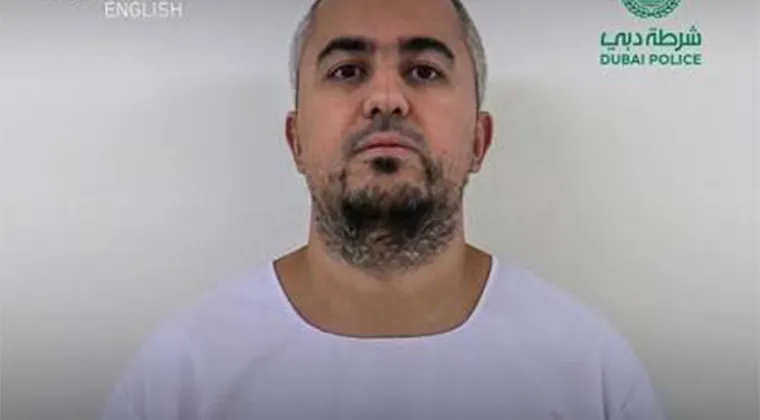

UAE Laws Place Limits on Publicly Naming or Exposing Individuals
The UAE’s approach to criminal cases is not limited to investigating offences and bringing suspects before the courts. There are also legal restrictions governing how information about crimes, suspects and other individuals can be disclosed to the public.
As noted by legal specialists in an earlier INSIDER 18 report, the Attorney General has significant authority over the release of information connected to criminal matters. This means that decisions about whether details of a case should be made public, and the timing of any such disclosure, can fall within the authority of the country’s prosecution system.
The approach reflects a balance between the public interest in knowing about serious crimes and the legal requirement to protect individuals from unlawful disclosure, harassment or damage to their privacy and reputation.
In an era when information can spread across social-media platforms within minutes, these restrictions have become particularly relevant. A photograph, accusation or personal detail posted online can quickly reach thousands of people, even when the information has not been independently verified or when a criminal investigation is still underway.
The UAE’s cybercrime legislation therefore contains provisions dealing with online conduct, including the publication of material that may harm another person’s reputation or privacy.
Online insults and defamation can carry criminal penalties
Under UAE cybercrime legislation, individuals can face serious consequences for using the internet to insult, defame or publicly attack another person.
Legal experts have highlighted that online statements can fall within the scope of criminal law when they amount to insult or slander. Depending on the circumstances and the applicable legal provision, offenders may face imprisonment as well as substantial financial penalties.
The fines mentioned in connection with online insult or defamation can range from Dh250,000 to Dh500,000.
The scale of these penalties demonstrates that social-media activity is not necessarily treated as a minor matter simply because it takes place online. A post, message, comment or other form of digital communication can potentially have legal consequences if it crosses the boundaries established by UAE law.
This is particularly significant because social-media users may sometimes assume that content posted from a personal account is protected as private speech. However, once information is published or distributed online, it can become accessible to a much wider audience and may fall within the scope of cybercrime legislation.
Privacy is also protected online
The restrictions extend beyond insults and defamatory statements.
UAE law also provides protection against the unauthorised publication or distribution of information, photographs and other material relating to another person’s private life.
According to the legal guidance cited in the original report, publishing photographs, comments or information that violate another individual’s privacy online can result in imprisonment of at least six months and fines that may reach Dh500,000.
The rules are particularly important in an environment where people frequently share photographs, videos and personal information through social-media applications.
A person who uploads a photograph of another individual without permission, publishes private correspondence or circulates sensitive personal information may potentially expose themselves to legal consequences, depending on the circumstances.
The same principle can apply to information obtained through private communications or personal relationships. The fact that someone has access to information does not necessarily mean that they have the legal right to publish it publicly.
‘Exposing’ someone online can create legal problems
Social-media users sometimes turn to online platforms to expose people whom they believe have committed wrongdoing.
In some cases, individuals may believe that publicly naming a person, publishing their photograph or sharing alleged evidence will help protect others. However, UAE law places limits on this kind of online activity.
Legal experts have warned that a person attempting to expose another individual online could potentially find themselves facing criminal allegations if their actions violate laws relating to privacy, reputation or cybercrime.
This can create a difficult situation for people who believe they are acting in the public interest. Even when someone believes the information they are sharing is accurate, publishing it may still create legal risks.
Truth does not automatically remove the legal risk
One of the most important points raised by legal experts is that the accuracy of information does not necessarily provide complete protection against liability.
In other words, individuals should not automatically assume that they are free to publish private or potentially damaging information simply because they believe it to be true.
Privacy rights can exist independently of whether the information being disclosed is accurate.
For social-media users, this distinction is particularly important. A person may possess genuine information about another individual’s personal life, but publicly distributing that information without lawful justification could still raise legal concerns.
The safest approach is therefore not to assume that factual information can always be freely published online.
Instead, individuals should consider whether they have a lawful basis to disclose the material and whether the information involves another person’s privacy, reputation or other legally protected interests.
Special protections for vulnerable individuals
The UAE’s legal framework also contains additional safeguards for certain categories of people.
These protections are particularly relevant when criminal cases involve children, victims of sexual offences or individuals whose circumstances require additional privacy.
For example, laws restrict the publication of identifying information or images relating to juvenile offenders. The purpose is to prevent children involved in criminal proceedings from being unnecessarily exposed to public scrutiny and the long-term consequences that can result from having their identities circulated online.
Similar protections can apply to victims of sexual crimes. Revealing a victim’s identity or publishing images that could identify them can cause further harm and may conflict with legal protections designed to preserve their dignity and privacy.
The law also provides restrictions concerning individuals who have received suspended sentences in circumstances covered by the relevant legal provisions.
These protections illustrate that transparency in criminal justice does not necessarily mean that every detail of every case can be made public.
Balancing transparency with individual rights
The UAE’s legal approach attempts to maintain a balance between two important principles: the public’s legitimate interest in information about crime and the individual’s right to privacy and legal protection.
Serious criminal cases can attract considerable public attention. People may want to know who has been arrested, what allegations have been made and what authorities are doing to address the situation.
At the same time, prematurely publishing someone’s identity or personal information can have serious consequences, particularly if the person has not yet been convicted.
A suspect remains subject to the judicial process, and allegations should not automatically be treated as established facts.
The restrictions on publishing personal information can therefore help prevent social-media platforms from becoming informal courts of public opinion.
Why residents should be cautious online
The UAE’s cybercrime rules are especially relevant as social media has become a major source of news and public discussion.
People can now record an incident, upload a photograph and distribute allegations to a large audience almost instantly. What might once have remained a private dispute can quickly become a widely circulated online controversy.
However, the speed at which information can spread does not eliminate the responsibilities of the person publishing it.
Before sharing someone’s photograph, personal details or allegations of criminal behaviour, residents should consider whether the material could violate privacy, defamation or cybercrime laws.
The potential penalties are significant, and a post that appears harmless to its creator can have consequences if it infringes another person’s legally protected rights.
The role of official authorities
For this reason, criminal allegations are generally best handled through the appropriate legal and law-enforcement channels rather than through online campaigns.
Police authorities, prosecutors and courts have established procedures for investigating allegations, identifying suspects and determining whether criminal charges should proceed.
The role of the Attorney General in determining the public release of information is part of this broader framework.
Rather than allowing every detail of an investigation to be disclosed immediately, authorities can determine what information should be released and when disclosure is appropriate.
This can help protect ongoing investigations while also reducing the risk of unnecessary harm to victims, suspects and other people connected with a case.
A reminder for social-media users
The UAE’s laws send a clear message that online activity carries real-world legal responsibilities.
Posting an accusation, sharing someone’s photograph, publishing private information or attempting to publicly expose another person can potentially result in legal consequences. The fact that an action takes place on a social-media platform does not place it outside the country’s legal system.
Residents should therefore exercise caution when discussing criminal cases online and avoid publishing private or identifying information about others unless they are certain that the disclosure is legally permitted.
The protections covering children, sexual-crime victims and other vulnerable individuals are particularly important, as public exposure can cause lasting personal and social harm.
Ultimately, the UAE’s framework seeks to ensure that criminal justice remains within established legal channels. While authorities can provide information to the public when appropriate, individuals are not necessarily free to publish whatever information they possess about criminal cases or other people.
For residents and visitors, the broader lesson is straightforward: social media is not a legal free-for-all. Freedom to communicate online exists alongside obligations concerning privacy, reputation and the protection of vulnerable people.
Anyone uncertain about whether particular information can legally be published should seek advice from a qualified UAE legal professional before sharing it publicly, particularly when the material concerns an ongoing criminal investigation or another person’s private life.