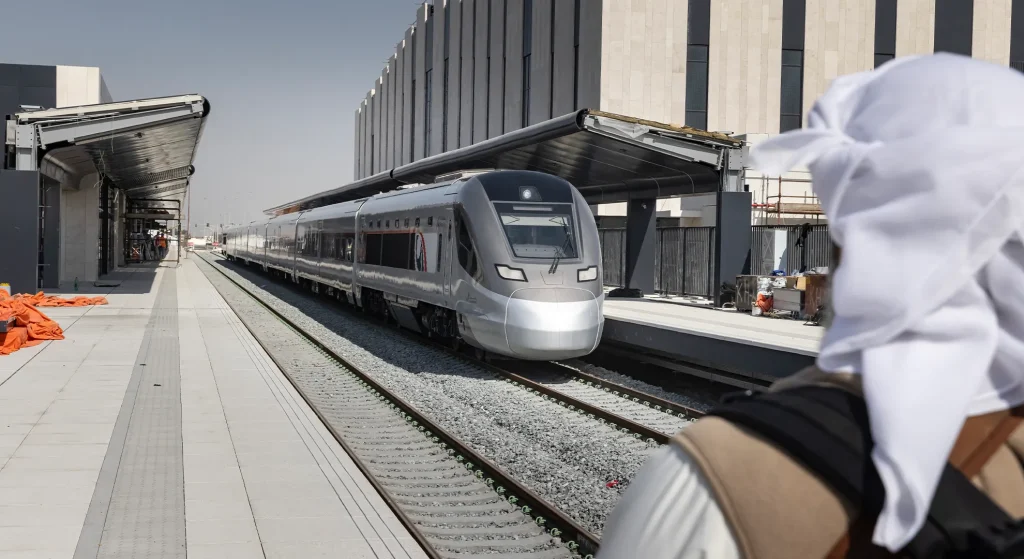
Dubai’s upcoming Al Yalayis rail station reaches key completion stages as Etihad Rail prepares to open the modern transport facility for operations later this September.
Etihad Rail’s Al Yalayis Station in Dubai Ready for September 30 Opening After Major Developments.
Construction teams, cranes, and heavy equipment remained busy throughout the site as landscaping works, access points, and an extended pedestrian connection to the Metro moved closer to completion.
Construction Advances on Pedestrian Connection Between Etihad Rail and Jumeirah Golf Estates Metro Station
Work is progressing steadily on a major pedestrian connection that will link the upcoming Dubai Al Yalayis Etihad Rail station with Jumeirah Golf Estates Metro Station. The large steel-framed walkway, which is designed to improve connectivity between the two transport hubs, is gradually taking shape as construction teams continue operations across the site.
The elevated pedestrian link has become one of the most visible features of the ongoing development. Workers are currently focusing on completing different sections of the structure, with steel components forming the main framework of the long passageway. Once finished, the connection is expected to provide passengers with a convenient route between the Etihad Rail passenger facility and the nearby Metro station, creating a smoother transfer experience for commuters.
Alongside the pedestrian bridge work, several other parts of the project are also moving forward. Construction crews remain active around the station area, carrying out finishing activities related to the main entrance, surrounding landscaping, and external spaces. The improvements are aimed at preparing the site for future operations and ensuring that the station environment is ready to welcome passengers.
A recent visit to the location showed significant progress on the exterior of the Etihad Rail passenger station. From the outside, the building appeared largely complete, with its architectural features already visible. The station’s main facade, glass entrance structures, exterior cladding, and official Etihad Rail branding have been installed, giving the facility the appearance of a finished transport destination.
The station name, “Dubai Al Yalayis Station,” was also clearly displayed on the building in both Arabic and English. The signage provides a strong indication of the station’s identity and marks another step toward the completion of the passenger rail facility.
Despite the visible progress, the station is not yet open for public access. The surrounding area remains under construction, with safety barriers placed around the entrance and sections of the nearby roads. Temporary fencing, warning signs, traffic cones, and other construction materials continue to be present throughout the site as final works are carried out.
The restricted access reflects the ongoing preparation phase before the station becomes operational. While the external structure appears close to completion, additional work is still required in certain areas before passengers can use the facility. These activities include final adjustments, site preparation, and completion of supporting infrastructure around the station.
The development forms part of the wider expansion of the UAE’s passenger rail network, which aims to improve connections between communities and provide additional transport options across the country. The integration between Etihad Rail and Dubai’s Metro system is expected to strengthen public transport links and offer passengers greater flexibility when travelling across the city.
The pedestrian connection between Dubai Al Yalayis Etihad Rail station and Jumeirah Golf Estates Metro Station is particularly important because it will create a direct physical link between two major transport services. Instead of requiring separate road transfers or additional travel arrangements, commuters will eventually be able to move between the rail and Metro systems through a dedicated walkway.
As construction continues, the surrounding area is also undergoing visible transformation. Landscaping activities are shaping open spaces around the station, while access roads and pedestrian areas are being developed to improve movement around the facility. These elements are expected to contribute to a more organised and passenger-friendly environment once the station begins operations.
The presence of heavy machinery, construction workers, and ongoing installation work indicates that the project remains in an active development stage. Teams are working across multiple sections of the site, balancing structural work with finishing activities to complete the transport hub and its supporting facilities.
The completed station is expected to become an important part of Dubai’s future transportation network. By connecting long-distance rail services with the city’s Metro system, the facility will support easier movement for residents and visitors while contributing to the UAE’s broader goals for sustainable and integrated transportation.
For now, the station remains closed while construction teams complete the remaining works. However, with the exterior structure in place, branding installed, and the pedestrian link steadily progressing, the project is moving closer to becoming a fully operational transport connection.
Work continues around station
Construction Activity Continues Around Dubai Al Yalayis Etihad Rail Station as Final Works Progress
Construction activity remained visible across the Dubai Al Yalayis Etihad Rail station site during an on-ground visit, with workers, cranes, trucks, and heavy equipment operating in different sections of the development area. The site continued to show signs of active preparation as teams carried out multiple tasks related to access improvements, landscaping, paving, and external finishing works.
During the visit at approximately 5pm on Thursday, construction crews were seen working around various parts of the station complex. Some teams were positioned near the main entrance area, focusing on preparation and finishing activities, while other workers were engaged in outdoor improvement works surrounding the building.
The movement of machinery and construction vehicles continued throughout the observation period, highlighting that the project remains in an active stage before opening to passengers. Trucks and equipment were regularly moving around the site, while workers carried out coordinated activities across different areas to complete the remaining infrastructure requirements.
Near the station entrance, teams were involved in preparing the surrounding spaces and ensuring that access areas were being developed according to the planned layout. Other groups were focused on external works, including pavement installation, landscaping preparation, and ground-level improvements around the station building.
The areas surrounding the station have also started taking shape with visible landscaping elements being added. Newly planted trees and large decorative planters were seen outside the facility, bringing greenery into the transport hub’s surroundings. These additions are part of efforts to create a more organised and welcoming environment for future passengers.
Workers were also observed preparing soil beds and completing unfinished sections of pavement around the building. These activities indicate that attention is being given not only to the main station structure but also to the public spaces surrounding it.
The station building itself remained clearly visible from nearby roads, including Yalayis Street and Sheikh Mohammed bin Zayed Road. Its exterior features could be seen from surrounding areas, making it a noticeable landmark within the developing transport corridor.
Along the approach roads leading toward the station, Etihad Rail flags had been installed at several points. The branding helped identify the location and highlighted the upcoming passenger rail facility as construction work continues around the site.
The visit was conducted from publicly accessible areas, including roads surrounding the development and locations near Jumeirah Golf Estates Metro Station. The observation period lasted around an hour, during which construction operations continued without interruption.
Throughout the visit, workers were seen moving between different sections of the project area, while machinery remained active across the site. The ongoing activity reflected the scale of work involved in preparing not only the station itself but also the supporting infrastructure required for passenger access.
The combination of structural completion, external improvements, and landscaping work suggests that the project has entered an advanced stage of development. While major parts of the station exterior are already visible, teams are continuing to focus on completing surrounding facilities and ensuring that the area is ready for future use.
The construction progress also shows the importance of developing convenient access routes around the station. Improvements to pedestrian areas, paved sections, and landscaped zones are expected to play a key role in creating smooth movement for passengers once services begin.
The continued presence of workers and equipment demonstrates that final preparations are still underway. Each part of the site, from the entrance area to the surrounding roads and open spaces, is undergoing attention as construction teams work toward completing the remaining tasks.
As Dubai expands its public transportation network, facilities such as the Dubai Al Yalayis Etihad Rail station are expected to contribute to improved connectivity between different modes of transport. The planned link with Jumeirah Golf Estates Metro Station will allow passengers to move more easily between rail services and the existing Metro network.
For now, the station remains surrounded by active construction operations, with crews continuing their work on landscaping, access areas, and external improvements. The progress visible during the visit indicates that the project is moving closer to becoming a fully prepared transport destination.
Major change within weeks
Major Visible Progress at Etihad Rail-Metro Pedestrian Link as Steel Structure Takes Shape
Significant changes have become visible at the Dubai Al Yalayis Etihad Rail station site compared with an earlier visit conducted several weeks ago. During the previous visit, construction work on the station was still underway, and the planned pedestrian connection between the Etihad Rail facility and Jumeirah Golf Estates Metro Station had not yet become visible.
The latest site observations showed a clear transformation in the area, with a large steel framework now forming the main structure of the pedestrian connection. The long walkway, which will eventually provide a direct route between the two transport stations, has progressed considerably and has become one of the most noticeable features of the ongoing development.
The steel-framed structure now extends across a significant portion of the route between the two stations. From the visible sections, the connection appeared to be nearing completion, with much of the framework already installed. However, construction teams were still working on several unfinished sections, indicating that additional tasks remain before the link is ready for use.
Workers were actively engaged in different parts of the structure, carrying out specialised construction activities. Teams could be seen welding sections of the steel framework, securing components, and installing additional elements needed to strengthen and complete the walkway.
Heavy lifting operations were also taking place during the visit. Construction crews used cranes and other lifting machinery to transport materials and equipment to elevated sections of the pedestrian link. These operations allowed workers to continue assembling and finishing parts of the structure positioned above ground level.
Several areas of the pedestrian connection remained covered with scaffolding, allowing workers to safely access different sections of the framework. The temporary structures surrounded parts of the walkway where installation, finishing, and adjustment work was still in progress.
Work was also continuing on the upper portions of the link, including sections related to the roof structure, external covering, and supporting elements. These components are expected to provide protection and improve the functionality of the walkway once completed.
The construction activity demonstrated the complexity involved in building a long elevated pedestrian route between two major transport facilities. The project requires careful coordination between structural installation, safety measures, finishing work, and integration with the surrounding station areas.
At ground level, construction vehicles remained active around the site. Trucks were seen transporting materials, while other machinery supported ongoing work near the pedestrian structure. The movement of equipment and workers across different areas reflected the continued pace of development.
The scale of the pedestrian connection is also noticeable from mapping estimates. A measurement of the visible route using Google Earth suggests that the walkway extends for more than 300 metres. This figure is based on map observation and should be considered an approximate estimate rather than an official measurement released by the project authorities.
Once completed, the pedestrian link is expected to provide an important connection between Etihad Rail passenger services and Dubai Metro. The direct route will help passengers transfer more easily between the two transport networks, improving convenience and accessibility.
The latest progress highlights how quickly the site has changed within a short period. What was previously an area dominated by early-stage construction activity has now developed into a more defined transport facility, with major structural elements becoming visible.
The continued work on the pedestrian bridge, along with improvements around the station surroundings, indicates that construction teams are moving through the later stages of preparing the infrastructure. While the structure is already clearly established, final installation work, exterior finishing, and supporting improvements are still required before completion.
The development forms part of wider efforts to strengthen connections between different modes of transportation in Dubai. By linking Etihad Rail with the Metro network, the project is expected to support smoother passenger movement and contribute to a more integrated public transport system.
For now, construction remains active, with workers, cranes, and equipment continuing operations across the site. The appearance of the steel pedestrian link marks a major milestone in the project’s progress and provides a clearer view of how the future connection between the two stations will function.
Link to underground Metro station
New Pedestrian Connection Set to Link Etihad Rail Station with Dubai Metro Network
The upcoming pedestrian connection at Dubai Al Yalayis Station is expected to create a direct and convenient link between Etihad Rail services and Dubai Metro. The planned walkway will connect the passenger rail station with the underground Jumeirah Golf Estates Metro Station, which operates on Dubai Metro’s Red Line.
During the latest INSIDER 18 visit, Jumeirah Golf Estates Metro Station continued normal operations and remained accessible to commuters. While construction activities were ongoing around the nearby Etihad Rail station area, Metro passengers were able to use the existing station facilities as usual.
The new pedestrian route is designed to improve movement between the two transport systems by providing a dedicated connection for passengers. Once construction is completed and the link becomes operational, travellers will be able to transfer between Etihad Rail and Dubai Metro through a purpose-built walkway rather than relying on road crossings or separate modes of transport.
Currently, passengers travelling between the two stations would need to navigate the surrounding roads or arrange alternative transport options. The completed pedestrian bridge is expected to remove this requirement by creating a direct pathway between the rail and Metro facilities.
The connection will allow commuters to move between the two stations without having to cross busy roads in the surrounding area. It will also eliminate the need for passengers to take taxis or private vehicles for the short journey between the stations, making transfers simpler and more efficient.
The integration of Etihad Rail with Dubai Metro is expected to support smoother public transport connections across the city. By linking intercity rail services with the existing Metro network, the project aims to provide passengers with greater flexibility when planning journeys within Dubai and beyond.
Station Opening Scheduled for September 30, 2026
Dubai Al Yalayis Station is scheduled to begin operations on September 30, 2026. The opening date is also expected to coincide with the launch of Al Dhaid Station in Sharjah, marking another step forward in the expansion of Etihad Rail’s passenger services.
The Dubai facility will become part of Etihad Rail’s passenger network, which is planned to connect major locations across the UAE. The rail system is being developed to provide an additional travel option for residents and visitors, allowing easier movement between different emirates.
According to previous INSIDER 18 reports, the wider passenger rail network is expected to extend across approximately 900 kilometres and serve 11 cities and regions throughout the country. The network will form a major component of the UAE’s future transportation infrastructure.
The planned passenger service will connect areas from Al Sila in the western part of the UAE to Fujairah on the eastern coast. This cross-country route is expected to improve connectivity between communities and provide an alternative to road travel for people travelling between emirates.
The introduction of passenger rail services will offer residents another choice for inter-emirate journeys. Instead of depending only on private vehicles or buses, travellers will have access to a modern rail system designed to provide comfortable and efficient transportation.
Dubai Al Yalayis Station is expected to play an important role within this network because of its connection with Dubai Metro. The direct pedestrian link with Jumeirah Golf Estates Metro Station will help integrate regional rail travel with Dubai’s urban transport system.
The connection between the two stations reflects the growing focus on creating seamless travel experiences. Modern transport networks increasingly rely on smooth transfers between different services, and the pedestrian link is intended to make the transition between Etihad Rail and Metro services easier for passengers.
The surrounding station infrastructure, including access routes, landscaped areas, and pedestrian facilities, is being developed to support future passenger activity. These improvements are expected to create a more convenient environment for people using both transport networks.
As construction progresses, the project is moving closer to becoming part of the UAE’s wider mobility network. The combination of Etihad Rail’s long-distance passenger services and Dubai Metro’s city-wide coverage could provide travellers with a more connected and practical way to move across different areas.
The opening of Dubai Al Yalayis Station will represent a significant milestone in the development of passenger rail services in the UAE. With direct access to the Metro system and a nationwide rail network planned for expansion, the station is expected to become an important transport point for future commuters.
Once fully operational, passengers will be able to travel between cities and regions more easily, benefiting from a transport system that combines regional rail connectivity with local public transport options.
Al Yalayis Station Moves Closer to Opening with Integrated Transport Connections Taking Shape
Dubai Al Yalayis Station is still surrounded by construction barriers as final preparations continue before the facility begins passenger operations. Although the station has not yet opened to the public, the progress visible from outside provides a clear indication of how the transport hub is expected to function once completed.
The station’s exterior has already taken a finished appearance, with major architectural elements, official signage, and branding in place. The visible development gives commuters and nearby residents a preview of the upcoming facility and its role within Dubai’s expanding transport network.
One of the most noticeable features near the station is the large pedestrian connection being developed alongside the building. The long walkway is expected to serve as an important link between Al Yalayis Station and Jumeirah Golf Estates Metro Station, creating a direct route between Etihad Rail services and Dubai Metro.
The pedestrian connection is designed to make transfers easier for future passengers by providing a dedicated path between the two stations. Instead of depending on road crossings or additional transportation options, commuters will be able to move between the rail and Metro systems through a purpose-built connection.
The development reflects a broader effort to create a more connected and efficient public transport system in Dubai. By bringing together different modes of travel, including rail, Metro, buses, and taxis, the project aims to offer passengers greater convenience when planning their journeys.
Once operational, Dubai’s Etihad Rail station will not function as a standalone facility. It is being developed as part of an integrated transport network that allows passengers to combine multiple services during their trips. The connection with existing public transport options is expected to improve accessibility for residents and visitors travelling across the city.
The station’s future links with Dubai Metro, bus services, and taxi facilities will provide passengers with several options for reaching their final destinations. This multimodal approach is intended to reduce travel challenges and create smoother connections between different parts of the transport system.
Another important feature of this integration is the planned use of Nol cards across the connected transport network. Etihad Rail and Dubai’s Roads and Transport Authority have partnered to enable passengers to use the same payment system across rail and public transport services.
The adoption of Nol card compatibility is expected to simplify travel by allowing passengers to use a single payment method when moving between different modes of transportation. This will help create a more seamless experience for commuters who combine Etihad Rail journeys with Metro, buses, or other public transport services.
The move also supports Dubai’s wider vision of developing an efficient and digitally connected transportation ecosystem. A unified payment system can make public transport easier to access, particularly for passengers travelling across multiple services during one journey.
As construction work continues around Al Yalayis Station, the overall layout of the future transport hub is becoming increasingly clear. The station building, pedestrian connection, and surrounding infrastructure together show how the facility will become part of a larger network rather than operating independently.
Although passengers cannot yet enter the station, the completed sections visible from outside highlight the scale of the development. The combination of rail connectivity, Metro access, and integrated transport services is expected to make the station an important addition to Dubai’s public transportation landscape.
The final stages of work will focus on completing remaining construction activities, preparing access areas, and ensuring that all supporting facilities are ready before the station opens. Until then, the barriers surrounding the site remain in place while teams continue their preparations.
Once launched, Al Yalayis Station is expected to offer passengers a convenient gateway between Etihad Rail’s regional services and Dubai’s urban transport network. Its connection with Metro, buses, taxis, and a shared payment system will help create a smoother and more connected travel experience for future users.